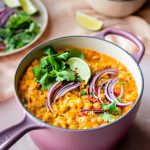
Vegan Thai Kabocha Squash Curry
This Vegan Thai Kabocha Squash Curry is super creamy, packed with flavor, and an easy comfort food recipe for the fall! Plus, no need to use full-fat coconut milk to get the creamiest curry ever when you use my trick for cooking kabocha squash!
Servings: 6
Ingredients
- 1 medium kabocha squash (~2 to 3 lbs / 900g to 1.4 kg)
- 1 - 1 1/2 tablespoons coconut oil* (or oil of choice), plus more for brushing squash
- Kosher salt or sea salt to taste
- Black pepper to taste
- 1/2 cup water (or vegetable broth)
- 1 large yellow onion, diced
- 2 medium carrots, scrubbed (or peeled) and diced
- 4 cloves garlic, minced
- 2- inch piece ginger, grated or finely minced
- 1-2 Thai bird’s eye chili peppers, (see Note 1)
- ¼ cup cup red curry paste (use less to make it less spicy)
- 1 teaspoon ground turmeric
- 1 (13.5 ounce) can “lite” or reduced-fat coconut milk
- 1 tablespoon reduced-sodium tamari (see Note 2)
- 1 tablespoon white miso (optional but recommended, see Note 3)
- 1 tablespoon maple syrup, agave nectar, or coconut sugar
- 2 (15 ounce) cans chickpeas, drained and rinsed (~ 3 cups cooked chickpeas)
- 1-2 tablespoons freshly squeezed lime juice
- ½ cup fresh cilantro, roughly chopped
- For serving: white rice or grains of choice
Instructions
- Preheat the oven to 400°F (205°C) and line a sheet pan with parchment paper for easy cleanup.
- Use a large, sharp knife to slice the kabocha squash in half. For tips on how to slice the kabocha squash, see the blog post section on “how to cut kabocha squash.” Once sliced in half, use a spoon to scoop out the seeds. Lightly brush each squash half with a bit of oil and sprinkle with salt and pepper.
- Place the squash halves, flesh side down, on the sheet pan. Roast for 40-45 minutes until the flesh is very tender. If your squash is large, bake for an additional 10 minutes.
- Once it’s cool enough to handle, use a spoon to scoop the flesh out of the skin, and discard the skin. Place the kabocha squash flesh in a blender and add ½ cup water (or vegetable broth) and puree until very smooth. You should end up with approximately 3 cups of liquid.
- While the kabocha squash is roasting, prepare the rest of the ingredients. Dice the onions and carrots.Mince the garlic, grate or finely mince the ginger, and thinly slice the chile peppers (if using). Measure out the other ingredients.
- Heat a Dutch oven or a large saucepan over medium-high heat. Add the coconut oil, and once it’s shimmering, add the onions and carrots along with a pinch of salt and pepper. Cook the vegetables for 7-8 min, or until they are very tender and lightly browned.
- Add the garlic, ginger, chile peppers (if using), red curry paste, and turmeric. Cook for 2 minutes, stirring very frequently to coat the vegetables in the aromatics. If you aren’t using a nonstick pan, you may need to add a splash of water to prevent the mixture from drying out and burning.
- Pour the pureed kabocha squash sauce into the pan, then add the lite coconut milk, tamari, miso paste (if using), maple syrup, and black pepper to taste. Stir or whisk until the mixture is smooth and creamy.
- Add the drained chickpeas and stir to combine. Bring the mixture to a simmer and cook for 15-20 minutes, or until the curry has become thick and creamy, and the veggies are fully softened.
- Remove from the heat. Stir in 1 tablespoon lime juice and cilantro. Taste, adding more lime juice or salt/pepper as needed. Serve with white rice or grains of choice.
Video

KABOCHA SQUASH | how to cut it, cook it, and make it taste delicious
Notes
- If you are sensitive to spicy food, omit the chile peppers. Alternatively, you can use a less spicy pepper, such as half of a jalapeño pepper.
- Use tamari to keep gluten-free. Otherwise, you can use reduced-sodium soy sauce.
- The miso paste adds a deep, complex umami flavor. If you don’t have any, you’ll want to add a bit of salt (or more tamari) at this stage.
Nutrition
Calories: 331kcal | Carbohydrates: 44g | Protein: 10g | Fat: 14g | Saturated Fat: 10g | Polyunsaturated Fat: 2g | Monounsaturated Fat: 1g | Sodium: 679mg | Potassium: 895mg | Fiber: 10g | Sugar: 8g | Vitamin A: 7154IU | Vitamin C: 25mg | Calcium: 131mg | Iron: 3mg