


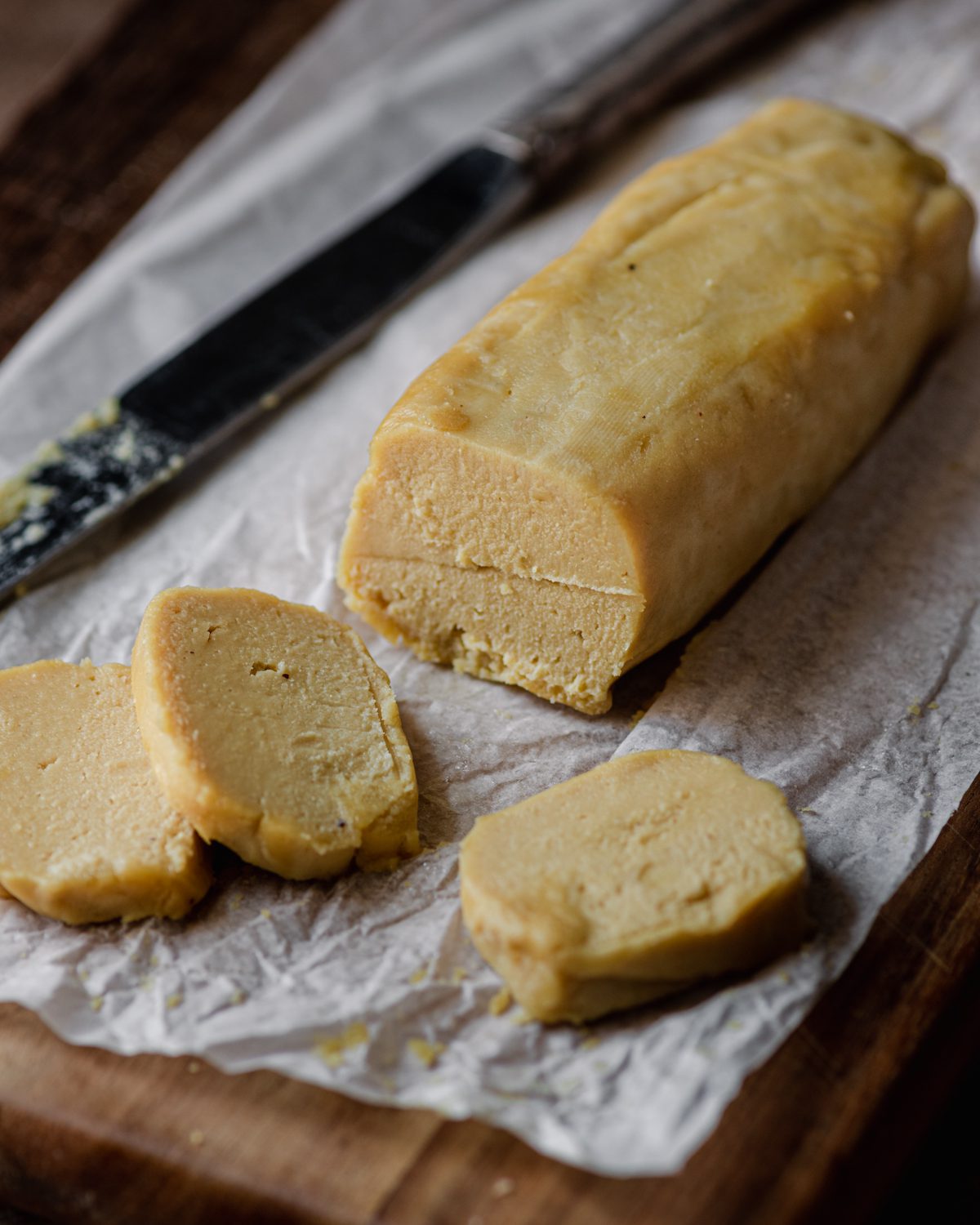
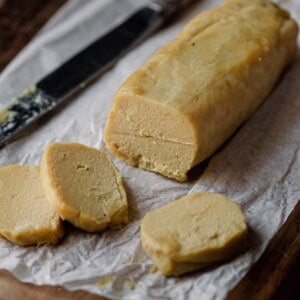
If you miss being able to slice into a log of cheese and spread it on bread or crackers, this fermented cashew cheese will give you back that experience.
And if you’ve ever been disappointed by the vegan cheese options at the grocery store or don’t have access to them, this recipe will be a godsend.
First, a simple mixture of cashews, vinegar, lemon juice, coconut oil, nutritional yeast, and seasonings gets blended until smooth. Then, it ferments for a day or two. Finally, the cheese gets shaped into a log (think a log of goat cheese) and hangs out in the fridge for a few hours. Once sliced, it’s easy to slice and spread (and is SO very tasty).
Hungry for even more vegan cheese?
Check out my complete guide to vegan cheese! It covers the best vegan cheese recipes to use for every situation (like Vegan Feta and Vegan Queso) and reviews the best vegan cheeses you can buy at the supermarket.
Why you’ll love this recipe
Sliceable and spreadable. Homemade vegan cheese recipes that are sliceable and/or spreadable are hard to come by, and if you don’t have access to vegan cheeses at your grocery store, this is an amazing option to keep in your fridge. The addition of coconut oil and very little liquid makes the cheese solid enough to hold its shape and to slice.
Easy and minimal ingredients. This recipe requires just 10 to 15 minutes of hands-on work and a bit of patience while the cheese ferments. And just 7 pantry-friendly ingredients!
Gourmet and flavorful. Despite being so easy to make, this cheese feels fancier than most homemade cheeses and is packed with flavor. In addition to having subtle cheesy vibes from nutritional yeast, it has so much more tanginess and umami than your standard vegan cheese thanks to fermentation.
Make ahead. Because this is a fermented cheese, it will continue to stay good in your fridge for several weeks… if you can resist eating it!
Wholesome but indulgent. Fermented cashew cheese has all the traditional dairy cheese flavors but it’s made with wholesome plant-based ingredients. Plus, the live bacteria created in the fermentation process are good for your gut!
If you’re interested in some of the crazy cool things cashews can do to recreate your favorite comfort foods, check out my crazy good Vegan Spinach Artichoke Dip or Vegan Moussaka!
How to make this recipe
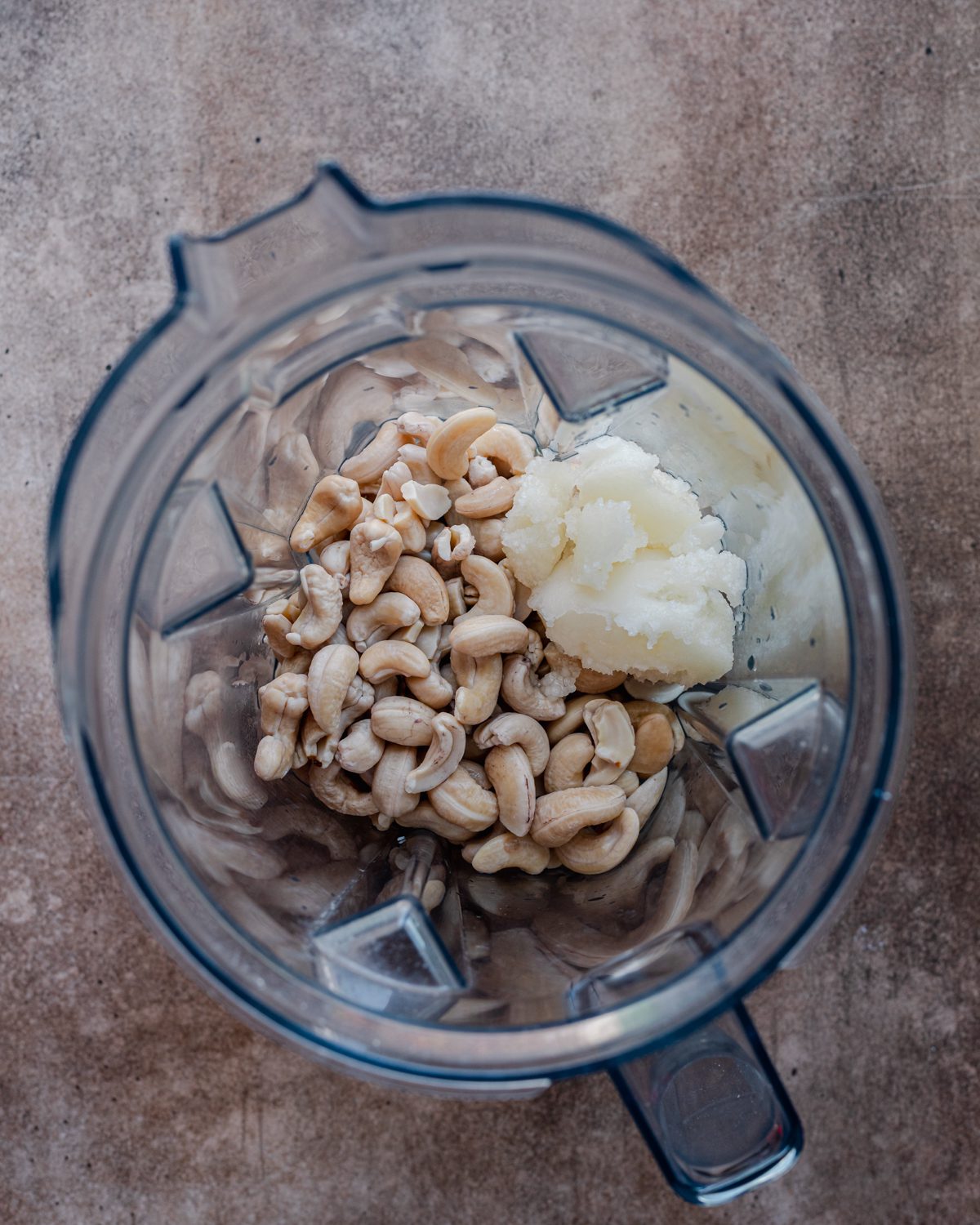
Add the soaked cashews, apple cider vinegar, lemon juice, and coconut oil to a high-powered blender. Blend on medium to high speed for several minutes, scraping down the sides of the blender several times as you go, until relatively smooth.
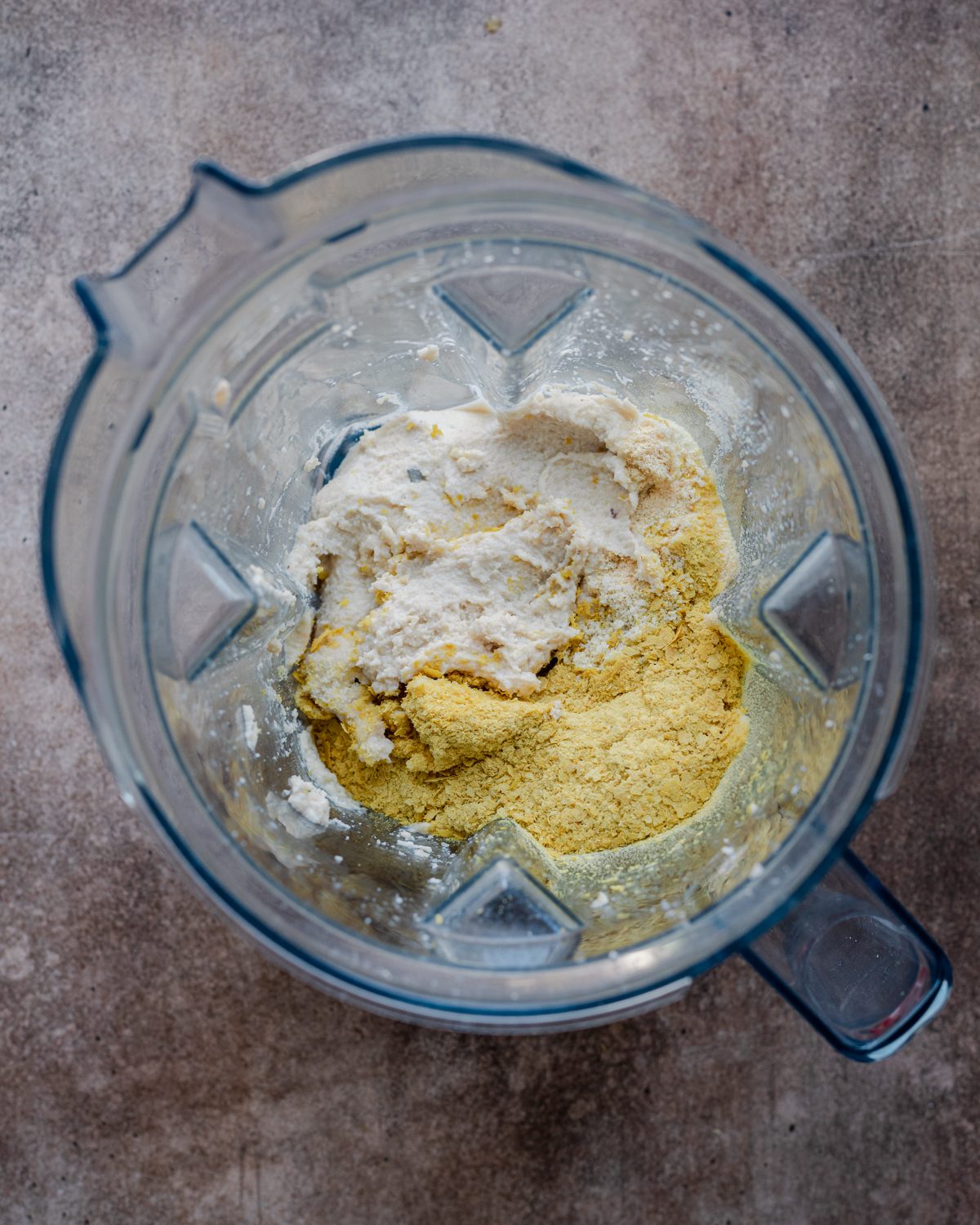
Add the nutritional yeast, garlic powder, onion powder, and salt. Blend again until completely smooth.
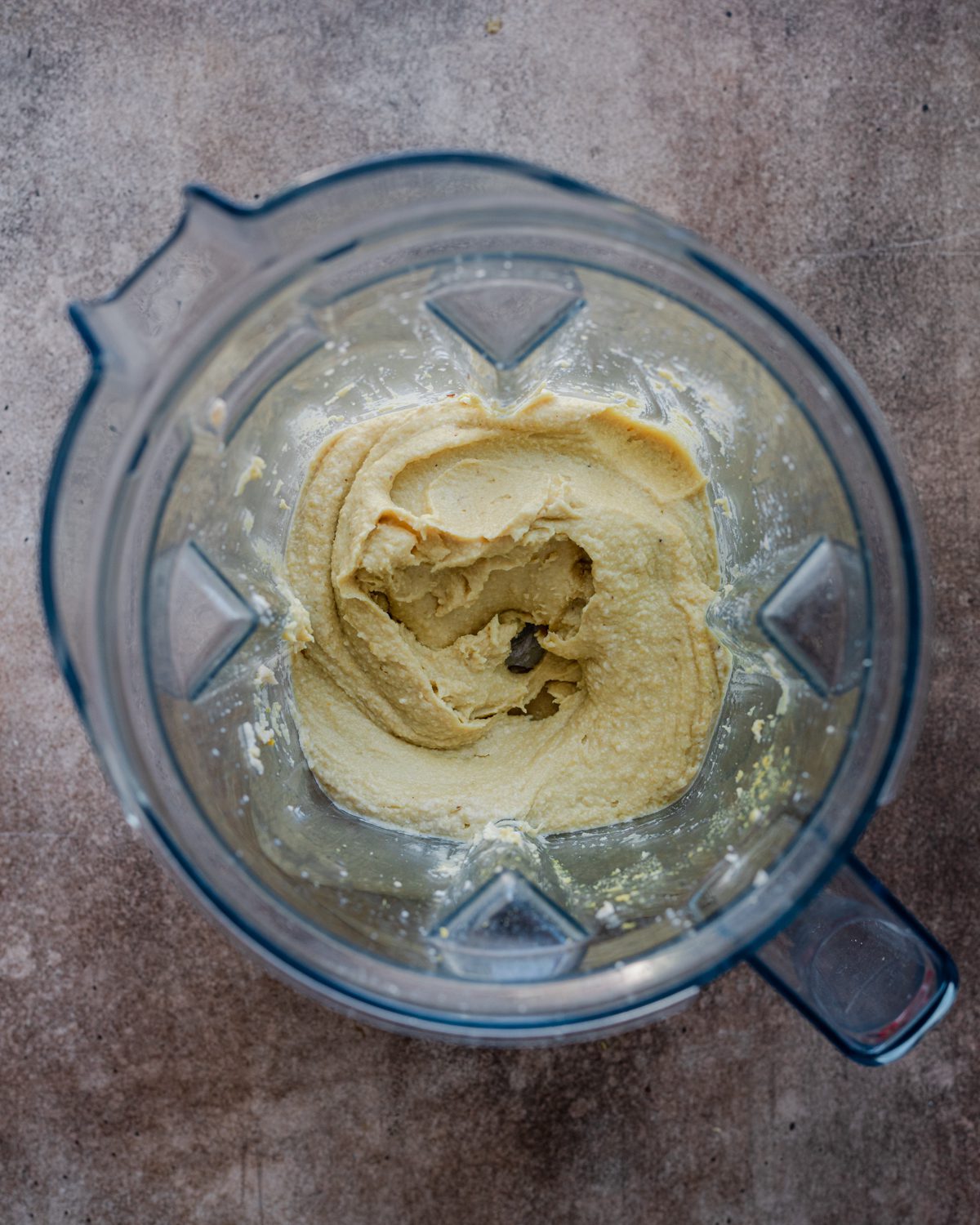
Transfer the cheese mixture to a clean mason jar (you can sterilize it if desired but it’s not necessary). Seal the jar and place in a warm spot to ferment for at least 16 hours, or up to 48 hours. (see “Tips” section for fermentation tips).
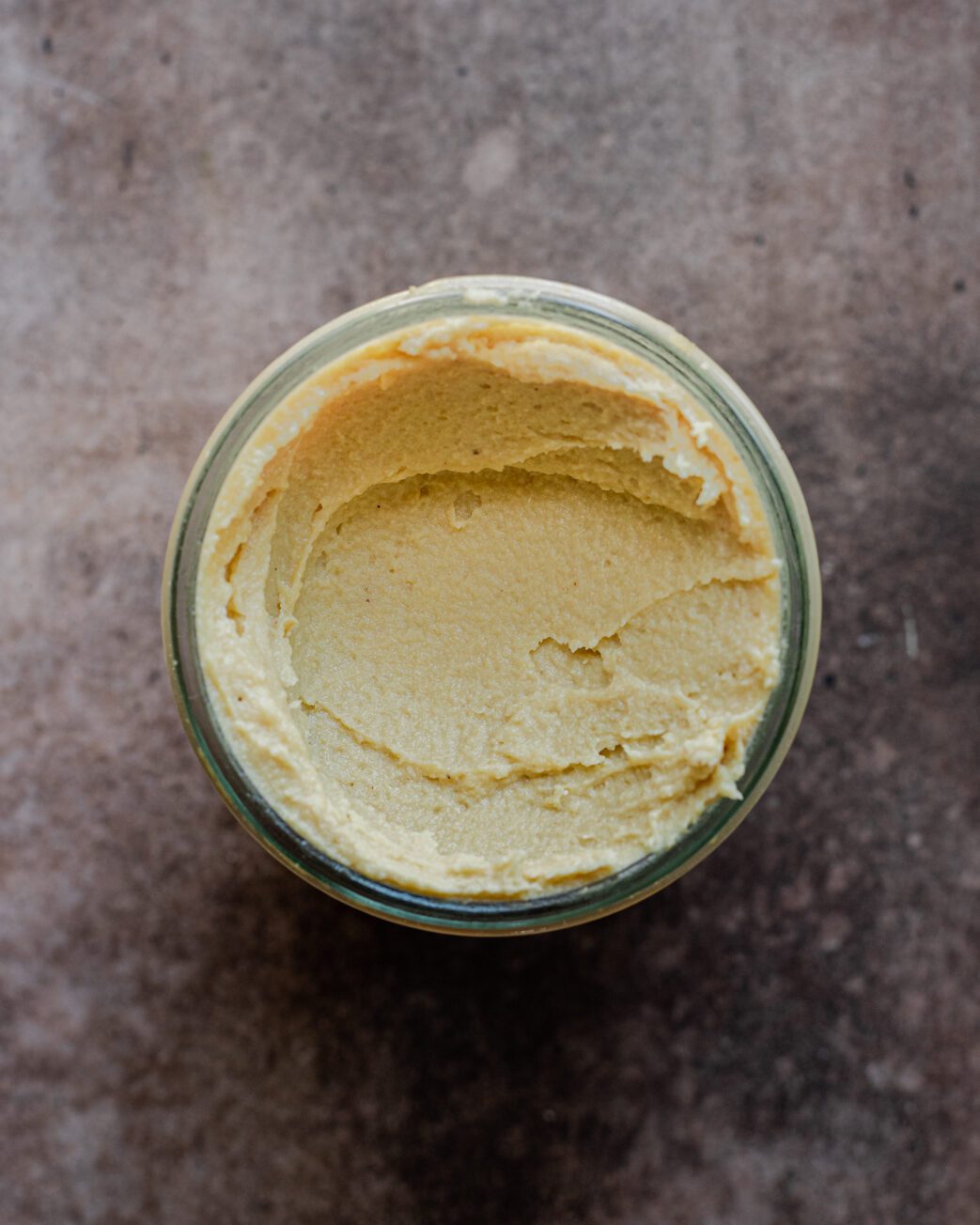
Stir the fermented cheese and transfer to the fridge for at least 4 hours to set.
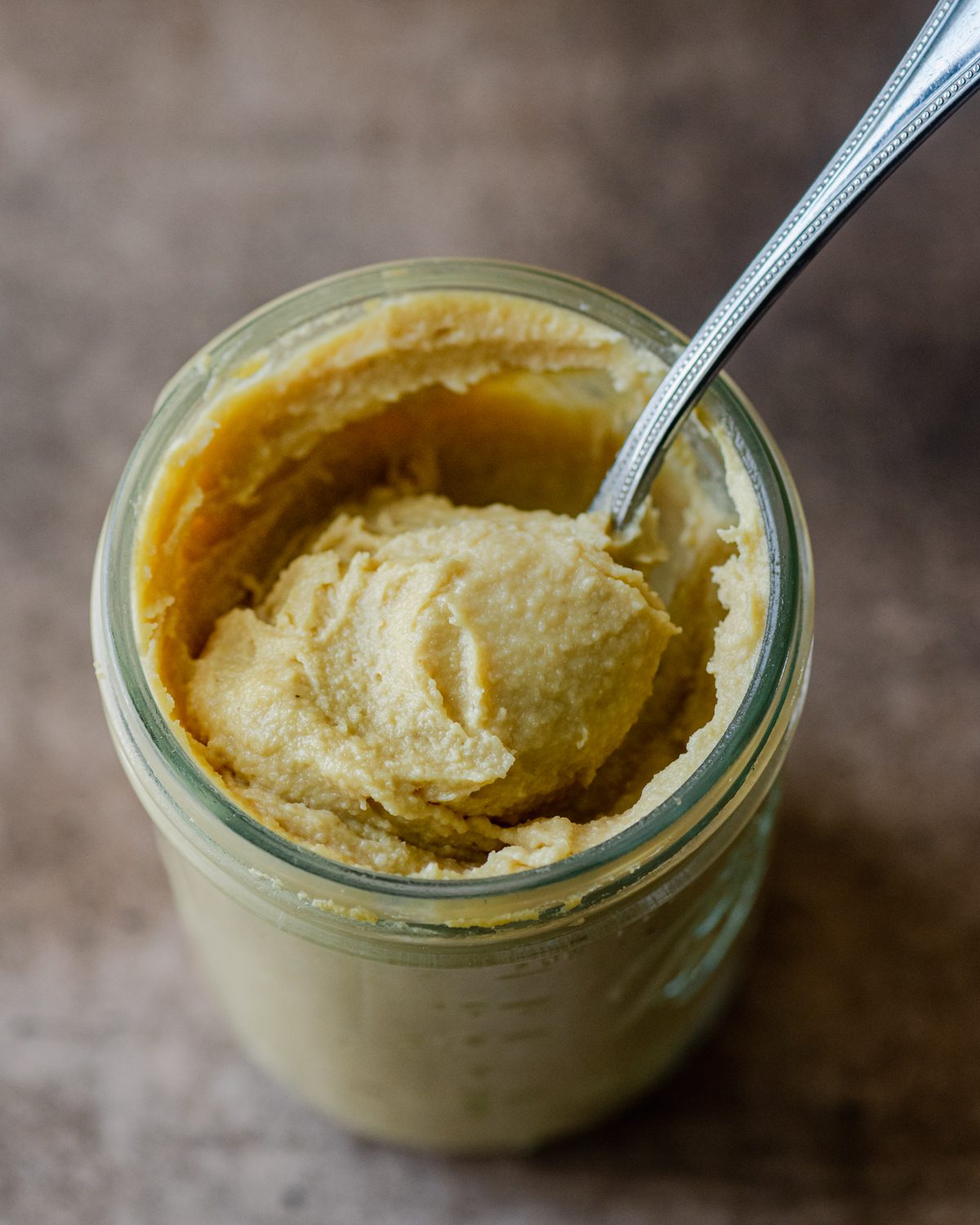
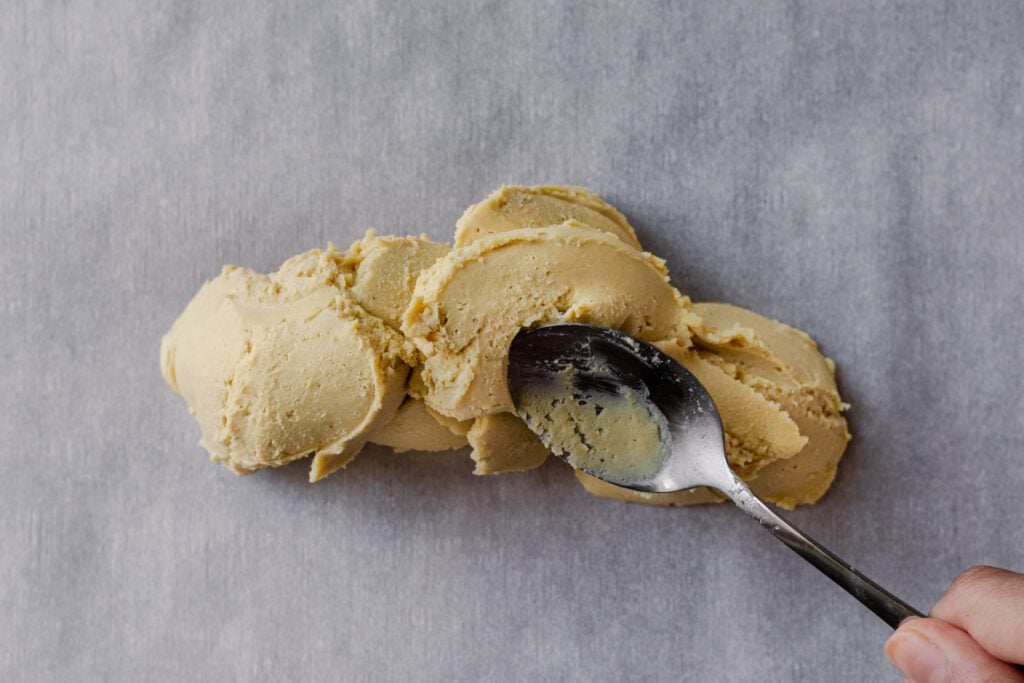
Once the cheese has solidified, scoop out half of it onto a sheet of parchment paper. Use a spoon to push it into a log-like shape.
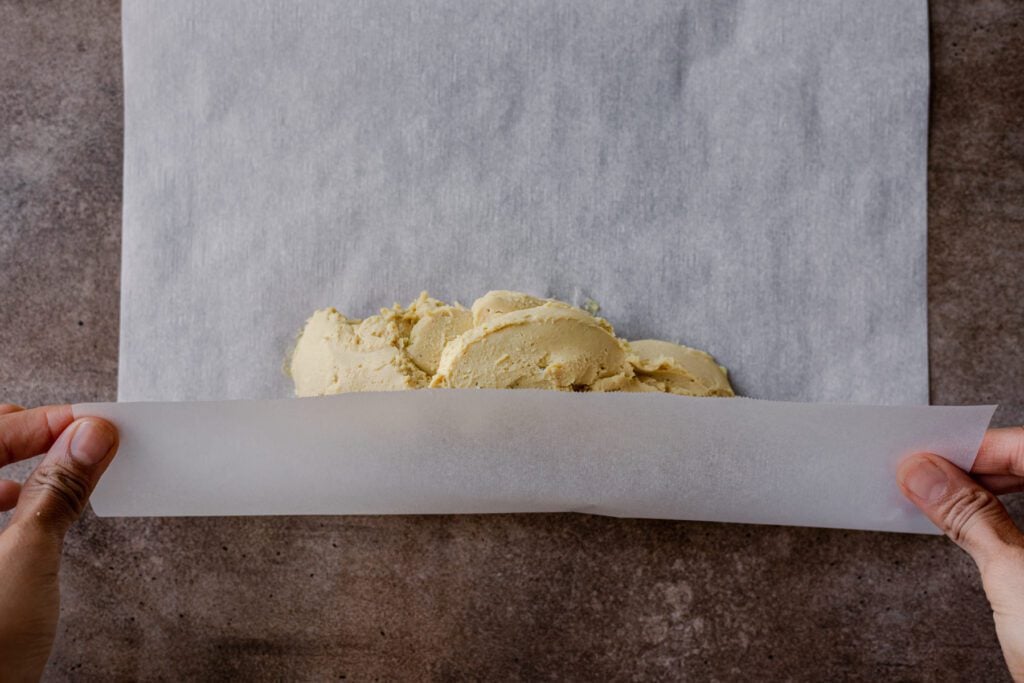
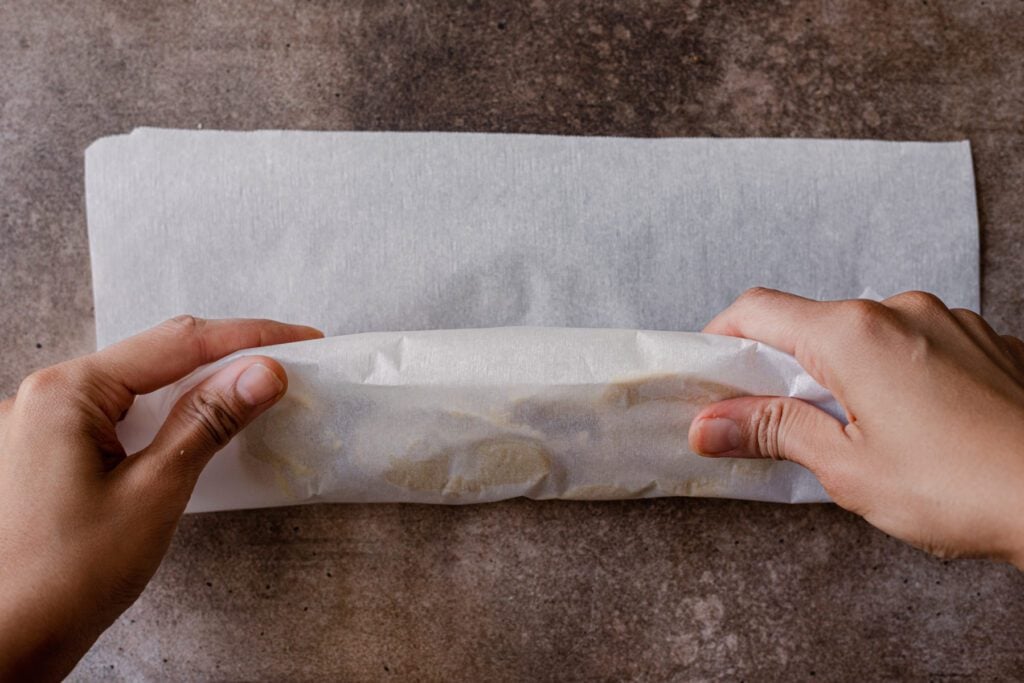
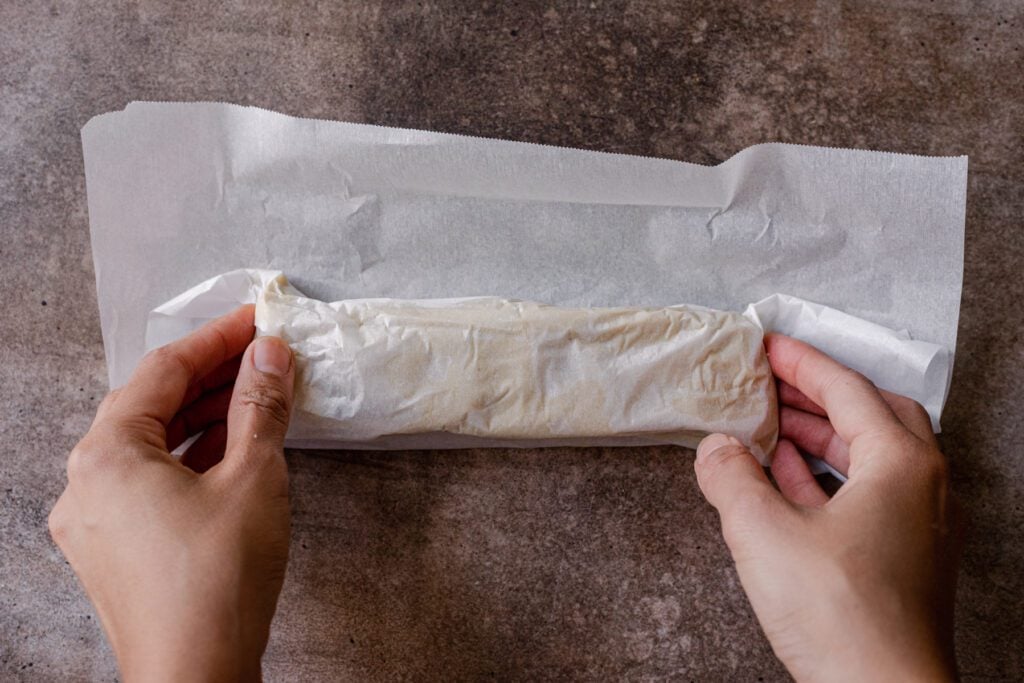
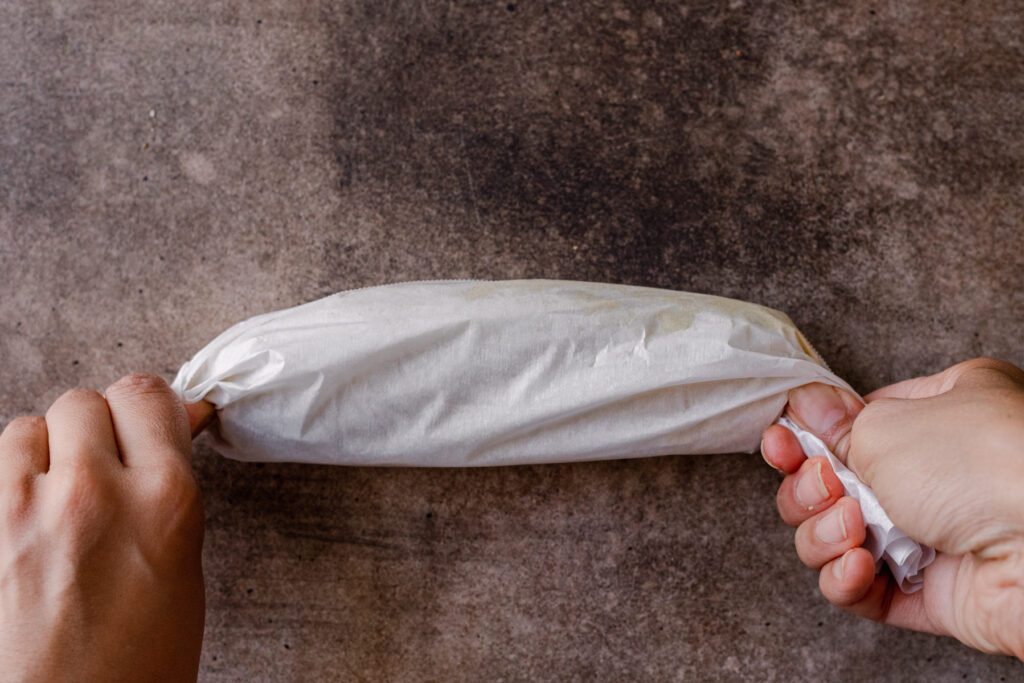
Roll up the parchment paper and your hands to mold and shape the cheese into a log shape. Repeat with the other half of the cheese. Refrigerate the cheese logs for 2 hours, or more, to set.
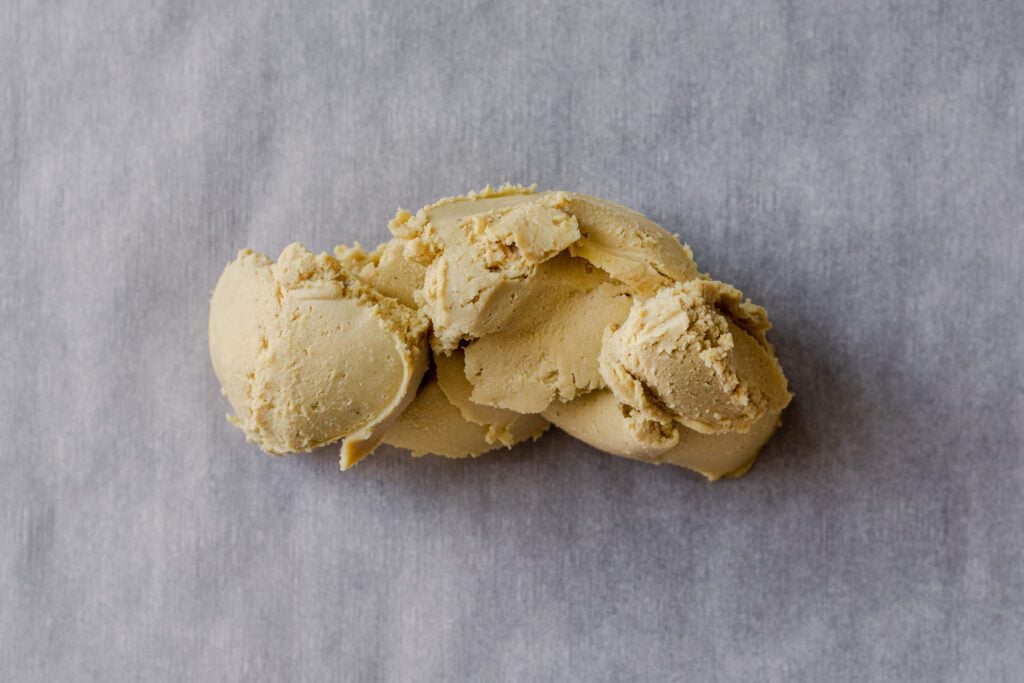
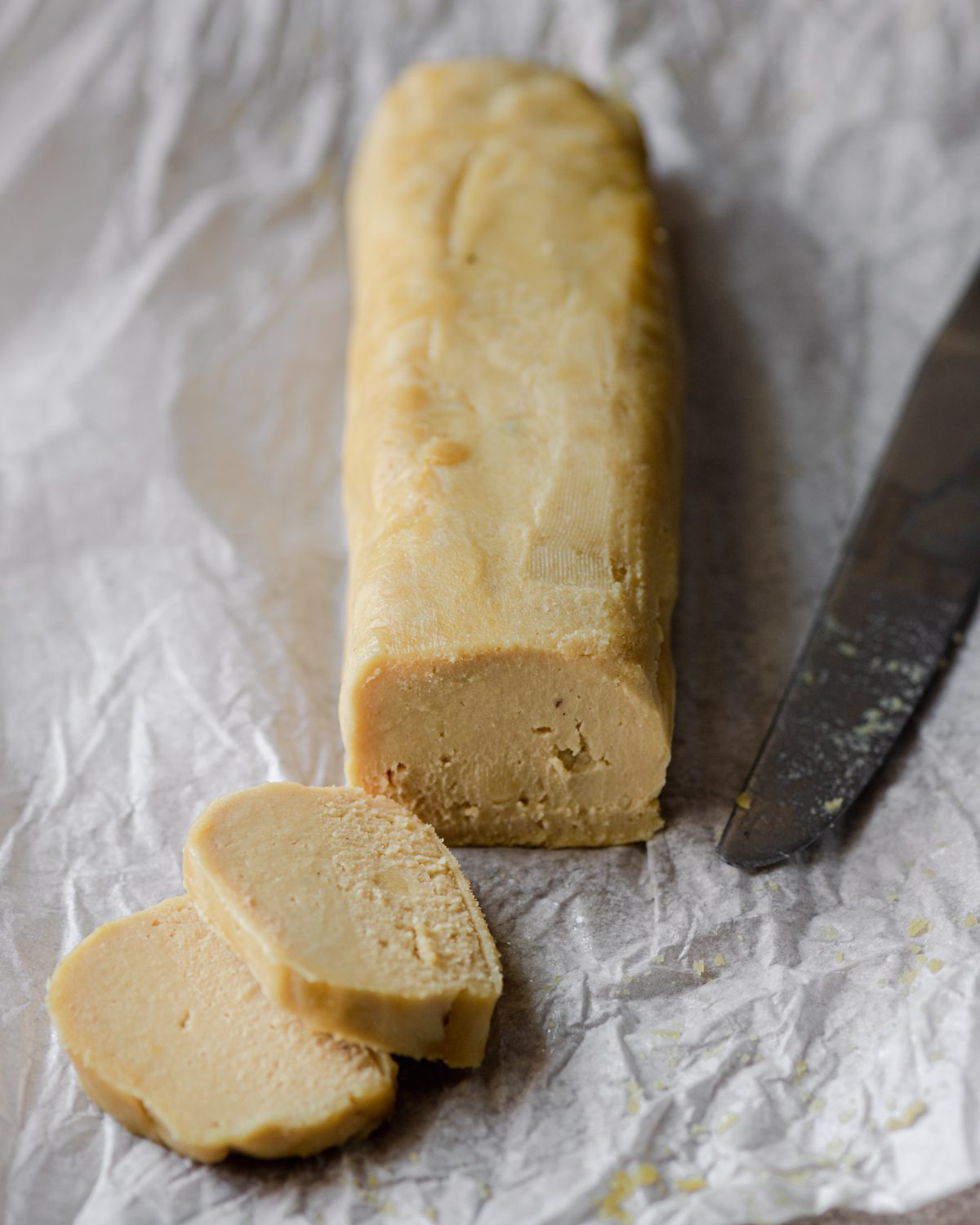
Once the cheese log is set, slice and spread as desired.
Tips for making this cheese
How to soften raw cashews.
I highly recommend soaking your cashews in cool water overnight, or boiling them on the stove for 20 minutes. Since there’s very little liquid, a proper soak or boil is necessary to fully soften the cashews.
Use a clean glass jar.
Wash your jar and lid with soapy warm water and dry well before adding your cheese and fermenting.
Use a high-powered blender.
Along the same lines, you’ll get the best, smoothest results with a high-powered blender, as you want a powerful machine to fully pulverize the cashews. Since there’s not much liquid, you’ll need to scrape down the sides several times as you go, especially if you have a large-sized blender container like me (I have the 64-ounce Vitamix container; it’s considerably easier with a smaller blender container).
Shake the apple cider vinegar.
It’s important to include a bit of the “mother” bacteria from the vinegar to start the fermentation process. Shaking the apple cider vinegar before pouring it ensures that the mother bacteria is evenly distributed.
Let it come to room temperature
If your cheese log has been in the fridge for quite awhile, let it sit at room temperature for 5 minutes to soften up. This will make it much easier to spread.
Where and how long to ferment the cheese.
One of the most important parts in the process is letting the cheese ferment in a warm place.
If it’s summertime, this could be your kitchen counter or pantry. If you live in a warm but not crazy hot climate like I do (Southern California), you can also ferment the cheese outside. Just make sure to not expose the jar to direct sunlight. I typically wrap the jar in ad dish towel during the day and set it outside; in the evening, I transfer it to the oven with the light bulb on (the warmth from the light is sufficiently warm for fermentation).
If it’s wintertime, you can just leave it in the oven as mentioned above. If that’s not an option, you’ll need to leave it out on a counter or in the pantry for at least a few days.
The warmer the temperature, the less time you should ferment it. The countertop when it’s not summer will take more time than in the oven with the light on. If the temperatuer is quite warm, consider fermenting for just 16 to 24 hours to avoid over-fermenting.
Frequently Asked Questions
The coconut oil is key for the texture of this cheese. As you might know, coconut oil has a high melting point compared to other oils (that’s why it’s solid at room temperature instead of liquid, like other oils). So when you refrigerate the cheese mixture, the coconut oil helps solidify it, leaving you with that sliceable texture.
If you are strictly oil-free, try my other oil-free cheese options (Vegan Queso and Nut-Free Cheese Sauce). If you are allergic to coconut products, you can try using olive oil, but I don’t know if you’ll get the same sliceable texture, as coconut oil is solid at room temperature.
NO! The combination of fresh garlic and oil at room temperature for more than a few hours can foster the growth of clostridium botulinum bacteria (aka botulism). It’s toxic and can cause bad severe food poisoning!
Roll it tightly in the parchment paper and store it in the fridge for at least 2 weeks. If the paper isn’t wrapped tightly, the edges dry out, so to avoid this, store the wrapped cheese in an airtight container.
Yes! Some flavor ideas are below. Just sprinkle them on after you’ve rolled the log and it’s hardened a bit. Use your hands to pat the mix-ins into the cheese. Then refrigerate again for 2 hours (or longer) to set.
– Sundried tomatoes + dried oregano
– Chopped dill + parsley
– Dried cranberries + crushed walnuts
– Pomegranate seeds + crushed pecans
How to use this cashew cheese
I have no doubt you’ll find countless uses for this delightful cheese, but here are a few to get you started:
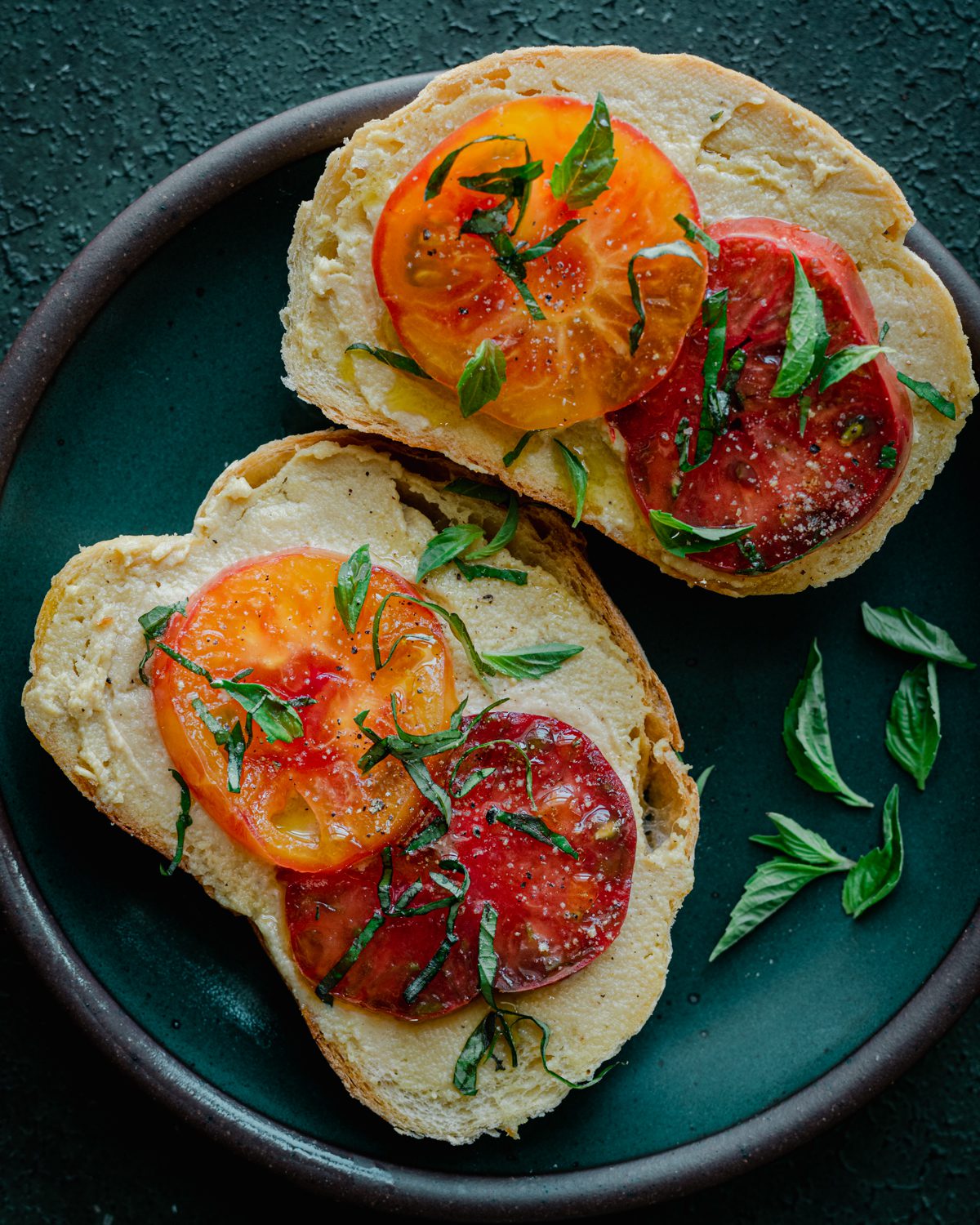
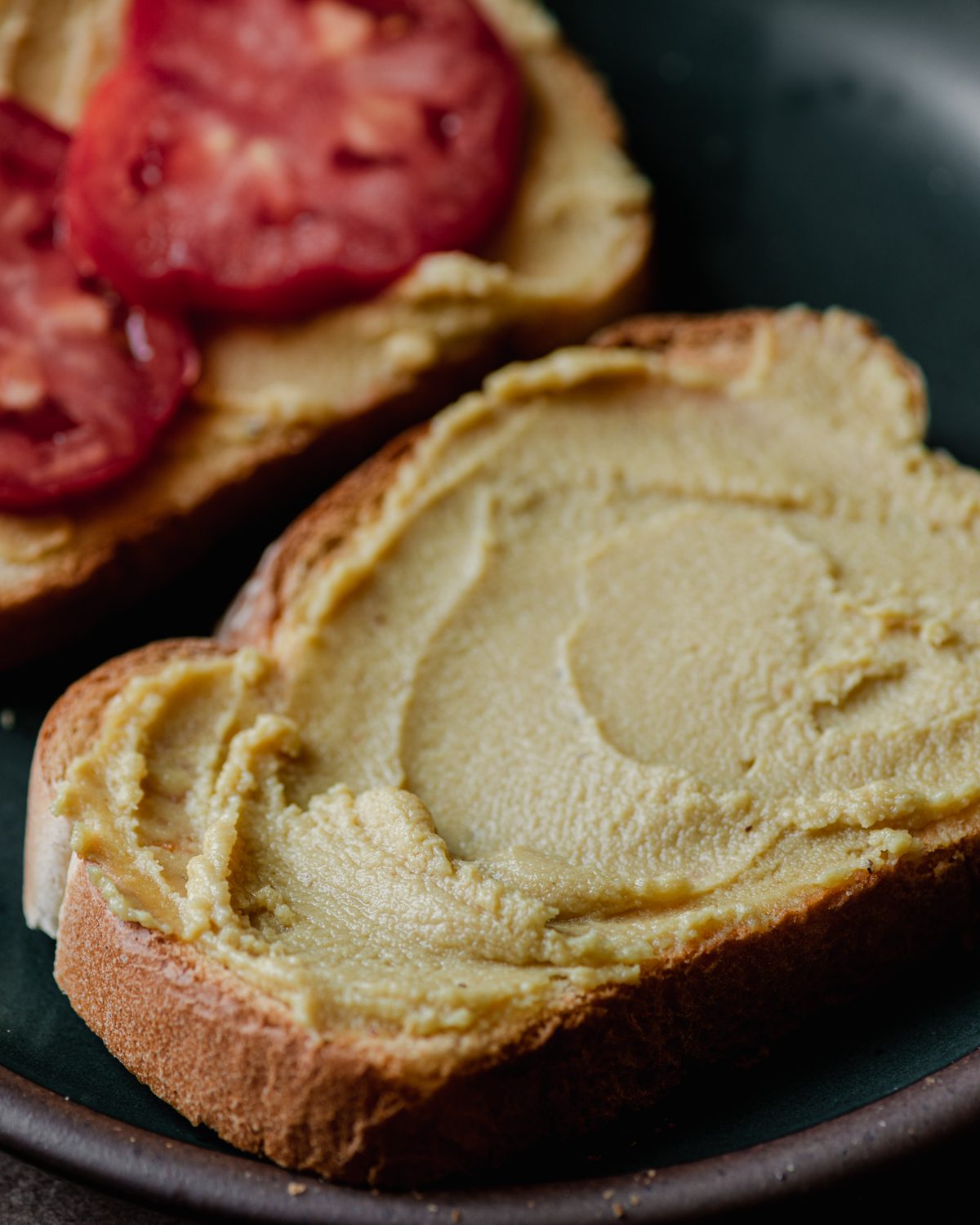
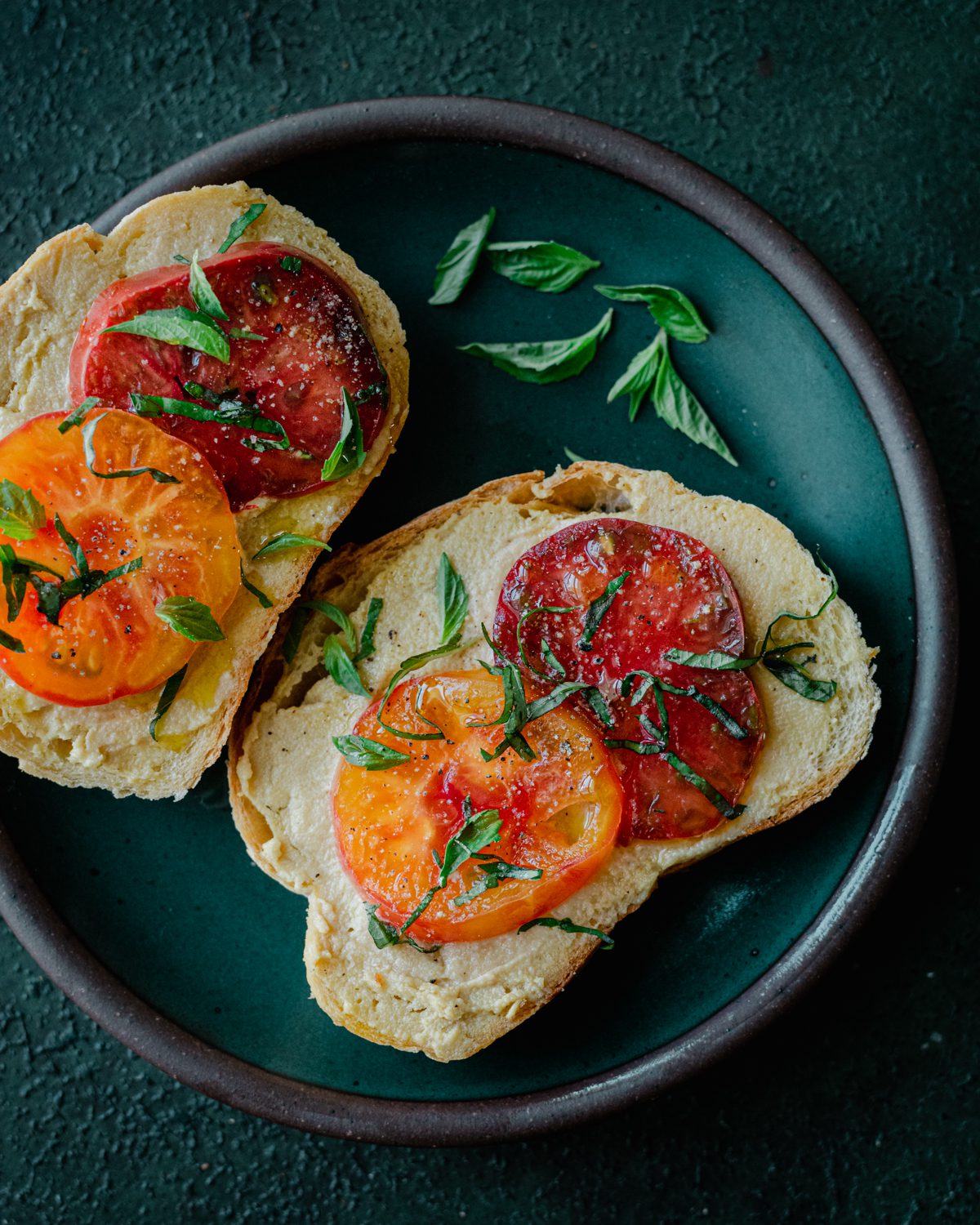
- Spread it onto bread! My current favorite is a good crusty bread, a thick layer of fermented cheese, and heirloom tomatoes sprinkled with sea salt and pepper.
- Add some to a bowl as a dip for crudités or spread for crackers.
- Serve as part of a vegan charcuterie or cheese board with crackers, olives, and fruit.
- Use as a sandwich spread instead of mayo.
- Spread onto a pita round or flatbread and add your favorite toppings and bake in the oven for an easy pizza!
If you love this fermented cashew cheese, please leave a rating and review with your feedback and tag me on Instagram with your remakes 🙂

Introducing
Big Vegan Flavor
Techniques and 150 recipes to master vegan cooking.
Fermented Cashew Cheese
Ingredients
- 1 1/2 cups (200g) raw cashews, soaked in water overnight or for 8 hours or boiled in water on the stovetop for 15 minutes
- 2 tablespoons apple cider vinegar with the “mother”, shake the bottle to evenly distribute
- 1 tablespoon freshly squeezed lemon juice
- 3 tablespoons water
- 1/3 cup 67g refined coconut oil
- 1/2 cup ~25-30g nutritional yeast
- 3/4 teaspoon garlic powder (do NOT use fresh garlic!)*
- 3/4 teaspoon onion powder
- 1 1/4 teaspoons sea salt, more as needed
Instructions
- Drain the soaked cashews and rinse. Wash your glass jar and lid with warm soapy water and dry well.
- Add the cashews to a high-powered blender, along with the vinegar, lemon juice, water, and oil. Blend on medium or high speed, scraping down the sides as you go, until relatively smooth and creamy. Add the nutritional yeast, garlic powder, onion powder, and salt, and blend again until well incorporated and completely smooth. If you have a large blender container, like a 64 ounce jar, this will take several minutes, as you will need to scrape down several times, as there is very little liquid.
- Pour the mixture into a glass jar with an airtight lid. Seal and let the jar ferment in a warm place, for a minimum of 16 hours, or up to 48 hours.**If it’s summer, your kitchen counter works great. You can also place it in the oven with just the lightbulb on (be sure to not preheat your oven during this time and don't place it right next to the light, as it might get a little too warm). You can also ferment it outside if you live in a warm but temperate climate (no direct exposure to sun; loosely wrap the jars in a dish towel).
- Once the cheese has fermented, give it a stir and then refrigerate for at least 4 hours to firm up.
- Once the cheese has solidified, spoon half of it onto a sheet of parchment paper. Use a spoon to push it into a log-like shape. Roll up the parchment paper and use your hands and the parchment paper itself to mold and shape the cheese into a log shape. Repeat with the other half of the cheese in a second log. Refrigerate the cheese logs for 2 hours, or more, to set. Store leftovers wrapped in parchment paper in the refrigerator for at least 2 weeks.
Video
Notes
Nutrition
Nutrition information is automatically calculated, so should only be used as an approximation.
 Love this? Leave a rating below!









Hi! Thank you for this amazing recipe :))
I would like to know if one could replace the cashews with other nuts or seeds, like sunflower seeds or walnuts?
Hi Clara, we have tried similar recipes using walnuts or almonds with not great results, unfortunately! There’s just something very unique about raw cashews, both their taste (neutral) and texture (super creamy when soaked) that make them perfect for cheeses like this. Walnuts taste like, well, walnuts and a bit bitter, and almonds don’t get as creamy (unless they are blanched and soaked for 24 hours or more, and even then, it’s not amazing. Sunflower seeds have a pretty distinctive taste that tends to overwhelm the flavors in vegan cheeses like this. I typically only use sunflower seeds in nut cheeses or creams when there are other strong flavors, like lots of spices.
I tried the recipe with almonds instead, more of a feta cheese flavour, but feta lovers might like it. Walnuts produced a tangy flavor. Sunflower cheese is definitely a more unique flavor , much different from cashew cheese flavors
Thanks for sharing your experience with us, Neil!
This cheese is so easy and very delicious! Mine doesn’t firm up so it’s more spreadable, which is great because I make salad dressing out it also. Thanks
Hi Stacy, we’re so happy you enjoyed it! Thanks for leaving a review 🙂
Hi there!
I want to make this and am wondering if using tue instant Pot yogurt setting is an option for the fermentation stage (in a jar with lid off in the pot, as with yogurt recipes)
Thanks!
Hi LT, we haven’t tried this in the RPL kitchen but we think it’s worth a shot since we have made homemade yogurt using the instant pot My guess is you’ll have great results!
hi
thanks for the recipe
I dont believe that it can really ferment in such an acidic environment (ACV and lemon juice). This recipe might work really well, but I highly doubt that it contains live bacteria, def not the lacto-fermented ones you get when ferment veggies with water and salt.
Hi James, lacto-fermentation does involve using salt and water to create an anaerobic environment, and there are alternative methods to achieve fermentation-like qualities in non-dairy cheeses, like this one! This recipe does not have the same process as lacto-fermented veggies, but it still provides a desirable flavor and texture change over time. Apple cider vinegar and lemon juice promote enzymatic activity, allowing the cashew cheese to develop tanginess and complexity over time.
Hello! Thanks for this recipe! What do you think about using cultured/fermented cashewmilk? What ingredients should I omit?
Hi Noelyn, we’ve never tried using fermented cashew milk at RPL, it sounds delicious! I’d substitute the fermented cashew milk for the apple cider vinegar and see how it goes. Have fun!
We all love cheese!❤️
What abt roasted garlic instead of raw fresh garlic can caused botulism?
What other substitute to refined coconut oil?
If no high speed blender what other method to use especially when you love cheese & the grid goes down?
I’ve used psyllium husk instead of coconut oil (3-4 tablespoons). Maybe chia seeds could also be used instead of oil?
Hi Odelia, we’re not entirely sure on the roasted garlic part, but we err on the side of not using it since we’re not food scientists and don’t know exactly the environment in which botulism thrives.
Unfortunately, there are no great substitutes for refined coconut oil in this recipe because coconut oil is solid at room temperature and is what helps this cheese solidify. Any other type of oil would make this more of a cheese spread than a solid cheese. You can try olive oil if you’d don’t mind a softer consistency.
As for blending, if you soak the cashews for 24 to 48 hours (changing the water every 12 to 24 hours), that will soften the cashews quite a bit. You can then use a food processor, though it may not still have the exact same smoothness.
HI, I feel so fortunate to have discovered your recipes. I’m a newbie at this and these recipes are easy, delicious and nutritious.
Is there a substitution for nutritional yeast?
Thank you.
Hi Marie, the nutritional yeast helps add a cheesy umami flavor to this recipe, so we highly recommend leaving it in. If not, you could add some miso paste or omit it completely.
I have modified mine to replace the coconut oil. I used a combo of almond butter and olive oil. It tastes amazing already and I haven’t fermented yet! I will let you guys know if it turns out.
Made this today. It hasn’t even fermented yet but still tastes leagues better than other cashew cheeses I’ve tried! I am making it for a niece who has recently learned she is lactose intolerant and the poor little thing really misses her cheese. She will love this!
Thank you so much for sharing, Jennifer! We can’t wait to hear what you think of the final product.
How do you know when the cheese has fermented? I was looking for bubbles, like I see with a sourdough starter. It’s been 24 hrs and no bubbles. The directions say to let it ferment for 16-48 hours, but I’m not sure how to tell it’s ready.
Thanks for any help you can give!
Hi Beth, thanks for reaching out! The bubbles aren’t as prominent as in sourdough and will depend on the active cultures in the brand of the apple cider vinegar as well as the temperature of where you ferment it. In our tests, we saw a good amount of aeration the longer the cheese fermented. As long as the cheese was fermented at the right temperature range, it’s okay if there aren’t many bubbles. The flavor will still develop nicely. After 48 hours, stick it in the fridge, it’ll still be so tasty!
Hi
I’ve had this for 48hrs but I don’t think it has fermented. Will it still be ok?
Smells yummy.
Thanks.
Sorry for the late response, Leanne!
Yes, it will still be okay and still taste great. It may not look fermented but will likely have fermented a little bit in flavor (tasting tangier and more developed than on day 1).
This cheese is tangy and delicious! Can’t believe how easy it is to make and how yummy!! Perfect for a charcuterie board.
I agree this fermented cashew cheese is an awesome addition to a vegan charcuterie board! Thanks for trying it out, Kaila! 🙂
Do you think adding a bit of Miso would work well to add flavor and also some live cultures to help kick-start fermentation? Thanks!
Hi Markus, we think you could absolutely add miso for a more developed savory flavor! Good luck!
I have to comment again! I tried about 10 different vegan cheese recepies on youtube and yours is still the absolute winner! I love the texture, the flavours and the salt and fattyness. I dont think it tastes like cheese at all but even better!! I am not vegan but wanted to reduce my dairy intake and when I compare them now, I always prefer the cashew cheese. Thanks so much for this amazing recepie.
Hi Saskia, we’re so happy you enjoyed this cashew cheese and we’re looking forward to you trying even more recipes! 🙂 Next time, would you mind leaving a rating alongside your review? Star ratings are big help to readers who are thinking of making the recipe.
Definitely going to try this recipe my favorite nut thanks for sharing.
Awesome Betty, enjoy!
Omg ! I made it . So so yummy, creamy , healthy and soft . It was really a simply . No more cheese from the store .
Thank you so much for sharing this.
Woohoo! We’re so happy you loved it, Palmeira!
My family favorite cheese !!
Awesome, Priti. Thanks for your comment and for taking the time to review!
Amazing! Was so delicious on fresh baked sourdough bread. Thanks for another great recipe.
Hi Sue, we’re so happy you enjoyed it! Thanks for leaving a review 🙂
I just made this recipe and it does taste amazing straight from the blender! But then I went to leave it on the counter for the fermenting process and started worrying about botulism. I quickly looked the process up online how to ferment foods and found so many scary warnings. I think I would like to skip the fermenting part, I wanted to find out if you have made this recipe without fermenting it?
Thanks so much!
Hi Michele, when we’re fermenting foods with acidic ingredients, we’re creating an environment where harmful bacteria, such as botulism, cannot survive, so if you follow the instructions as written, all should be good!
Make sure to use a sanitized glass jar and utensils to be safe. You can sanitize glass jars by using the method list in this article, or by using your dishwasher on the sanitize or highest setting. https://www.thespruceeats.com/how-to-sterilize-canning-jars-1327595
The only issue related to botulism you want to be mindful of is garlic. Do not substitute the garlic powder with fresh garlic, as fresh garlic should not be kept with oil at room temperature.
If you’re still nervous and would like to try skipping fermenting all together, this cheese is still good if you refrigerate it after blending.
Hi I made this according to instructions but the mixture was too dry in the blender to achieve the same results as you. I note in the video(which I only noticed after I made the cheese) you used melted coconut oil but in the photos you used the solid oil. I used the solid oil and as its winter here it didn’t liquify very much in the blender. Also it was very hard to get all scrapings off the blender. Perhaps a food processor would have been better. I’ll try that next time. The taste however is amazing. Just not a lot of it….
Hi Janet, sorry to hear that! The blender we use is a high-powered blender which should heat the mixture up after being blended for over a minute, which should completely liquify the coconut oil and pulverize the cashews.
The food processor would definitely leave the cashews a bit gritty/chunky so we actually don’t recommend that method.
To get the full blended cashew mixture out of the blender, we suggest using a silicone spatula to scrape up any hard to reach areas! Hope that helped, we hope you get the recipe just right next time!
I love this recipe!! I reminds me of flavored cream cheese. The texture is smooth and creamy. It is good on crackers and toast for breakfast. Thanks!
We appreciate your feedback and support, Collette. Thank you for leaving a review!