

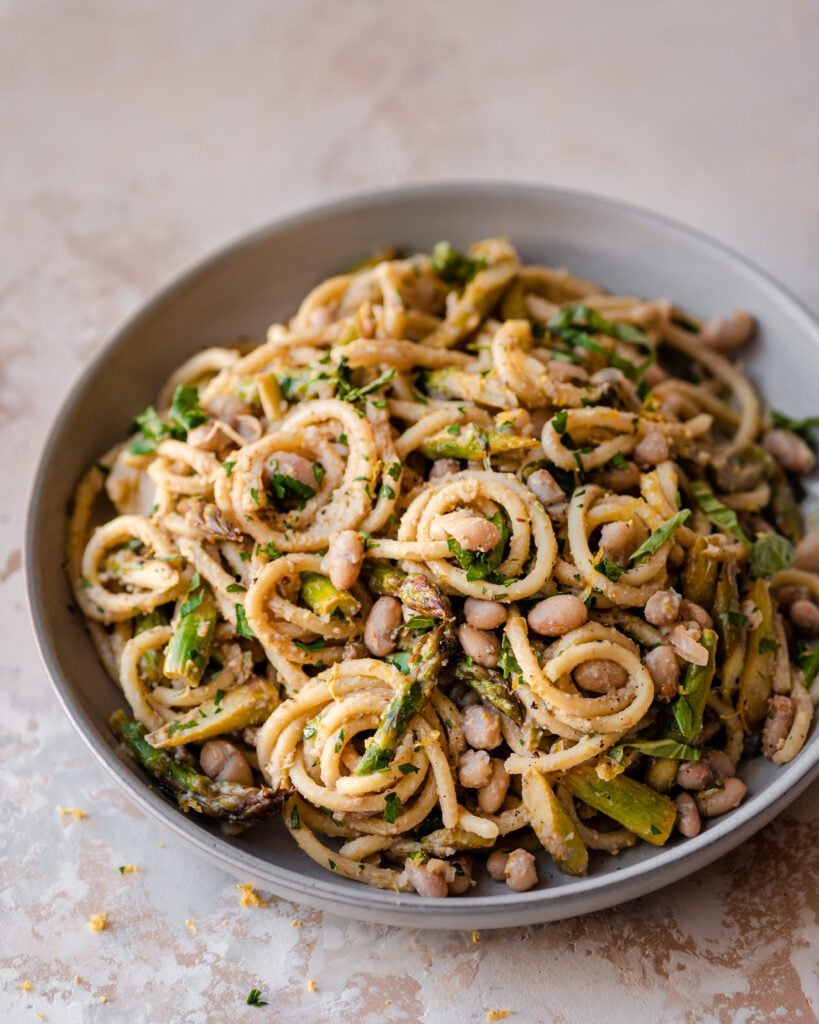
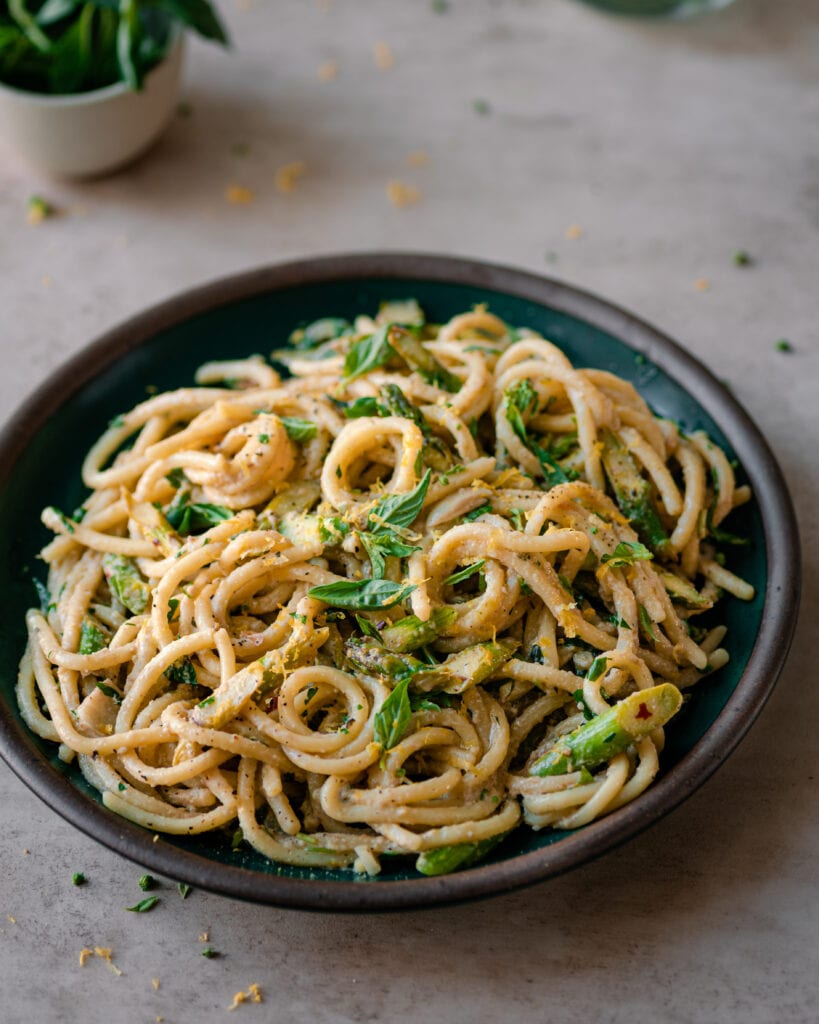
What better way to welcome spring with open arms than with this Lemon Asparagus Pasta? It’s bright, zingy, packed with delightful spring flavor and an amazing sauce.
The creamy sauce is made with a combination of olive oil, pasta water, and walnuts, creating a velvety texture that will leave you wanting more. And the best part? It’s naturally dairy-free and vegan!
As soon as asparagus comes into season, this lemon asparagus pasta recipe is a must-try. It’s fresh, flavorful, and perfect for any occasion. Whether you’re looking for a quick weeknight meal or a fancy dinner party dish, this recipe is sure to impress. So grab your apron and let’s get cooking!
In this post:
🎥 Watch the video

A few years back, I cooked this lemon asparagus pasta live on YouTube. With over 120K views, it was a huge hit with my community. I hope you love it just as much!
Why this recipe works
Perfect marriage of spring flavors.
Inspired by Evan Funke’s Spaghetti al Limone, this pasta has all the best flavors of spring.
With the juice and zest of two whole lemons, this pasta is delightfully lemony, while the addition of basil and parsley lends it an herbaceous note. Capers and olives add a zingy, briny flavor (but feel free to leave them out if you prefer), while the crushed walnuts provide a slight nuttiness.
A great way to cook asparagus
In-season asparagus doesn’t need much help to taste amazing. Here, asparagus gets lightly pan-fried in olive oil alongside shallots, garlic, and lemon zest. The result is a wonderful crisp-tender texture, which is a nice contrast with the creamy pasta.
Gourmet but easy
This is the kind of dish you might find at a fancy restaurant but it’s simple to make at home! With prep time included, you can get this dish on the table in 45 minutes.
Ingredient notes and substitutions
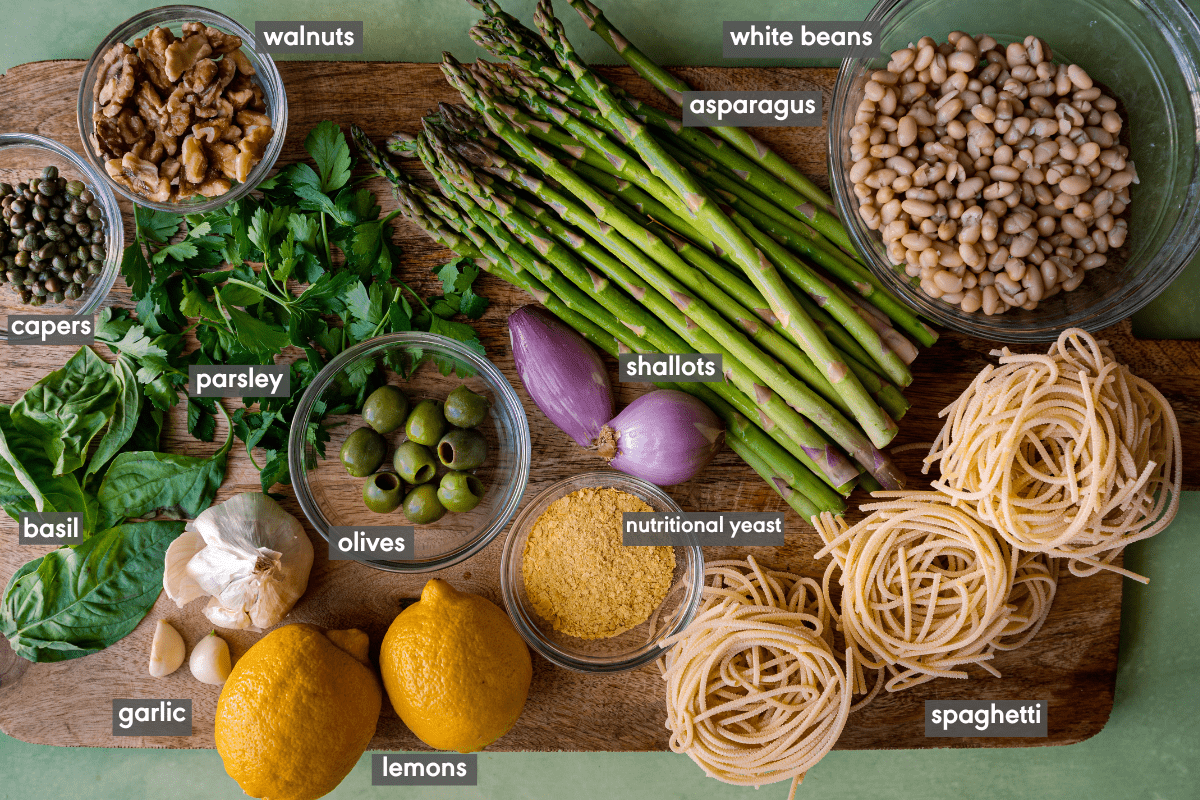
- Asparagus — One of my favorite spring vegetables and a natural fit here. Not in season? Swap in broccoli, brussels sprouts, green beans, or snap peas.
- Spaghetti — The classic choice, but any noodle or ribbon pasta works well (fettuccine, bucatini, linguine, etc.).
- Walnuts — A fantastic plant-based source of umami. Finely ground, they cling to the olive oil sauce the way parmesan cheese does, building a savory backbone alongside the nutritional yeast.
- Olives and capers (optional) — I know olives can be divisive, but Castelvetrano olives are very mild in flavor, so they’re worth a try. Feel free to leave them out if they’re not your thing.
- Extra virgin olive oil — Use a good-quality one since it’s the primary ingredient in the sauce. Good quality doesn’t need to be expensive — I used the California Olive Ranch extra virgin olive oil when I made this.
- White beans (optional) — They add serious heft and protein to make this a complete meal. Navy beans work as a substitute.
Step-by-step instructions
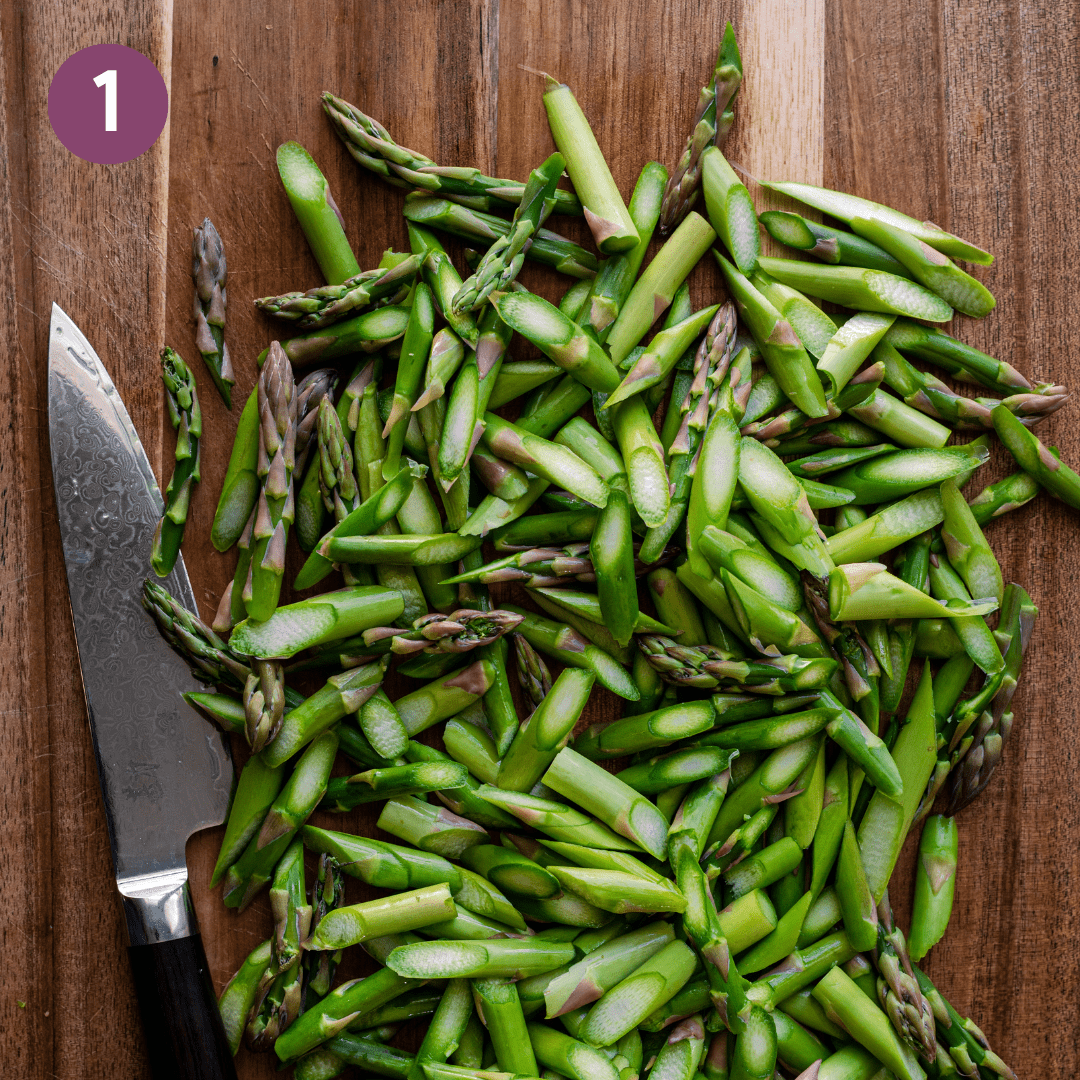
Trim the asparagus and discard the tough woody ends. Slice each asparagus spear deeply on the diagonal into pieces (about 1/2 to 1 inch).
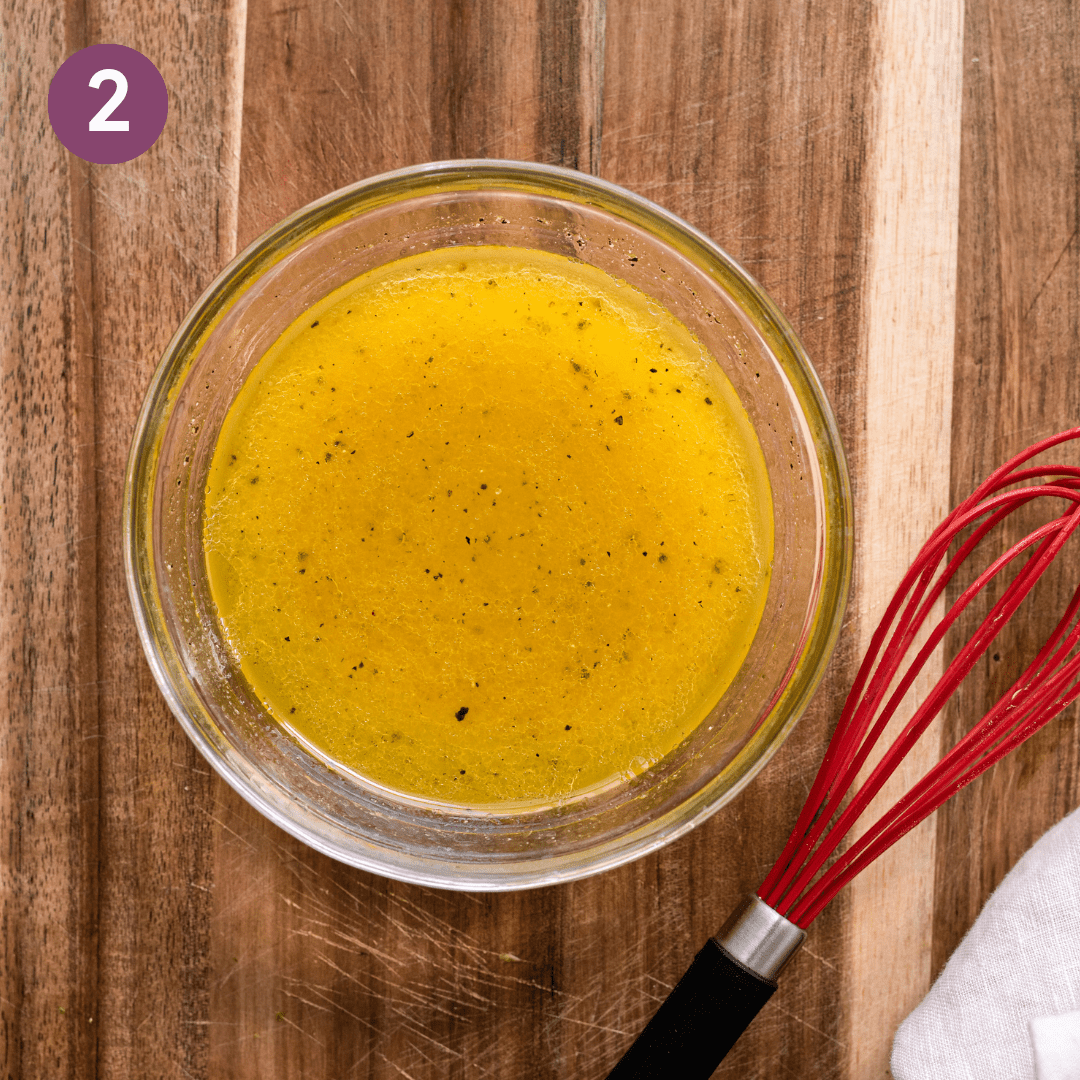
Make the Lemon Sauce. Juice the two lemons into a jar. Add the Dijon mustard, extra virgin olive oil, and salt/pepper. Shake vigorously until emulsified. Or, whisk all the ingredients together in a bowl.
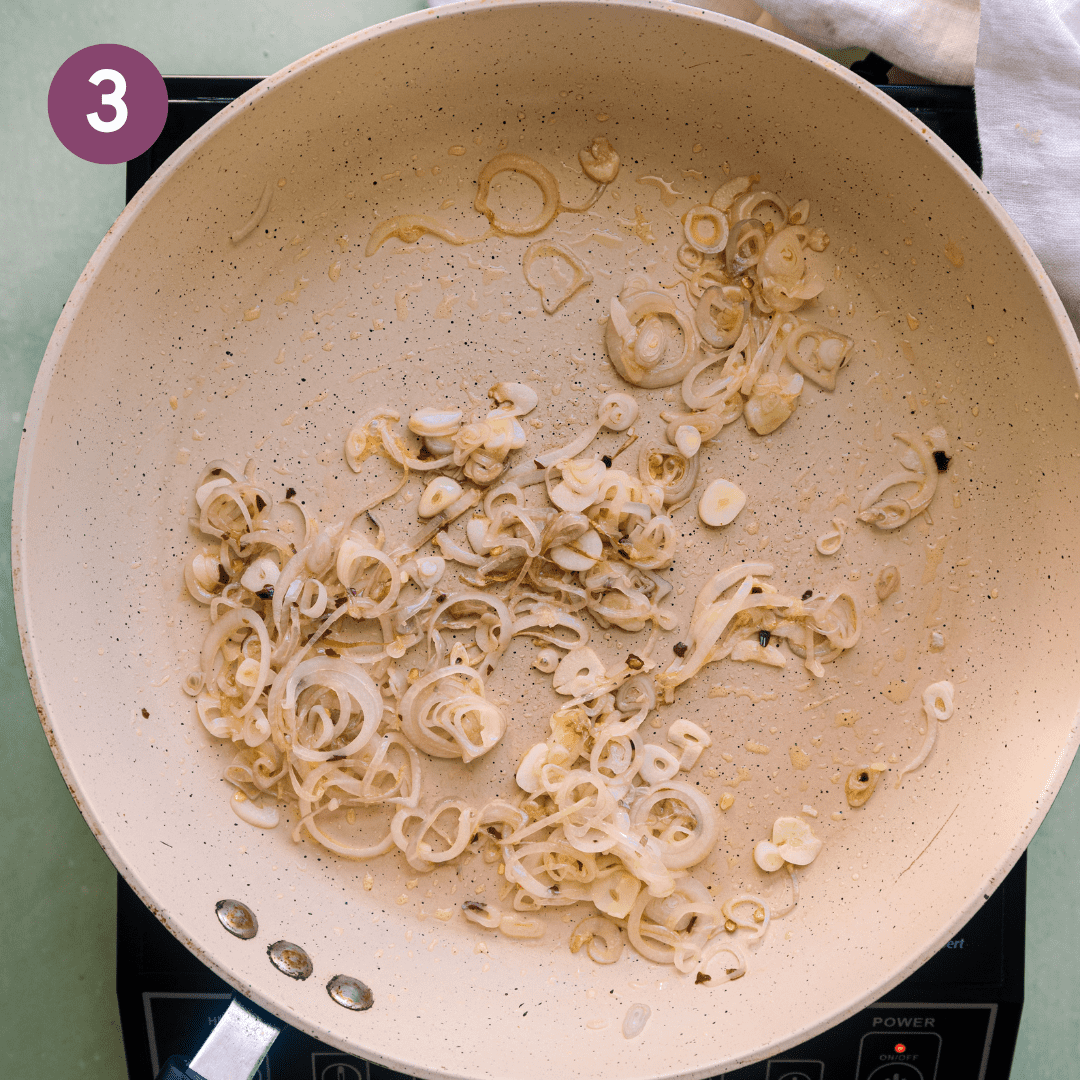
Heat a bit of extra virgin olive oil in a 12-inch sauté pan (or Dutch oven). Cook the sliced shallots and garlic cloves until golden. Add the red pepper flakes (if using) for 30 seconds.
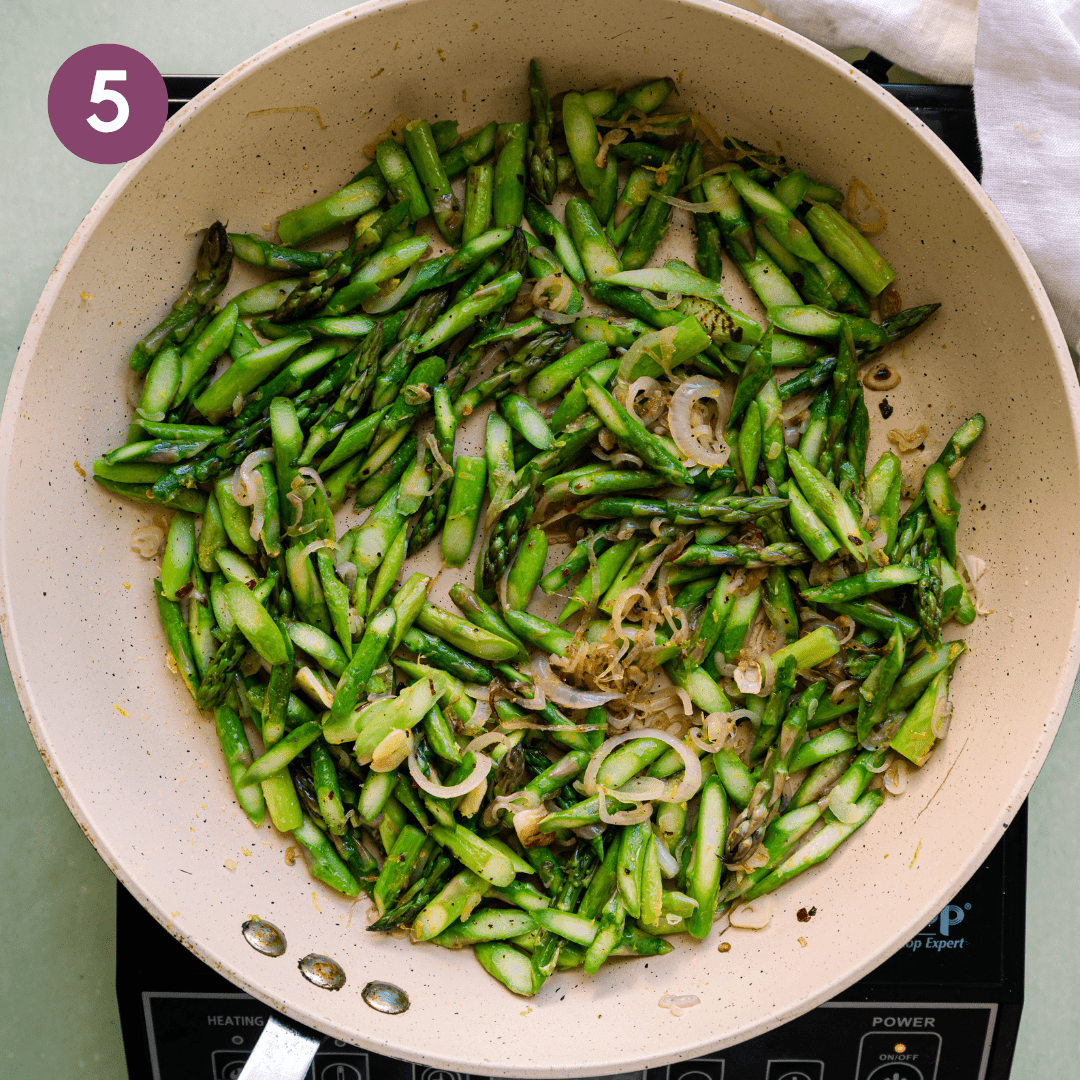
Add the sliced asparagus and half of the lemon zest (from one lemon).
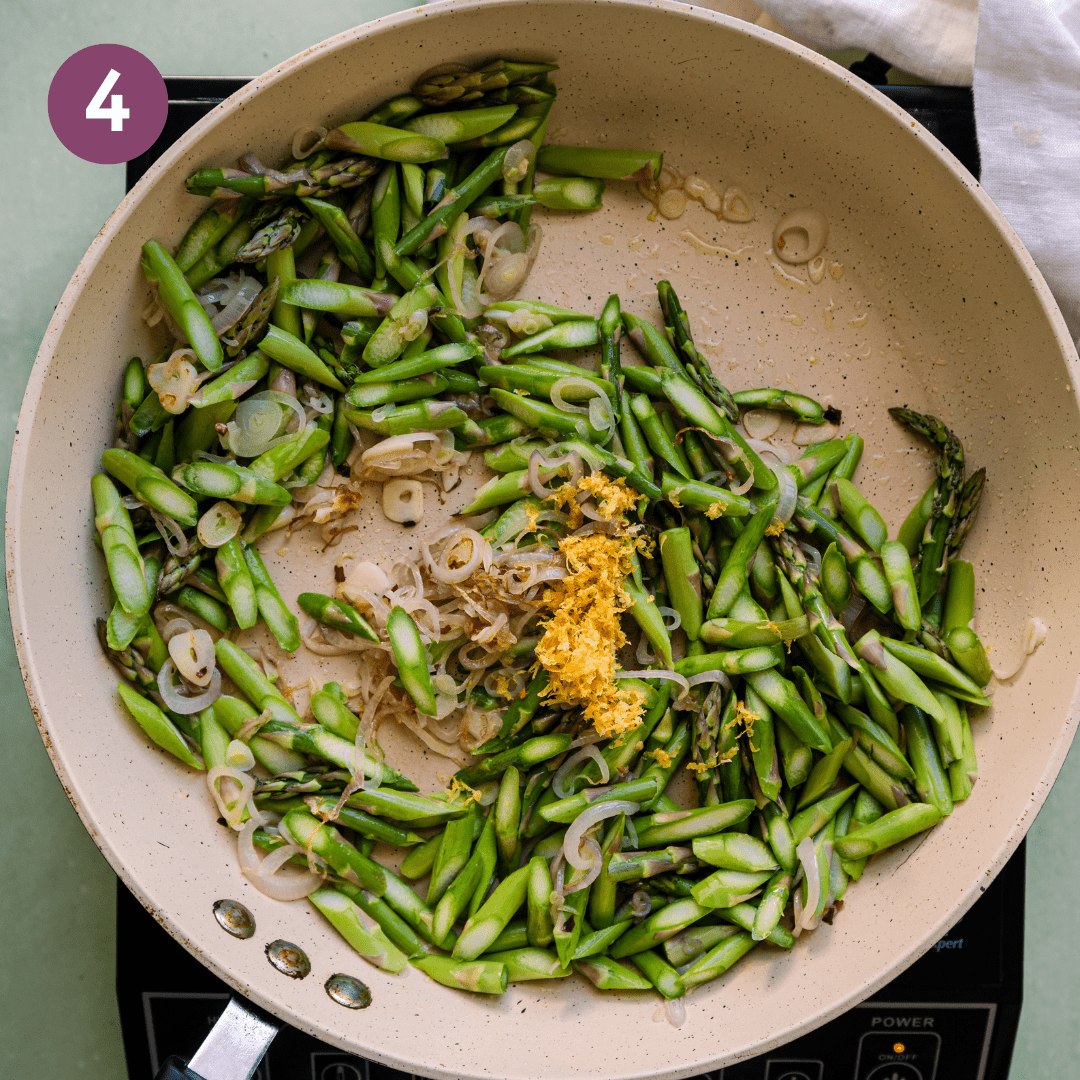
Cook for 3 minutes, until asparagus is crisp-tender. Take off the heat and let sit until the pasta is ready.
Cook the pasta in a pot of boiling salted water. While cooking, prepare the rest of the ingredients. Chop the basil and parsley, slice the olives, crush the walnuts, rinse and drain the white beans (if using).
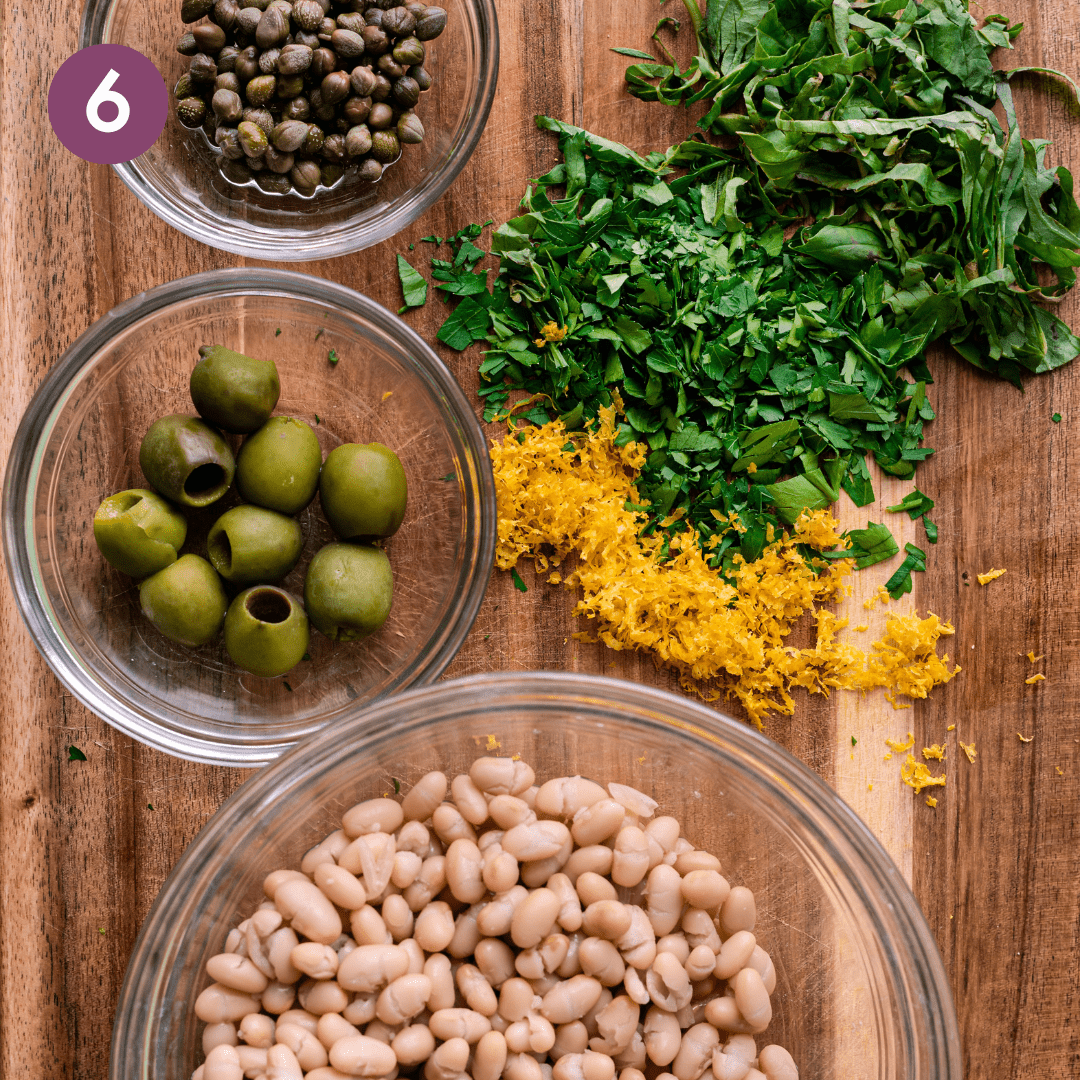
Once the pasta is just al dente, reserve up to 1 cup of the cooking water, then drain (do not rinse!). Transfer the hot cooked pasta and Lemon Sauce to the pan with the asparagus.
Add the crushed walnuts and nutritional yeast.
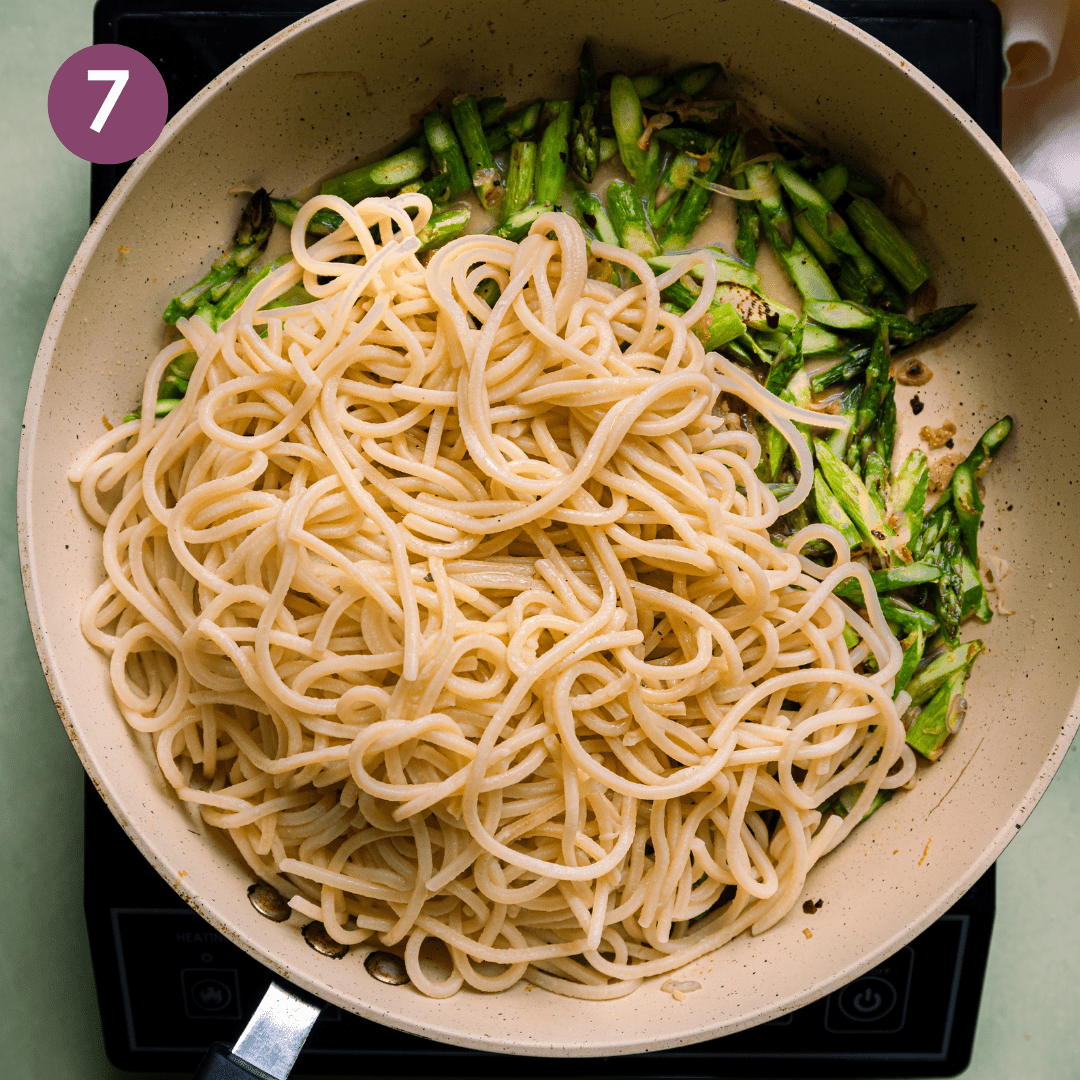
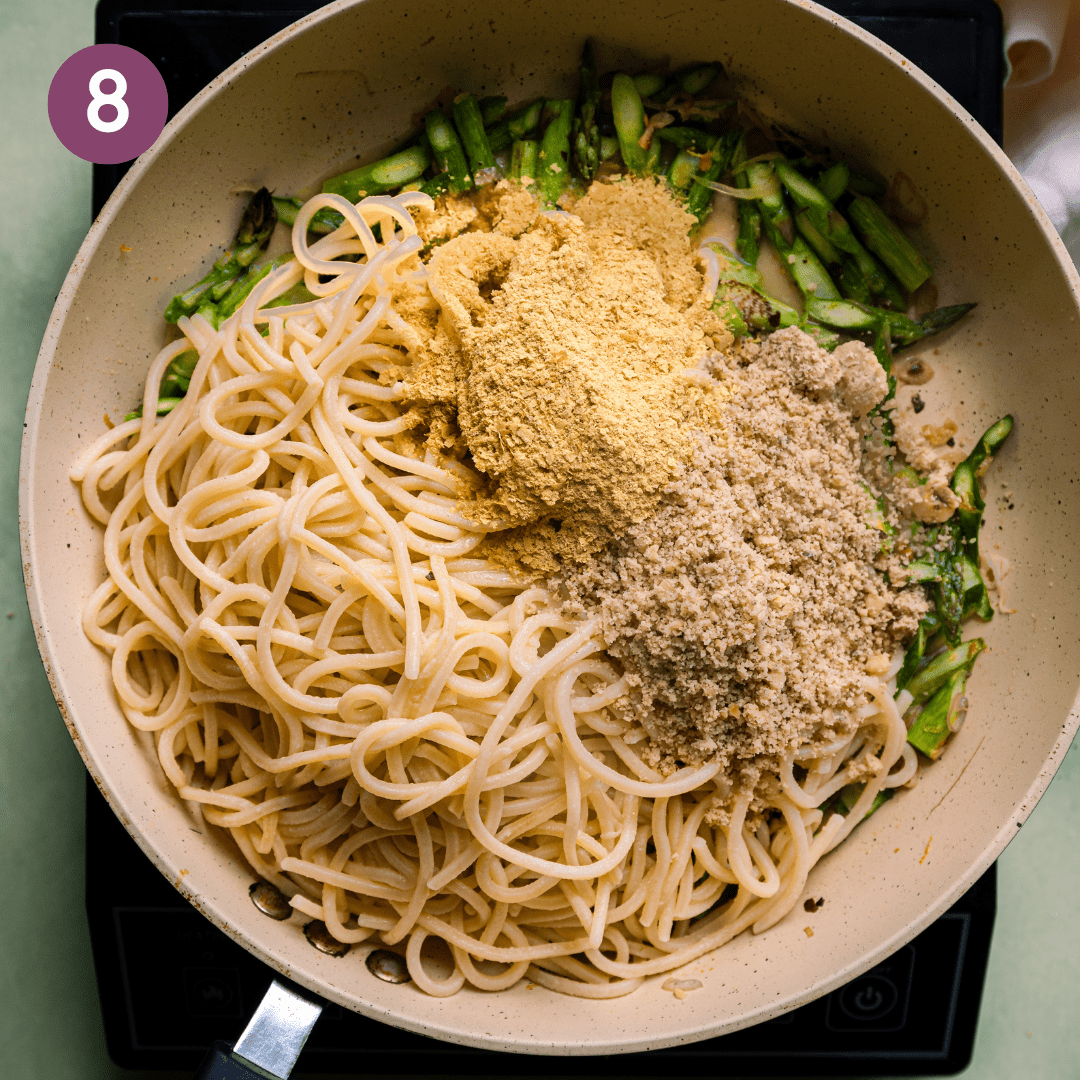
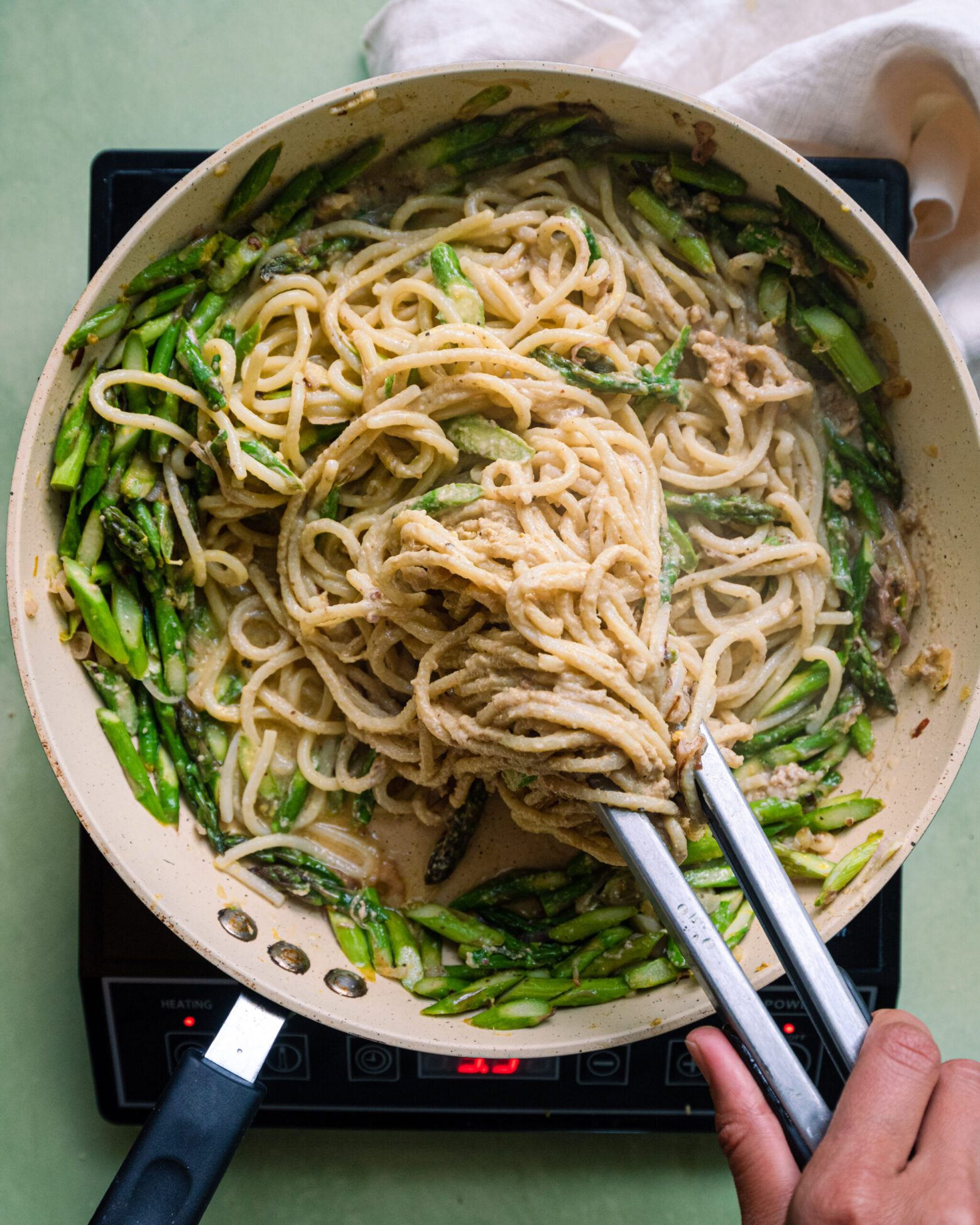
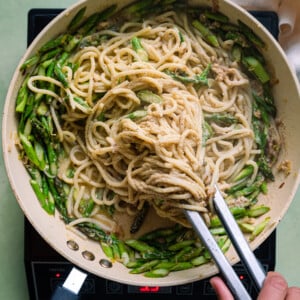
Pour in 1/2 cup (120 mL) of pasta water and return the pan to medium-high heat. Use tongs to toss the mixture quickly and vigorously, until emulsified. Add more pasta water as needed.
Add the remaining ingredients – basil, parsley, capers and olives if using, remaining lemon zest (from one lemon), and white beans (if using).
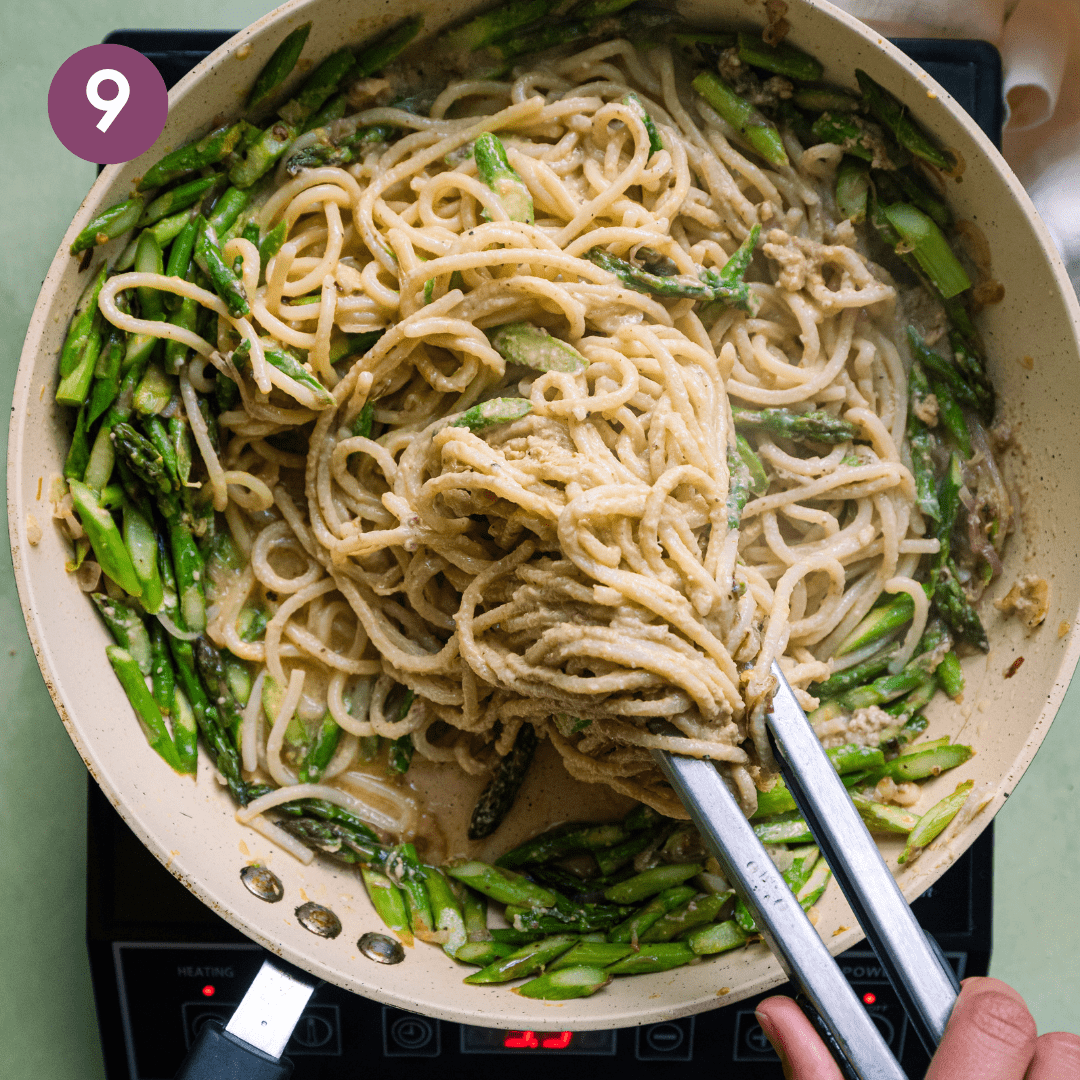
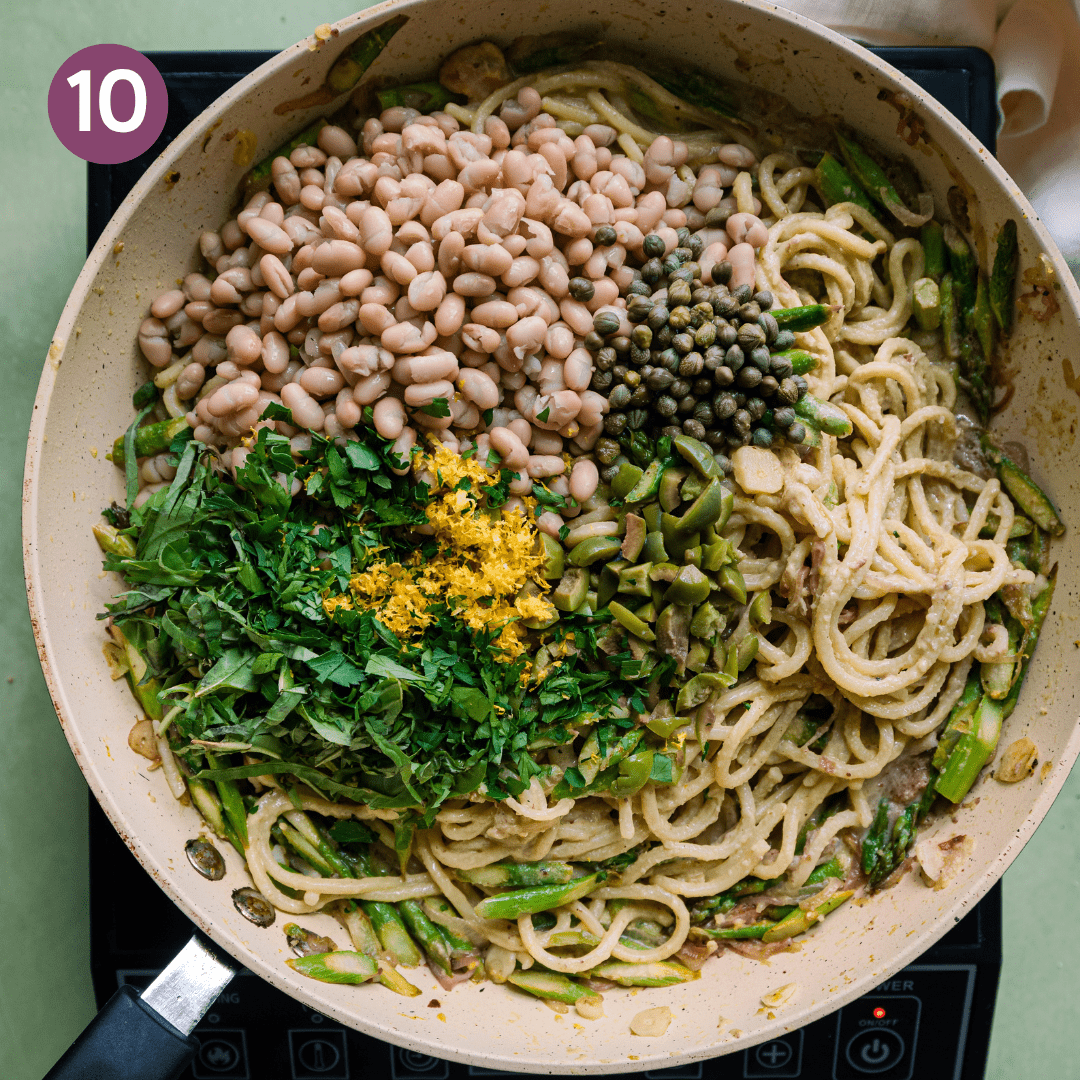
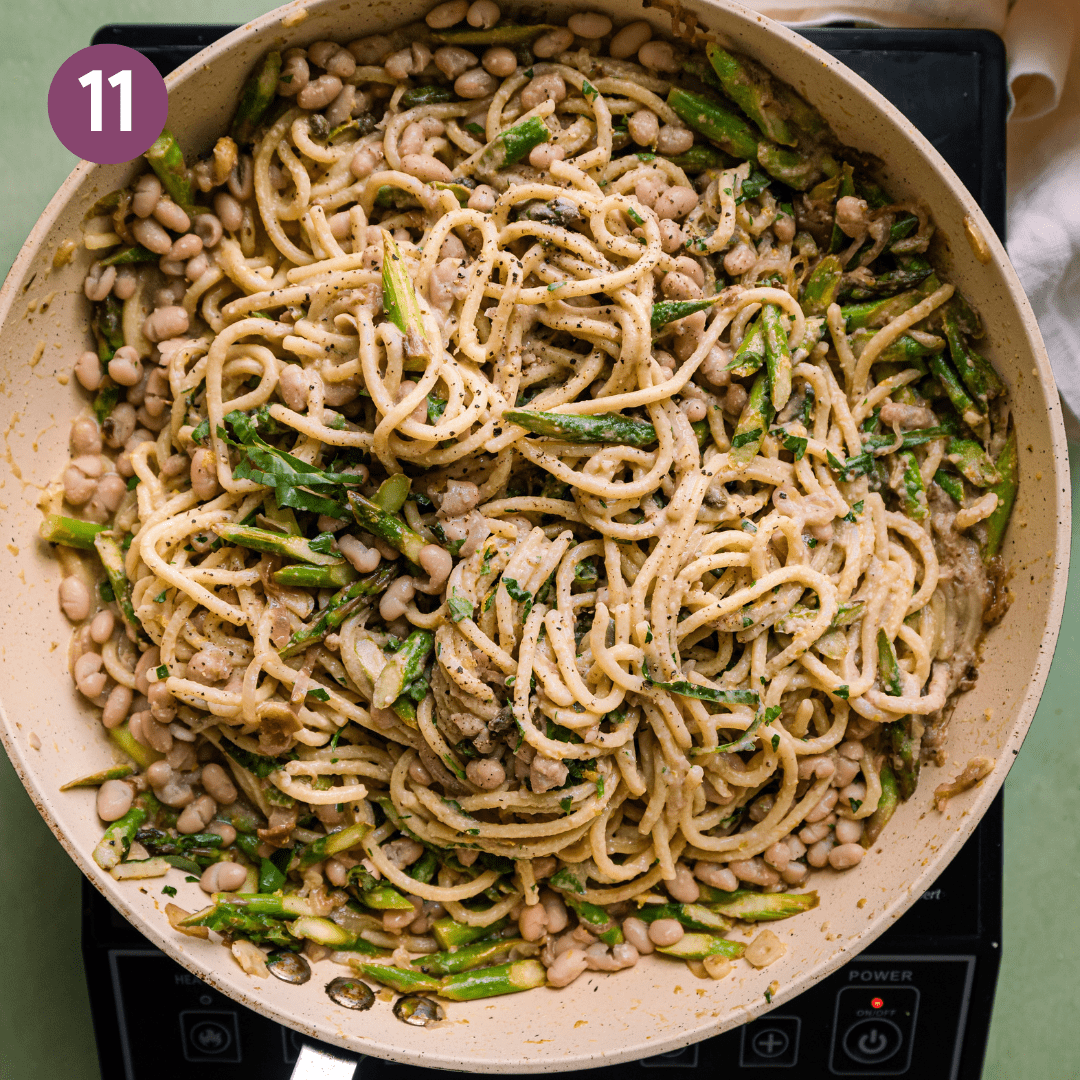
Toss again to combine and briefly cook. Serve warm.
Tips for making this recipe
Use less water than you’d think.
Without any cream or cheese, we need a very starchy pasta water to bind our sauce together.
To achieve this, use a bit less water to cook the pasta than you might typically use. For 10 to 12 ounces (285-340g) of pasta, that translates to about 9 cups (~2.1 liters/quarts) of water.
And of course generously salt the pasta water – about 2 to 3 teaspoons kosher salt (use less if using table salt or sea salt) to ensure the pasta itself has flavor from within.
Cook the pasta until just al dente.
Aim to remove the pasta from the water as soon as it’s al dente, or even a minute beforehand, as the pasta is going to continue to cook in the lemon sauce for a few minutes. Otherwise, the texture might be a bit overdone.
For the sauciest texture, enjoy this pasta shortly after making it. That’s not to say the leftovers aren’t tasty. They are. But this dish is the most luscious when eaten on day one. The color also starts to fade after a few hours.
Choose the right pan.
When cooking the shallots, garlic, and asparagus, use a large 12-inch sauté pan with relatively deep sides, or a Dutch oven. All of the pasta and mix-ins will be added into this pan at the end, so it helps to have a large enough pan to avoid any spills or mess.
Make it quicker with the right tools.
While you can definitely use a sharp knife to slice the shallots and walnuts, you’ll save some time by using (1) a mandoline for the shallots (and garlic, if the cloves are on the large side and you have a handheld mandoline slicer like this); and (2) a spice grinder to pulse the walnuts a few times until mostly crushed.
Frequently Asked Questions
Most of us have been taught that to cut asparagus, you bend it until it snaps. And the bottom portion that snaps off is too woody and tough to eat. WRONG!
Instead, use your eyes to see where the asparagus look like they’re starting to get tough, about an inch or two up the ends. Then, you can slice a big batch of them in one fell swoop. This is the technique that the fine people over at Serious Eats also recommend.
Or, if you want to be more precise, you can slice each asparagus spear for this recipe. And once your knife starts to feel some tension, you know that this particular spear has hit its tough end. Watch this video to see how I cut my asparagus for this recipe.
You can, with a few caveats.
First, gluten-free pasta tends to get mushy, so you’ll really need to ensure you stop cooking the pasta once it’s just al dente.
And second, gluten-free pasta tends to be more absorbent, so you may want to add more pasta water (up to 1 full cup) when you coat the pasta.
If you add the white beans to this recipe, this is a complete meal on its own (perhaps only more complete with a crisp glass of white wine).
If you omit the beans, it’s still quite satisfying, but you can serve the pasta along with a salad (a Caesar salad or simple mixed greens work well). Or on the side of blanched or roasted vegetables, such as broccolini/broccoli. For a protein option, a simple white bean salad works great (mix cooked or canned/drained/rinsed white beans with a bit of good-quality extra virgin olive oil, lemon juice, salt, and pepper).
Store in an airtight container in the fridge for 3 to 4 days. The pasta is best shortly after making, when the sauce is creamy and satiny. The color also starts to fade after a few hours.
I actually prefer leftovers cold over warmed up. If you want to reheat, heat the leftovers in a skillet over medium-low heat. Add a splash of water as needed to thin and toss frequently. If needed, perk the pasta up with some fresh lemon zest and/or juice.
In the mood for even more pasta? I’ve rounded up 30 of the best vegan pasta recipes from around the web! There are so many great choices, though I’m partial to the Lentil Bolognese during winter and the Vegan Pasta Salad in summer. Check it out!
If you love this Lemon Asparagus Pasta, please be sure to leave a rating and review below! It’s always much appreciated 🙂 And tag me on Instagram – I love seeing your remakes!

Introducing
Big Vegan Flavor
Techniques and 150 recipes to master vegan cooking.
Lemon Asparagus Pasta
Equipment
- Tongs
Ingredients
- 10 ounces (285g) of spaghetti, bucatini, linguine, or fettuccine (see Note 1)
- 2 medium-large lemons (see Note 2)
- 6 1/2 tablespoons extra virgin olive oil, divided
- Kosher salt and freshly cracked black pepper
- 1/2 teaspoon Dijon mustard
- 2 medium shallots, thinly sliced
- 4 garlic cloves, thinly sliced
- ¼ teaspoon red pepper flakes (optional)
- 1 bunch of asparagus (about 14 ounces), sliced thinly on a bias into 1-inch (2.5 cm) pieces
- ½ cup (60g) toasted walnuts, finely crushed (see Note 3)
- 3 tablespoons nutritional yeast
- ½ cup (8g) Italian flat-leaf parsley, (leaves and tender stems), chopped
- ½ cup (8g) fresh basil leaves, slivered
- 2 tablespoons capers, drained (optional)
- ¼ cup (30g) Castelvetrano olives, sliced in half (7 to 9 olives) (optional, see Note 4)
- 1 (15-ounce/425g) can of navy beans or other white beans rinsed and drained (optional, for a main meal)
Instructions
- Bring a large pot of water to a boil for the pasta.Tip: Don’t use too much water, otherwise the pasta water won’t be very starchy. I recommend about 9 cups (~2.1 L) of water for 10 ounces of pasta. Once the water is nearly boiling, add a generous amount of salt (~1 TBSP kosher salt). Add the pasta and cook according to the package directions, stirring occasionally, until just al dente. Drain the pasta, reserving 1 cup (240 mL) of the pasta water.
- Zest the lemons and divide the zest into two piles. Set aside.
- Meanwhile, make the Lemon Sauce. In a mason jar, combine 5 tablespoons (75 mL) of the lemon juice, 5 tablespoons (70g) of the extra virgin olive oil, 1/2 teaspoon Dijon mustard, 1 teaspoon kosher salt, and black pepper to taste. Shake until emulsified.No jar? Just whisk all the ingredients in a bowl until emulsified.
- Cook the asparagus. Meanwhile, heat 1 ½ tablespoons olive oil in a 12-inch sauté pan or Dutch oven over medium heat. Once warmed, add the shallots and garlic. Cook for 2 to 3 minutes, until the garlic is just golden, stirring frequently to prevent burning. Add the red pepper flakes (if using) and cook for 30 seconds. Add the asparagus and one half of the lemon zest. Season with a few pinches of salt and pepper. Cook for 3 minutes until the asparagus is crisp-tender. Remove from heat and set the pan aside until the pasta is done.
- Add the hot cooked pasta and the Lemon Sauce to the asparagus mixture, along with the crushed walnuts and nutritional yeast. Add ½ cup (120 mL) of pasta water. Return the pan to medium-high heat. Use tongs to vigorously toss everything together, shaking the pan as you go, adding more pasta water as needed, until the sauce is emulsified and clings to the pasta.
- Add the remaining half of the lemon zest, basil, parsley, and the capers, olives, and white beans, if using. Toss again and briefly cook for 30 to. 60 seconds. Sprinkle with a pinch or two of salt and pepper and finish with a nice drizzle of olive oil. Serve immediately.
Video
Notes
- You can use up to 12 ounces (340g) of pasta but it’s sauciest with 10 ounces (285g).
- The lemons should feel heavy for their weight. If you can’t find lemons that are medium-large, buy an extra third lemon to ensure you get enough zest and juice.
- To toast raw walnuts, add to a dry skillet over medium heat and cook, stirring occasionally, until a bit browned and fragrant, 4 to 5 minutes. Or roast a large batch on a sheet pan in the oven at 350ºF/175ºC for 8 to 10 minutes, tossing halfway. You can also use raw walnuts, but you’ll get more flavor from toasted. To crush walnuts, the quickest way is to add to a spice grinder and pulse several times. Otherwise, very finely mince with a knife.
- If your olives are already pitted, slice them in half. If they have the pits inside, here’s how to remove the pits.
Nutrition
Nutrition information is automatically calculated, so should only be used as an approximation.
 Love this? Leave a rating below!









This recipe has turned my worldview upside down! I didn’t like lemon that much in any food until i tried this recipe. And it is a wonderful way to use up asparagus as well, which is a beloved vegetable hier in Germany.
So the recipe goes pretty fast and tastes bombastic! Do not skip olives and capers – they are those fine details, which round up the flavour.
Yes, have you tried it with weisse spargel? I am curious.
Somehow my pasta turned a gray color, but it tasted way better than it looked.
A delicious & healthy dish. My sister and I loved it 🥰
My family loved this pasta! I subbed almonds for walnuts to accommodate my daughter’s nut allergy, but the pasta still had that rich nutty flavor the recipe called for. This pasta was a great way to introduce some new tastes to my toddler in the form of olives and capers, and I’m pleased to report she enjoyed it all!
Wonderful summer flavors. We loved it and will be making it again. Thank you!
I loved this so much. Yield was enough for 6 meals and each element really came through.
This pasta is soooooo good omg. The toasted walnuts and the capers…chef’s kiss! I love being in the #RPLRecipeClub!
My favorite thing about this pasta is all the stuff you add at the end: the basil, the parsley, more lemon zest, olives and capers! It’s so zingy, but rich at the same time, it’s just really well balanced, very flavor-packed! I used great northern beans instead of navy beans cause that’s what I could find and the bundle of asparagus I bought was a couple ounces shy of what’s recommended in the recipe, but it still came out delicious!!
My boyfriend and I loved this recipe! We weren’t sure how the beans and lemon sauce would taste in a pasta dish, but we were pleasantly surprised. I didn’t use olives because I didn’t have them and used Cannelloni beans.
Delicious and easy.
My boyfriend devoured it 😊
Incredible flavors, the toasted walnut sings in this and even though you only add a little, the Dijon adds a great layer of flavor, as does the nutritional yeast. We used bucatini and I highly recommend a thick noodle to sop up the tasty lemon sauce.
Turned out great! Super lemony and light, perfect spring dinner!
This was delicious, so many spring flavors
Very flavorful! Lots of little steps that made it take a bit of time to make, so not a quick dinner. The flavor was worth it. I used Kalamata olives because I didn’t want to run to the store just for olives. Just loved all of the bold flavors.
Fantastic!!! The whole family loved it!!! Thanks for the excellent recipe!
Absolutely delicious! Lemon and asparagus are a match made in heaven.
Made this last night with asparagus fresh from the farmer’s market and it was amazing! I made it exactly as written and it was perfection . Thanks for another incredible recipe !
I love this recipe. It’s a staple in our house now!
SOOOOOO GOOD!! I subbed out the walnuts for raw unsalted sunflower seeds because I have a nut allergy, added 2 tablespoons of nutritional yeast (I’m obsessed), and used kalamata olives instead (just what I had in my kitchen). It was perfect and still super creamy! I pretty much ate the whole batch in one day haha!
This was such a tasty dish! Perfect for spring time and easily adaptable depending on what vegetables you have. 10/10, tastes like restaurant quality!