


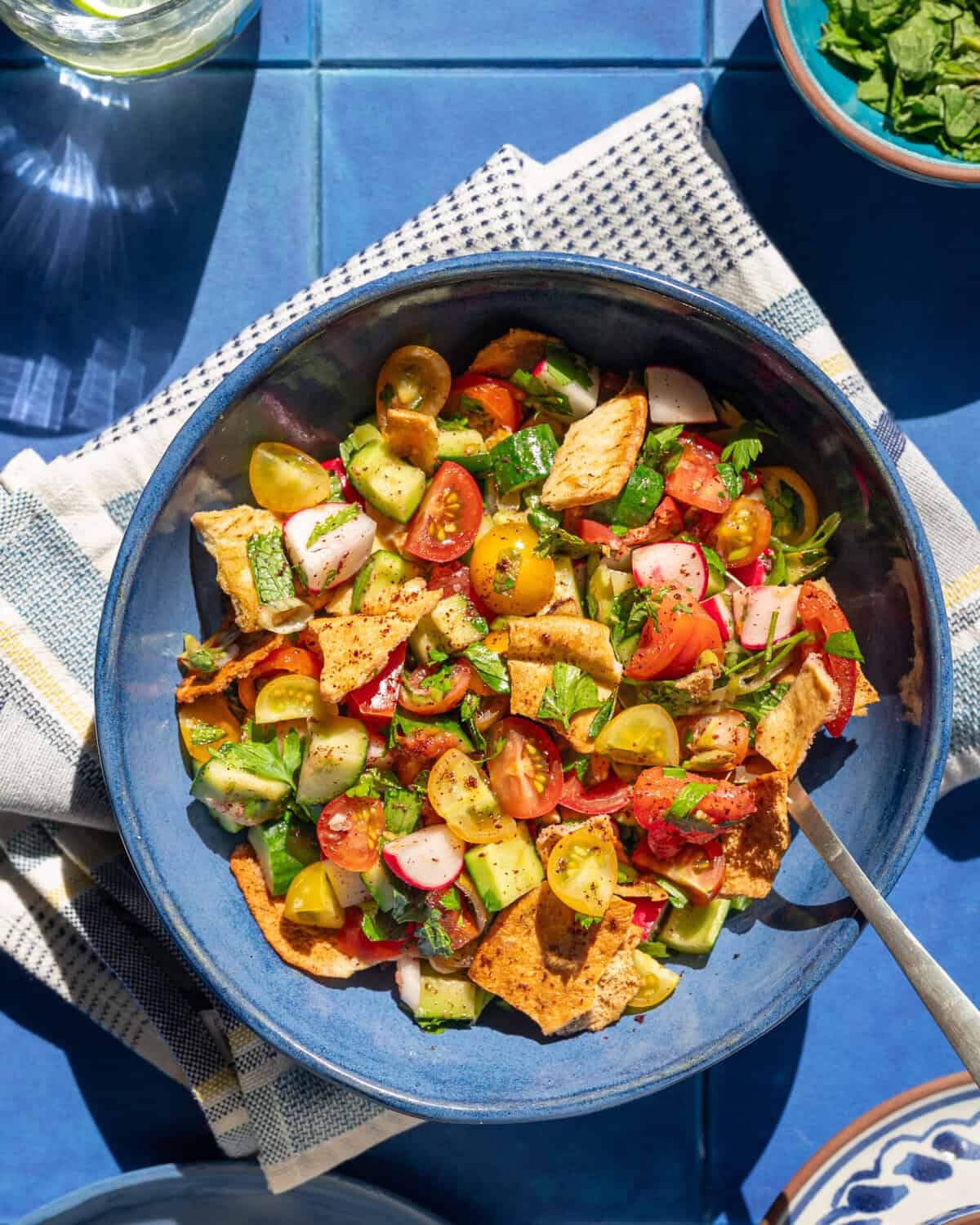
In a world full of carelessly thrown-together (read: underwhelming) salads, fattoush is a vibrant breath of fresh air (read: a salad you’ll be excited to make and even crave).
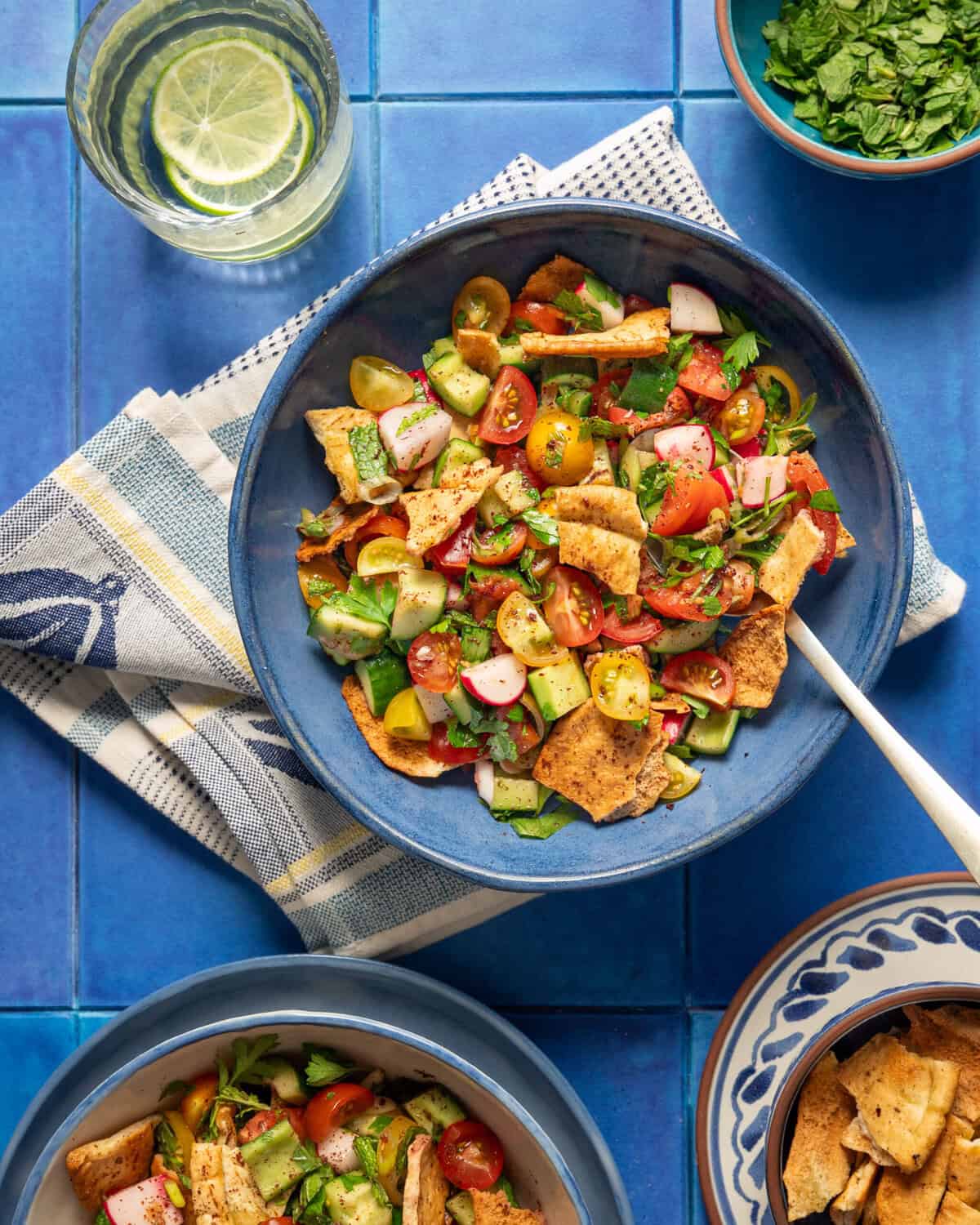
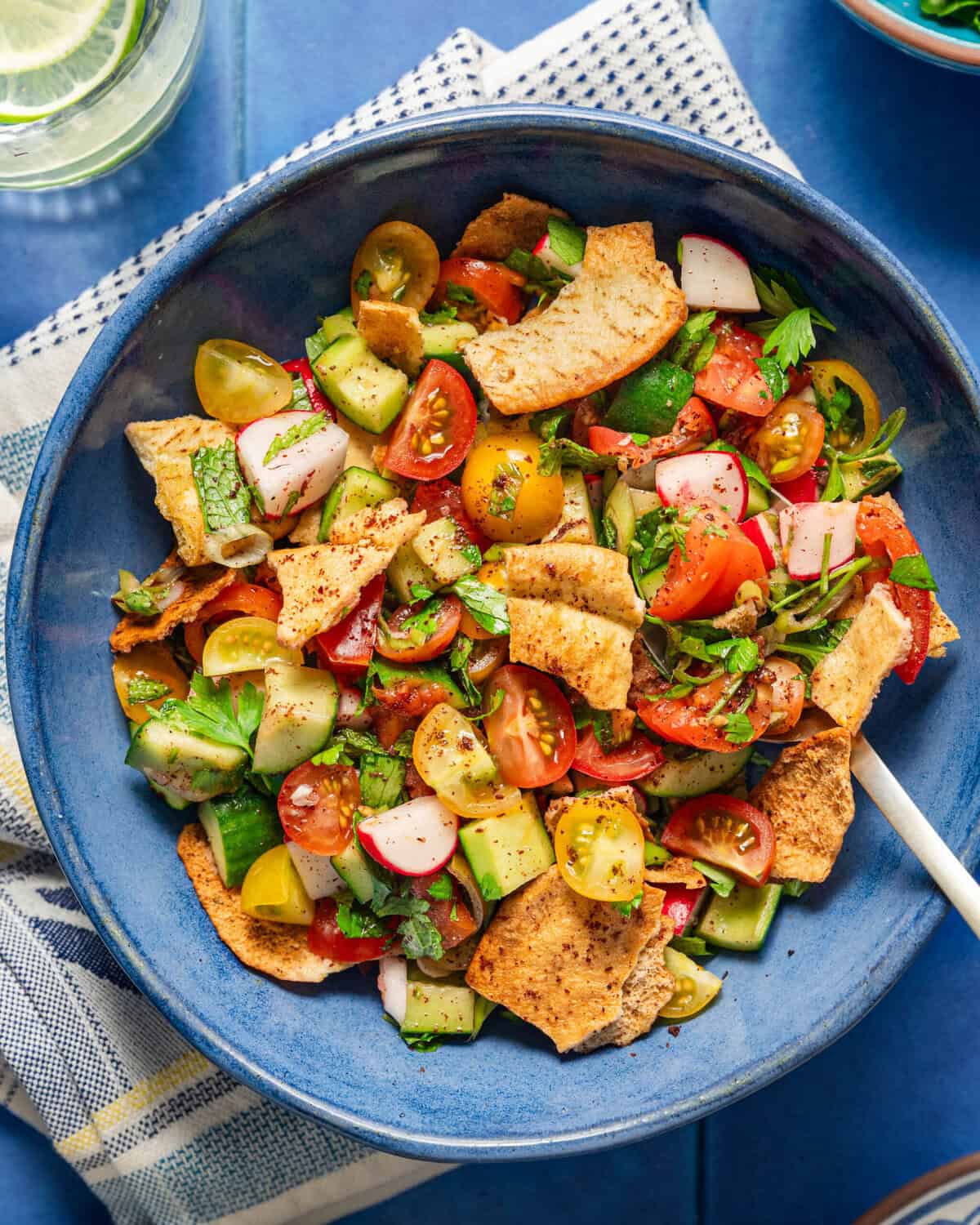
A zesty and bright sumac dressing coats a medley of crunchy veggies and fresh herbs, but the pièce de résistance? A scatter of za’atar pita chips, oven-baked till golden and oh so crunchy.
Enjoy this fresh and light yet flavorful salad any time of year. But have it in summer when produce is at its peak, and you’ll understand why fattoush is one of my favorite salads of all time.
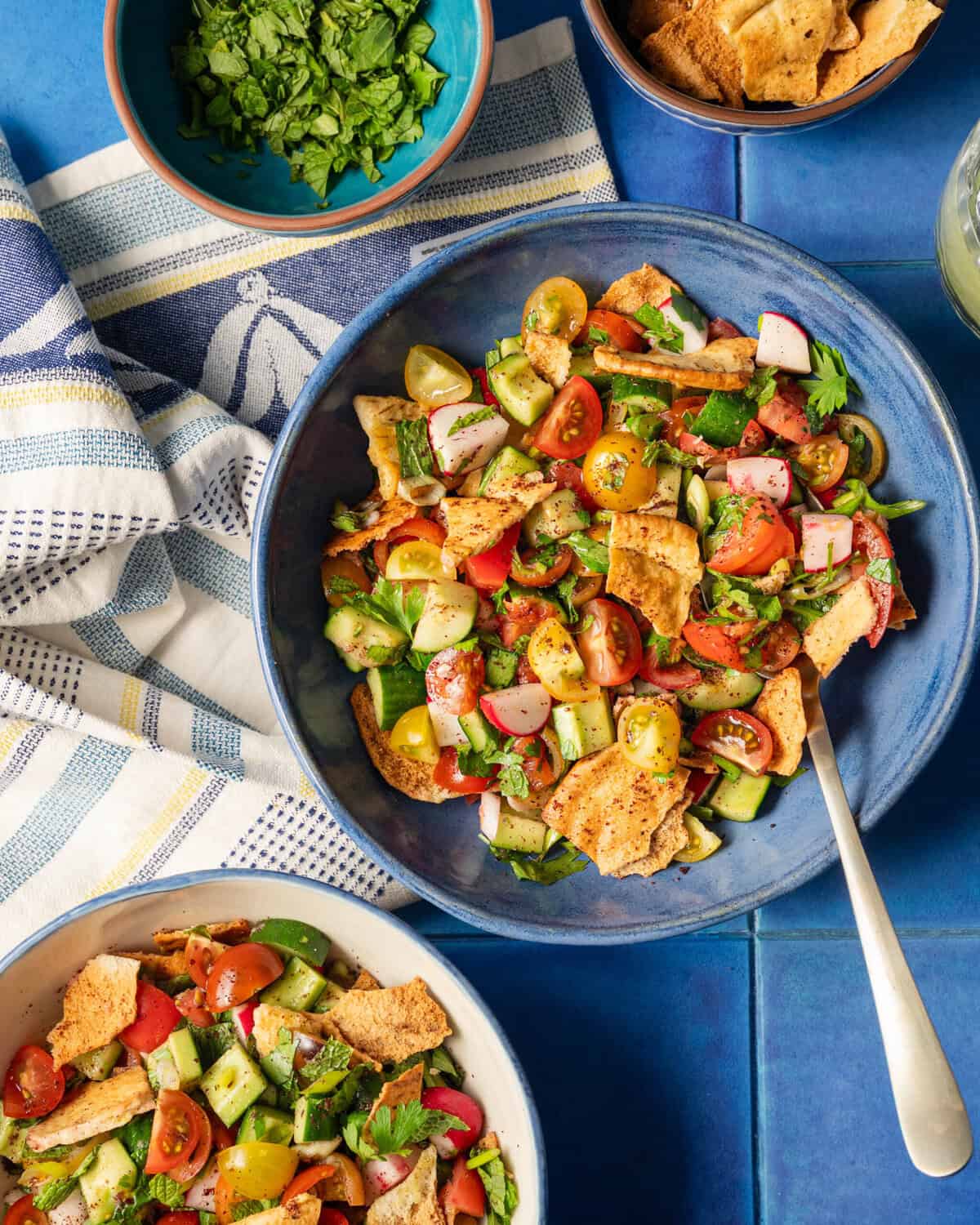
What is fattoush?
Fattoush originated in northern Lebanon, though it’s popular throughout the country as well as in Syria, Palestine, and Jordan, with regional variations abounding. The name comes from the Arabic root fatt, meaning to crush or crumble, a nod to the torn-up bread at its heart. It belongs to a larger family of dishes known as fattah, where stale flatbread, rather than being wasted, forms a central component of the dish:
“It’s likely that its origin, like that of many Arabic dishes, harkens back to times of austerity … Bread was often used to bulk things up and turn other pantry staples, like legumes, into a meal.” ~Reem Kassis, for Serious Eats
Regional variations abound, and if my own fattoush-sampling journey is any indication, you could work your way around the world trying different versions and never get bored (shout out to Cafe Jabelle in Melbourne, Australia for an unforgettable fattoush; my San Diego neighbors must try the version on Callie’s summer menu).
The fattoush you’ll find here features the expected ingredients—tomatoes & cucumbers, lots of fresh parsley and mint, and a sumac-olive oil dressing—but deviates in one way: rather than the traditional deep-fried pita (delicious, of course), this one calls for baked pita for ease.
Baking whole pita brushed with olive oil is simple and effective, yielding ultra crunchy pita chips. I also brush the pita with za’atar, a tip I picked up from my Lebanon-raised friend who told me “we always sprinkle local za’atar on the fried pita.”
PS: If you love the sound of this recipe, I highly recommend Palestinian chef Sami Tamimi’s cookbook, Boustany! It’s a celebration of vegetables and an homage to Palestinian food and culture.
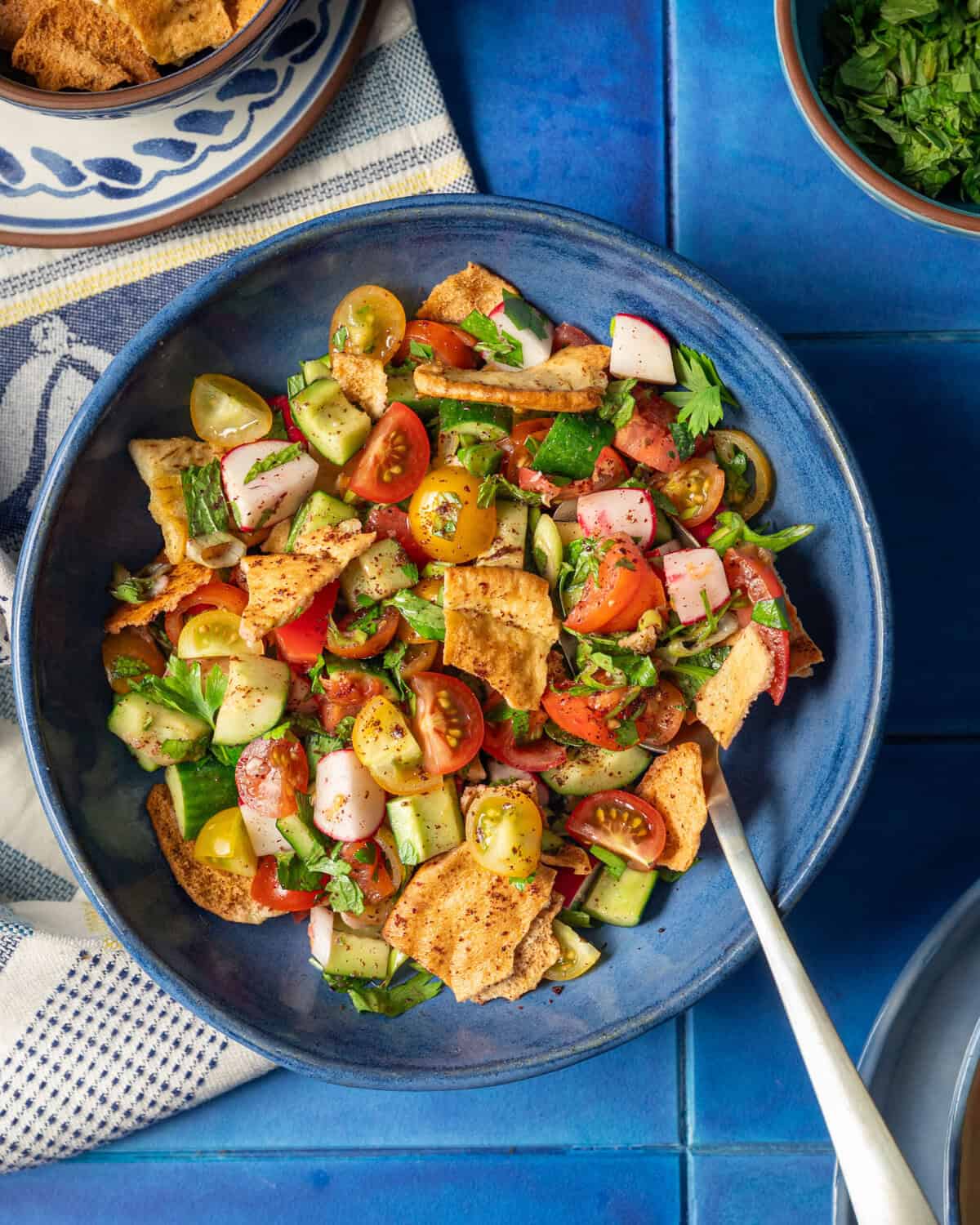
Ingredient notes
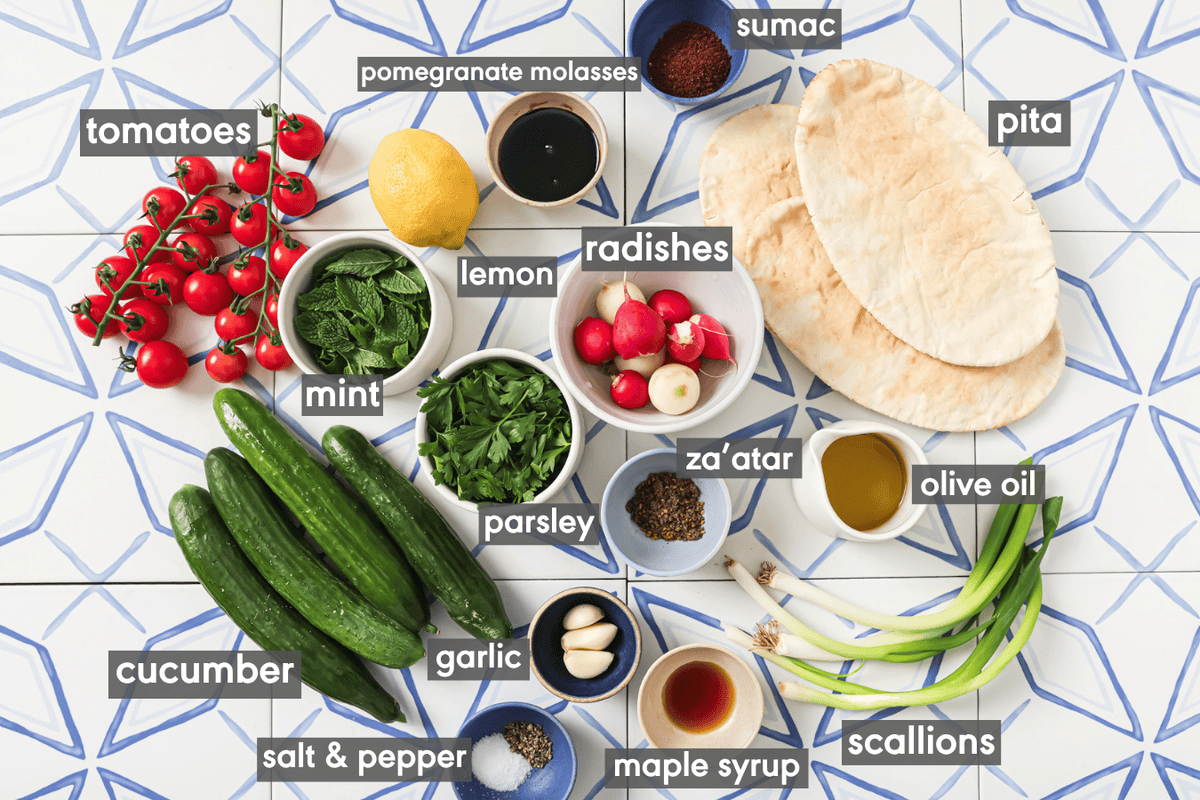
Tomatoes & cucumbers: Found in nearly every variation of this salad as, historically, fattoush was made with three primary ingredients: tomatoes, cucumbers, and bread.
Tomato tips: If it’s tomato season where you live, any ripe tomato will work (heirlooms would be swoonworthy!). If you’re making this dish during the colder months, use cherry tomatoes, as those tend to be the sweetest.
Cucumber tips: I love Persian cucumbers (crisp, mildly sweet), but an English cucumber will work (scrape out those seeds!).
Lebanese pita: One of THE defining elements of this salad. If possible, use thin pita, like Lebanese pita or a generically-labeled “Arabic-style pita,” as these get crispiest in the oven. (Curious about the traditional method of deep-frying the pita? Jump to the end of the Tips section for instructions!).
Tips for buying: If you have a Middle Eastern market, they will have plenty of pita options. If not, use whatever thin pita you can find at your local grocery store
Bonus veggies: This is where you’ll see variation across different recipes. I like using scallions for their gently garlicky edge and radishes for their peppery bite.
Substitute: Not a radish fan? Check the “make this fattoush your own” section for swaps. No scallions? You can use red onions but make sure to soak them in ice water for ~10 minutes, as they’re quite harsh otherwise.
Fresh herbs: Absolutely integral to fattoush’s flavor identity. Parsley and mint are the traditional duo, but you could add a small handful of cilantro if you love it.
Sumac: Widely used in Middle Eastern cooking and essential to fattoush, this berry-hued spice shapes the dressing’s flavor profile with its singular fruity tartness and bright tang.
Tips for buying: Sold at spice shops (my fave is from Burlap and Barrel!), Middle Eastern markets, some well-stocked grocery stores, or online.
Pomegranate molasses: I doubt I’ll ever tire of gushing about this ingredient: it adds an inimitable sweet tang and squeal-inducing zing to the dressing.
Tips for buying: Look for “all natural” pomegranate molases where the sole ingredient is pomegranate juice. This is my favorite brand, but I also enjoy all of these brands. Find even more options at Middle Eastern markets!
Don’t know how to use leftover sumac and pomegranate molasses? Try one of these recipes!
- Featuring sumac: Mediterranean Chickpea Salad, Charred Green Beans with Herby Lemon Salsa
- Featuring pomegranate molasses: Muhammara, Roasted Red Pepper Hummus, The Best Quinoa Salad
Step-by-step instructions
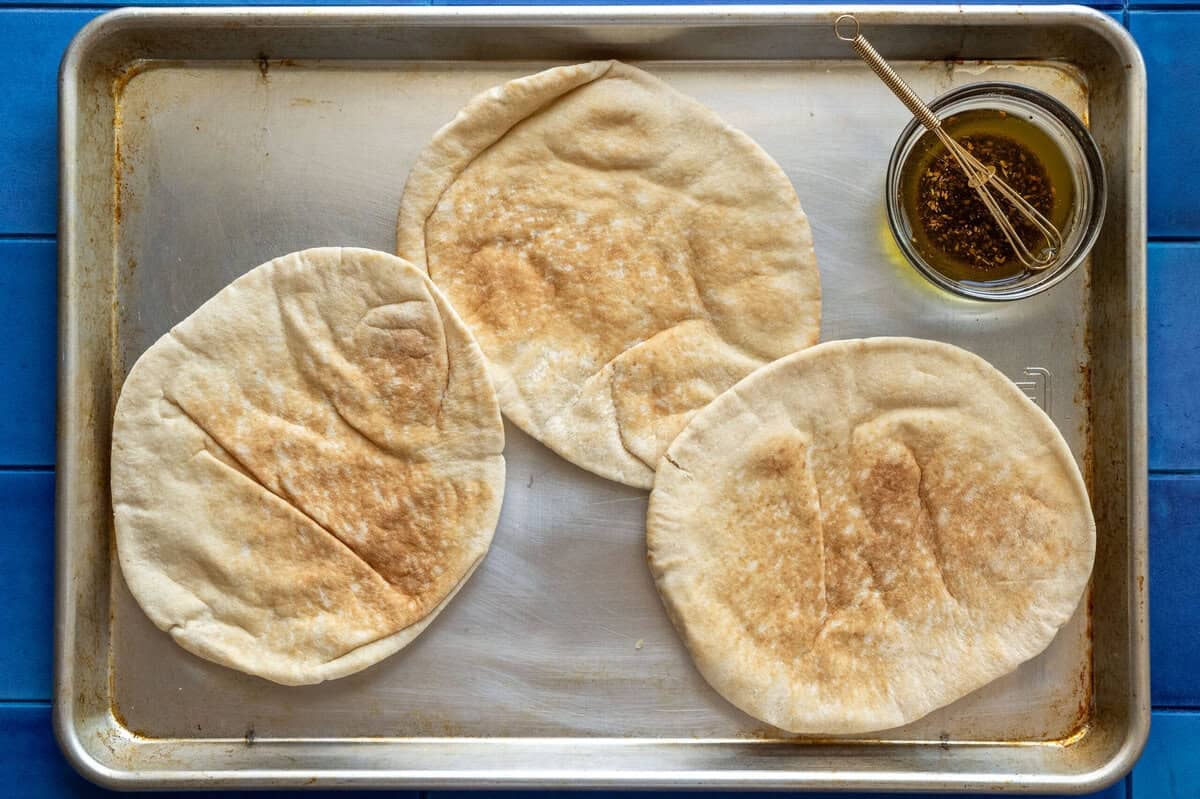
- Combine 2 ½ tablespoons olive oil, za’atar, kosher salt, and black pepper in a small bowl. Arrange the pita on a rimmed sheet pan.
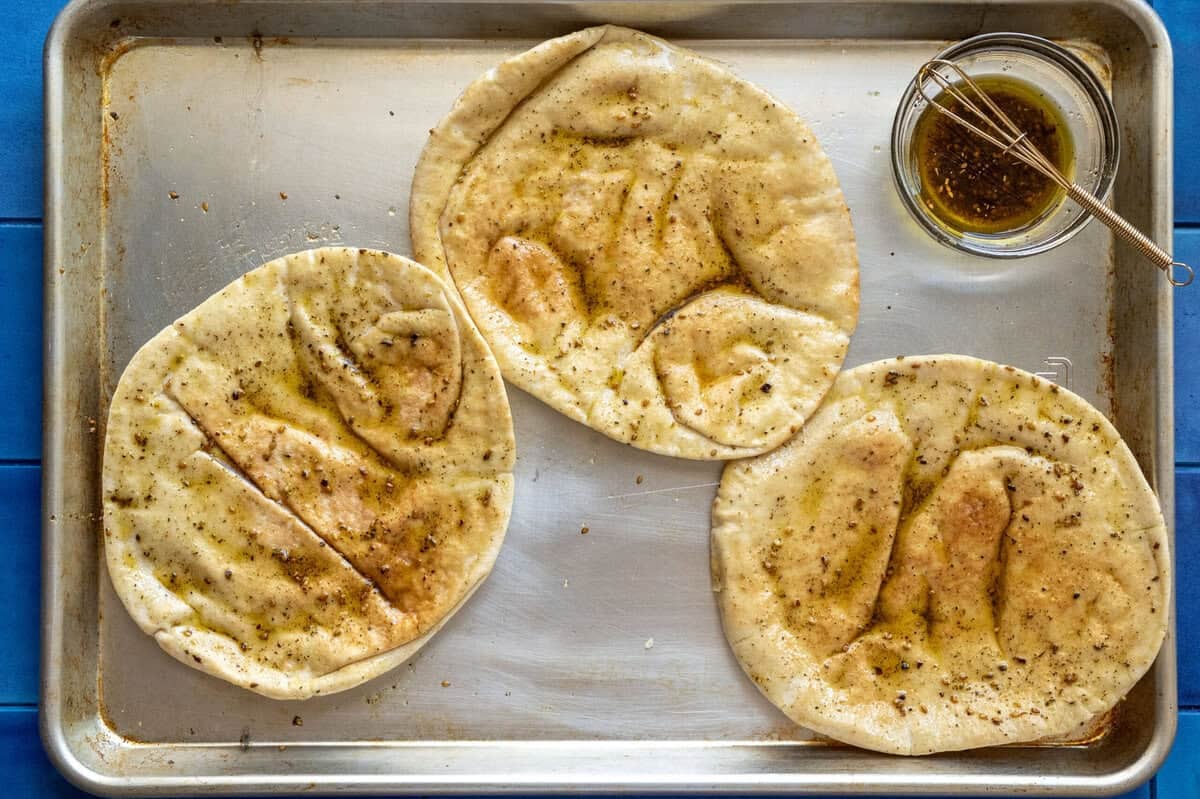
- Rub half of the seasoned oil mixture into the top sides. Flip and repeat on the other side of the pita with the remaining oil.
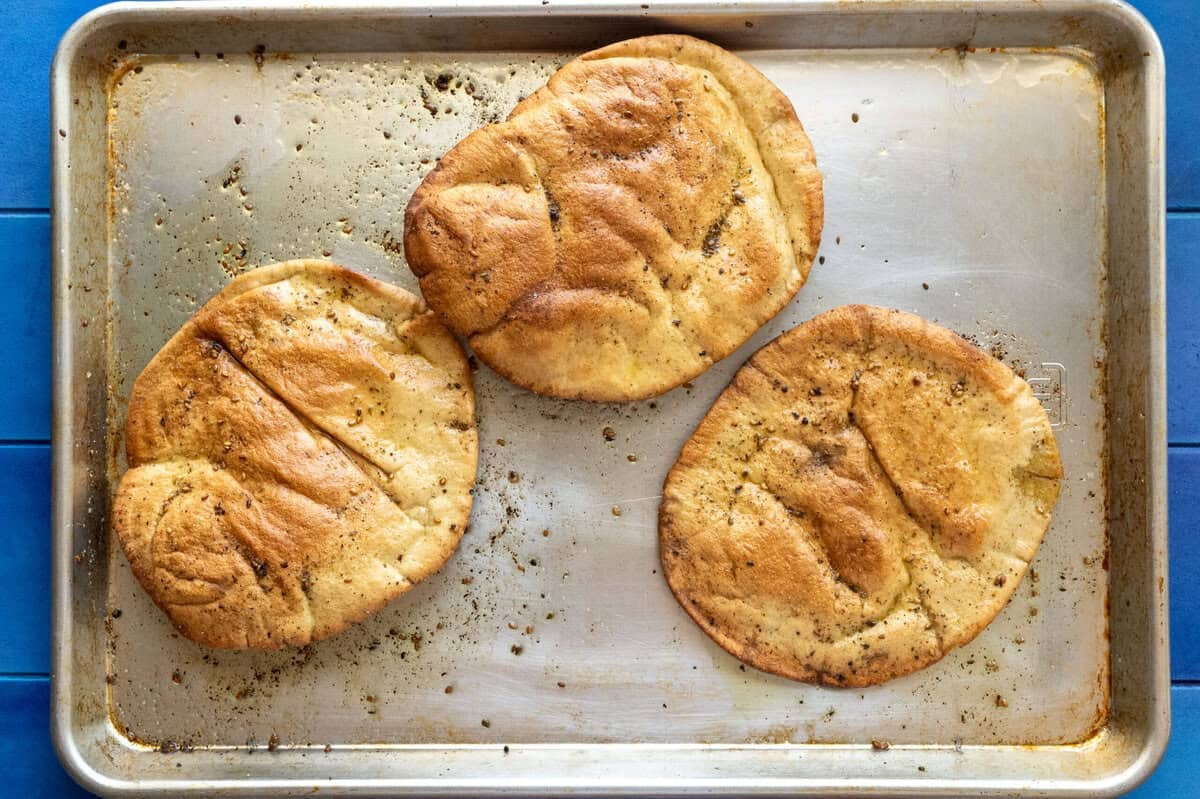
- Bake the pita in a 400ºF/200ºC oven for 5 minutes, carefully flip, and bake for 4 to 5 minutes or until deeply golden brown and crunchy.
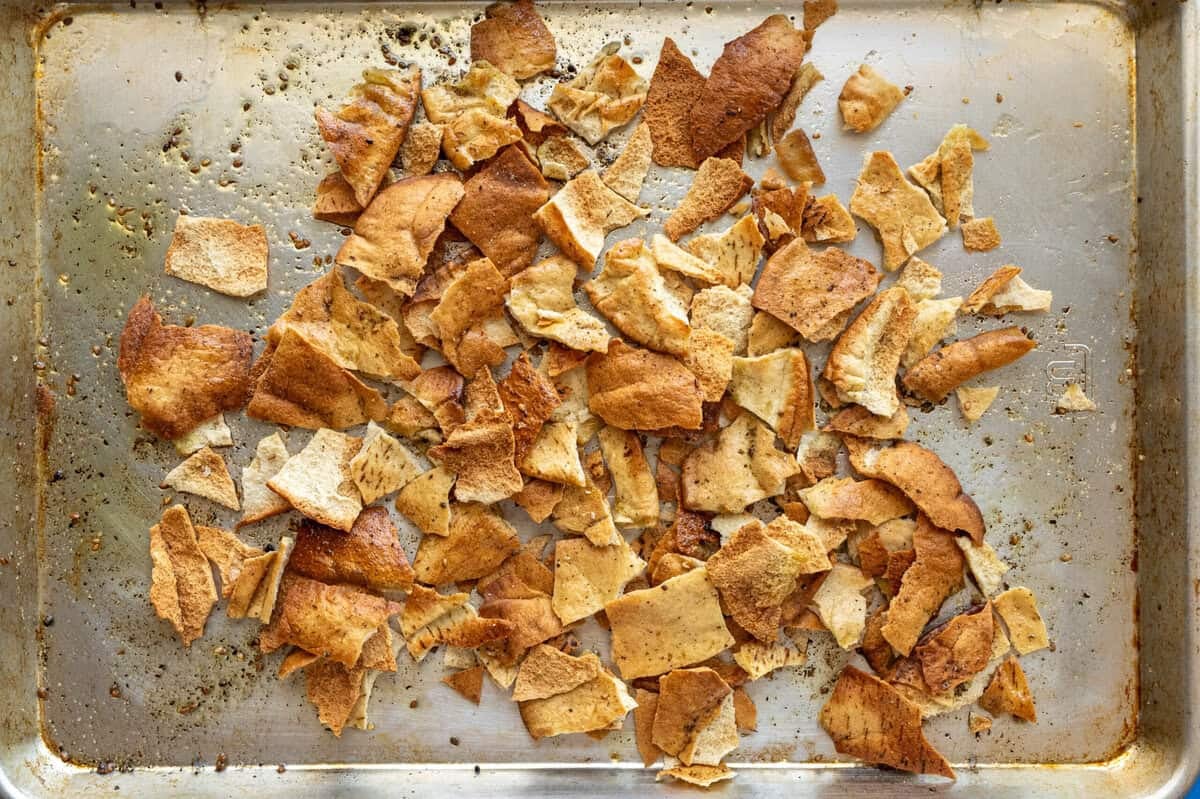
- Let cool a bit and then tear into bite-sized pieces.
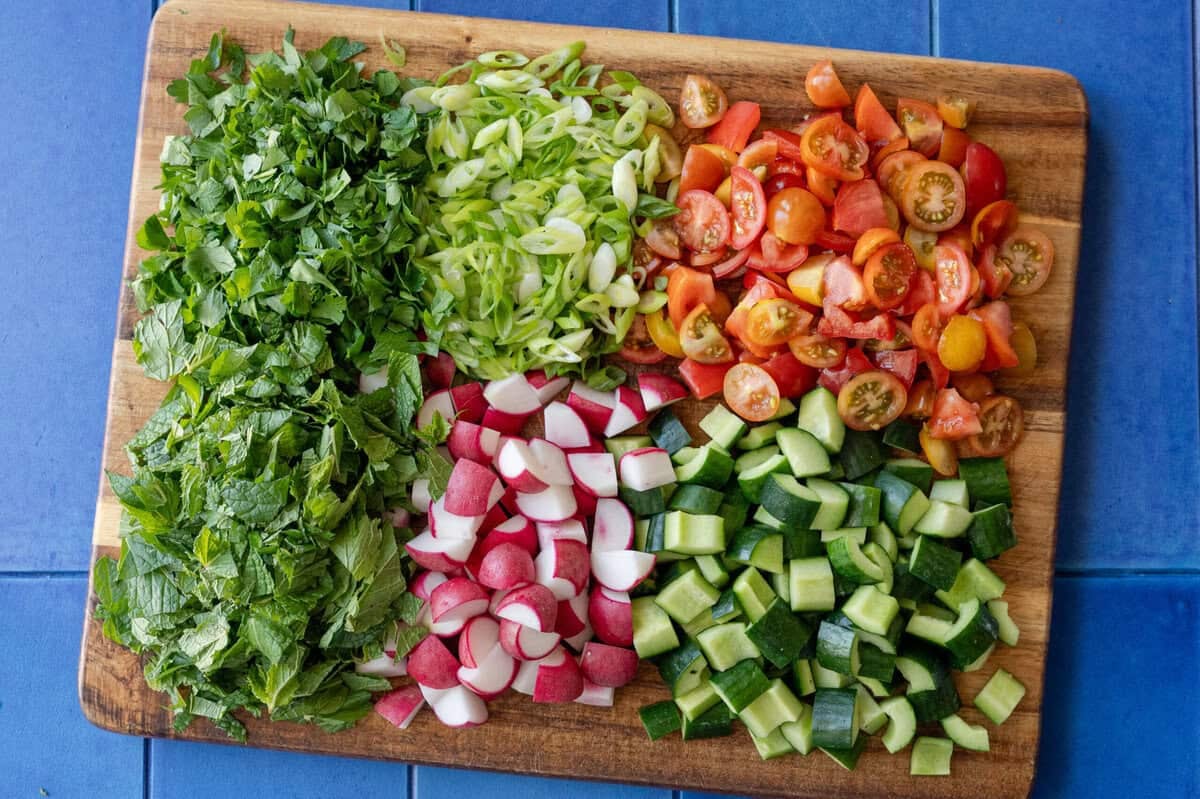
- Chop the cucumbers, tomatoes, and radishes into bite-sized pieces (full instructions are in the recipe card). Thinly slice the scallions. Chop the mint and parsley.
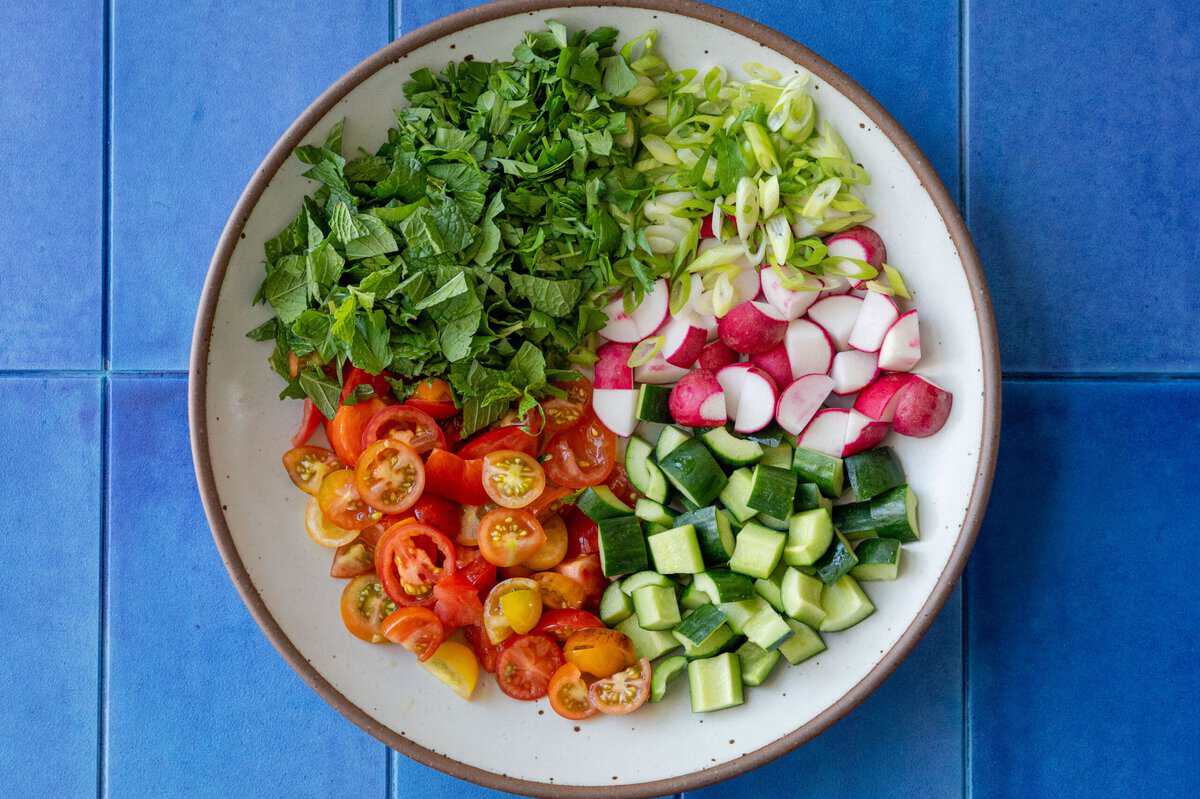
- Add all the veggies and herbs to a large bowl.
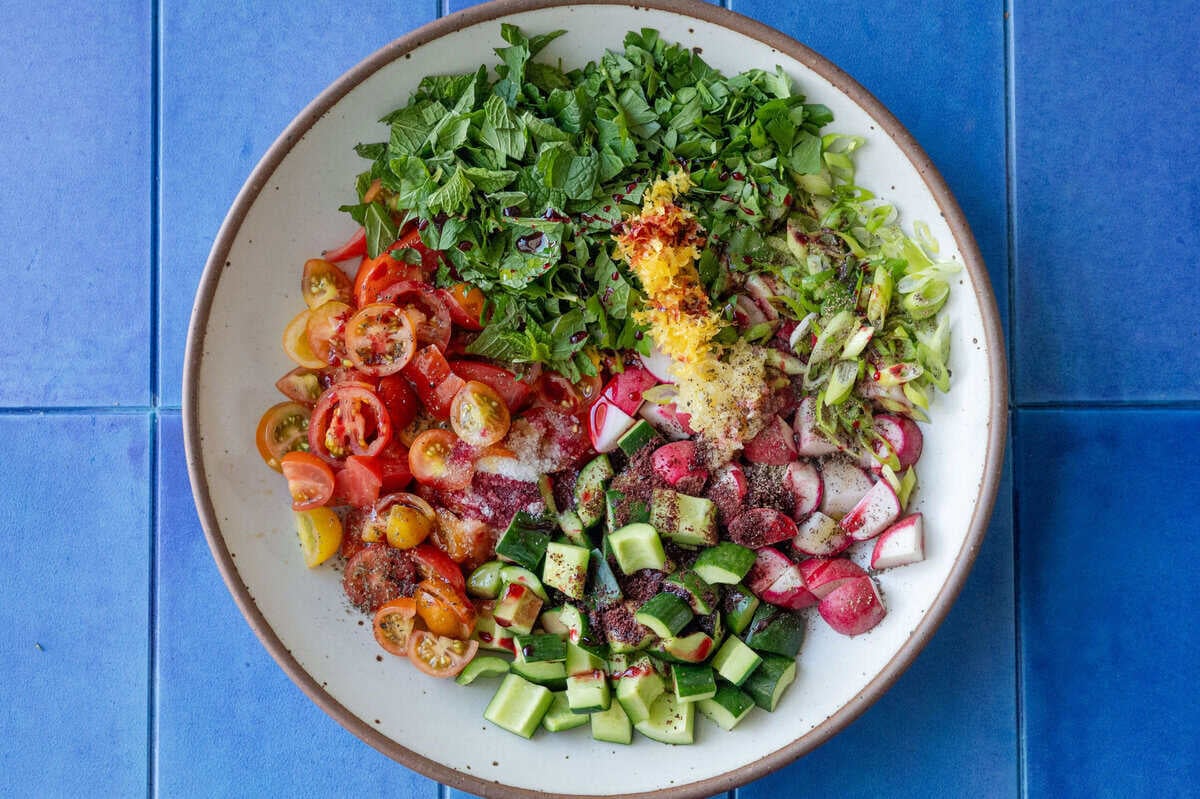
- Add the dressing ingredients: grated garlic, lemon zest and juice, sumac, pomegranate molasses, olive oil, salt, and black pepper.
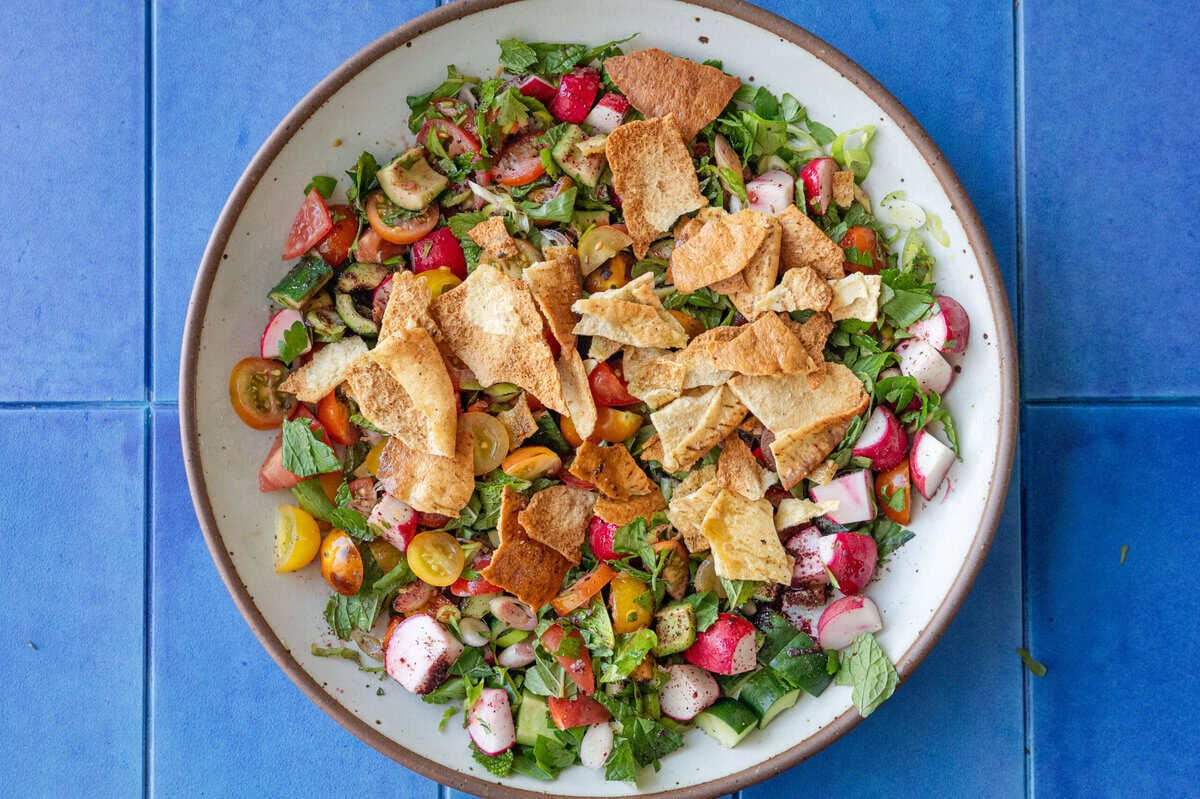
- Gently toss. Just before serving, scatter the toasted pita chips on top. Enjoy immediately!
Tips for making this recipe
Be deliberate about produce!
This salad puts fresh produce center stage, so it’s worth it to seek out the best-quality veggies you can afford/find. Check out your local farmers’ market or food co-op if you have one 🙂
And try to slice the veggies into bite-sized pieces that are roughly the same size. Mouthfuls of similarly-sized morsels in a variety of textures = an exquisite eating experience.
Pita Tips
If possible, seek out Lebanese-style pita or “Arabic-style” pita, which is thin and flat. This is what’s traditionally used in fattoush, and it crisps up best in the oven.
In our tests, when baking slightly thicker pita, some pieces stay chewy instead of getting crunchy. Admittedly, this is a minor tragedy… but it does dampen the textural experience.
If your pita is slightly thicker, make these adjustments:
- You may need only 2 pita instead of 3 (use the weight listed in the recipe card as your guide).
- Warm the pita, either in the microwave for 10-15 seconds or in the toaster for 30 seconds, until warm–this makes it less likely to tear.
- Slice through the seam to split the pita into two single rounds.
- Bake at a slightly lower temperature to prevent burning. See the recipe card notes for specifics.

Add the pita just before serving
Perhaps more than any other salad in the RPL universe, this one is best eaten fresh—as in, within the first hour of making it.
One of the many textural delights of fattoush is the crunch of crisp pita in each bite, but the longer the assembled salad sits, the more the pita succumbs to the inevitable fate of bread exposed to moisture: sogginess.
So add the pita to the salad right before you serve it for peak textural contrast.
Want to prep ahead of time? Check out the first FAQ!
Make this fattoush your own!
Permission to riff, granted.
- Not a fan of spicy radishes? Try diced red/yellow/orange bell pepper. Or just more cucumber.
- Love cilantro? Replace some of the parsley with cilantro.
- Don’t have za’atar? Dust the baked pita chips with sumac.
- Add lettuce. Chopped romaine is used in many versions of fattoush so feel free to add some in (personally, I am partial to a lettuce-free salad!).
- Partial to a creamy dressing? Drizzle a tablespoon or two of tahini into the dressing.
- Want a sprinkle of indulgence? Finish with vegan feta (…check out my recipe for Greek-style vegan feta)
How to deep fry pita
If you want to try the traditional method of deep frying the pita (rather than baking it), here’s the run-down:
- Heat enough neutral-flavored oil for deep frying (or shallow frying) in a high-sided saucepan over medium-high;
- Tear the pita into pieces;
- Working in batches as needed, fry the pita for 3 to 4 minutes, stirring frequently, until golden.
- Transfer to a paper-towel lined surface and sprinkle with salt and za’atar.
Frequently Asked Questions
This salad is most divine right after it’s been assembled, so the best make-ahead tactic is to prep the elements separately:
2 to 3 days in advance:
(1) Make the sumac dressing–store the dressing in a sealed jar in the fridge (if the oil has solidified, let it come to room temp before dressing the salad).
(2) Toast the pita and tear into pieces; store in a sealed ziploc bag on the counter.
The day of: Wash and chop the vegetables (a few hours in advance of assembly).
Just before serving: Chop the herbs, then combine all the elements, dress the salad, and scatter the pita on top.
The pita will get soggy fairly quickly, so rather than optimize for leftovers, I recommend assembling only as much salad as you plan to eat, and storing any leftover ingredients separately.
When making the dressing, add more lemon juice to bump up the tartness and a bit of liquid sweetener (maple syrup or agave) for sweetness.
In certain RPL recipes calling for sumac, I recommend lemon zest or juice as an acceptable substitute—but sumac is quite integral to fattoush.
If you don’t have sumac on hand, you can use more lemon zest than the recipe calls for but it won’t be quite the same.
Find sumac at Middle Eastern grocers, spice shops (this is my favorite), or online!
Are you now a proud member of the Fattoush Fan Club? If so, I’d love it if you’d leave a rating and review! 💜

Introducing
Big Vegan Flavor
Techniques and 150 recipes to master vegan cooking.
Fattoush Salad
Ingredients
Toasted Pita
- 3 thin pita ideally Lebanese pita (6.5 oz / 180g) (see Note 1 if pita is not thin)
- 2 ½ tablespoons (35g) extra virgin olive oil
- 1 ½ teaspoons za’atar (see Note 2)
- Kosher salt and freshly cracked black pepper (see Note 3)
Salad
- 12 ounces (340g) Persian cucumbers (~4 Persian cucumbers)
- 12 ounces (340g) cherry tomatoes (or heirloom tomatoes, if in season)
- 10 (6 to 7 oz / 170 to 200g) radishes (see Note 4)
- 1 bunch scallions (about 6)
- 1 heaping cup (20g) flat-leaf parsley leaves and tender stems
- 1 cup (16g) fresh mint leaves
Sumac Dressing
- 1 large lemon (or 2 medium lemons)
- 2 to 3 cloves garlic (3 for garlic lovers)
- 2 to 3 teaspoons sumac, plus more to taste
- 2 tablespoons (40g) pure pomegranate molasses, more to taste (see Note 5)
- 3 tablespoons (42g) good-quality extra virgin olive oil
- ½ teaspoon maple syrup or agave nectar, as needed
Instructions
- Arrange a rack in the top third of the oven. Preheat to 425ºF/220ºC (see Note 1 if pita is not thin).
- While the oven preheats, wash and chop the vegetables.Slice the cucumbers lengthwise, scoop out the seeds, then dice into ½” (1.25 cm) pieces.Halve some of the cherry tomatoes, quarter some, and/or slice others. A variety of shapes is nice. If using bigger tomatoes, cut into the same size as cucumbers.Chop the radishes slightly smaller than the cucumbers.Trim the roots and any bruised tops on the scallions, then thinly slice.
- Toast the pita: In a small bowl, mix together 2 ½ tablespoons (35g) olive oil, the za’atar, black pepper to taste, and ½ teaspoon kosher salt (or half amount sea salt/table salt). Place the pita on a rimmed sheet pan (they will slightly overlap). Pour half of the seasoned oil mixture on the tops of the pita and rub it in. Flip and coat the second side. Bake for 5 minutes, then carefully flip (the pita is hot!) and bake for 4 to 5 more minutes or until deeply golden brown and very crisp. Allow to cool, then tear apart into bite-sized pieces.
- Chop the herbs: Chop the parsley. Sliver the mint or finely chop it.
- Assemble the salad: In a large bowl, combine the cucumbers, tomatoes, scallions, radishes, parsley, and mint.Use a microplane to zest the lemon into the veggies (1 tablespoon / 3g zest), then grate the garlic into the bowl.Add 3 ½ tablespoons (52 mL) of lemon juice, the sumac (I usually use 3 teaspoons), pomegranate molasses, 3 tablespoons (42g) olive oil, 1 teaspoon kosher salt (or half amount sea salt/table salt), and several cracks of black pepper.Use clean hands or tongs to gently toss the dressing into the salad.Taste, adding the sweetener as needed to balance acidity.
- Just before serving, scatter the salad with the toasted pita chips and gently toss.
- Taste, adding more pomegranate molasses or lemon juice for acidity, more sumac as desired, more olive oil for richness, and/or salt to taste. Serve immediately.
Notes
(1) You may need only 2 pita to yield 6.5 oz / 180g.
(2) Warm them up first in the microwave for 10-15 seconds or toaster for 30 seconds so they don’t tear too much;
(3) use kitchen shears or sharp knife to cut through the pita seam to split into two thin, single rounds;
(4) When tossing the pita with the oil and seasonings, you may need to use a pastry brush to get the oil onto the cut sides;
(5) Bake at 400ºF/205ºC for 5 minutes, then flip, and bake for 3 to 5 minutes. 2. Za’atar is sold at well-stocked grocery stores, Middle Eastern markets, spice shops, or online. I’ve tried many varieties, and Za’atar by Z&Z and Burlap & Barrel are my favorites. If you don’t have it, skip it. 3. If using sea salt or table salt, use about half the amount of salt listed in the recipe. 4. If you don’t like the slightly spicy bite of radishes, you can replace them with more cucumbers or tomatoes, or, if you want a little sweetness, diced red bell pepper. 5. I recommend “all natural” pomegranate molasses where the only ingredient is pomegranate juice. I love this brand and enjoy this one, this one, this one, or this one. Find even more options at Middle Eastern markets.
Nutrition
Nutrition information is automatically calculated, so should only be used as an approximation.
 Love this? Leave a rating below!








I’ve made this twice already and it’s so flavor-filled, interesting with different textures and absolutely delicious! I found a local Persian grocery that carried many of the items which is a new found discovery. I’m making the salad for a party I’m hosting tomorrow. I’m excited to share it with friends.
Thank you!
Amy, thank you for your thoughtful review! We’re so happy to hear that you enjoyed the fattoush salad, and we hope your guests did too!
OMG- this might just have been the most delightful salad I’ve ever had. I have never left a review for a recipe before, but had to for this one. Even my husband who hardly wants to eat any vegetables emptied his entire bowl and commented that he wishes he had eaten the other things first because the salad was so flavorful, everything else paled in comparison afterwards. I see my salad future changed with lots of double batches of this dressing too. Don’t wait – make this before vegetable peak season is over!!
Your positive feedback is the best reward for our hard work. Thank you for taking the time to leave this sweet review, Carla!
This salad is the taste of summer! I love how fresh it was but also flavorful, it did not feel like I was eating a salad because it was just so yummy. I first bought pomegranate molasses for your quinoa salad and I’ve never looked back because like you say it really does make the food sing!
Your positive feedback is the best reward for our hard work. Thank you, Eleena!