

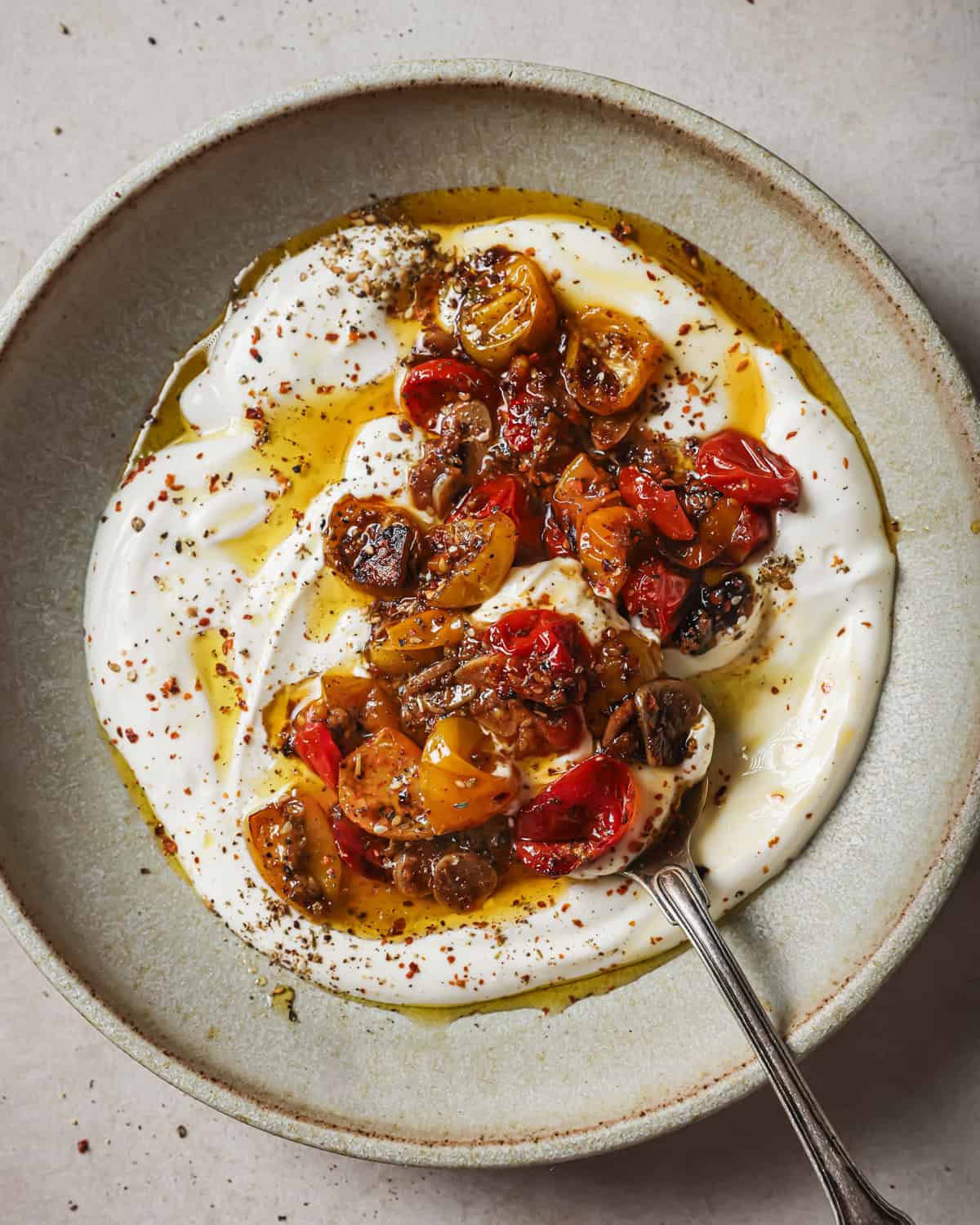
Before I made these confited tomatoes, I’m not sure I had described a tomato as “ethereal.” So, it’s fair to say that these have rocked my world—and are about to rock yours.
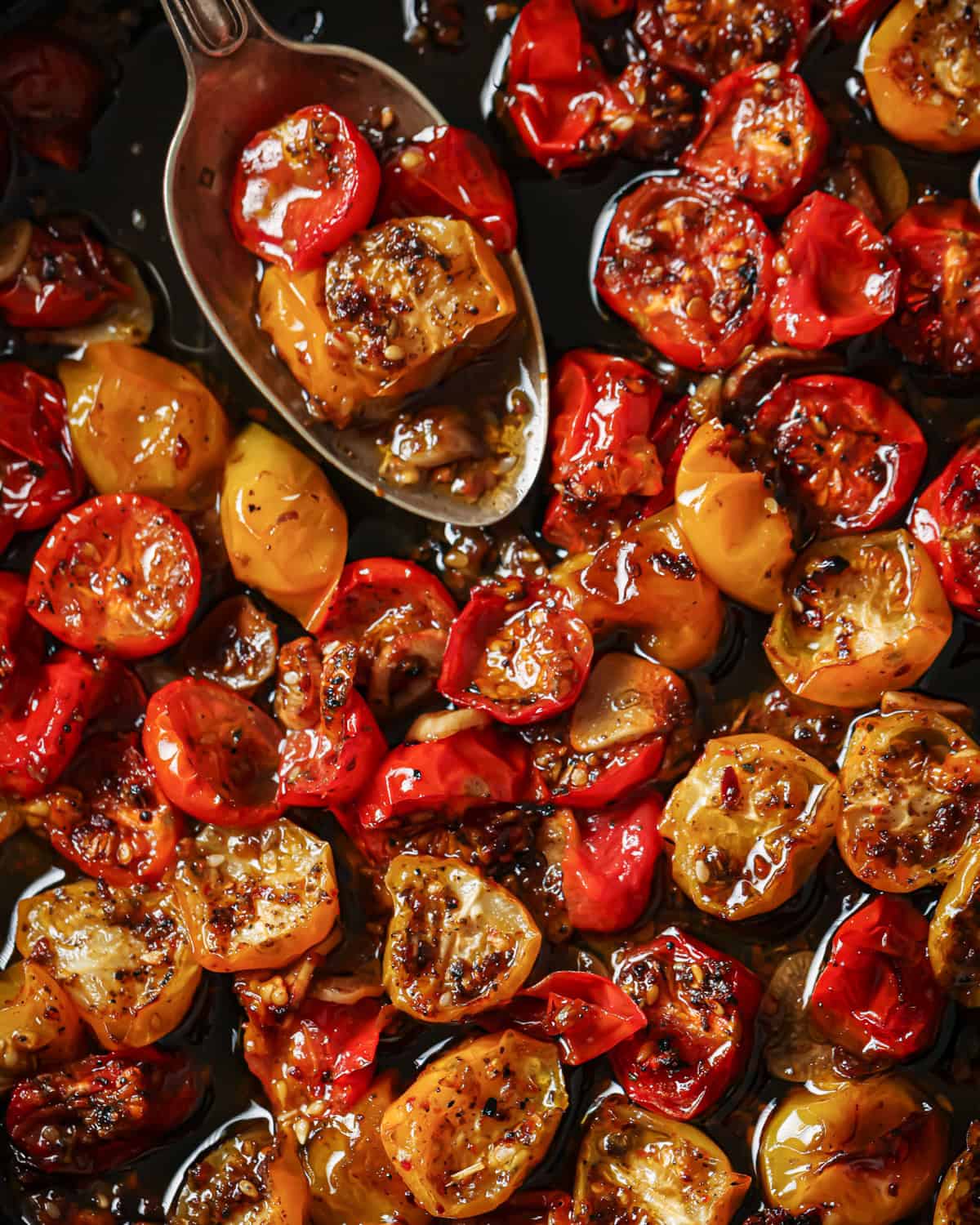
By slowly roasting cherry tomatoes in an olive oil bath with a mix of flavorful spices and sliced garlic, they transform into deeply caramelized flavor pearls, hyper-concentrated with the sweet-umami essence of tomato. I’m not exaggerating when I say that eating these is a happy-dance-eliciting, transcendent tomato experience.
These confited tomatoes make a luxurious condiment to spoon onto grain bowls or atop pizza, and are equally at home as a sandwich spread or an effortlessly elegant pasta sauce.
Bonus: the spice-infused confit oil in which the tomatoes cook can be used to level-up vinaigrettes and sauces, cook other veggies/proteins, or finish dishes with a luxurious drizzle.
In this post:
What is confit?
Confit (pronounced “kon-FEE”) comes from the French verb confire, meaning “to preserve.” It refers to slowly cooking food—whether it’s vegetables, fruits, or meat—in a liquid. With vegetables, the liquid is typically oil, and if you want great flavor (and heart-healthy fats), you can’t do much better than olive oil.
In a traditional confit, the veggies are completely submerged in a large quantity of oil as they cook. This is what I do in my ridiculously good Herby Shallot-Garlic Confit (p. 163 of Big Vegan Flavor) which, if you haven’t tried it, my goodness, you are missing out on one of life’s greatest joys.
But in my many tests of this tomato confit, fully submerging the tomatoes in oil didn’t work as well, likely due to the high water content of tomatoes. It yielded oily tomatoes that hadn’t absorbed the flavors of the salt and spices the way I wanted them to.
Hence, the method in this recipe: I use enough olive oil to roast them without burning and, once they’re almost done, I add a bit more oil and finish them so they’re juicy, rich, caramelized, perfectly sweet, and deeply infused with flavor. And one of life’s greatest pleasures.
Ingredient notes
Cherry tomatoes
This recipe uses cherry tomatoes instead of larger tomato varieties because they’re a more concentrated package of tomato flavor, meaning the resulting confited tomatoes are that much more flavorful.
Obviously, this recipe will be most delicious in summer when tomatoes are at their peak. However I tested this recipe in November through February and still got great results.
Tomato Tips
Choose cherry tomatoes over grape tomatoes (which are less sweet).
If you have a choice between different colors of cherry tomatoes, opt for golden tomatoes. These tend to be a bit sweeter and, in my tests, led to the best batches!

Extra virgin olive oil
AKA, the all-important fat source in which we slowly cook these tomatoes—this is what defines the confit cooking technique, as mentioned above.
I’ve made this recipe with a grocery store brand of olive oil with good results, so feel free to use the olive oil in your budget. That said, a higher quality, fruitier olive oil will enhance the deliciousness of your results.
Garlic
I can’t imagine cooking tomatoes without garlic—hence, the garlic in this recipe. You’ll slice it (not too thinly so it doesn’t burn) and it gives these tomatoes this otherworldly bite of sweet-savory goodness.
❗Safety note: To minimize the risk of food-borne botulism, garlic stored in oil must always be refrigerated, not stored at room temperature. Please carefully read the information in the Tips section on safe storage, as well as the storage instructions in the recipe card.
Spices
You can take this recipe in many directions (a more traditional route might use thyme and Herbes de Provence), but here, I’m giving things a Middle Eastern twist with the dynamic duo, za’atar & Aleppo pepper.
Za’atar is an aromatic Middle Eastern seasoning blend that tastes citrusy, herbaceous, and slightly nutty (if you’re a fan, you’ll love this 20-min dinner). Aleppo pepper is mildly spicy but also has a lovely fruity and smoky chile flavor. It’s originally from Syria but is popular in many Middle Eastern dishes.
Shopping tip: You can find za’atar at well-stocked supermarkets, Middle Eastern grocers, and online (my favorite is by Z&Z, but you can also try the homemade blend in Big Vegan Flavor, p. 179).
Aleppo pepper is less-frequently found in standard supermarkets, but easy to find at Middle Eastern grocers, spice shops, and online (like this or, sourced from my favorite spice purveyor, Burlap & Barrel!)
Substitute: Don’t have Aleppo pepper? Use another mild chile flake OR, if using red pepper flakes, use far less than the recipe calls for—¼ to ½ tsp at the most.
Step-by-step instructions
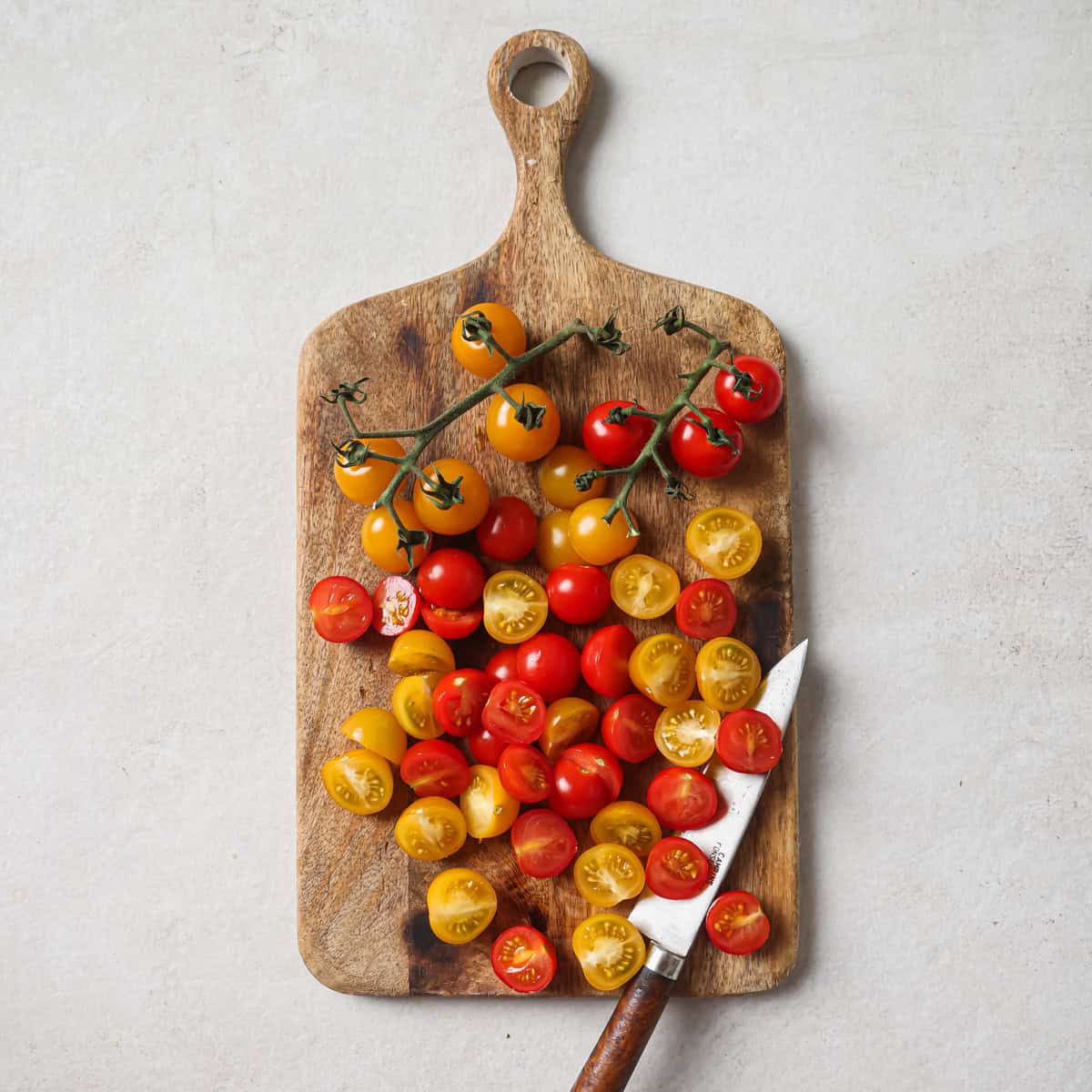
- Slice the cherry tomatoes in half.
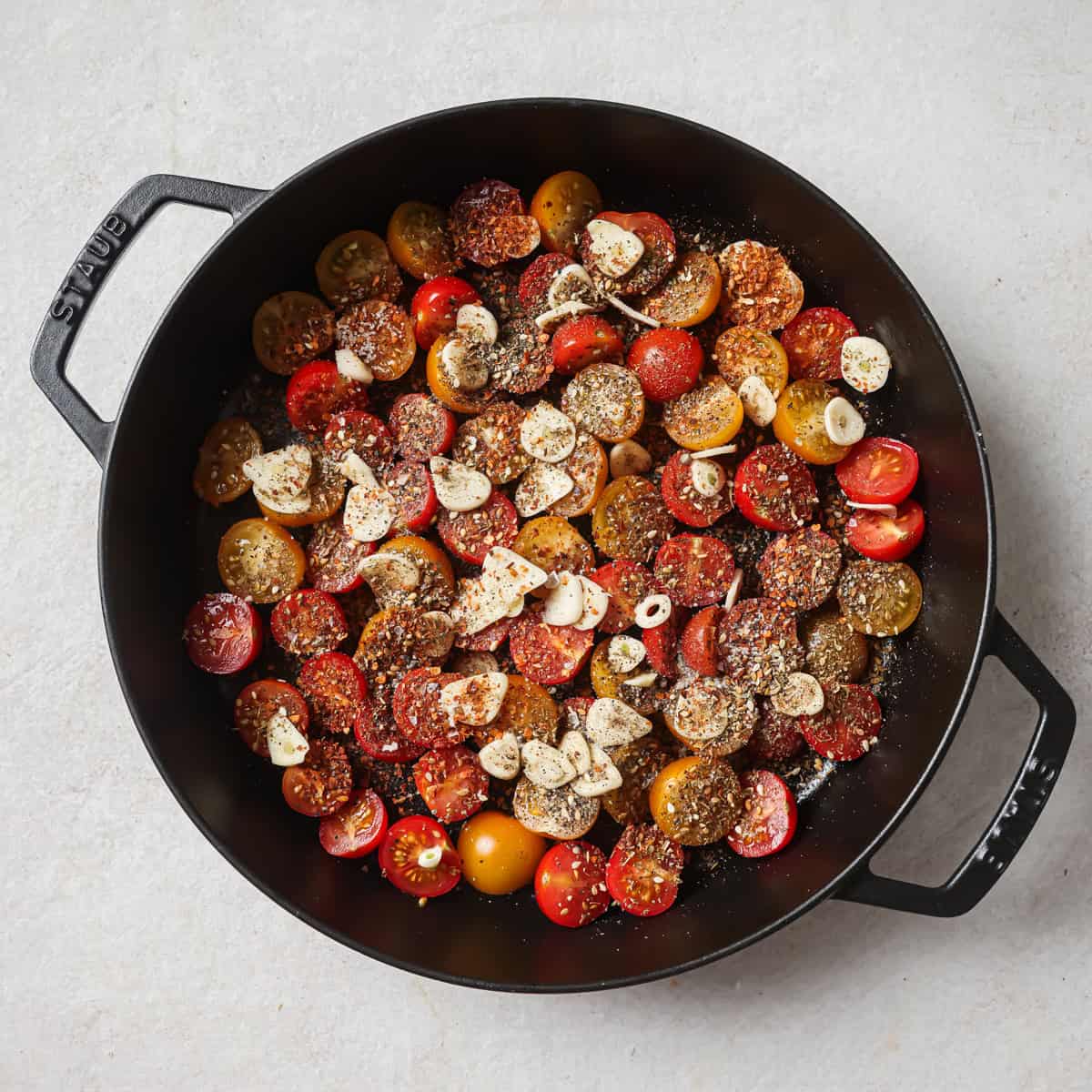
- Add the tomatoes to a baking dish closely packed in a single layer. Add the sliced garlic, za’atar, Aleppo pepper, sugar, salt, and pepper.
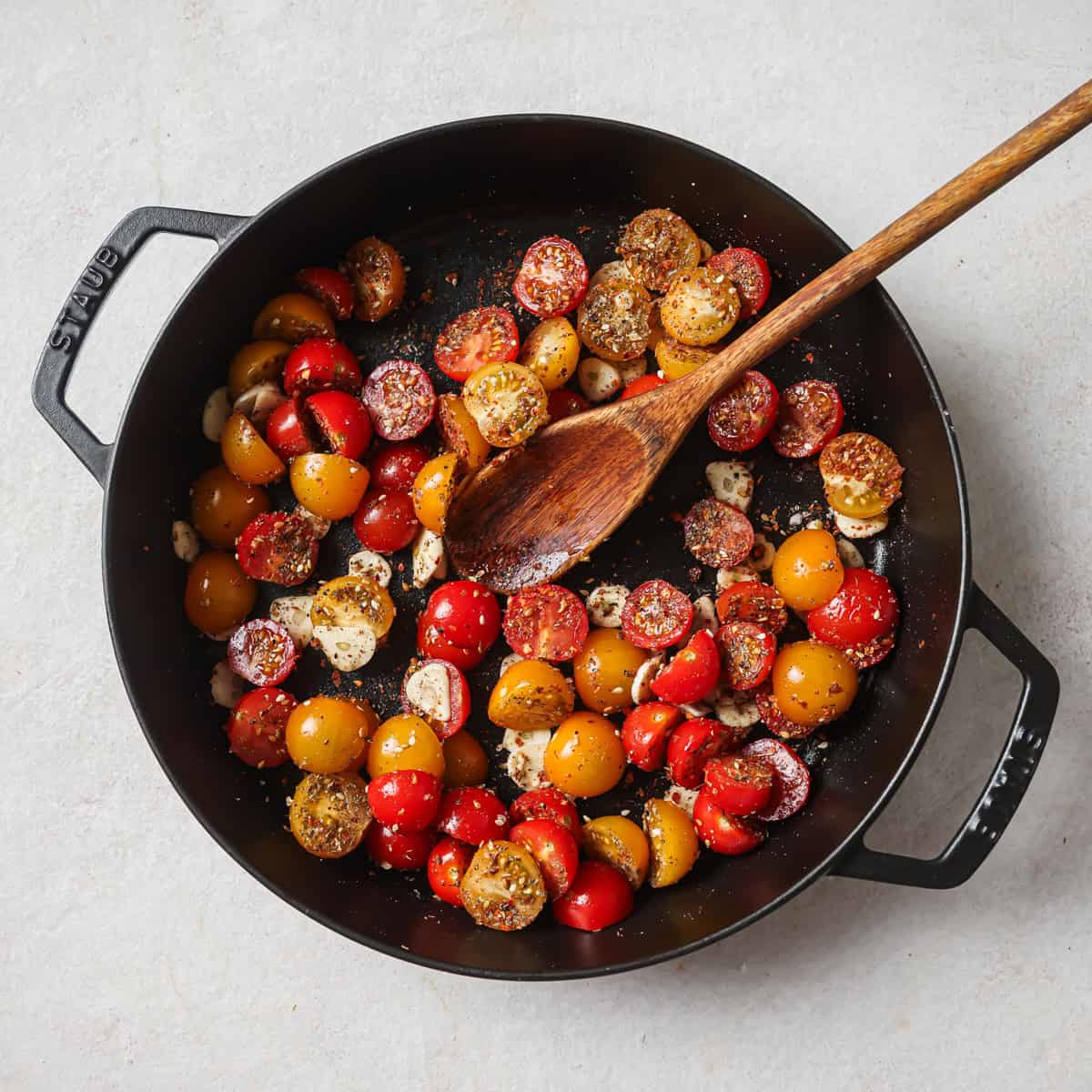
- Toss everything until the tomatoes are well-coated.
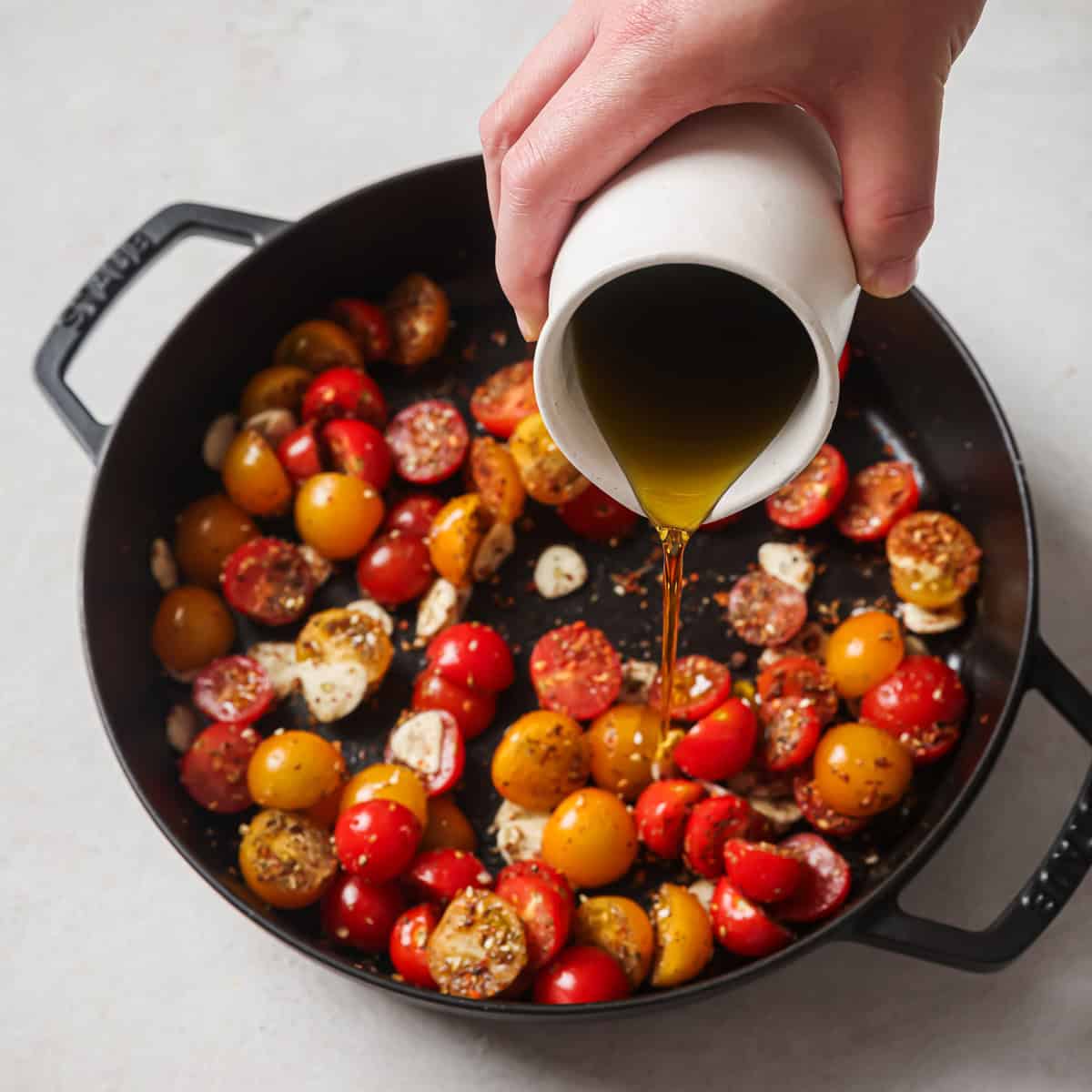
- Drizzle the tomatoes with half of the olive oil (3 tablespoons).
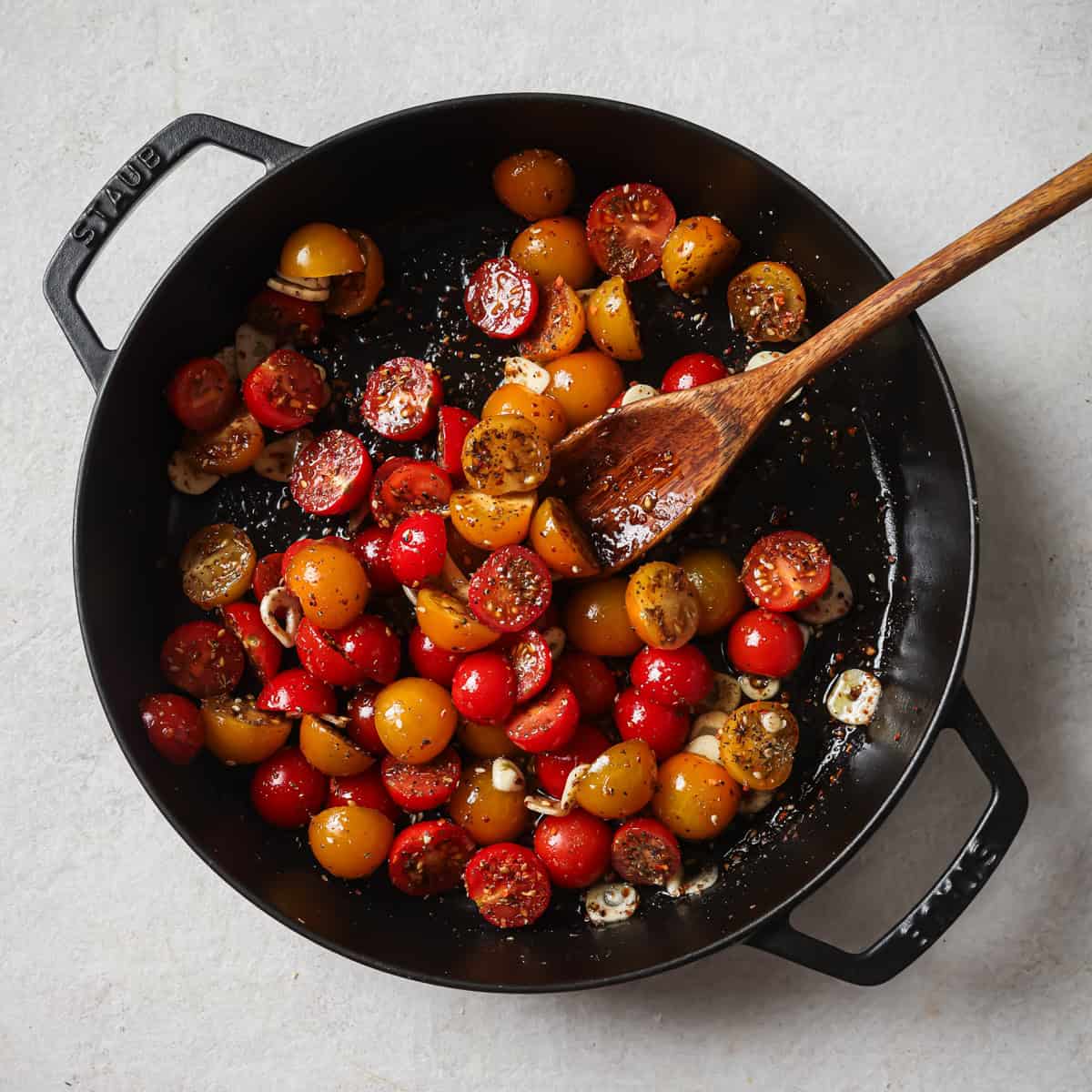
- Toss the tomatoes and seasonings in the olive oil.
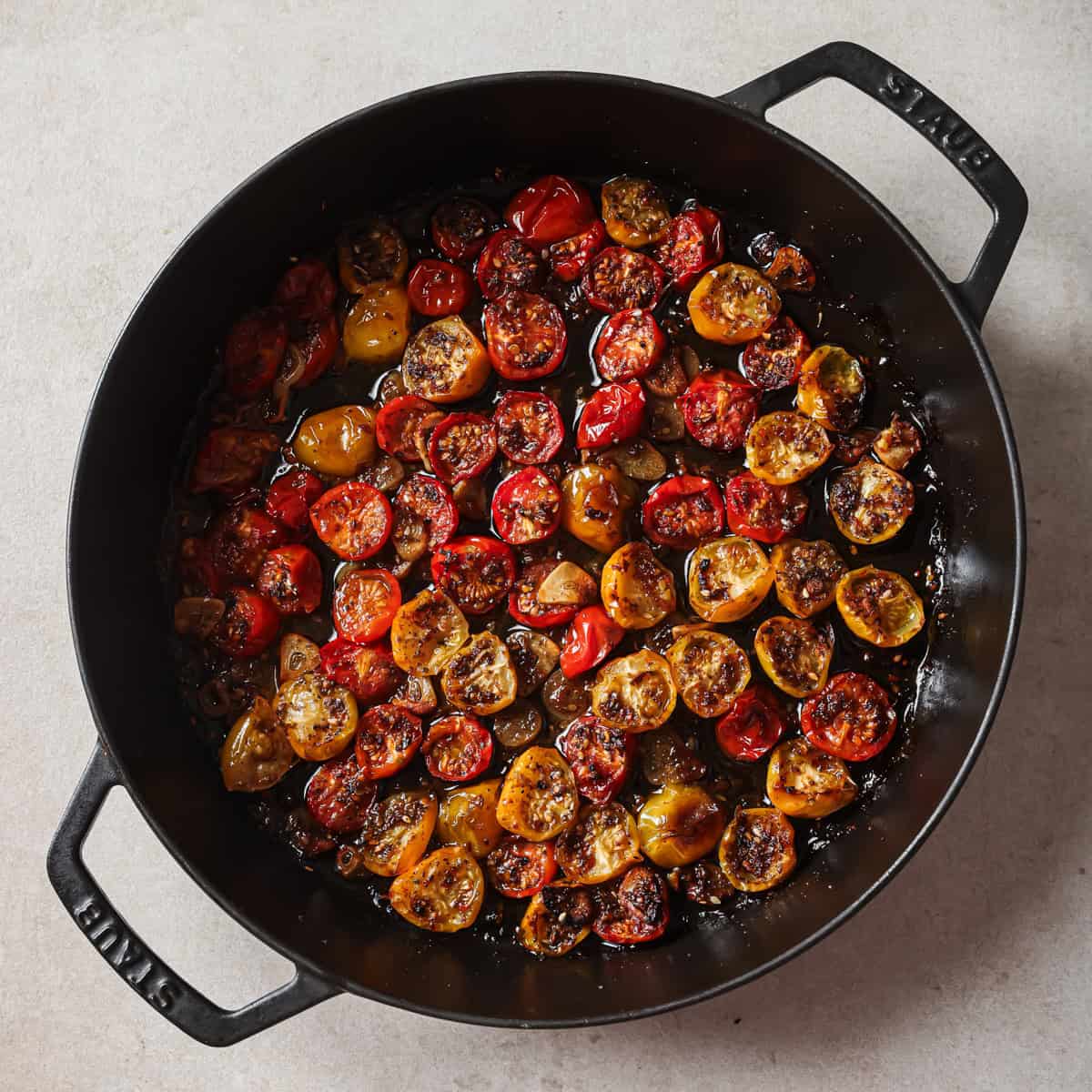
- Roast at 350ºF/175ºC for 50 minutes.
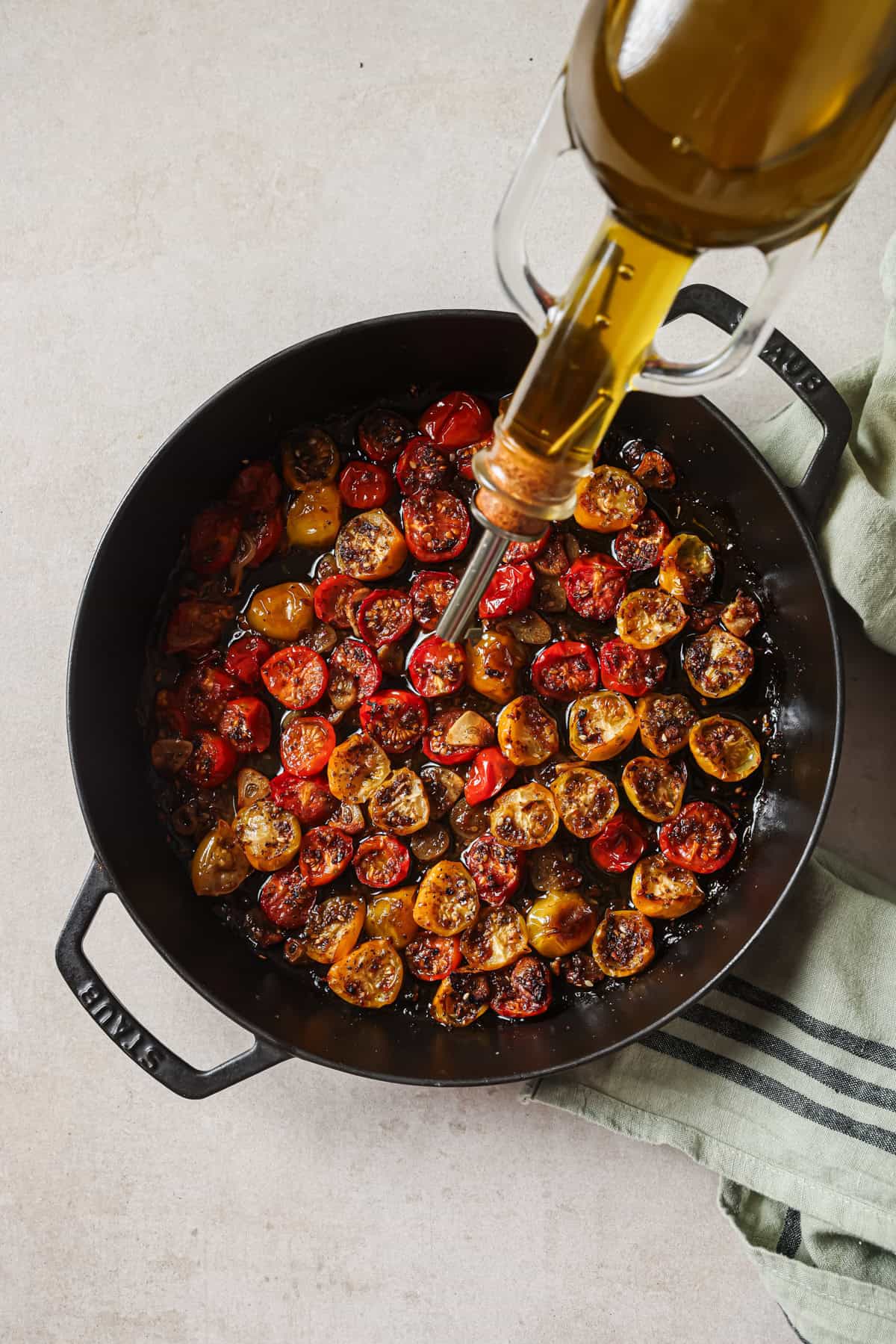
- Remove from the oven, drizzle with the remaining olive oil, and shake the pan to evenly distribute.
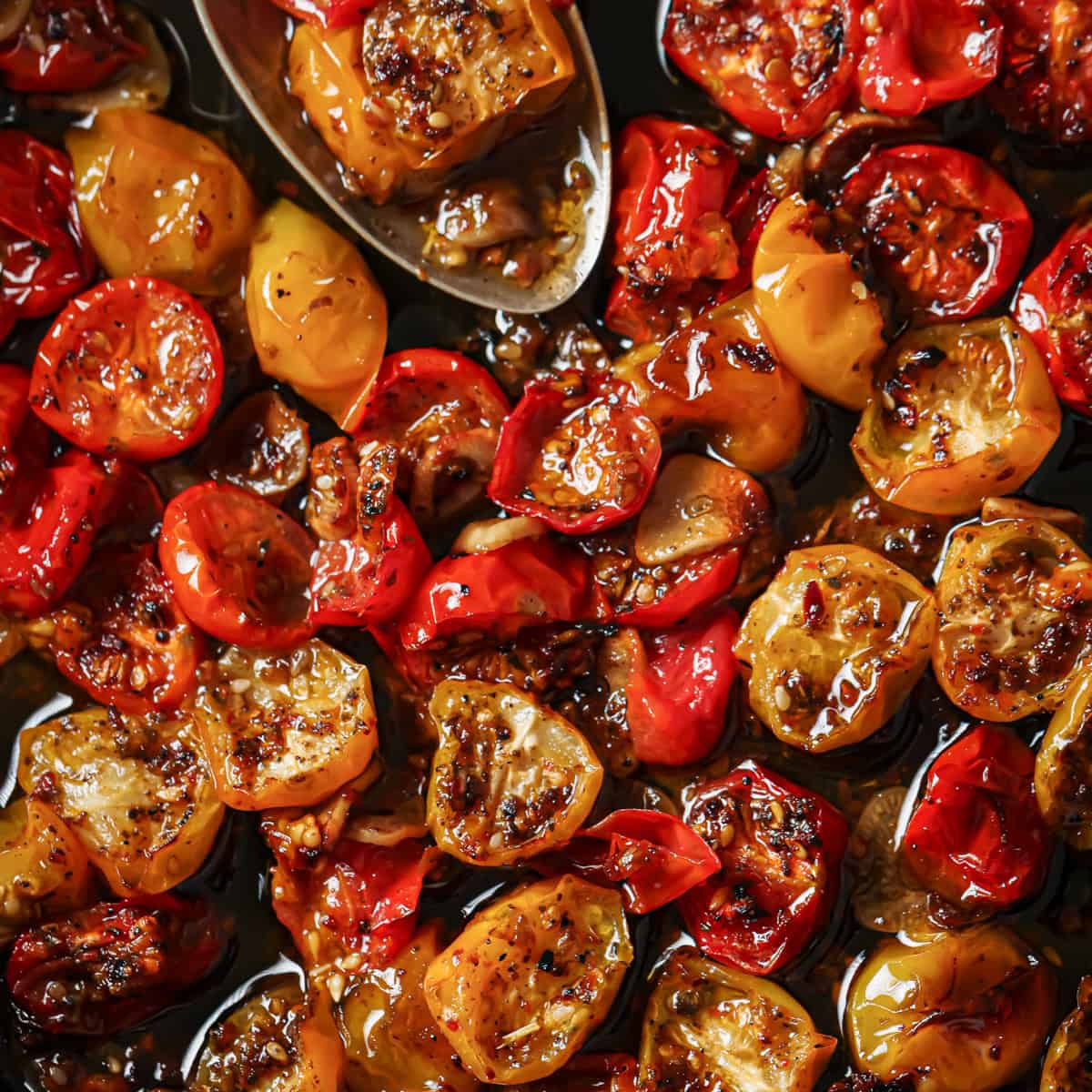
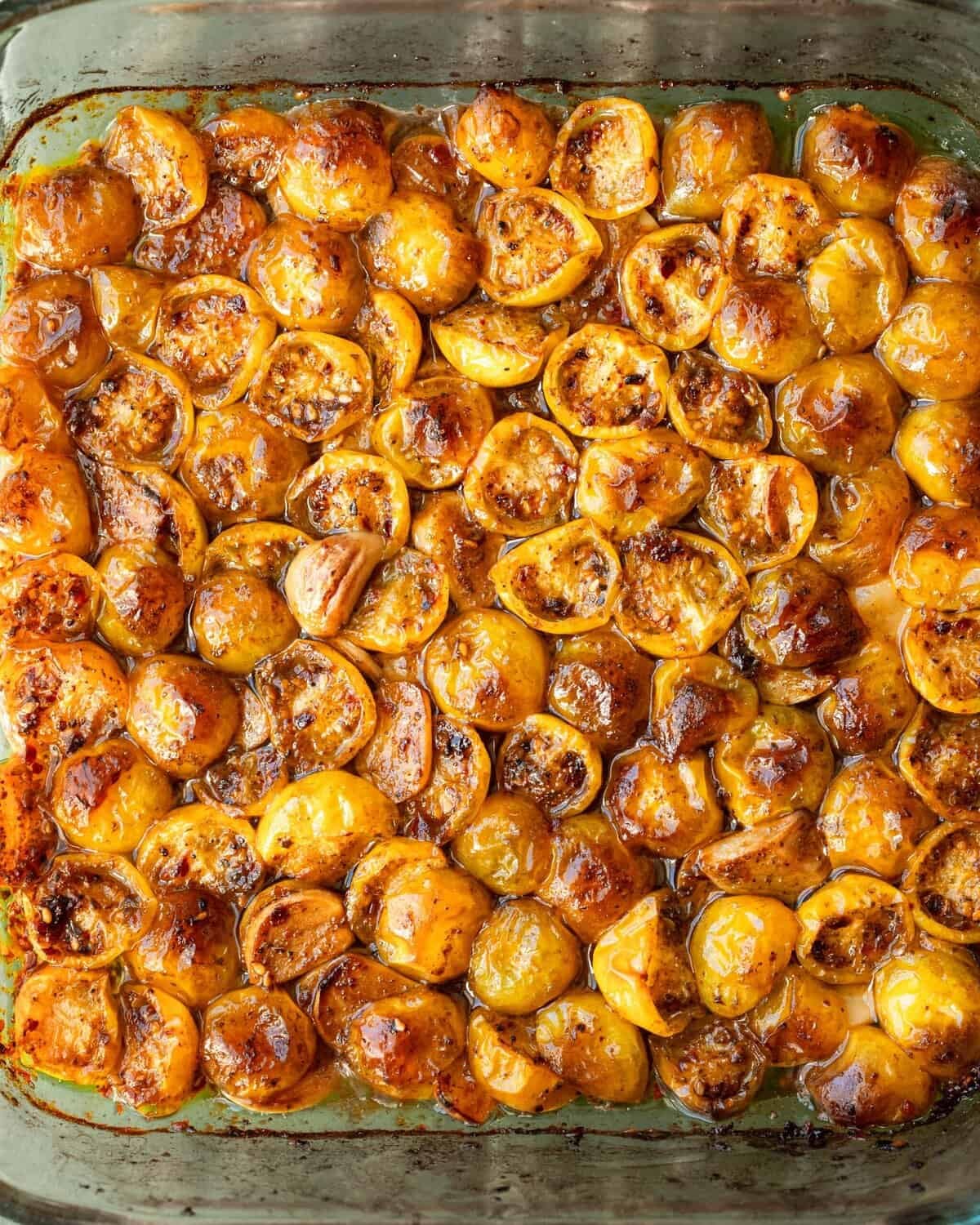
- Bake for 15 additional minutes, until caramelized, soft, and wrinkly.
Tips for making confited tomatoes
Use cherry tomatoes (and halve them!)
This might not be obvious, but cherry tomatoes ≠ grape tomatoes. Cherry tomatoes are sweeter and work best in this recipe, so only use grape tomatoes if they’re all you can find.
Don’t be tempted to keep the tomatoes whole—slicing them exposes their interiors, which are much better-equipped to absorb the salt and spices.
Use the Goldilocks of pans
Translation: not too big, not too small. You want a pan that can hold the tomatoes in roughly a single layer, but packed closely together.
The amount of tomatoes called for in the recipe fits in an 8×8” (20×20 cm) square baking pan perfectly. If you use a larger pan, you will need to use more oil.
Know thy oven (and pan)
If your oven runs hot, check earlier than the 50 minutes listed on the recipe card for the first roast—you don’t want the tomatoes to burn or dry out.
If using a metal pan or cast iron skillet, which conduct heat differently than a glass pan, you’d be safest checking at 45 minutes.
🚨Store correctly — please read, for safety reasons!! 🚨
Never store these confited tomatoes at room temperature.
Garlic should never be left in oil at room temperature because of the risk of botulism, a rare but potentially fatal form of food poisoning. The bacterium that causes this will not change the look, smell, or taste of the confit, meaning you can’t rely on your senses to detect its presence.
For this reason, it’s extra important to know how to store this confit so you can enjoy it safely!
Short-term storage
If you’re not eating the tomato confit now, let the tomatoes cool for a bit (but not for a long time because the botulism-causing bacteria grows at room temperature). Then transfer them, along with all of their oil, to a sterilized jar (see FAQ for sterilization instructions). Refrigerate and use within a couple days.
Long-term storage
Just like for short-term storage, let the tomatoes cool for just a bit before transferring them with their oil to a sterilized jar. Now, make sure the tomatoes are covered in oil so they are not in contact with any air. You may need to drizzle more olive oil on top to achieve this.
Refrigerate for up to 4 weeks, or freeze for up to 3 months. Always use a clean spoon when digging into the confit and—say it with me—Do. Not. Store. At. Room. Temperature.
If the oil solidifies in the fridge
This is likely to happen after several days of refrigeration. To return it to a liquid state, fill a bowl with warm (not hot) tap water and set the jar of confited tomatoes in it for 5 – 10 minutes, refreshing the water if necessary. The oil will melt quickly and the garlic won’t get warm enough to be a concern.
How to use confited tomatoes
As a mind-blowing pasta sauce
So simple, and so exceptional. Just pair this tomato confit with freshly-cooked pasta for a simple yet delicious dish. Check out the first FAQ for instructions for an easy pasta recipe.
While not quite pasta, this tomato confit would also be amazingggg spooned over polenta (see p. 513 of Big Vegan Flavor for my Oven-Baked Polenta with Tomatoes & White Beans).
As the be-all and end-all of condiments
Spoon this confit tomato onto virtually any grain bowl or dinner bowl for a rich and flavorful finish. Seriously. You cannot go wrong here.
These tomatoes + bread = BFFs
They’re a match made in heaven.
- Say hello to upgraded bruschetta! Shmear this over toasted sourdough (or bread of choice), smashing the tomatoes to create a luxurious spread. For a more filling open-faced sandwich, start with a layer of my whipped tofu ricotta and then add the confit.
- Make fabulous flatbreads—start with the confit, top with arugula and thinly-sliced red bell peppers, then drizzle with leftover confit oil and finish with a squeeze of lemon or a splash of red wine vinegar! YUM.
- Smash the tomatoes and oil into a sandwich spread. I can’t think of a sandwich this WOULDN’T vastly improve.
Turn it into a dip
- Serve it in a shallow bowl as a dip for bread when you’re hosting—I guarantee it won’t last long.
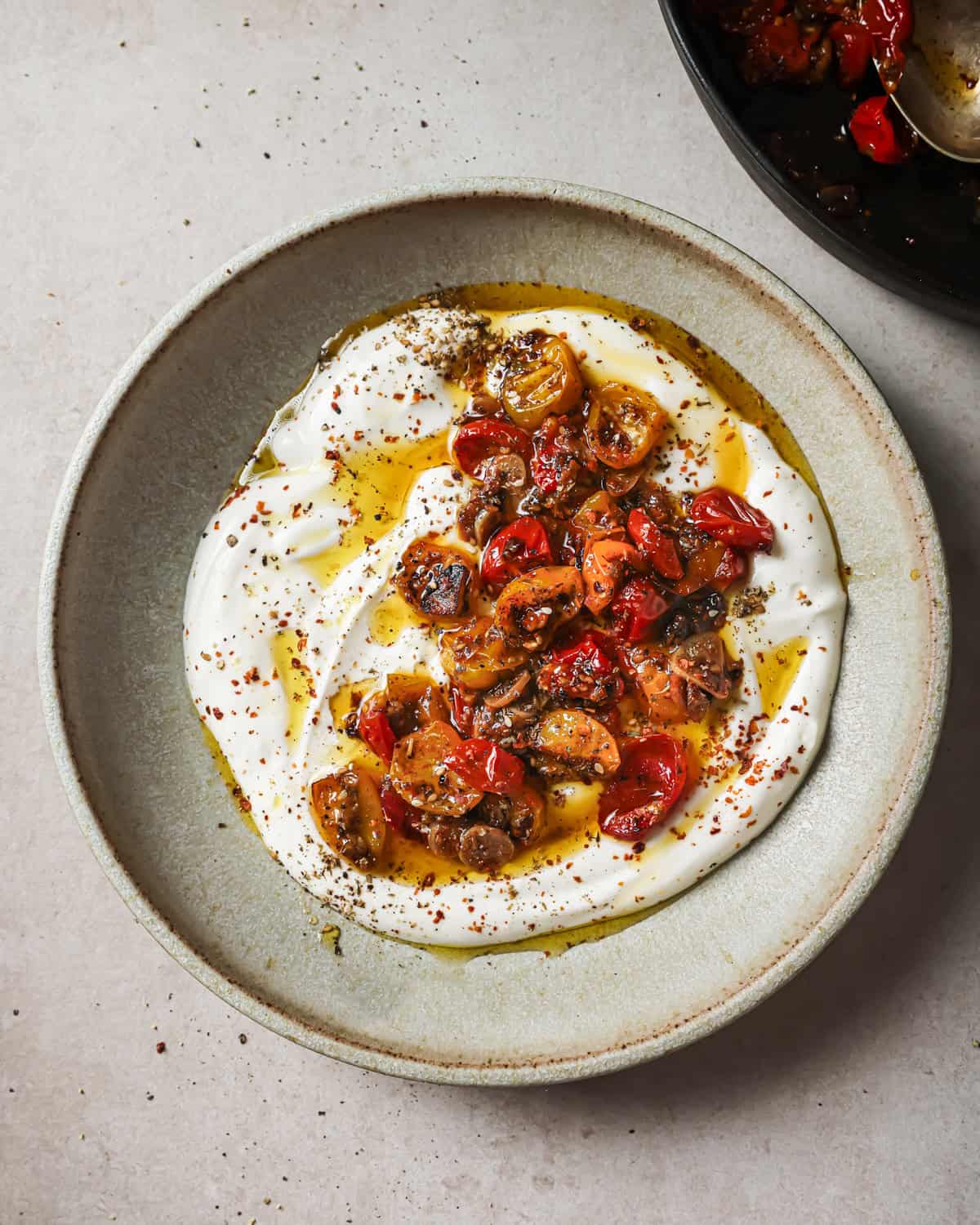
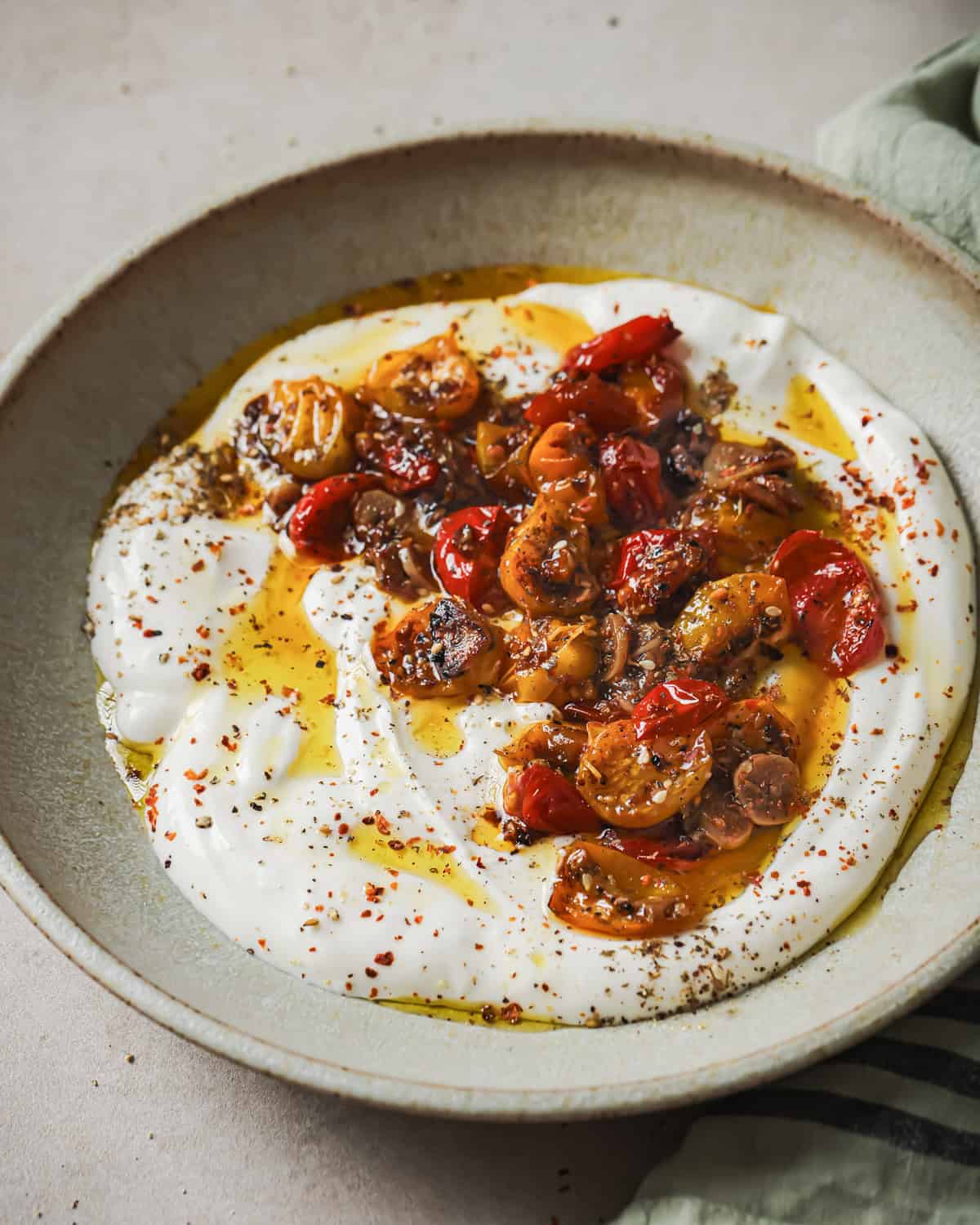
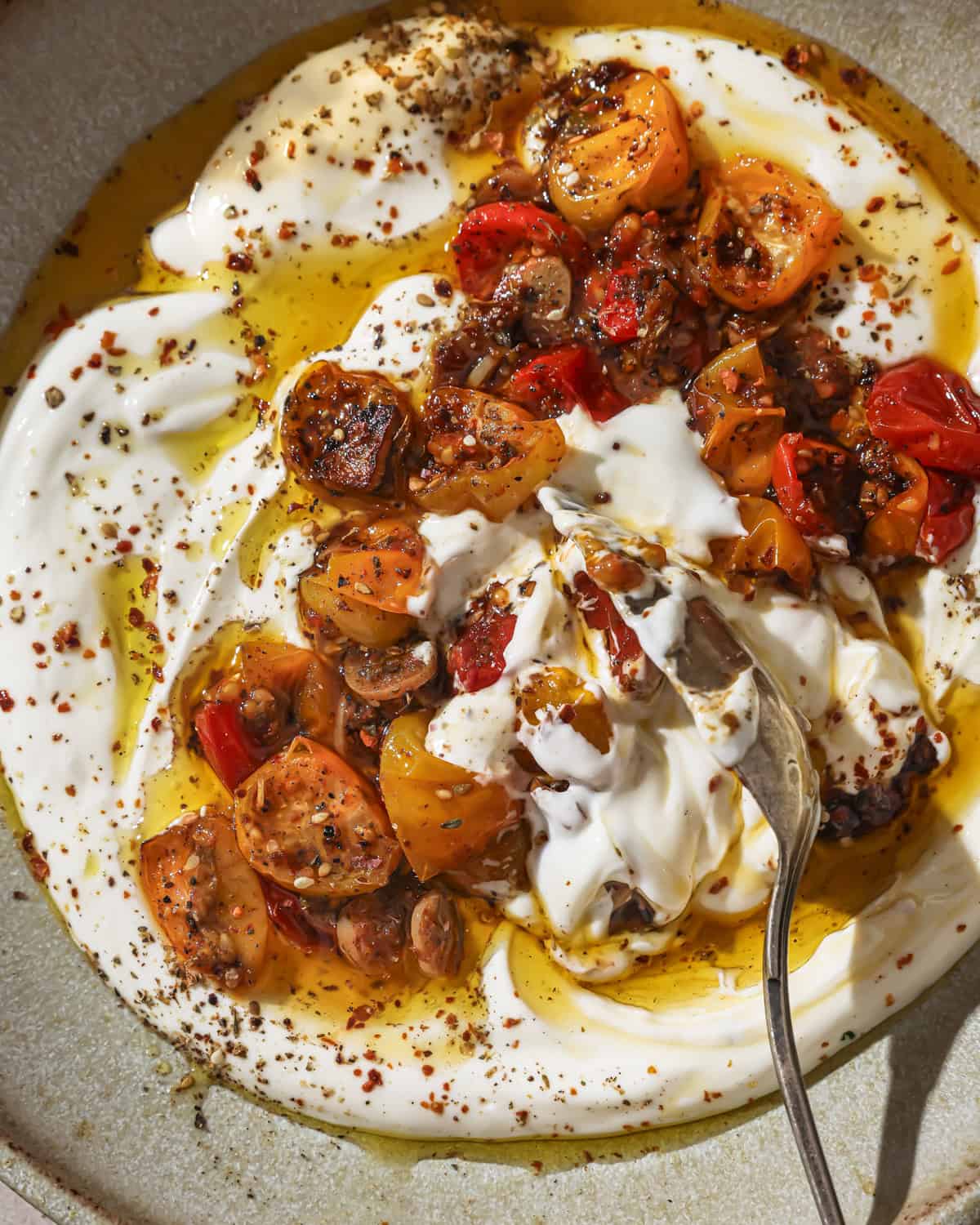
- Or spoon the tomato confit over creamy coconut yogurt and drizzle confit oil on top, as shown in the photos. Scoop up with crusty bread.
Blend it!
You can blend leftover tomato confit into a rich sauce that makes an excellent pasta sauce! Or, stir the blended goodness into soups (this would majorly upgrade any tomato soup) or risotto at the end of cooking.
Leveled-up salads
- Fold the tomato confit into a white bean salad, lentil salad, or corn salad.
- Use leftover confit oil in vinaigrettes, like red wine vinaigrette.
- Pair the tomato confit with slices of vegan mozzarella or dollops of whipped tofu ricotta for an elegant vegan spin on a burrata salad.
Frequently Asked Questions
1. Cook 8 oz (227g) of linguine or bucatini in boiling salted water until al dente. Scoop out a ladle of pasta water and then drain. Return the pasta to its pot.
2. Strain the tomato confit of excess oil, reserving the oil in a jar. You’ll typically be able to strain away about 2 ½ tablespoons or 35 g of oil.
3. Add all of the tomatoes to the pasta with a few splashes of pasta water and cook over medium heat for a minute, tossing with tongs until the sauce is slightly creamy and sticks to the pasta.
4. Season with flaky salt and black pepper and finish with sliced basil. If you have vegan feta or parmesan on hand, you can fold that in too.
5. You can also use the leftover confit oil to cook up a protein to serve with the pasta. Some pan-fried white beans or chickpeas in the confit oil would be great. Or, store the leftover oil in a jar in the fridge. Check out the third FAQ for ideas on how to use it.
If you submerge the tomatoes in olive oil before storing, these will stay good in the fridge for up to 4 weeks or up to 3 months in the freezer. If you don’t, you should use them within a few days.
This recipe involves garlic in oil, so proper storage is critical to prevent any risk of botulism. Please read the Tips section or the storage instructions detailed at the bottom of the recipe card, which have detailed tips.
The most important takeaway: don’t store confit at room temperature.
Leftover confit oil = liquid gold. Let it upgrade your cooking in multiple ways!
• Use it in vinaigrettes and sauces that call for olive oil
• Cook other vegetables or proteins in it (pan-fried chickpeas or white beans are delish)
• Use it to start a batch of tomato sauce
• Drizzle it over roasted/steamed vegetables or finished dishes as a luxurious finishing oil
We tried doubling this recipe in a larger pan (13 x 9”), and while it was good, it didn’t have the same concentration and intensity of tomato flavor—major bummer.
For the best results, I’d recommend doubling the ingredients and splitting them across two smaller pans. They should both fit on one oven rack, but if not, rotate the pans halfway through cooking.
Because of their higher water content, I don’t recommend using them here, as it will make the confit watery and you won’t get the same results.
Did these confited tomatoes rock your world with their intensely tomatoey goodness? Let me know by leaving a rating and review below—I’d love to hear your favorite ways to use these!

Introducing
Big Vegan Flavor
Techniques and 150 recipes to master vegan cooking.
Confited Tomatoes

Equipment
- 1 8×8” (20×20 cm) baking dish
Ingredients
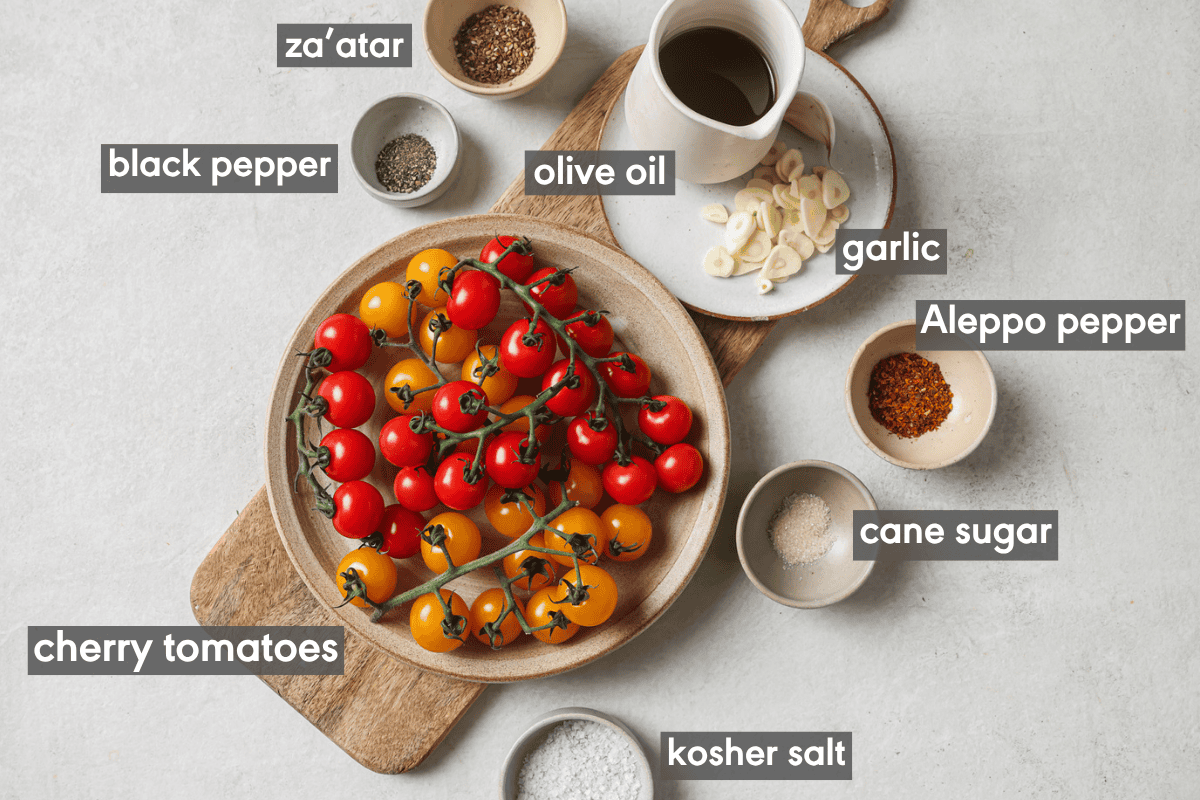
- 12 oz (340g) cherry tomatoes, halved (see Note 1)
- 4 fat cloves garlic, sliced (not too thinly to prevent burning)
- 1 ½ teaspoons za’atar
- 1 ½ teaspoons Aleppo pepper (see Note 2)
- ½ teaspoon organic cane sugar (see Note 3)
- ¾ teaspoon Diamond Crystal kosher salt (see Note 4)
- Freshly cracked black pepper
- 6 tablespoons (84g) extra virgin olive oil, divided
Instructions
- Preheat the oven to 350ºF/175ºC. Arrange a rack in the middle of the oven.
- Grab a 8×8” (20×20 cm) baking dish or other oven-safe pan that can hold the tomatoes in roughly a single layer, packed closely together (a pan that’s too big = you’ll need to use more oil than listed). Add the halved tomatoes, garlic, za’atar, Aleppo pepper, sugar, salt, and several cracks of black pepper to the pan. Toss well with your hands to coat the seasoning into the tomatoes.
- Drizzle on 3 tablespoons (42g) olive oil, and toss again to coat. Spread out in a single layer or mostly single layer.
- Transfer to the oven and roast for 50 minutes, or until soft with some browning on the edges.TIPS: If using a metal pan or cast-iron skillet, you may want to check 5 minutes earlier. TIPS: If you wish to store these for more than a few days, sterilize a glass jar while the tomatoes roast (see storage instructions below).
- After 50 minutes, remove the pan from the oven and shake everything around a bit. Pour 3 tablespoons (42g) olive oil over the tomatoes and shake to evenly coat the tomatoes. Return to the oven to roast for 15 minutes, or until tomatoes are caramelized, soft, and wrinkly and edges are browned.
Storage Instructions
- For longer storage (up to 4 weeks in the fridge; 3 months in freezer): Let the tomatoes cool a bit before transferring them and the oil to a sterilized or clean jar. Remember: don’t let the confit sit out at room temp for too long, as garlic shouldn’t be left in oil at room temperature for food safety reasons. Make sure the tomatoes are completely covered with oil so that air doesn’t enter the jar; you may need to drizzle with a bit more olive oil on top.Refrigerate and always use a clean spoon when digging into the confit. NOTE: The olive oil may solidify in the fridge after several days. If that happens, fill a bowl with warm (not hot) tap water and set the jar of confited tomatoes in it for 5 to 10 minutes. The oil will melt quickly and the garlic won't get warm enough to be a concern.
- If using tomato confit within a couple days: Let the tomatoes cool a bit before transferring them and the oil to a clean or sterilized jar. Remember: don’t let the confit sit out at room temp for too long, as garlic shouldn’t be left in oil at room temperature for food safety reasons. Refrigerate for a few days and always use a clean spoon when digging into the confit.
Notes
- In my experience, the sweetest tomatoes are golden or yellow cherry tomatoes. Try to use cherry tomatoes as opposed to grape tomatoes, as cherry tomatoes are sweeter.
- You can substitute with any mild chili flake of choice. If all you have is red pepper flakes, use a lot less, as they’re much spicier, ½ teaspoon at the most.
- If you are using peak summer tomatoes that are very sweet, you can omit this. Otherwise, I recommend including it.
- If using sea salt, use a scant ½ teaspoon. If using table salt, use a heaping ¼ teaspoon.
Nutrition
Nutrition information is automatically calculated, so should only be used as an approximation.
 Love this? Leave a rating below!