


Welcome to the complete guide to cooking tofu (and making it taste DELICIOUS).
This post details the essential techniques for tofu preparation aimed at enhancing the flavor and texture potential of tofu so you can take your tofu skills to the next level!
In this post:
Meet your chef
Why should you let me be your guide through the world of cooking tofu?
- I’ve been cooking tofu for a decade, and have published over a dozen of the most popular tofu videos on YouTube, with a combined 8 million+ views.
- My recipes are trusted by experts. I hate self-promotion but am apparently supposed to do it, so this is where I tell you I’m an NYT Cooking contributor (and my tofu recipes are pretty popular there!). I’m also a vegan cooking expert for Chowhound and Tasting Table, and my most recent cookbook (packed with tofu recipes) was an NYT bestseller and James Beard nominee.
- I love the science of tofu so much, I spent weeks researching the best methods to make crispy tofu at home.

With over 1.2M views, this video was a huge hit with my audience!

A quick review of the tofu basics
Tofu is a plant-based protein made from soybeans and water, and it comes in a wide range of textural varieties based on water content.
On the watery end of the spectrum, we have silken tofu. It’s very delicate and often served raw and blended into recipes to lend creaminess in texture without flavor. On the firmest end of the spectrum, we’ve got super-firm tofu, which is best used as a meat substitute.
For a more thorough walkthrough on the different types of tofu and how to use them, check out my Tofu 101 Guide.
In between those two extremes on the spectrum, you’ll find firm and extra firm tofu, which are the most user-friendly and versatile: they’re porous enough to successfully absorb flavors from sauces and marinades, but still sturdy enough to withstand high heat. This versatility lends itself to a variety of cooking methods.
In short, while I hate to play favorites, we’ll focus on firm and extra firm tofu in this blog post, as they are the types of tofu I most frequently call for in my recipes.
Methods of prepping tofu
To maximize tofu’s flavor absorption potential and prime it to take on the texture you’re aiming for—whether that’s maximum crispiness or juicy tenderness—you first need to prep tofu.
TLDR: There is a suite of options available to you when it comes to tofu preparation, and knowing each technique and its optimal application sets you up for success in a major way.
Prepping Method 1: Pressing Tofu
Firm varieties of tofu (except for super-firm tofu) are almost always sold packed in water. Even when you drain the tofu from the water, you’ll notice the tofu seeps out water when you squeeze it—that’s because there’s a significant amount of water inside the tofu.
Pressing out some excess moisture has two benefits:
- With less water, the tofu is better able to absorb other flavors (from sauces, marinades, etc.)
- Tofu with less internal moisture is better able to crisp up.
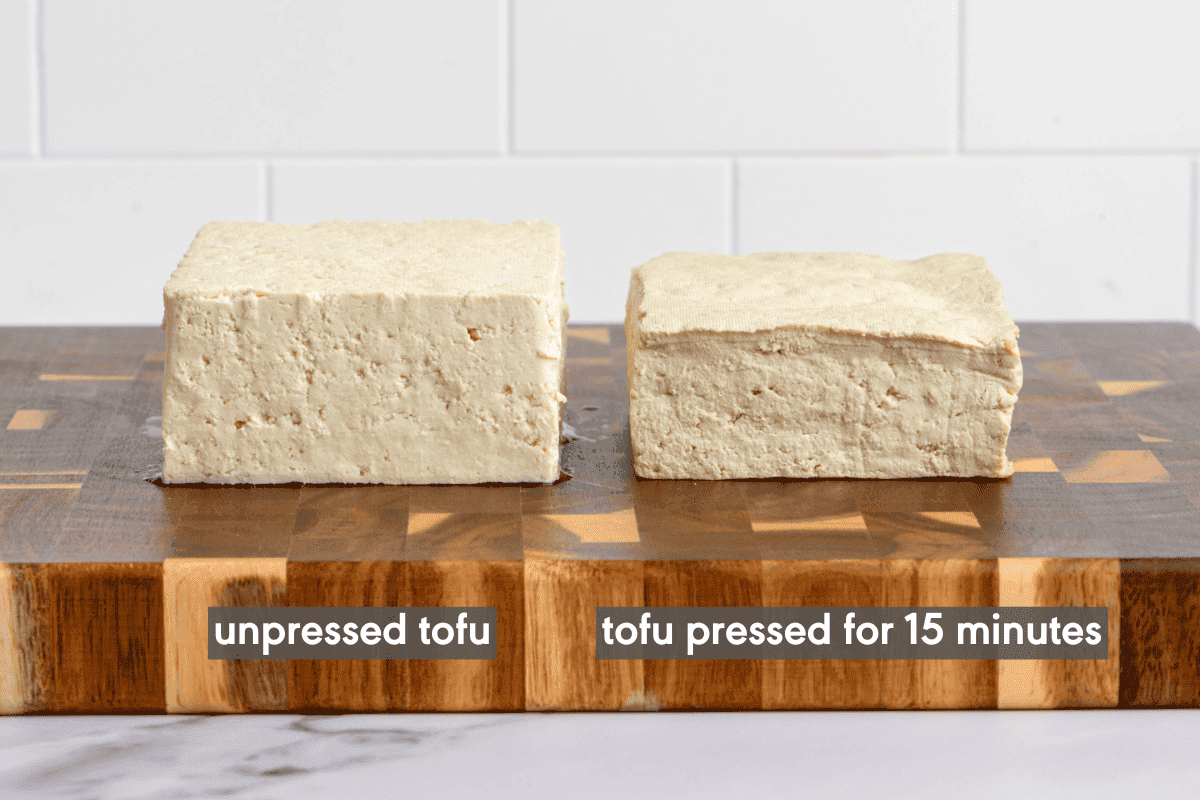
How to press tofu: classic method
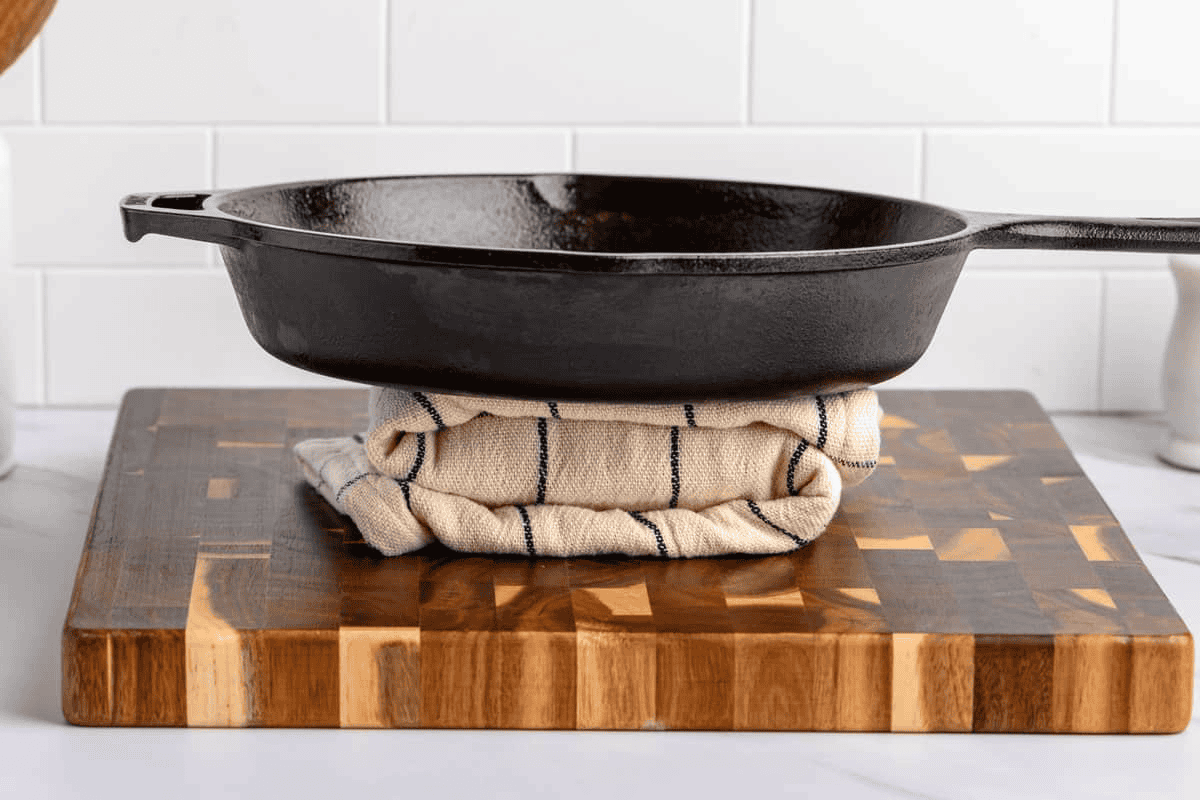
- Drain the water from the package, then wrap the block* in a clean kitchen towel or layers of paper towel.
- Place it on a cutting board or large plate. Weigh down the brick with a heavy cookbook, a cast iron skillet, or a large plate weighed down by a few cans of beans or tomatoes.
- Let the water drain from the tofu for at least 10 minutes or up to 30 minutes depending on the recipe. Change the towel halfway through if needed.
*If the recipe doesn’t require specific tofu shapes, I prefer to first slice the tofu into 4 vertical slabs, wrap them in towels, then press. It’s faster to press out excess water from smaller pieces rather than one large block.

How to press tofu: tofu press method
A tofu press is a device designed to press all of the water out of a brick of tofu. I have this one and love it.
Try this method in action
Pressing is the method called for in my extremely beginner-friendly simple baked tofu, as well as my baked peanut tofu, my tofu scramble, and so many more.
Prepping Method 2: Soaking Tofu in Hot Salt Water
Interestingly—and perhaps counterintuitively, but stay with me—soaking tofu in a hot saltwater solution often removes even more moisture than pressing it!
From a high level, here’s what’s going on: the salt in the hot water attracts the water molecules within the tofu and draws them out (thanks, osmosis!).
How to soak tofu in hot salt water
- Cube or tear your tofu into chunks first—you don’t want to soak the block whole.
- In a heatproof glass or jar, combine 2 cups (480 mL) boiling water with 1 tablespoon of Diamond Crystal kosher salt (see the recipe card if using another type of salt). Stir to dissolve the salt, then pour over the tofu. Soak for 10 minutes.
- Drain the tofu in a colander, spread it out on a clean dish towel, and gently pat dry.

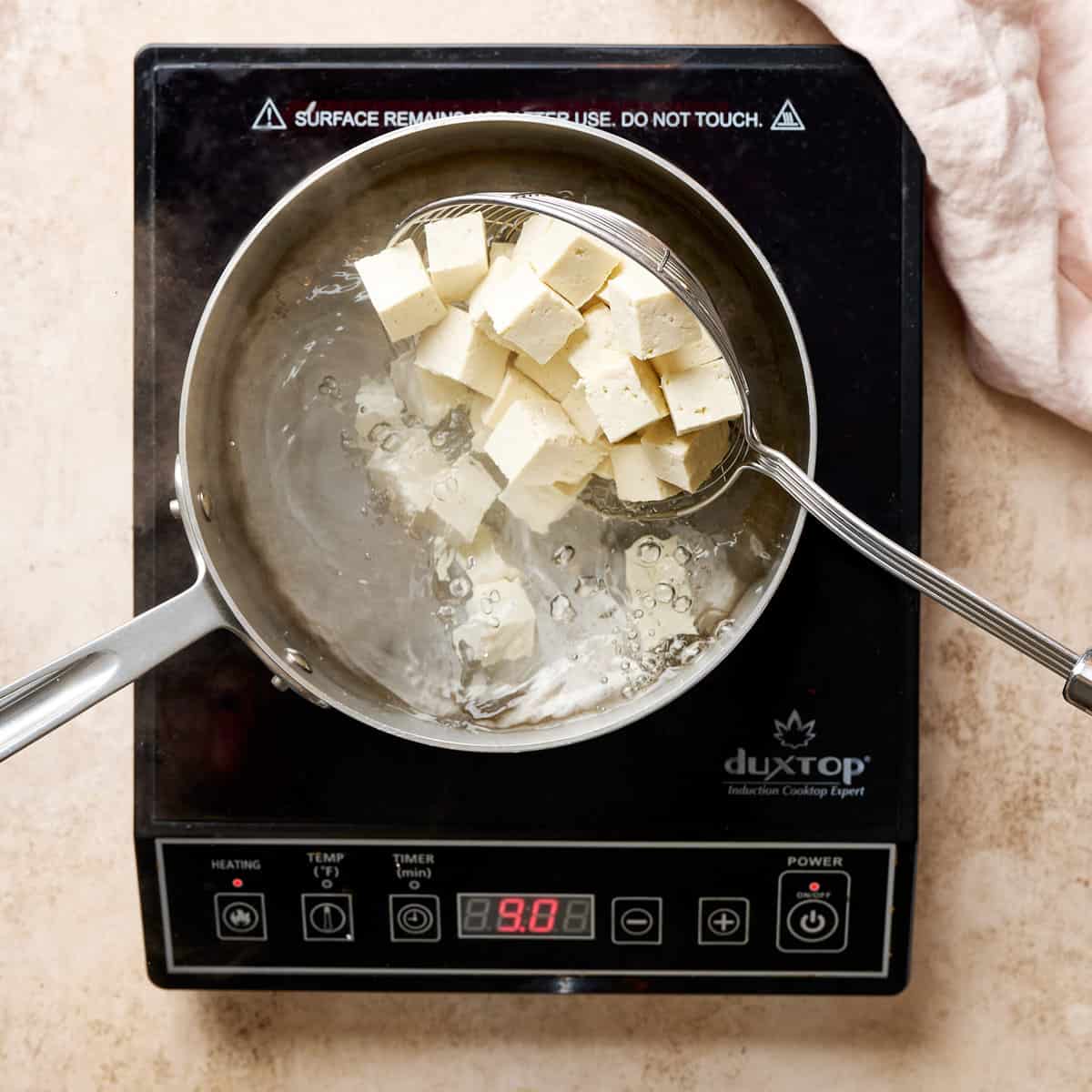
Alternative: boil the tofu!
Plop the tofu pieces into salted boiling water for 2 minutes, then scoop out with a slotted spoon.
Dab them dry, and you’re ready to rock and roll.

Try this method in action
Soaking tofu in hot salt water: This is the method used in the featured recipe of this blog post, so scroll down and give it a try in my Crispy Pan-Fried Tofu Chunks!
Boiling tofu in salt water: Try my Tofu Curry or Vegan Palak Paneer.
Prepping Method 3: Freezing Tofu
Once again, we’re relying on science to level up our tofu prep: freezing, then thawing a block of tofu can improve its texture and flavor depending on the recipe, because it essentially changes the tofu’s internal structure!
As tofu freezes, the water inside of it turns into ice crystals. These ice crystals melt upon thawing, leaving little air pockets throughout the tofu that make it better at absorbing flavors, just like a sponge.
The result is often a tofu that is chewier and meatier. Employ this technique in recipes where the tofu needs to be fried and/or simmered in flavorful sauces, because it primes the tofu to sponge up the flavor like a dream.
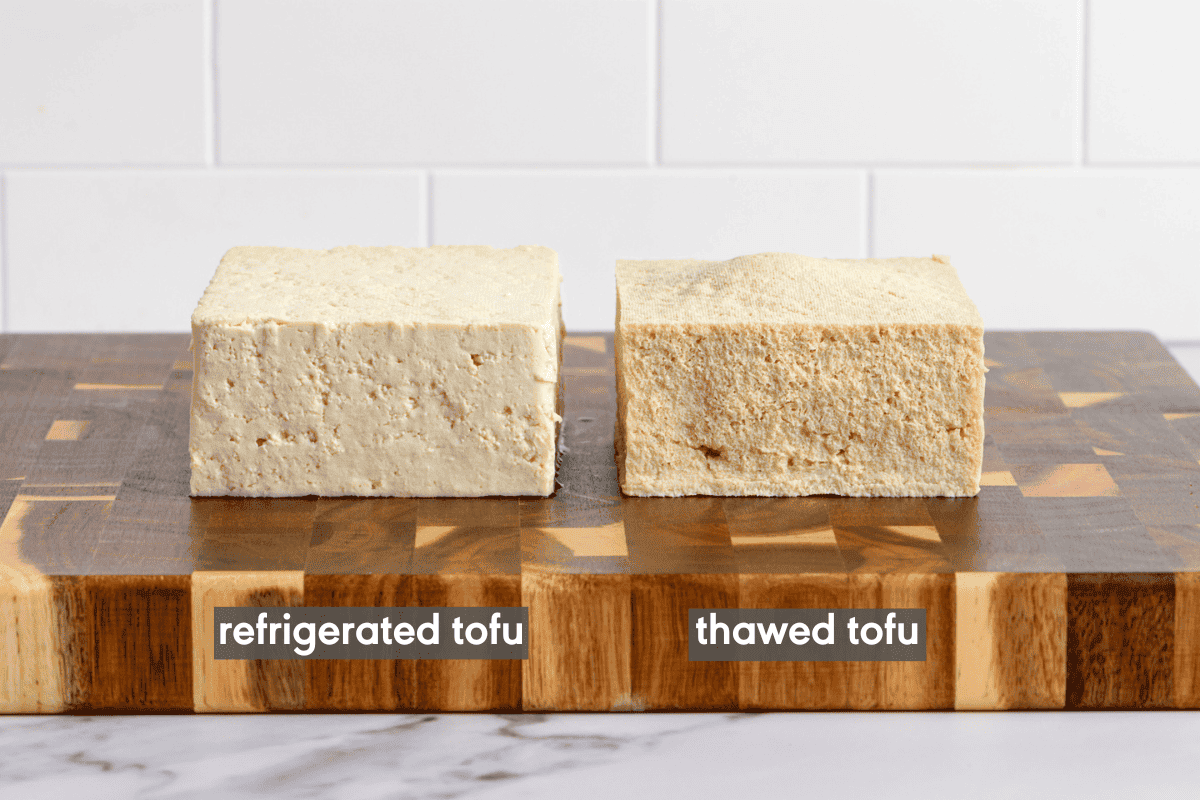
How to freeze tofu
You have two options:
- Chuck the entire unopened package of tofu in the freezer and let it freeze for a minimum of 10 hours. Be sure not to place anything else on top of the tofu package, as it will interfere with the freezing process.
- Open the tofu package and transfer the tofu to a freezer-safe container, with or without its water (or add fresh water). Freeze for at least 8 hours.
In our experiments, the second method yielded slightly better and more consistent results, but both methods work great!
How to defrost tofu
- Long method: Leave the tofu to thaw in the fridge. This can take between 1 and 2 days, depending on how long you froze the tofu.
- Shortcut: Place your tofu on an aluminum sheet pan like this at room temperature for up to 2 hours, then return it to the fridge. Thermodynamics magic happens when you defrost frozen food on aluminum defrosting trays. Alternatively, leave the tofu in a bowl or pan of warm water.
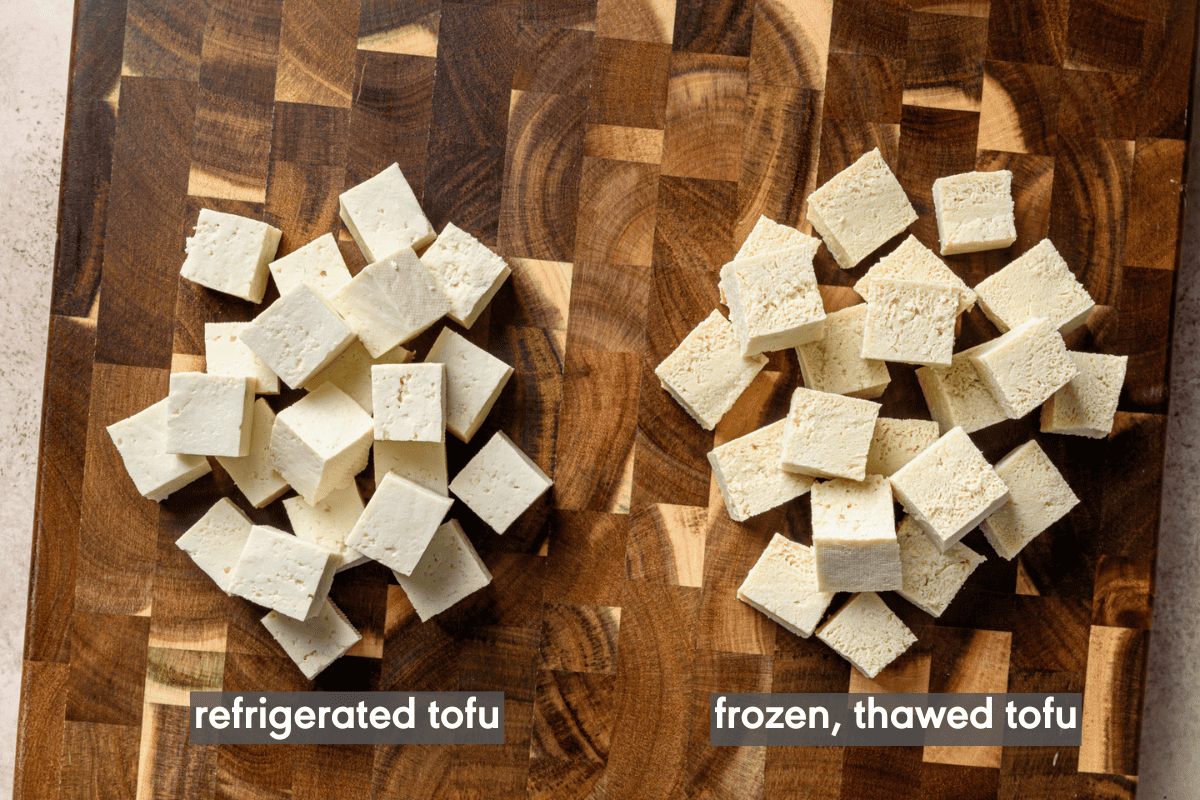
Pro Tip: After you defrost tofu, you’ll notice there’s still quite a bit of water in the tofu. You can simply use your palms to squeeze out any excess water (the defrosted tofu is sturdy enough to handle gentle squeezing).
Try this method in action
Give freezing and thawing tofu a try by making my Vegan Curry with Tofu, Tofu Stir Fry, Marinated Tofu, or my Spicy Noodle Stir Fry with Salt & Pepper Tofu from NYT Cooking (gift link!).
Prepping Method 4: Marinating Tofu
Marinating tofu can be tricky because, unlike meat, tofu is quite watery and porous. If you were to pour a liquidy marinade on top of some cubed extra-firm tofu, most of the marinade will slip right off, leaving you with underwhelming tofu.
So, here are my two main tips for marinating tofu:
- Use previously frozen and thawed tofu (or tofu that’s been boiled in hot saltwater)
- Use a fairly viscous marinade (i.e., not a water-heavy marinade). Adding a bit of oil or toasted sesame oil along with a sweetener like brown sugar or maple syrup can aid in this.
Try this method in action
My savory, sweet, nutty Marinated Tofu recipe is seriously delicious! Use it in bowls, wraps, salads, or as a topper for savory oatmeal.
Looking for no-prep tofu recipes?
In a rush and don’t have time to press, soak, or freeze your tofu?
You can skip these prep steps if you are (a) crumbling extra-firm tofu, (b) slicing extra-firm very thinly, or (c) using super-firm tofu.
(1) Cooking extra-firm tofu crumbles
Simply break the extra-firm tofu block into 6 to 8 large chunks. Gently press each chunk between your hands over the sink or a bowl to release excess water. From here, crumble the tofu into small pieces.
You can toss the crumbles with spices, salt, and cornstarch and pan-fry, or just pan-fry plain.
(2) Cooking thinly sliced tofu
Gently press down on the extra-firm tofu block with a dish towel, then slice crosswise into ⅓” (.75 to 1 cm) thick slabs. Spread them out on a cutting board and gently press down with a dry towel a few times.
Sprinkle with salt and pan-fry until golden brown on both sides. Try this method in my 20-Minute Crispy Tofu with Peanut Sauce recipe.
(3) Cooking super-firm tofu
There’s no need to press or soak super-firm tofu in salt water, as most of the water has been pressed out already.
Once you remove super firm tofu from the package, here are some options for preparing it:
- Grate the tofu using a box grater and pan-fry it, as in my Super Savory Grated Tofu recipe for NYT Cooking (gift link!)
- Crumble the tofu into medium pieces and pan-fry it, as in my Chipotle Copycat Sofritas recipe
- Crumble the tofu into smaller pieces and pan-fry it, as in my High-Protein Tofu Noodle Bowl
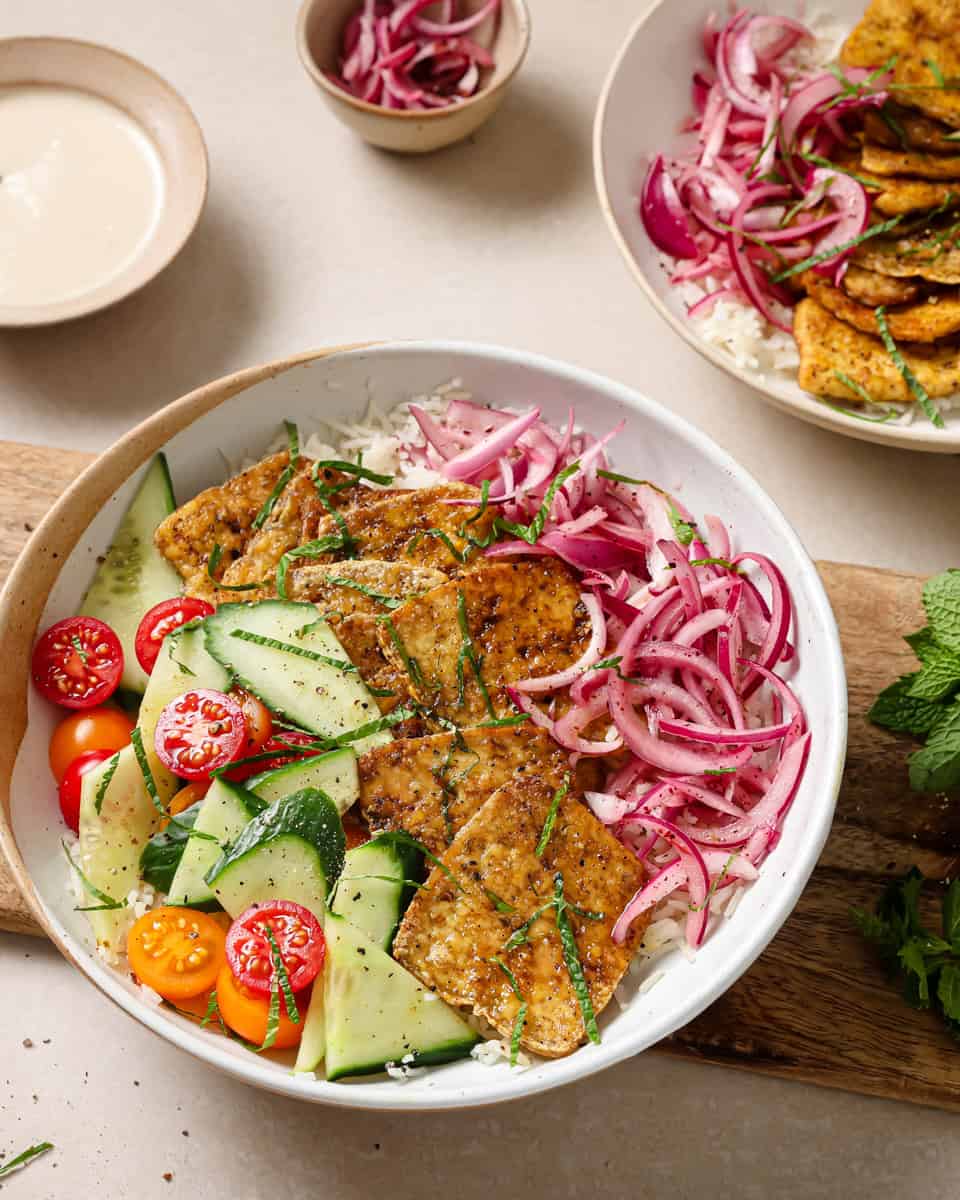
- Thinly slice the tofu and pan-fry it as in my Tofu Shawarma recipe for NYT Cooking (gift link!)
- Shave the tofu with a Y-shaped peeler and pan-fry it (see this YouTube video for instructions)
Methods of cooking tofu
Now that you’ve prepped your tofu, it’s time to get to the main event: cooking the tofu! And the good news is, you’re spoiled for choice when it comes to how, exactly, you do this.
Below are five fantastic ways of cooking tofu.
Each has its unique strengths, which I detail for you, but with these five methods to choose from, you unlock huge potential for transforming a humble block of firm/extra firm tofu into mouthfuls with major textural variety and big-time flavor.
PS: You’ll notice that most of these methods include coating the tofu in a starch, like cornstarch or arrowroot powder. This enhances the crispy potential of tofu, but the best starch option often depends on the method of cooking. Keep on reading for more details.
Cooking Method 1: Baking Tofu
Let’s start simple—just like with animal proteins, you can throw tofu onto a baking sheet, pop it in the oven, and end up with something tasty in about 30 minutes.
Pros
- Uncomplicated, straightforward, and largely hands-off (the oven does most of the work)
- Weeknight-friendly
- Super versatile and customizable
Cons
- Tofu doesn’t get quite as crispy as other methods (pan-frying, deep-frying, or air-frying)
When to bake tofu?
If you’re looking for a hands-off, weeknight-friendly tofu-cooking experience, bake your tofu. You press, toss the cubes in the world’s simplest batter, and while the tofu is in the oven baking, you can prepare the other components of your meal.
Pro tips for baking tofu:
- Tofu variety: I prefer extra-firm tofu.
- Tofu shape: cubes (or chunks)
- Starch: I prefer potato starch or arrowroot powder. Cornstarch tends to taste a little chalky when baked (at least for me, I may be very sensitive to this).
Try this method!
- Start here: my simple baked tofu
- Level up with my Sesame Baked Tofu recipe, p. 270 of Big Vegan Flavor
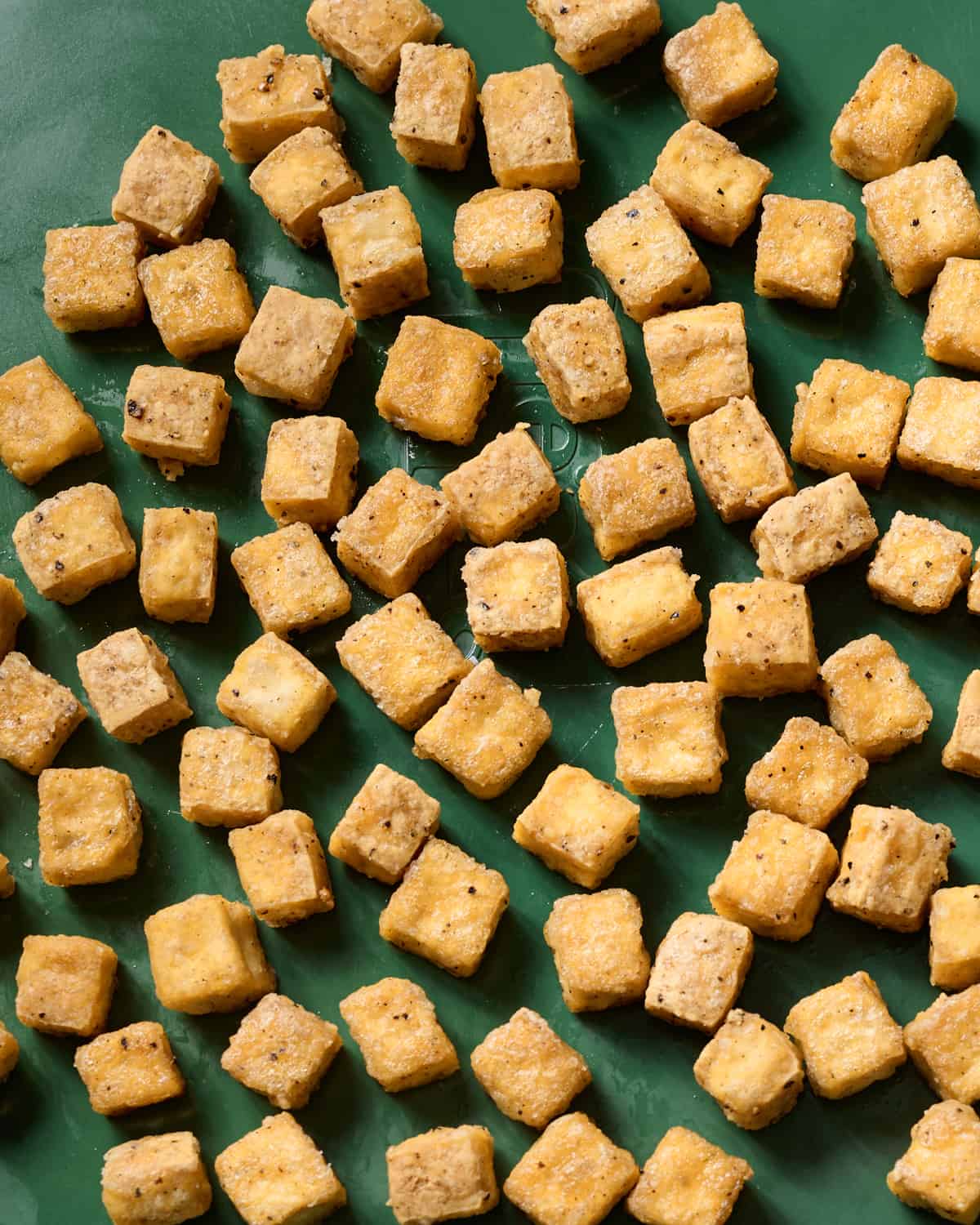
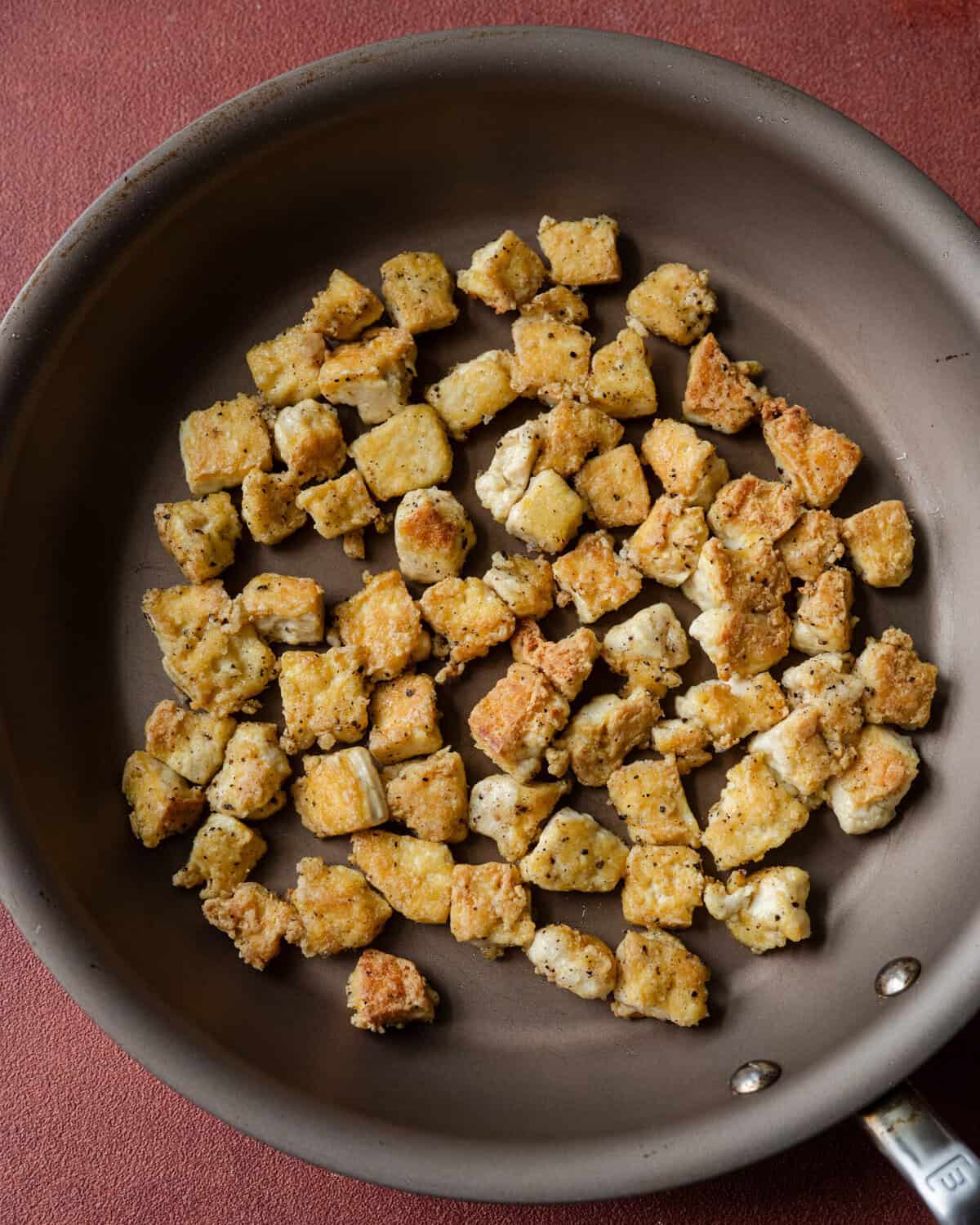
Cooking Method 2: Pan-Frying Tofu
Spoiler alert: this is the method used in the featured recipe of this blog post!
Pros
- Yields crispier tofu than baking
- Weeknight-friendly
- Quickest of all the tofu cooking methods
Cons
- Requires more hands-on work than baking tofu
When to pan fry tofu?
If you want delectably crispy tofu with relatively low time/effort investment (i.e. the crispiest tofu you can achieve on a weeknight), look no further than this method.
Pro-tips for pan-frying tofu:
- Tofu variety: I prefer extra firm tofu. If you prefer a softer interior, try firm tofu.
- Tofu shape: For maximum crispiness, don’t cube your tofu—tear it into pieces instead. The craggy irregularities maximize the surface area exposed to the heat, yielding the crispiest tofu morsels. Plus, they’re easier to toss than cubes and they crisp up faster!
- Starch: fried tofu typically is best with cornstarch. Arrowroot powder and potato starch can make the tofu stick together in the pan, which makes some pieces gummy.
Try this method!
- My favorite method of pan-frying tofu is used in the recipe at the bottom of this blog post, so be sure to check out my recipe for Crispy Pan-Fried Tofu Chunks!
- My fried tofu blog post is another great resource for simple pan-fried tofu.
Cooking Method 3: Deep-Frying Tofu
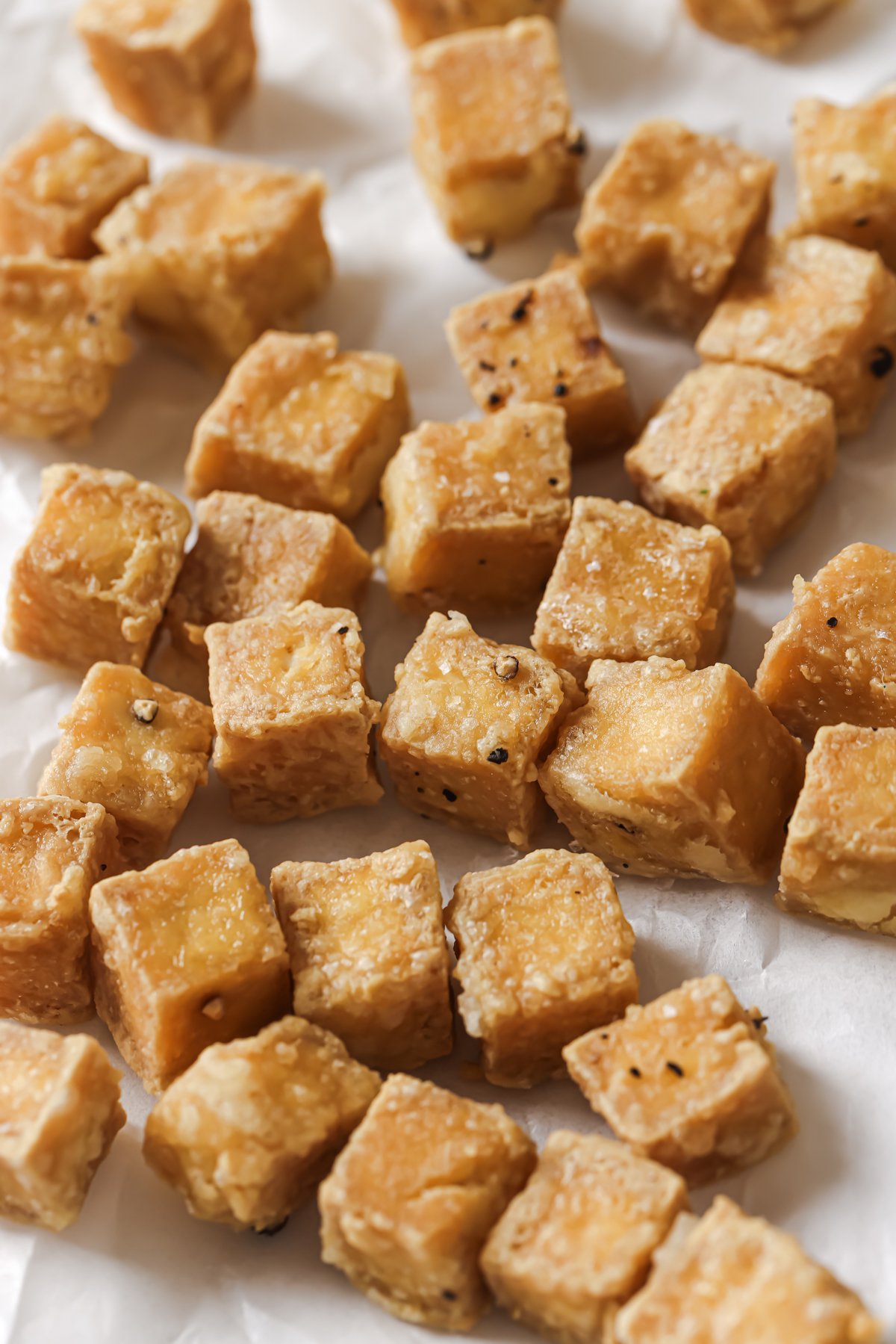
Yes, it’s a little more involved than most of the other techniques in this post, but you really can’t beat this method for a special occasion, or if you want to bite into your tofu and experience movie-sound-effect-style crunch.
Pros
- Yields THE CRISPIEST tofu of any of the methods
- Not as difficult as you think it’s going to be, promise
- Perfect for impressing friends or a special occasion
Cons
- More involved and less weeknight-friendly than other techniques
When to deep fry tofu?
When nothing but maximum crispiness will do. And you don’t mind a little extra cleanup.
It’s also a great way to please tofu skeptics, because I genuinely don’t believe someone could bite into these heavenly nuggets and complain.
Pro-tips:
- Tofu variety: I prefer firm tofu, as it yields a nice contrast between super crispy exterior and slightly pillowy interior. Extra-firm tofu comes out a bit dry IMO.
- Tofu shape: As with pan-fried tofu, tear the tofu into chunks but keep them slightly bigger. This helps ensure the tofu gets crispy but not rock hard.
- Starch: Use a mixture of cornstarch and white rice flour in your batter. White rice flour doesn’t absorb as much oil as wheat-based flours, meaning your fried tofu stays light and airy rather than greasy and heavy.
- Safety Note: Never fill your pan up more than halfway with oil—if the oil level is too high, hot oil can bubble up out of the pan, which is very dangerous!
Try this method!
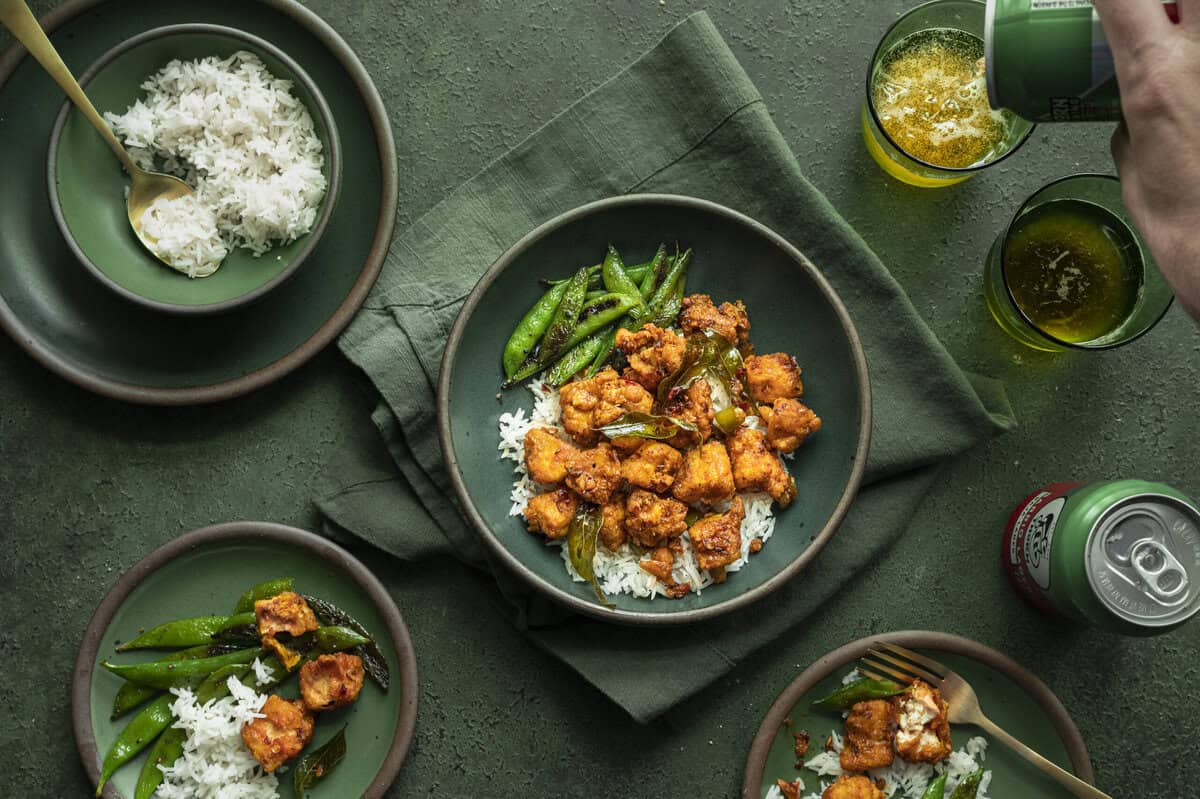
My favorite-ever fried tofu recipe, Tofu 65, can be found on p. 477 of Big Vegan Flavor. Try it—you won’t be sorry.
For a simple Chinese salt-and-pepper fried tofu, watch this section of my YouTube video on crispy tofu methods!
Cooking Method 4: Air-Frying Tofu
If you’re an air fryer aficionado, this one’s for you.
Pros
- Yields impressively crispy tofu—crispier than baked tofu!
- Weeknight-friendly
Cons
- Results are less crispy than pan-fried or deep-fried tofu
- If you don’t have a large air fryer model, you’ll have to cook a block of tofu in two batches. This makes it more time-consuming than baking or pan-frying, unless you’re cooking for one (in which case a half block of tofu is perfect).
When to air fry tofu?
If you’re a devout air fryer-er, go for it! This is also a great method if your oven is full but you still want to whip up a versatile protein, or if you want crispy tofu in the dog days of summer.
Pro-tips:
- Tofu variety: I prefer extra firm tofu.
- Tofu shape: Tofu chunks technically get a tiny bit crisper, but I prefer cubes because you can fit more cubes in a standard-sized air fryer basket.
- Starch: Arrowroot powder produced the crispiest results in my tests, but potato starch and cornstarch also work.
Try this method!
I’ve dedicated a whole blog post to Crispy Air Fryer Tofu here!
Cooking Method 5: Braising Tofu
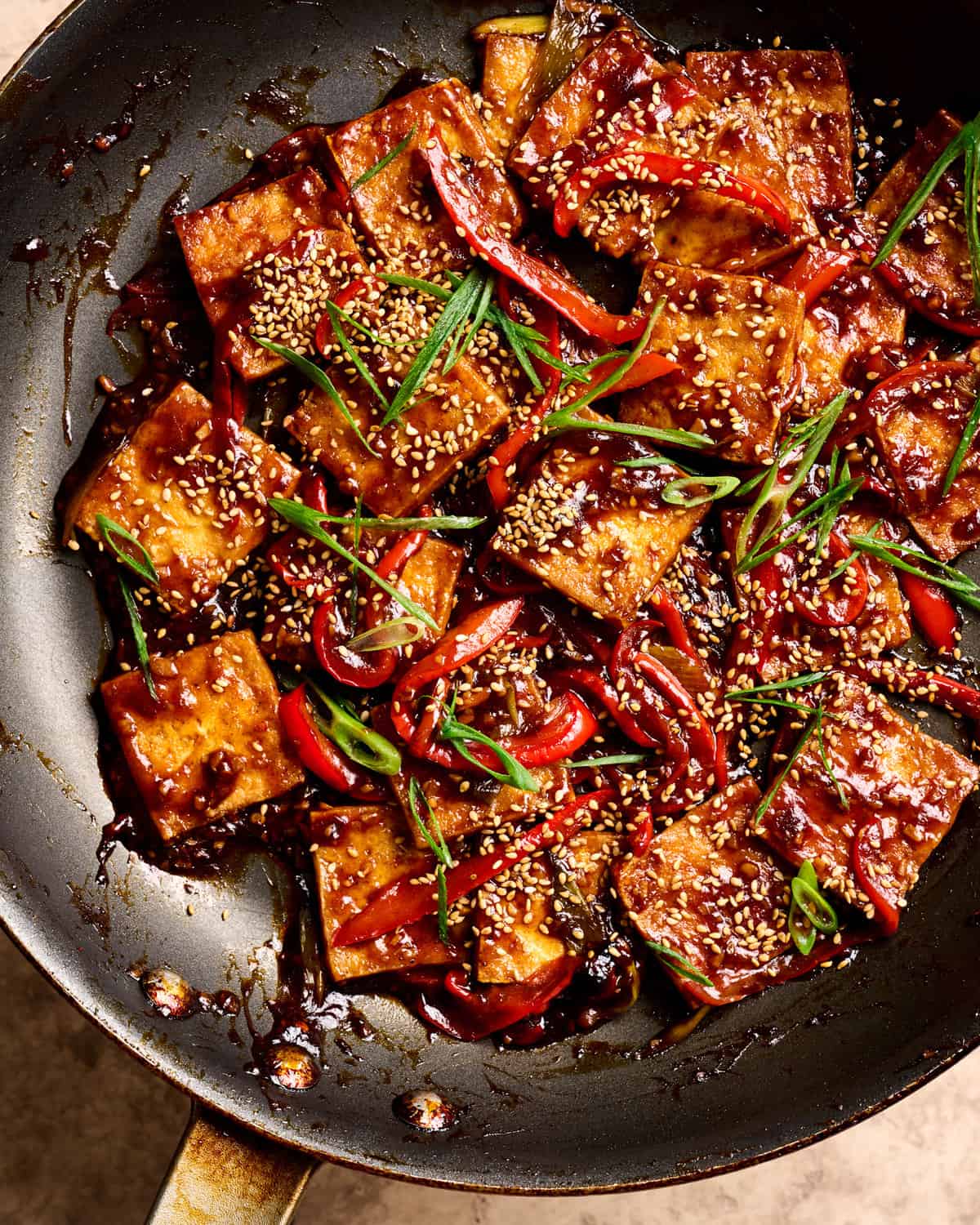
The four methods above are primarily aimed (and excellent!) at getting tofu to be crispy, but this one comes at the job of cooking tofu with a different top priority—imparting maximum flavor to tofu slabs.
Pros
- Unmatched when it comes to infusing tofu with deep, rich flavor
- Fancy-feeling, while still being doable on a weeknight
Cons
- Requires pan-frying and simmering the tofu, so it’s a bit more time-consuming and hands-on than other techniques
When to braise tofu?
If you’re in the mood for saucy tofu, it’s time to get braising. This method infuses the tofu with deep flavor from your braising liquid, so you’ll end up with strikingly flavorful, tender yet chewy results.
Pro-tips:
- Tofu variety: I prefer extra firm, but firm tofu is also nice.
- Tofu shape: I like to cut the tofu into squares or rectangles, rather than small chunks or cubes.
Try this method!
- My Chinese-inspired braised tofu is truly one of my favorite ways to eat tofu, and once you try it, you’ll see why.
- …And while we’re talking about my favorite ways to eat tofu, check out my Sticky Coconut Milk-Braised Tofu on p. 278 of Big Vegan Flavor, for beautifully spongy, tender tofu with Thai-inspired flavors.
Excited to cook some tofu?
With these techniques for tofu preparation and cooking in your repertoire, you are well-equipped to start whipping up some fabulously flavorful and downright showstopping meals starring soy.
Try my absolute favorite method for pan-frying tofu below and let me know what you think of it by leaving a rating and review!

Introducing
Big Vegan Flavor
Techniques and 150 recipes to master vegan cooking.
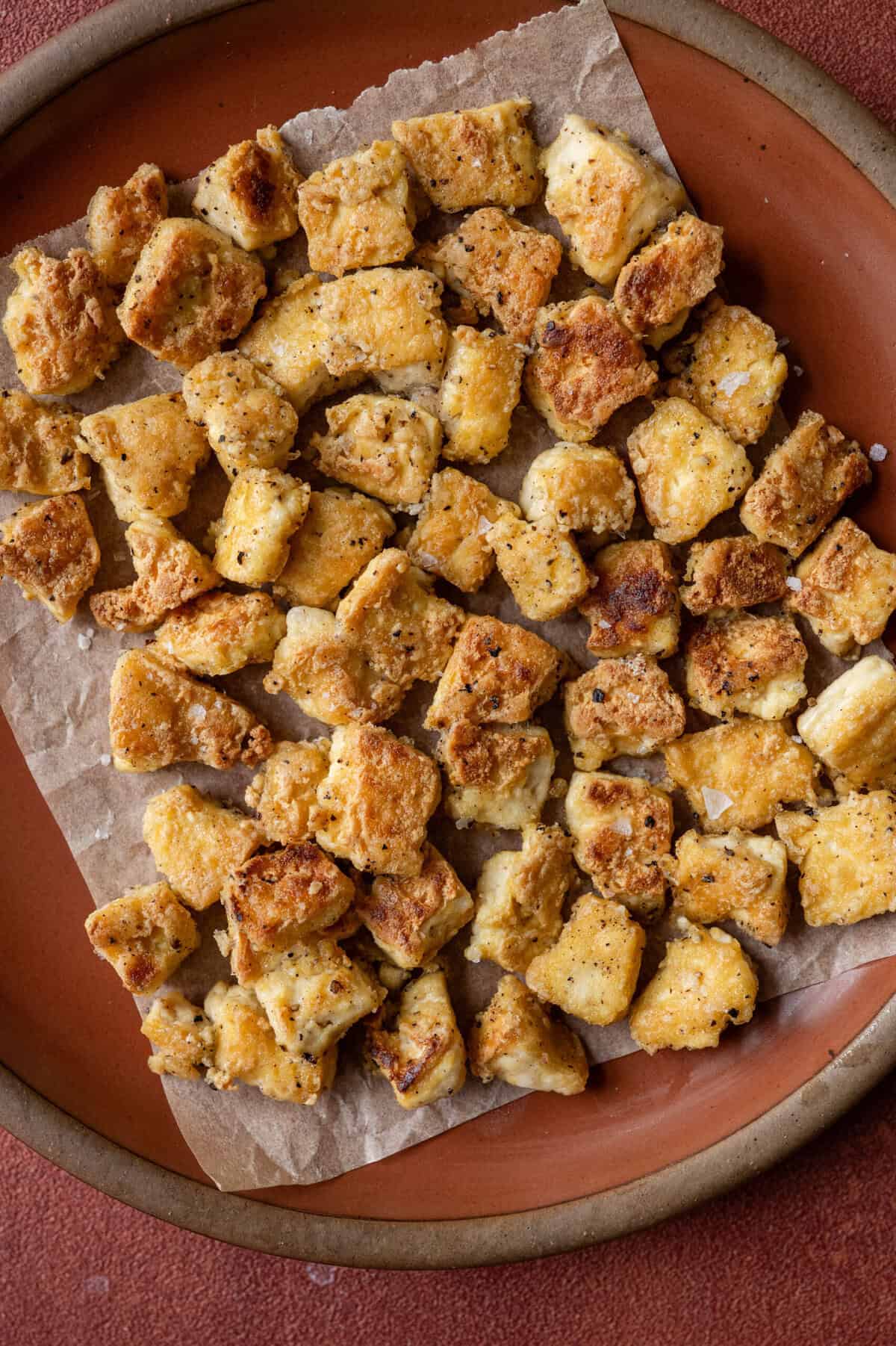
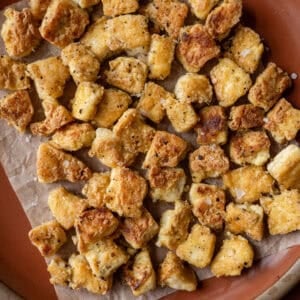
Crispy Pan-Fried Tofu
Ingredients
- 1 (12 to 14-ounce / 340 to 400g) block extra firm tofu, drained
- 2 cups (480 mL) boiling water
- Diamond Crystal kosher salt, (see Note 1)
- Freshly cracked black pepper
- 3 tablespoons (24g) cornstarch (see Note 2)
- 3 tablespoons (42g) olive oil, avocado oil, or cooking oil of choice
Instructions
- Use your hands to tear the tofu into 1” (2.5 cm) chunks. Add to a large bowl.
- In a heatproof glass or jar, combine the boiling water and 1 tablespoon Diamond Crystal kosher salt. Stir to dissolve the salt, then pour the hot saltwater over the tofu. Soak for 10 minutes.
- Meanwhile, in a small bowl, stir together 1 teaspoon Diamond Crystal kosher salt, several cracks of black pepper, and the cornstarch.
- Drain the tofu in a colander and gently shake it to release excess water. Spread out the tofu on a clean dish towel and gently pat dry (or let it rest for 5 to 10 minutes to dry a bit).
- Dry the bowl and return the tofu to it. Sprinkle it with the cornstarch seasoning. Use a silicone spatula to gently coat the tofu all over.
- Heat a 12-inch nonstick frying pan over medium-high heat with the oil. Line a cutting board or plate with a few layers of paper towels. Once the oil is shimmering, carefully add the tofu. Push the tofu around in the oil to evenly coat in one layer. Fry until golden brown on the bottom, about 5 minutes.
- Use a wide spatula to flip the tofu. Many pieces will stick together, which is fine–it marks them easier to flip. Cook on the second side until golden brown on the bottom, 3 to 5 minutes. Transfer the tofu to the paper towel-lined surface to absorb excess oil. If desired, sprinkle the tofu with a pinch of salt.
Notes
- Diamond Crystal kosher salt is less salty than most salts, teaspoon for teaspoon.
If using sea salt or Morton’s kosher salt: in step 2: use a scant 2 teaspoons salt; in step 3, use a heaping ½ teaspoon salt.
If using table salt: in step 2, use 1 ½ teaspoons salt; in step 3, use ½ teaspoon salt. - I don’t recommend substituting cornstarch with arrowroot powder or potato starch, as they tend to make the tofu stick together in the pan and parts of it get gummy.
- If you want to add spices, feel free to do so. Use 2 ¼ teaspoons of your favorite spice blend for this amount of tofu. Stir the spices into the cornstarch in step 3. For Chinese five spice tofu, try 1 teaspoon five spice powder, ½ teaspoon white pepper, ½ teaspoon onion powder, and ¼ teaspoon garlic powder. The tofu may need an extra 1 to 2 minutes while cooking on the first side.
Nutrition
Nutrition information is automatically calculated, so should only be used as an approximation.
 Love this? Leave a rating below!










This is absolutely the best way to make crispy tofu!
Thanks for the sweet words, Chlayne!
Great post!
here’s another method that I use: cut up tofu into slices (one block -> 8 even slices exactly) and toss it in the oven at “keep warm” temperature which is 175 Fahrenheit for me. I’ll put it in a parchment lined baking pan, spread it all out in a single layer.
Leave it there for 4 hours, forget about it.
If I’m around watching a movie or doing chores at home, I’ll stop by and discard the water every hour or so.
Come back 4-6 hours later, its nicely dehydrated and all the water has oozed out. This way I’m not dealing with freezing and thawing cycles which take forever.
here’s another method that I use: cut up tofu into slices (one block -> 8 even slices exactly) and toss it in the oven at “keep warm” temperature which is 175 Fahrenheit for me. I’ll put it in a parchment lined baking pan, spread it all out in a single layer.
Leave it there for 4 hours, forget about it.
If I’m around watching a movie or doing chores at home, I’ll stop by and discard the water every hour or so.
Come back 4-6 hours later, its nicely dehydrated and all the water has oozed out. This way I’m not dealing with freezing and thawing cycles which take forever.
Ooh, interesting method, Rashmi! Thanks for sharing!