

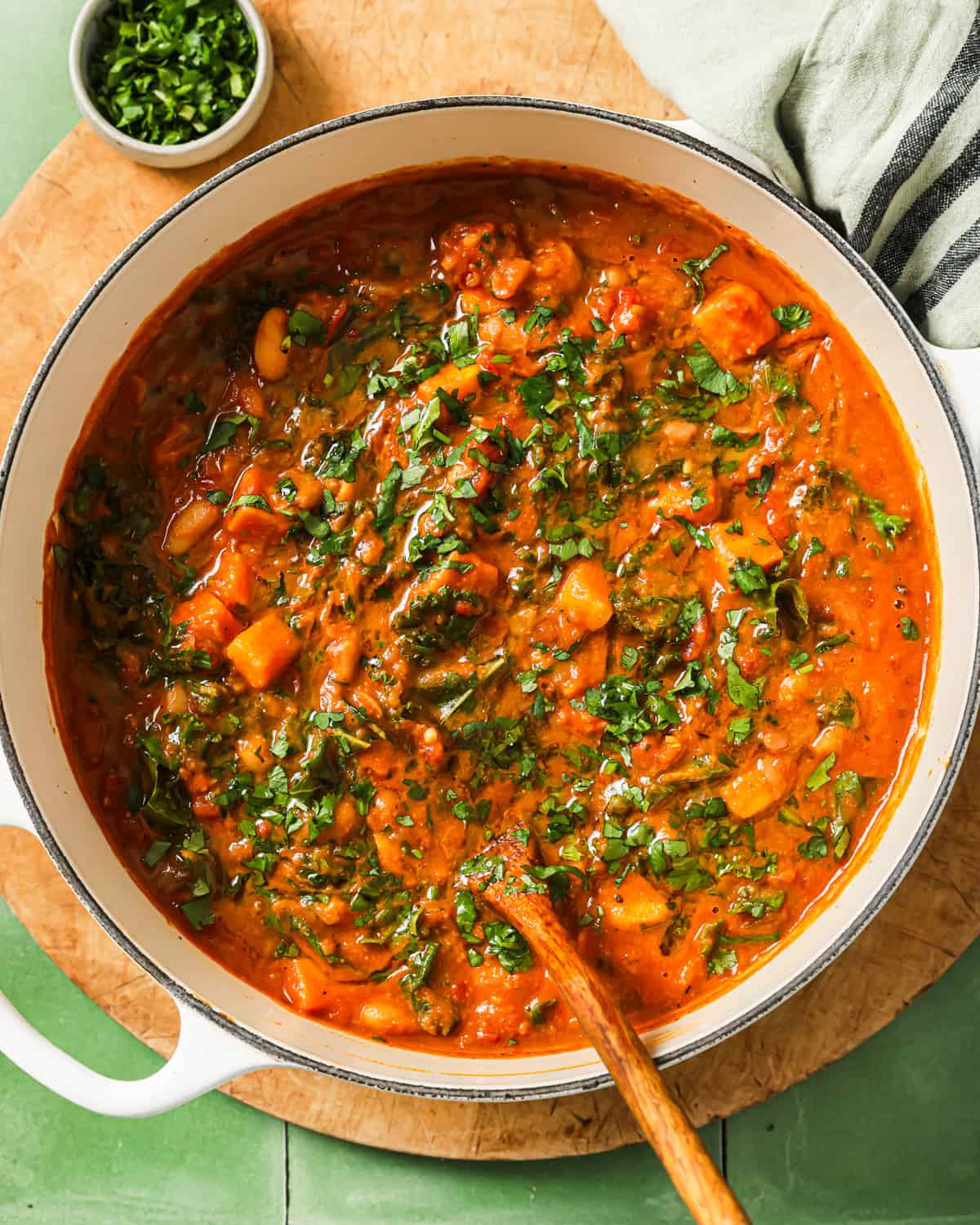
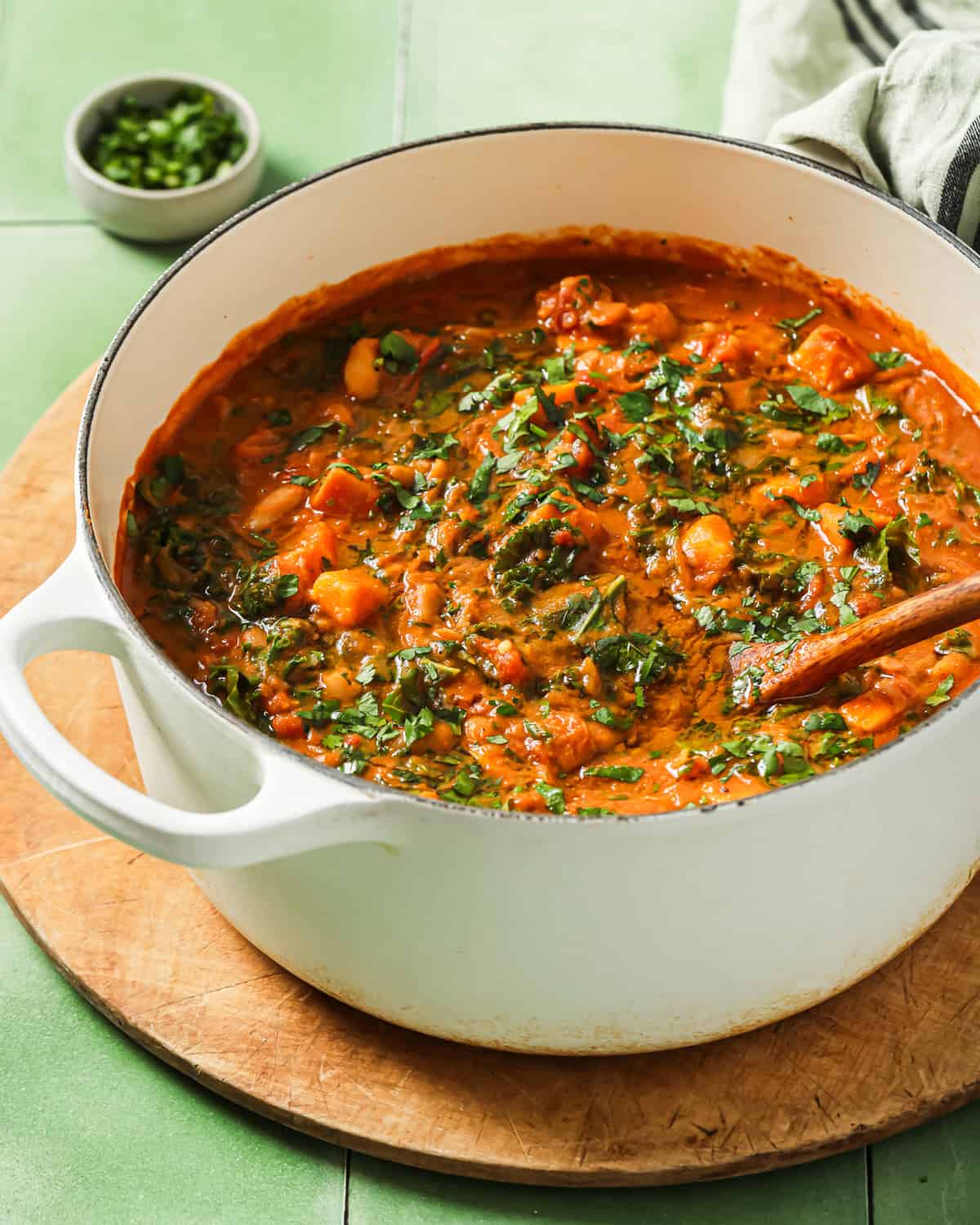
If you love hearty yet nourishing comfort-food, say hello to this Gambian Peanut Stew!
This nourishing one-pot stew is packed with aromatics and spices, will keep you satiated for hours, and pulls off one of my favorite culinary magic tricks: it tastes indulgent while being made with wholesome ingredients (plus vegan, gluten-free, and soy-free!). This is flavor-rich comfort food at its absolute finest. 😍
Please note: I originally titled this recipe Vegan West African Peanut Stew, but after doing more research on the various differences across West African peanut stews, I came to identify my particular recipe as being most influenced by Gambian Peanut Stew, aka domoda.
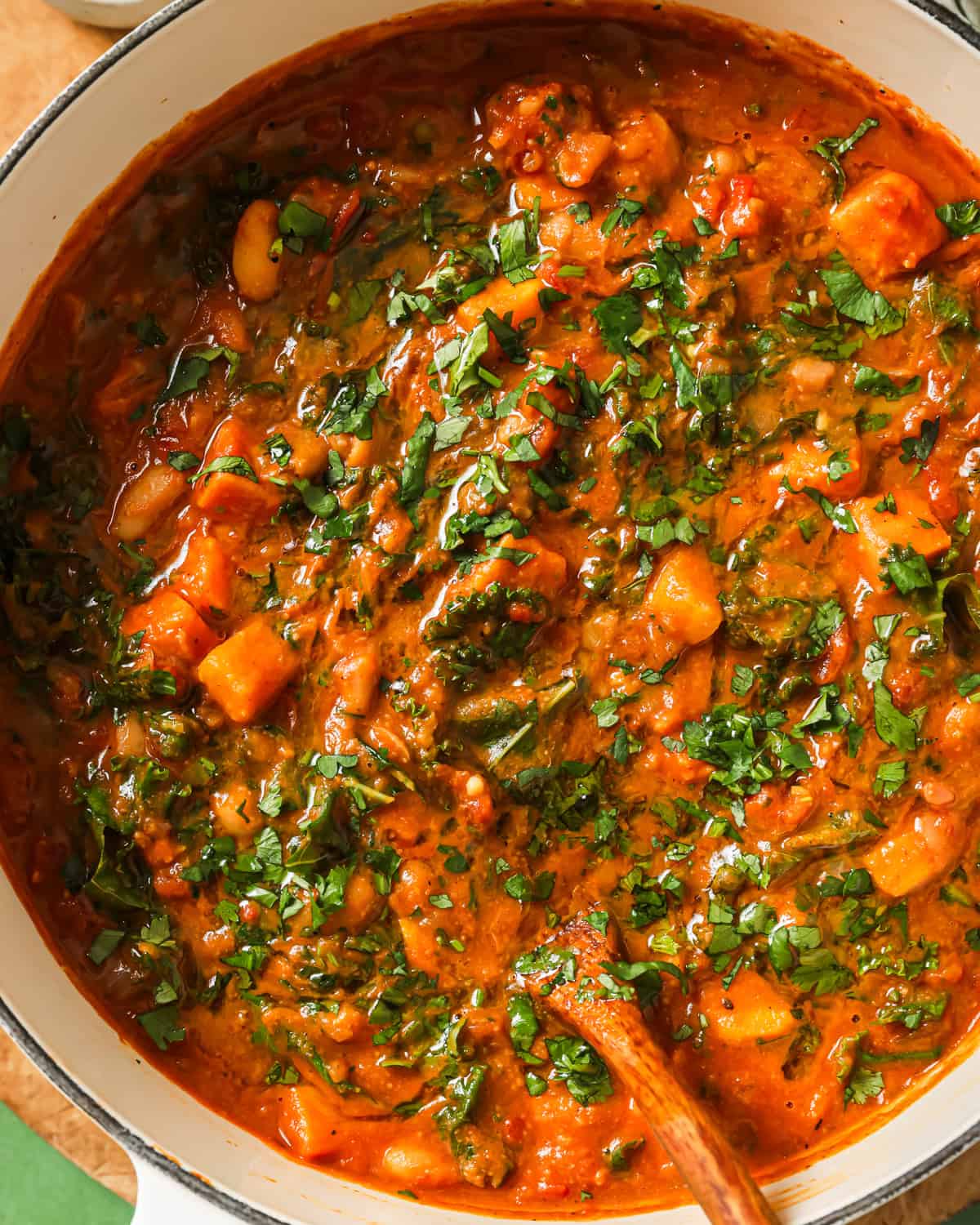
What’s a West African Peanut Stew?
Peanut stews are common in West African countries, including Senegal, Nigeria, Ghana, and The Gambia, with variations abounding throughout the region and across ethnic groups. They are often referred to as “groundnut” stews or soups, as “groundnut” is the more traditional term for peanut in this region.
This recipe most closely resembles the national dish of The Gambia, a peanut stew called domoda. You’ll find both vegetarian and meat versions, though the vegetarian version is quite common because meat can be expensive.
It usually contains roasted peanuts crushed or blended into a paste, tomatoes and/or tomato sauce, chili peppers, and a vegetable such as sweet potatoes, carrots, or pumpkin.
This recipe uses unsweetened, natural peanut butter for a shortcut, and while it might sound odd at first glance to add peanut butter to a stew, it blends effortlessly and lends a creamy, nutty richness you’ll adore.
Want to learn more about groundnut soups from West Africa? Check out this post from Gwafu Vegan or read more here.
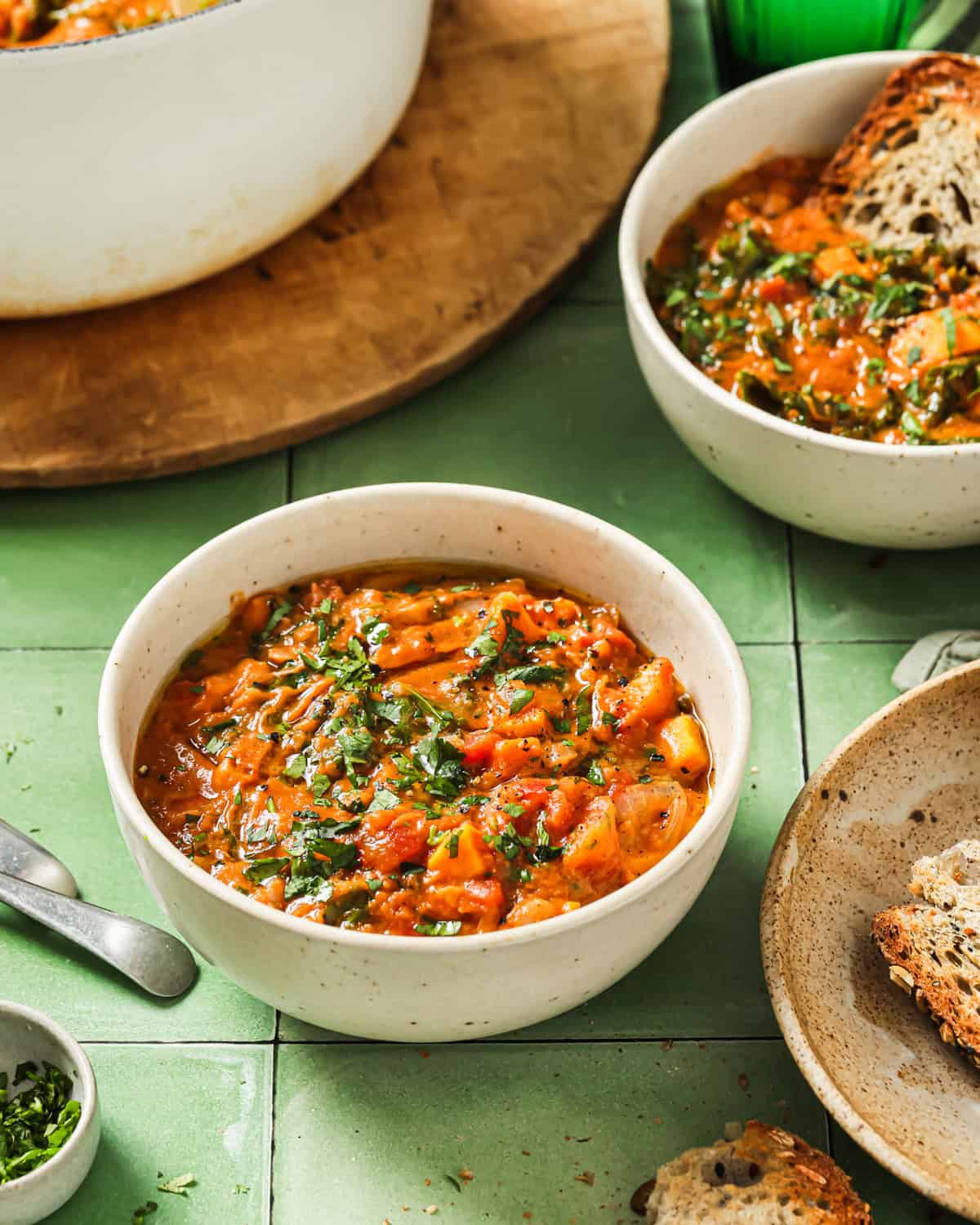
Ingredients
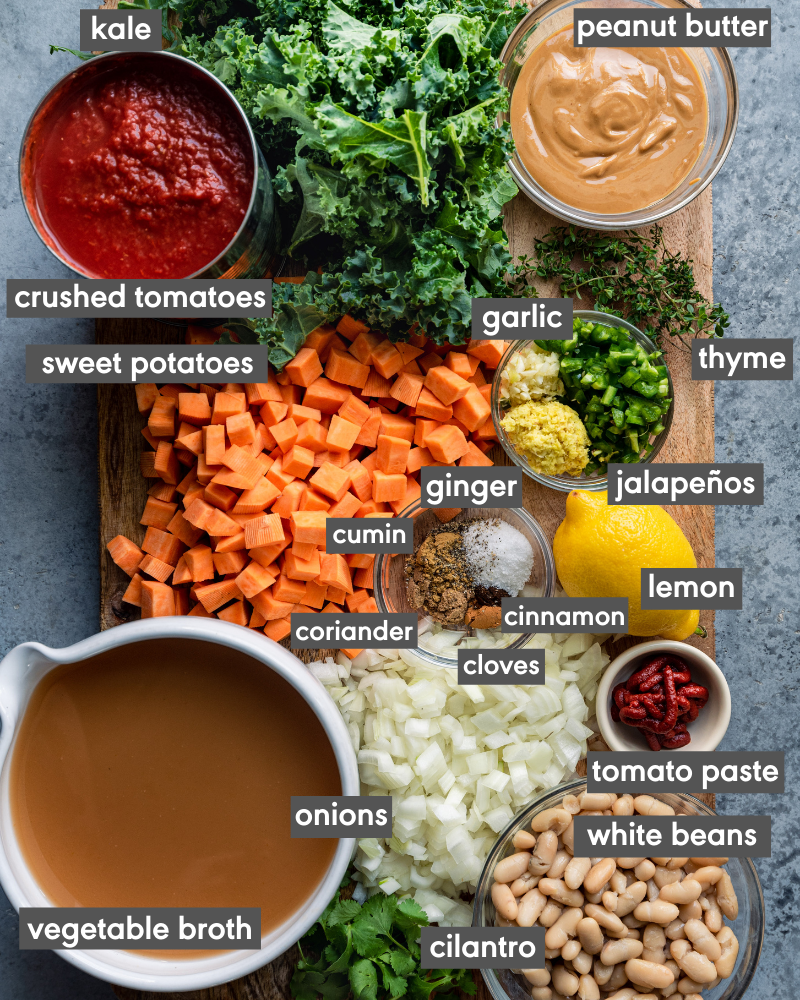
- Peanut butter. Be sure to use a variety with no added sugar. The best options are made with just peanuts and salt.
- White beans. Many Westernized vegetarian versions of this recipe do not contain a dedicated protein source. I added white beans in my take on this dish—they add extra protein and fiber, as well as extra creaminess!
- Aromatics. Starting this recipe with sautéing aromatics (onions, garlic, ginger, and jalapeño peppers) helps build layers of flavors. Often, West African peanut stews are made with habanero or Scotch bonnet peppers, but I opted for jalapeño peppers because they’re more widely available.
- Sweet potatoes. The finely diced sweet potatoes are key in this dish, as they help balance the spices and acidity. And the longer you cook the stew, the more the sweet potatoes will fall apart, virtually melting into the stew so you get a luscious, velvety texture.
- Kale. For added nutrition! Just toss it in towards the end of cooking and let it wilt. It’s a far easier way to get in your greens than chomping on a kale salad!
Substitutes + Swaps
- Peanut Butter: Peanut allergy? Try cashew butter, almond butter, or sunflower seed butter for a nut-free option (use an unsweetened variety like so). To make this more traditionally, buy whole raw peanuts and roast them yourself, then blend into a creamy paste with water (check out the instructions in this recipe).
- Want to make it spicy? Feel free to go traditional and use Scotch bonnet or habanero pepper. Or, for just a little more heat, replace the jalapeño with a serrano pepper.
- Not a kale fan? Try another green, like thinly sliced collard greens, or Swiss chard. I find spinach wilts a bit too much for my preference, but if you like it, go for it!

Step-by-step instructions
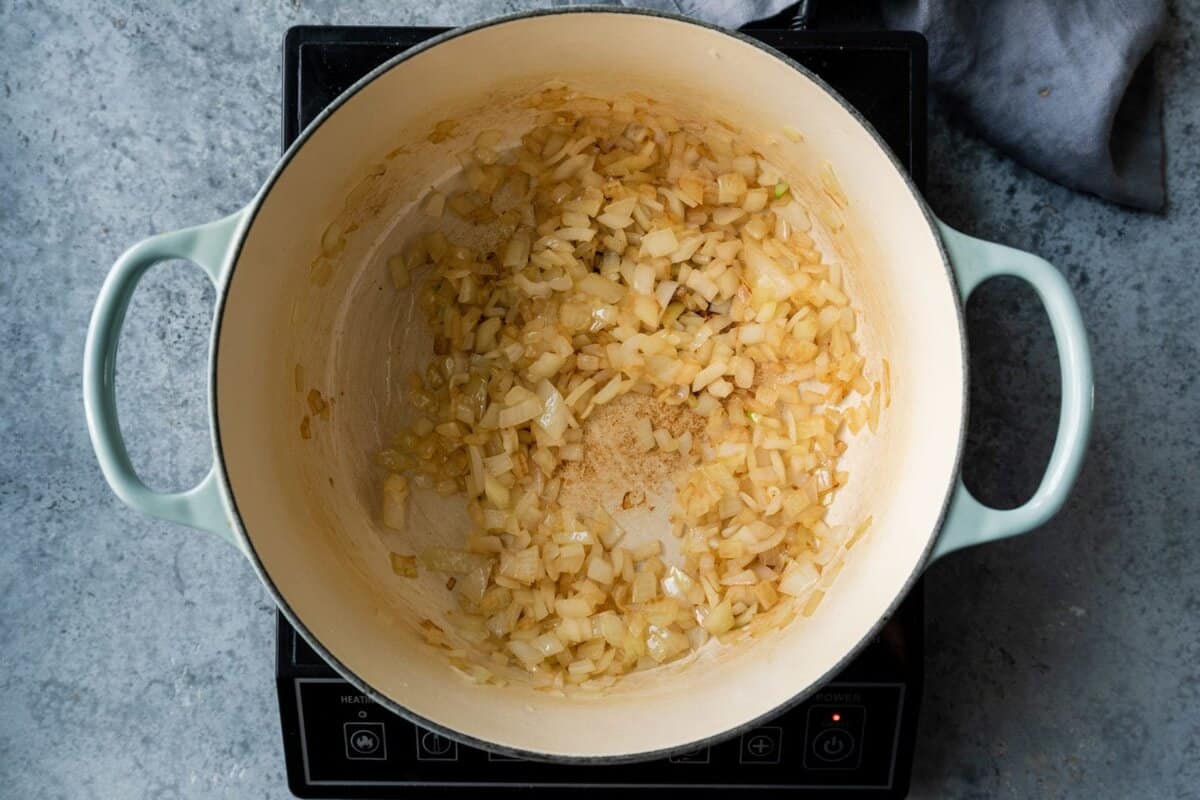
- Heat up the coconut oil in a Dutch oven or deep sauté pan.
Saute the diced onions in coconut oil until just starting to brown.
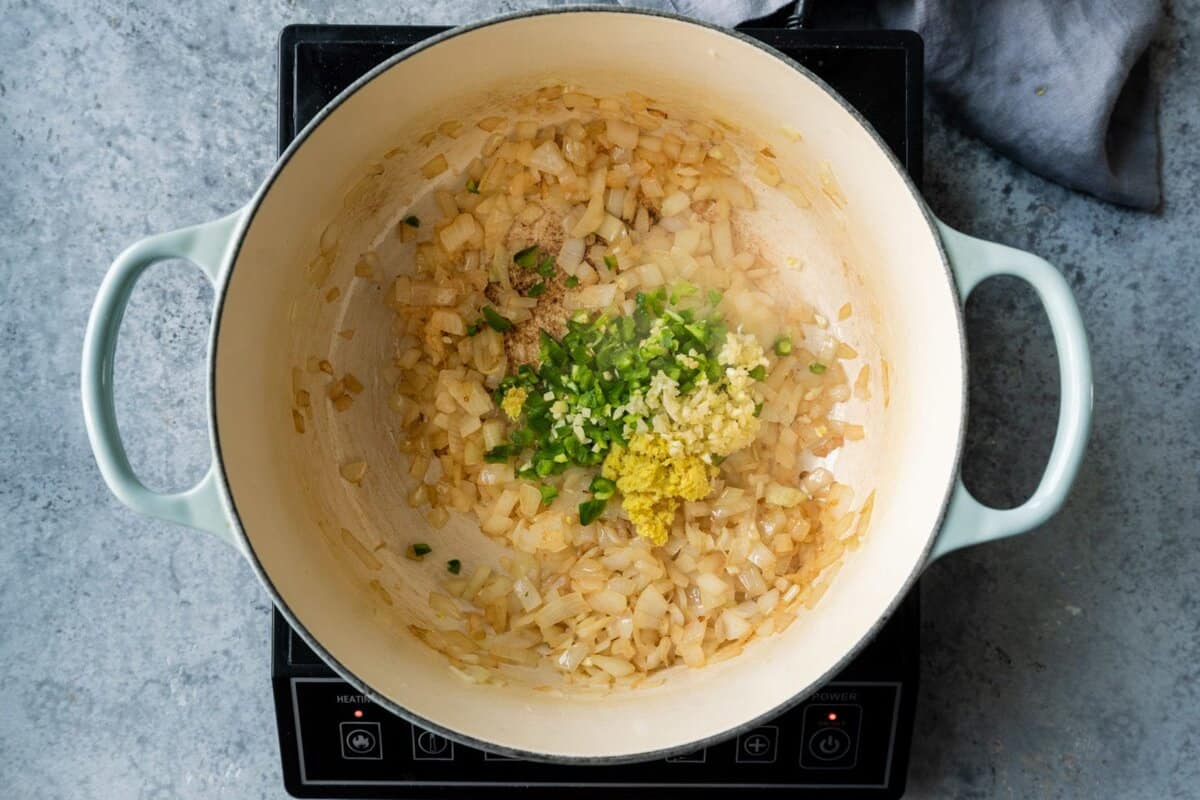
- Add the garlic, ginger, and jalapeños and cook for 2 minutes.
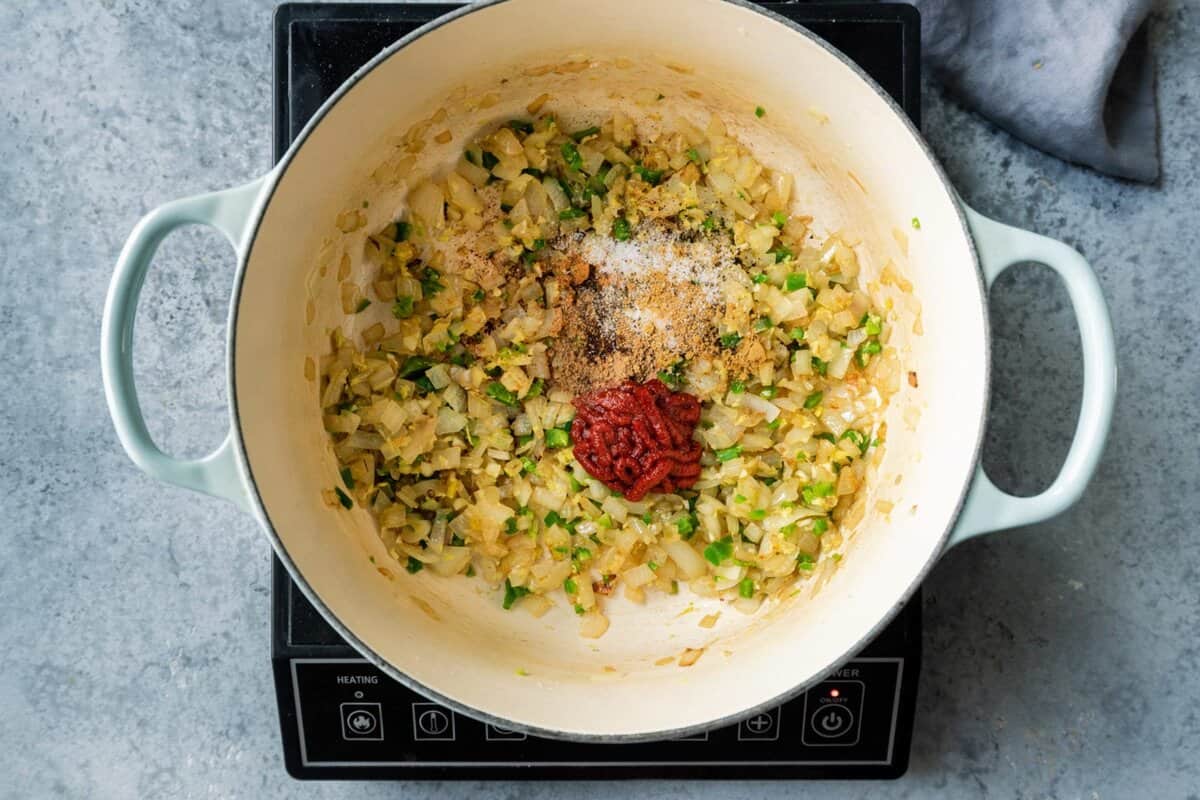
- Add in the tomato paste, cumin, coriander, cinnamon, cloves, salt, and pepper.
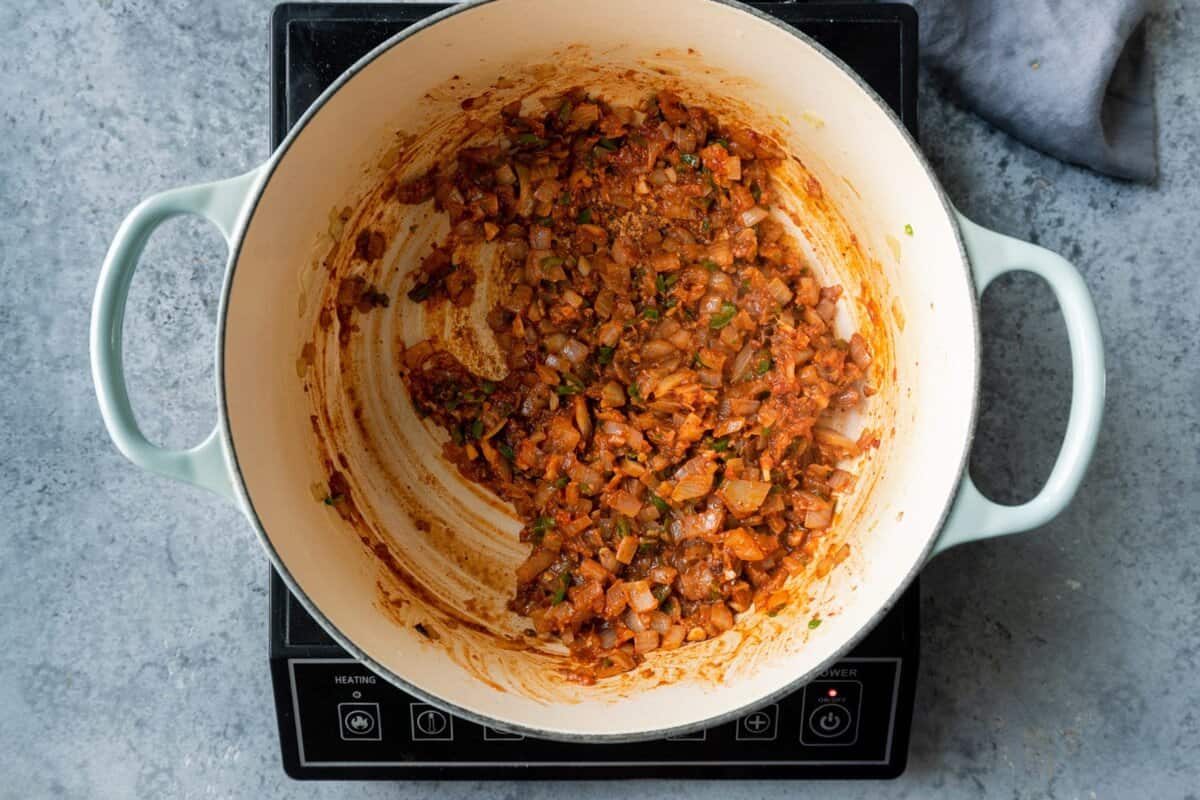
- Incorporate the tomato paste and spices into the onions and stir frequently for 2 minutes.
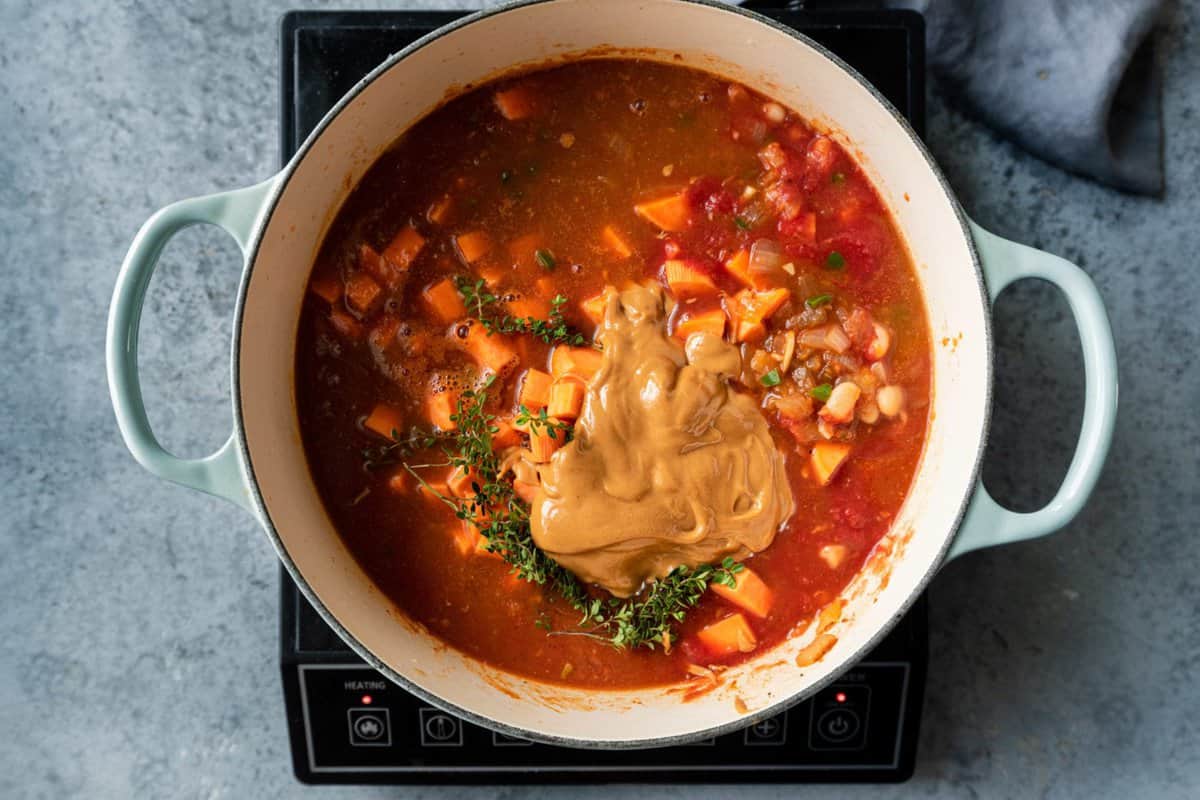
- Deglaze the pan with the vegetable broth. Add the white beans, crushed tomatoes, thyme, sweet potatoes, and peanut butter.
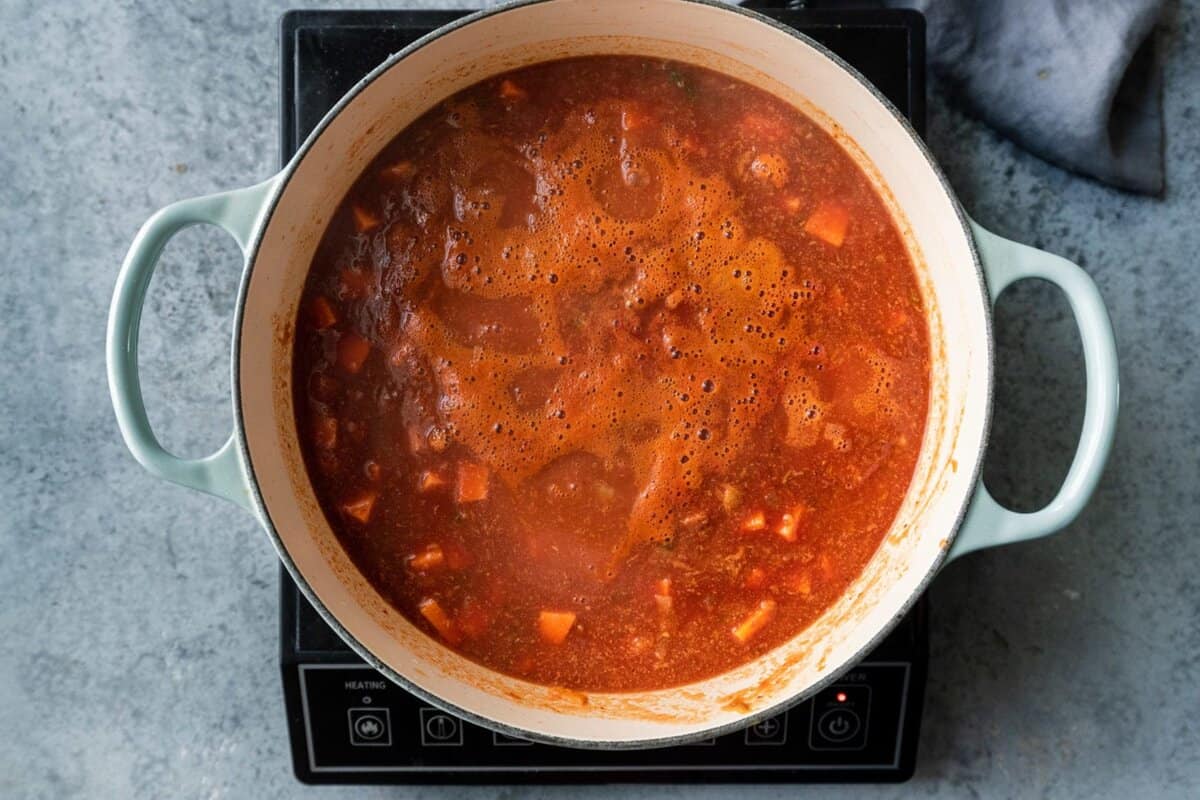
- Bring the stew to a boil, then reduce the heat to maintain a rapid simmer for 20-25 minutes until sweet potatoes are tender.
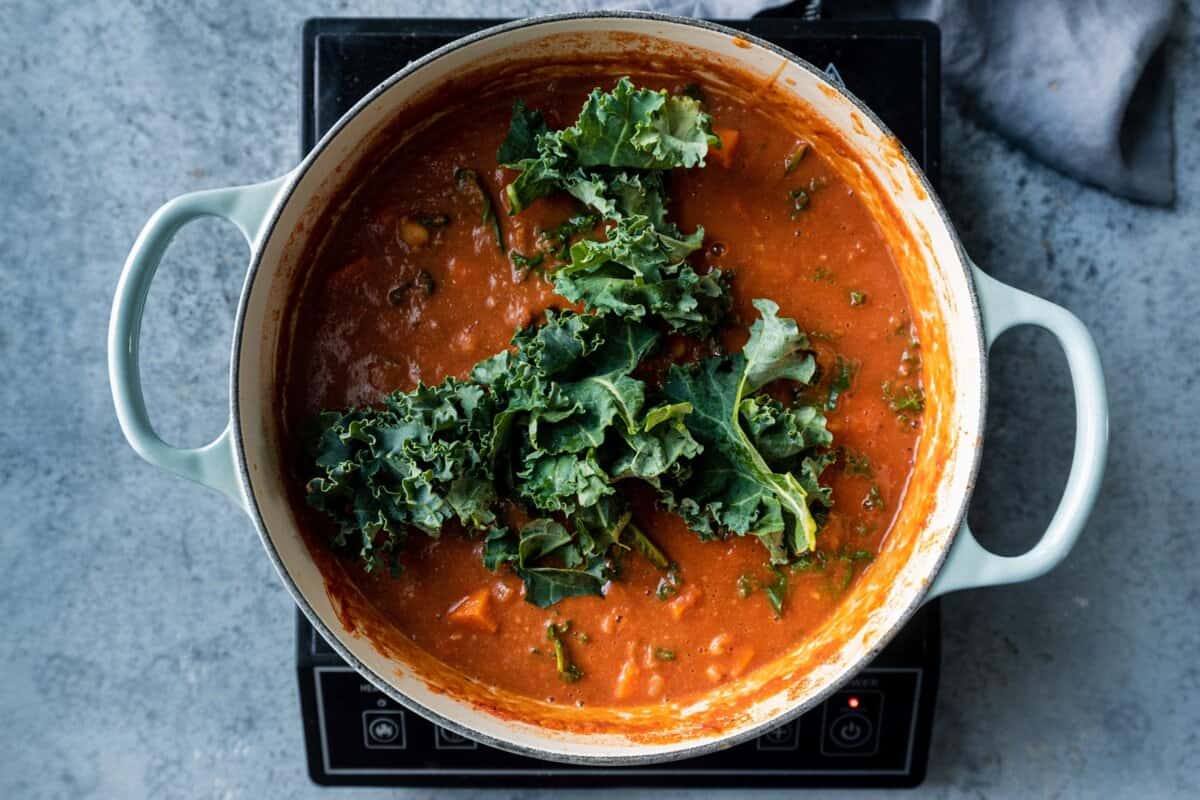
- Add the kale and cook for 3-5 minutes until wilted.
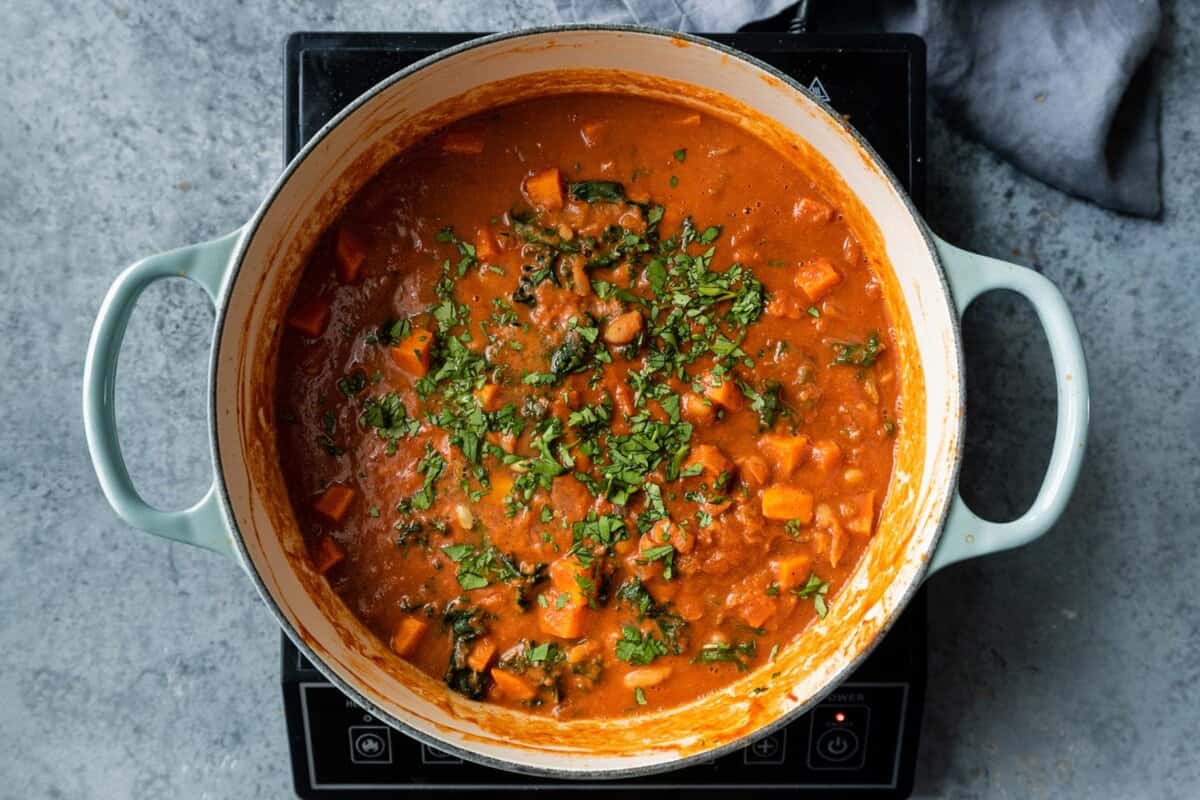
- Finish the stew with cilantro and lemon juice and season to taste.
Frequently Asked Questions
This stew is hearty enough on its own, but to stretch out your meal (and budget) and make it heartier, serve it over a grain like white rice, brown rice, millet, quinoa, or any favorite grain of yours. If you have access to fonio (a type of millet from West Africa), give that a try!
I actually have a version of this recipe in my cookbook, The Vegan Instant Pot Cookbook (and it’s a reader favorite!).
Store leftovers in an airtight container in the fridge for up to 5-6 days. Store the stew without any rice/grains as the rice tends to harden. The stew also freezes well—you can freeze it for 3 to 4 months. Defrost in the fridge before warming up for the best texture.
I prefer to reheat most leftovers on the stove in a saucepan, but the microwave also works fine.
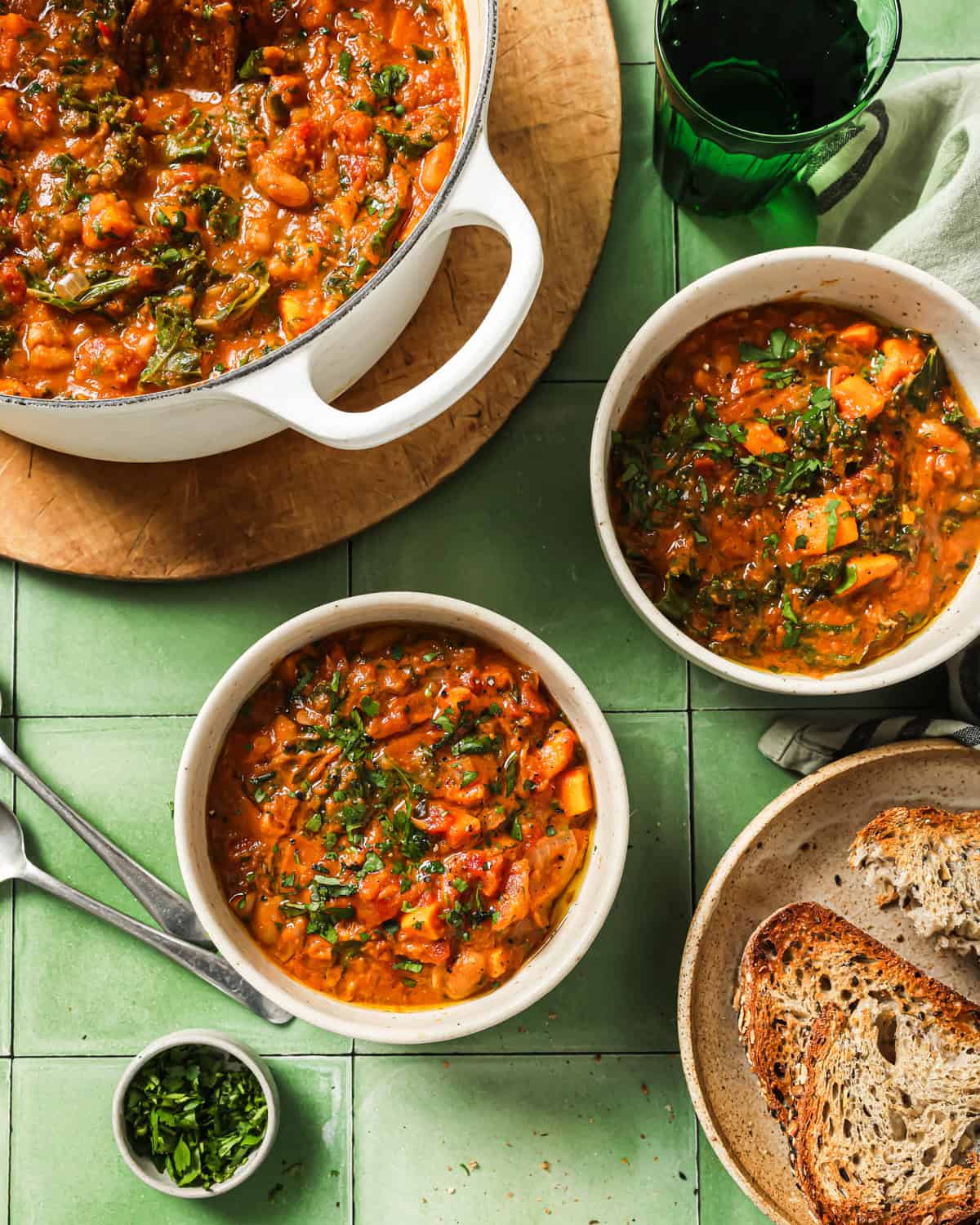
More nourishing vegan stews
- Vegan Tagine with Chickpeas
- Creamy Mushroom and Black Beluga Lentil Stew
- Tuscan Stewed Beans
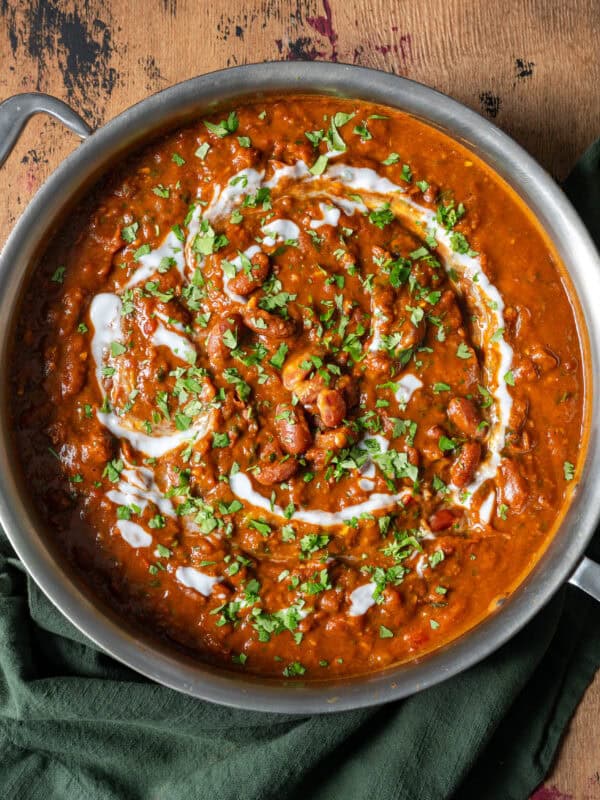
- Braised Indian Chickpea Stew
If you cozy up with a bowl of this Gambian Peanut Stew, I’d love to hear about it 😊 Leave a rating and review below and let me know what you think!

Introducing
Big Vegan Flavor
Techniques and 150 recipes to master vegan cooking.
Vegan Gambian Peanut Stew (Domoda)
Ingredients
- 1 ½ tablespoons unrefined coconut oil (use refined for a neutral flavor)
- 1 large yellow onion, diced
- 6 cloves garlic, chopped
- 2 tablespoons freshly grated ginger
- 1-2 jalapeño peppers, diced (see Note 1)
- 2 tablespoons tomato paste
- 1 teaspoon ground cumin
- 1 teaspoon ground coriander
- 1/4 teaspoon ground cinnamon
- 1/4 teaspoon ground cloves
- 1 ½ teaspoons kosher salt
- Freshly cracked black pepper to taste
- 4 cups (945 mL) low-sodium vegetable broth
- 1 small handful of fresh thyme sprigs (see Note 2)
- 1 pound (454g) sweet potatoes, peeled and finely diced (see Note 3)
- ½ cup (128g) creamy peanut butter (no sugar added)
- 1 (15-ounce/425g) can cannellini beans, drained and rinsed
- 1 (28-ounce/800g) can crushed tomatoes
- 5 cups (90-100g) chopped kale
- 1 tablespoon freshly squeezed lemon juice (or lime juice)
- ½ cup (8g) cilantro leaves and tender stems, chopped
For serving (optional)
- white rice, brown rice, millet, quinoa, or fonio
Instructions
- Heat a large, deep sauté pan or Dutch oven over medium-high heat. Add the coconut oil, and once it's shimmering, add the onions with a pinch of salt. Cook until the onions are just starting to brown around the edges, 5 to 7 minutes. Add the garlic, ginger, and jalapeño peppers. Cook for 2 minutes, stirring frequently to prevent burning.
- Add in the tomato paste, cumin, coriander, cinnamon, cloves, 1 1/2 teaspoons kosher salt, and a generous amount of freshly cracked black pepper. Stir frequently and vigorously for 2 minutes, incorporating the tomato paste and spices into the onions. Add a few splashes of water to prevent the spices from drying out or burning.
- Pour in the vegetable broth, scraping up any browned bits on the bottom of the pan. Add the thyme sprigs, sweet potatoes, peanut butter, drained and rinsed white beans, and crushed tomatoes. Stir well to combine.
- Bring the mixture to a boil, then reduce the heat to low or medium-low to maintain a rapid simmer for 20 to 25 minutes, or until the sweet potatoes are soft and tender, stirring occasionally.
- Optional step: The stew should be quite thick by now, but if you want it to be even thicker and creamier, run an immersion blender through half of the stew (don’t blend it all – you want to retain some texture).
- Add the chopped kale and simmer for 3 to 5 minutes, or until wilted. If desired, use a fork to smash the sweet potatoes to further thicken the stew.
- Stir in the lemon or lime juice and cilantro. Season to taste, adding more salt as needed. Serve plain, or on top your favorite grain.
Video
Notes
- If you’re very sensitive to spicy food, use just 1 jalapeño pepper and remove the seeds and membranes, where most of the heat lives. But if you can handle the heat, leave the seeds in. Really love spicy food? Feel free to use a habanero or Scotch bonnet pepper (the seeds are very spicy so I recommend removing them).
- You can substitute fresh thyme with 1 teaspoon dried thyme. Just add it to the Spice Blend.
- To ensure the sweet potatoes cook through in the time allotted, be sure to finely dice them. If not finely diced, it will take longer for the stew to cook.
Nutrition
Nutrition information is automatically calculated, so should only be used as an approximation.
 Love this? Leave a rating below!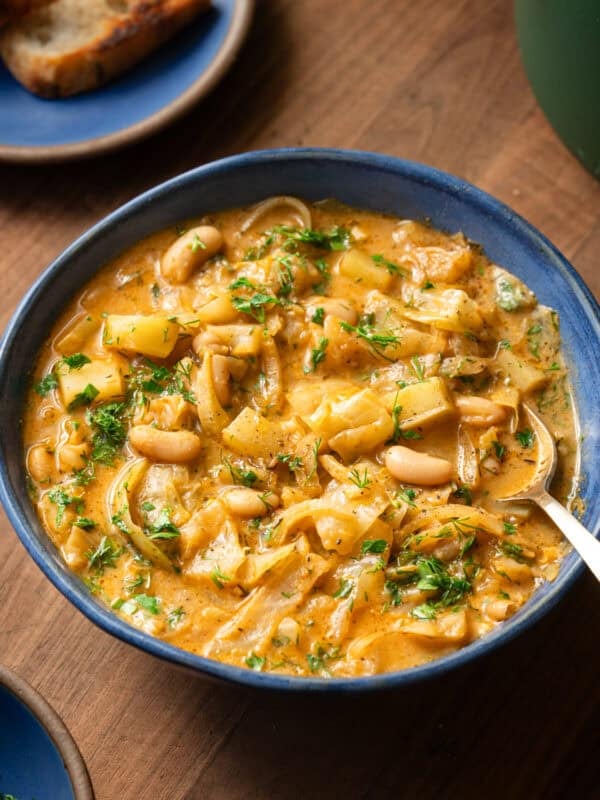








This was totally delicious- creamy, spicy and full of flavour
Wow was that insane!!! Its day two of the vegan challenge and I’m obsessed 🤩
Love the depth of flavors in this dish! Meal prepped it, and genuinely looked forward to lunchtime because I need this wonderfully nutty spicy dish was waiting for me!
This is such a hearty and comforting meal. Paired with some quinoa and pita. I cannot even explain how happy I was when I took my first bite. And then when I watched my husband take his first bite when he got home from work. This is such a winner!
How much should dried beans can be used in place of canned beans?
Any suggested substitution for tomatoes for the nightshade-allergic??
TIA
Can’t say enough great things about this recipe! It was so flavorful, warm, and hearty. Even though it is summer I imagine it would be even more amazing on a cold winter day. I swapped the white beans for chickpeas because its all I had and it worked great. I also used frozen sweet potatoes from a bag and just added them in later which was also great. I would definitely recommend to anyone making this not to skip the immersion blender step because it makes it so thick and creamy. Thanks for a great recipe!
Hi Nisha,My family and I love this dish. Including my 2 & 8 year old kids. It is a staple in our weekly "go to recipes"! Thank you! I really do love your instant pot version of this for speed on a weeknight. Of all the instant pot books that I have, yours is the one that I constantly turn to because the dishes are flavourful, delicious, and they reliably turn out.Do you have plans to publish another instant pot recipe book in the future?
Hi, are the cloves in the recipe supposed to be ground or whole? I don’t have ground cloves so wondering if I can use whole?
They’re ground, but you can use 2-3 whole cloves instead 🙂
Thank you for this recipe. Made this using dried great northern beans and served over a rice/quinoa blend and it was absolutely fantastic! I will most definitely be adding this to my cooking repertoire.
I’m so glad you enjoyed this recipe. Love that you used dried beans too. And thanks for your feedback – so nice to hear it’ll become part of your regular repertoire!
I made it this and it’s delicious! Subbed chickpeas for the white beans and had to omit the jalapeno for my kids, but still delicious and easy! Tastes even better the next day 😄
Hi Nisha, I have just bought your recipe book and so far recipes are awesome. As Imam in Europe I am using a stove top pressure cooker and it works just great. I was wondering if you could add a print button to your recipes on the blog ? thanks for your delicious recipes.
Hi Karin, I am so glad you are enjoying my cookbook and recipes, and great to hear that the stovetop pressure cooker is working out for you 🙂
I have been trying to add a print button for awhile, but unfortunately, Squarespace (which hosts my blog) doesn’t have an easy way to do that. I’ve chatted with customer service and it seems like it requires some coding that I need to figure out / hire someone to do. But it’s on my list of things to figure out 🙂
I was looking for one as well, however, I just copied the recipe with instructions, opened Microsoft Word, pasted it and printed it. That works in a pinch as well.
I made this stew yesterday and both me and my husband loved the rich flavors!I have a general question: in your recipes, do you think you could add the measurements using the metric system as well (g, ml)? It would make mine and probably other Europe based people’s cooking easier! 😉 thank you
Hi Anna, so happy you and your hubby both loved this stew, thank you for letting me know. I do have metric measurements for many of my recent recipes (something I started doing last year). I must have forgotten to do them for this post, but I’ll try to get it updated soon!
I made this a few days ago and it was incredible! Made the best leftovers and my partner who swears he needs meat to feel full didn’t even notice it was vegan until I told him after eating! Putting this one in my go to recipes. Have already sent to all my friends!
Aww thank you for the lovely feedback! So great to hear your partner loved it and that it will become a go-to recipe for you. It’s such a hearty dish 🙂
Delicious and even better the next day as leftovers over a little brown rice. Made this a few nights ago and used as meal prep for 4 days at work. So satisfying and filling. Definitely adding to the usual rotation!
Yes, the leftovers are so good! The flavors have a chance to hang out together and absorb one another 🙂 Thank you for the lovely feedback, Elyse!
I decided to make this amazing recipe for my first time yesterday with a friend in honor of celebrating the life of Dr. Martin Luther King Jr. This recipe ended up being euphoric by helping me tap into my roots. The lime and cilantro definitely married the flavors for me, and I am looking forward to making this for a upcoming dinner party in a few weeks. Thank you for sharing your amazing gift!
Hi Robert! What a wonderful comment to see. This seriously made my day so thank you for sharing. Food is such a powerful bridge and connector and can help us experience our own cultures in unique and surprising ways. So happy you had this experience, and hope you had a wonderful day celebrating the life of Dr. Martin Luther King Jr.
Made this last night for our Sunday night dinner ritual (we cook something new every Sunday) and we were blown away! The flavors are complex, the stew is hearty and cozy, and it got two thumbs up from from my husband and picky 12 year old. Thank you!
Hi Nadya, that’s such a cute tradition, I love that. I am so happy you loved the flavors and coziness of this stew, and yay for pleasing picky eaters!
do you have to use coconut oil/ would regular or olive oil taste just as well? Also, is this recipe in an insta pot version? thank you
Hi Irene, you can use olive oil – as long as it’s not a very flavorful one, I’m sure it won’t affect the taste. I have an Instant Pot version of this recipe in my cookbook, the Vegan Instant Pot cookbook. It’s slightly different but flavors/concept is similar 🙂
I’ll have to take a look in the book for this 🙂 sounds delicious!
Made this, loved this, and definitely will make it again! I used almond butter because I didn’t have peanut butter in my pantry, and it still turned out great! I’ll definitely buy some peanut butter and make it again! I added chopped carrots and a dash of berbere seasoning and paired it with jollof rice! Thanks for a slam dunk recipe, Nisha!
Looks great
This will be next on my list of things to make from your blog! I am a peanut butter ADDICT lol so I know I will love this. It sounds delicious and perfect for these cold winter nights!!
Look delicious. On a cold day.
That’s so nice to hear, Rachel! HA, I don’t blame you – I am also a PB addict (also an almond butter addict lol). Hope you’ll enjoy this winter stew!
Hello,
How many minutes it takes in the instant pot? Thank you.