

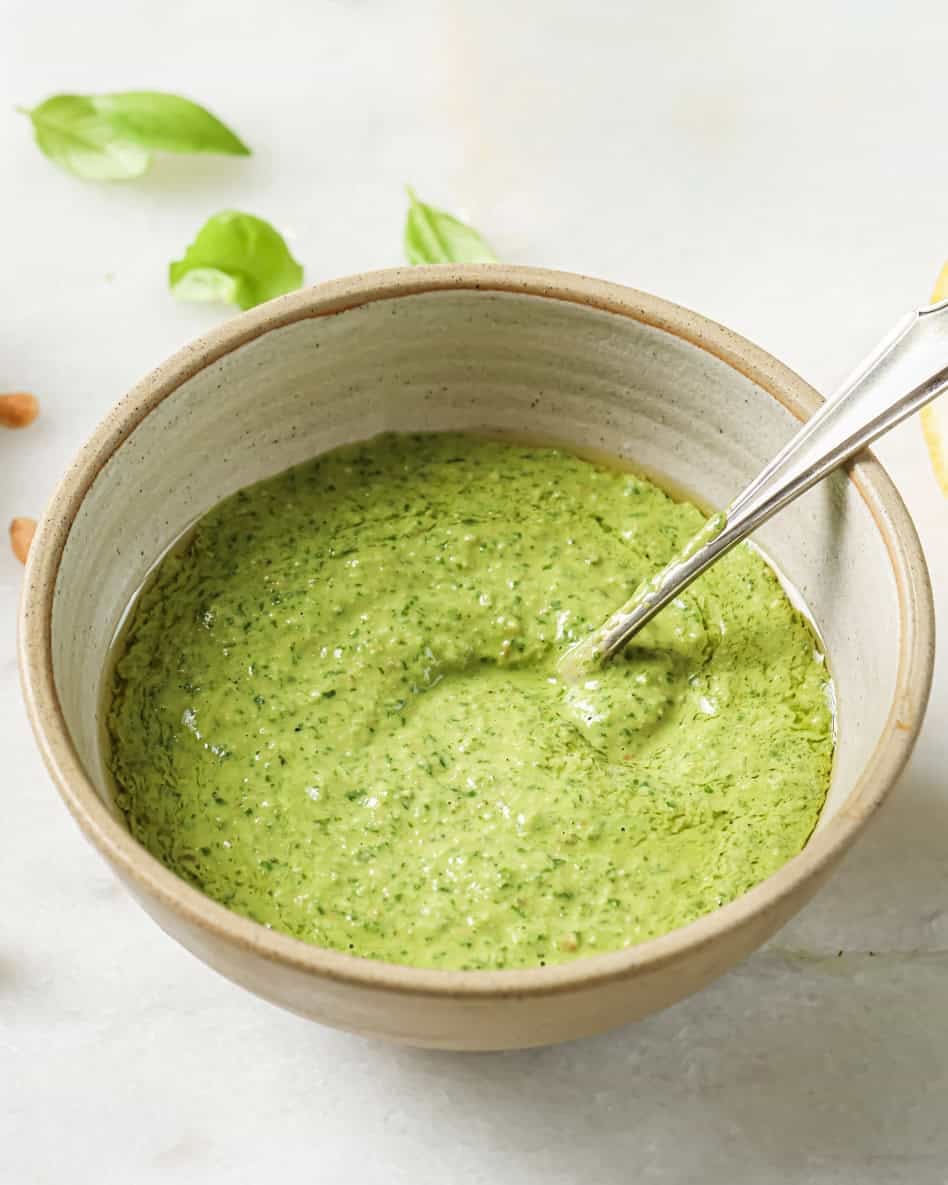
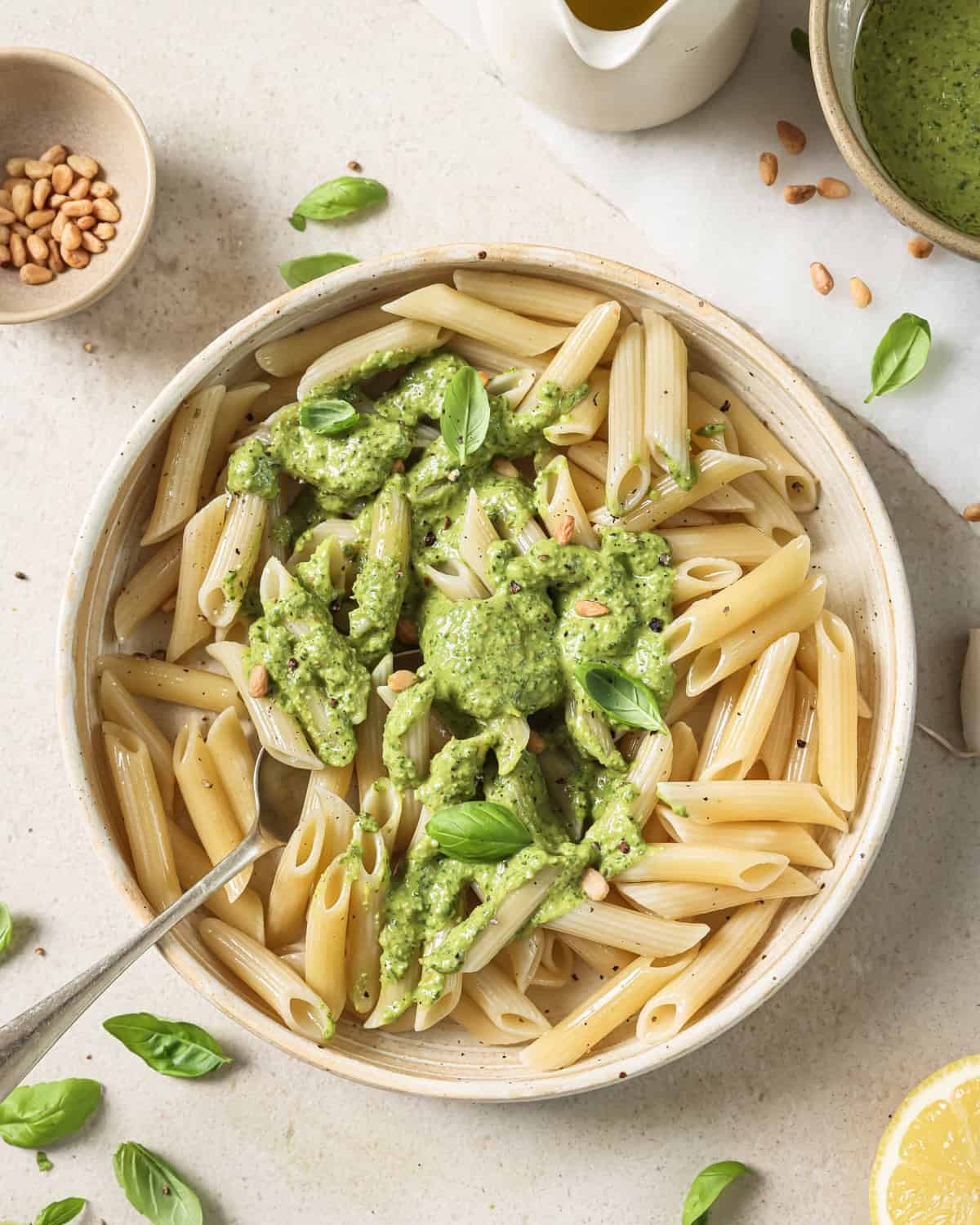
As a self-proclaimed Sauce Queen, I love all kinds of sauces, but pesto ranks among my all-time favorite sauces.
And this vegan pesto made with basil and pine nuts is one of my go-to “everything sauces,” i.e., the flavorful element that brings a meal together and takes it from “good” to oh my goodness!!
Plus, it couldn’t be simpler to make. All you need is 10 minutes and you’ll be gifted an incredible condiment that’s bright yet rich and bursting with flavor. Use it on pasta or pizza, as a sandwich spread, turn it into a salad dressing, or dollop it over roasted vegetables and grain bowls (more ideas here, customization options galore here!).
🎥 Watch the video!
With over 160K views on Youtube, this video was a hit with my community. I hope you love it just as much!
Ingredient notes
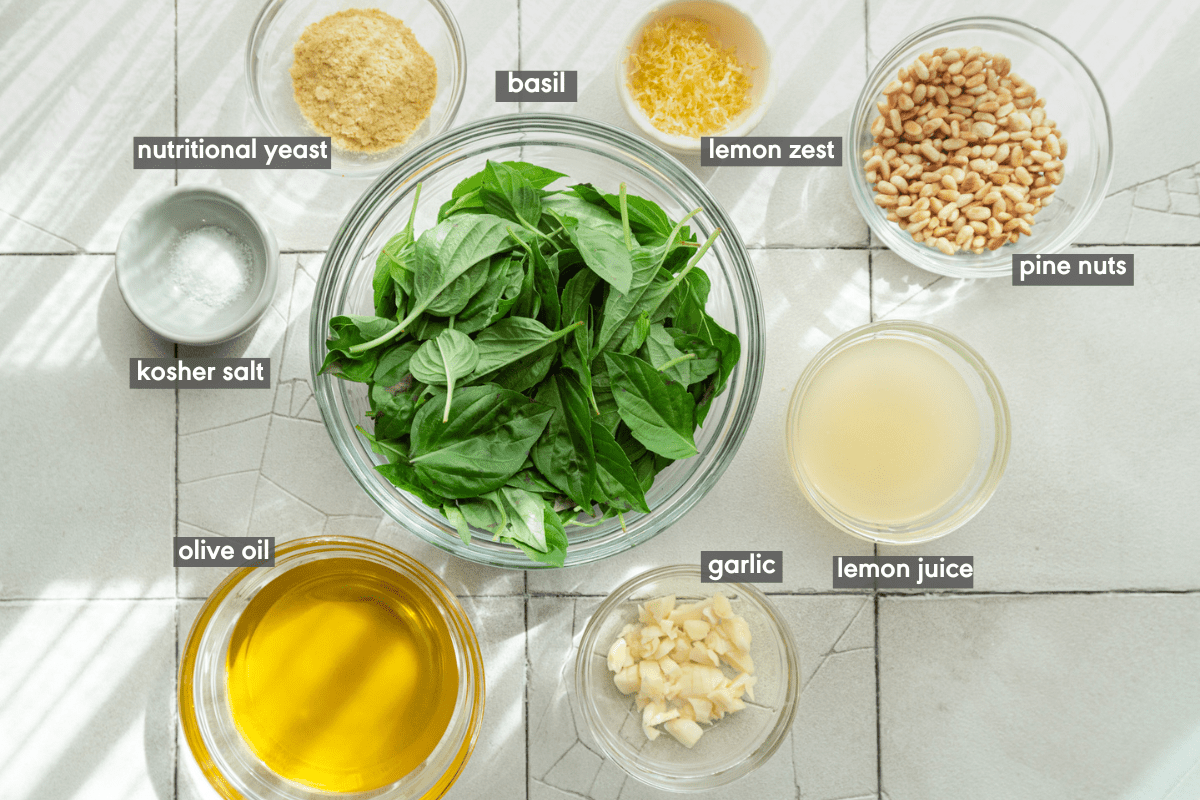
My vegan pesto includes these 5 pillars of traditional basil pesto:
- Basil: This fragrant herb with sweet and slightly spicy notes of anise is the star of the show! Summer is peak basil season, but you can find it in grocery stores year-round.
- Pine nuts: Originating in Genoa (in the Ligurian region of Italy), pesto alla genovese is always made with pine nuts. They have an unparalleled buttery smoothness and make the pesto luxe and irresistible.
- Garlic: Brings a punchy sharp flavor that cuts through the richness and prevents the pesto from tasting flat. Since garlic cloves vary in size, start slowly—then taste and add more as needed!
- Extra virgin olive oil: This serves so many purposes in pesto so it’s not optional! It’s the binder, turning hard ingredients into a spoonable sauce; it contributes mouthfeel and richness; and it even acts as a preservative, keeping the basil green for longer.
- Salt: Helps break down the basil and makes the flavors pop. If you have good-quality sea salt, now is the time to use it!
…plus a few non-traditional ingredients specific to this vegan recipe!
- Lemon: I find a little lemon zest and juice bring a zingy freshness to pesto. But if you’re a pesto purist, feel free to skip (or use just a touch).
- Nutritional yeast: Traditional basil pesto is made with both Parmigiano-Reggiano and Pecorino cheese, so I like to sub in a little umami-rich nutritional yeast. However, if you are using high-quality ingredients (in-season basil + a fruity extra virgin olive oil), you may not feel the need to add this.
Shopping Tips: Since pesto is an uncooked sauce, you’ll taste the flavor of the olive oil. Aim for a fairly delicate, mild extra virgin olive oil, as a more aggressive or peppery olive oil will overpower the basil.
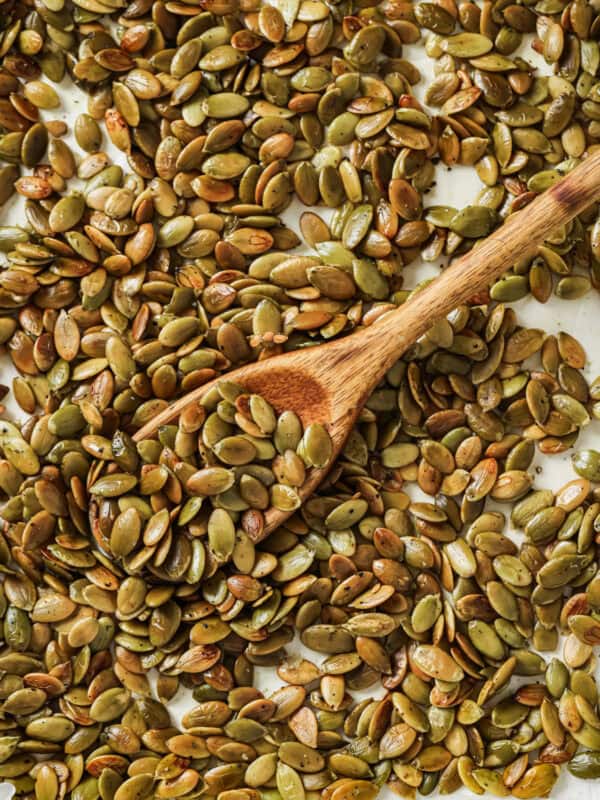
Substitutes: I get it, pine nuts are pricey! The best sub would be walnuts or pistachios. Or, you can split the difference, and use half pine nuts and half walnuts. If you’re nut-free, use pepitas or sunflower seeds.
Step-by-step instructions
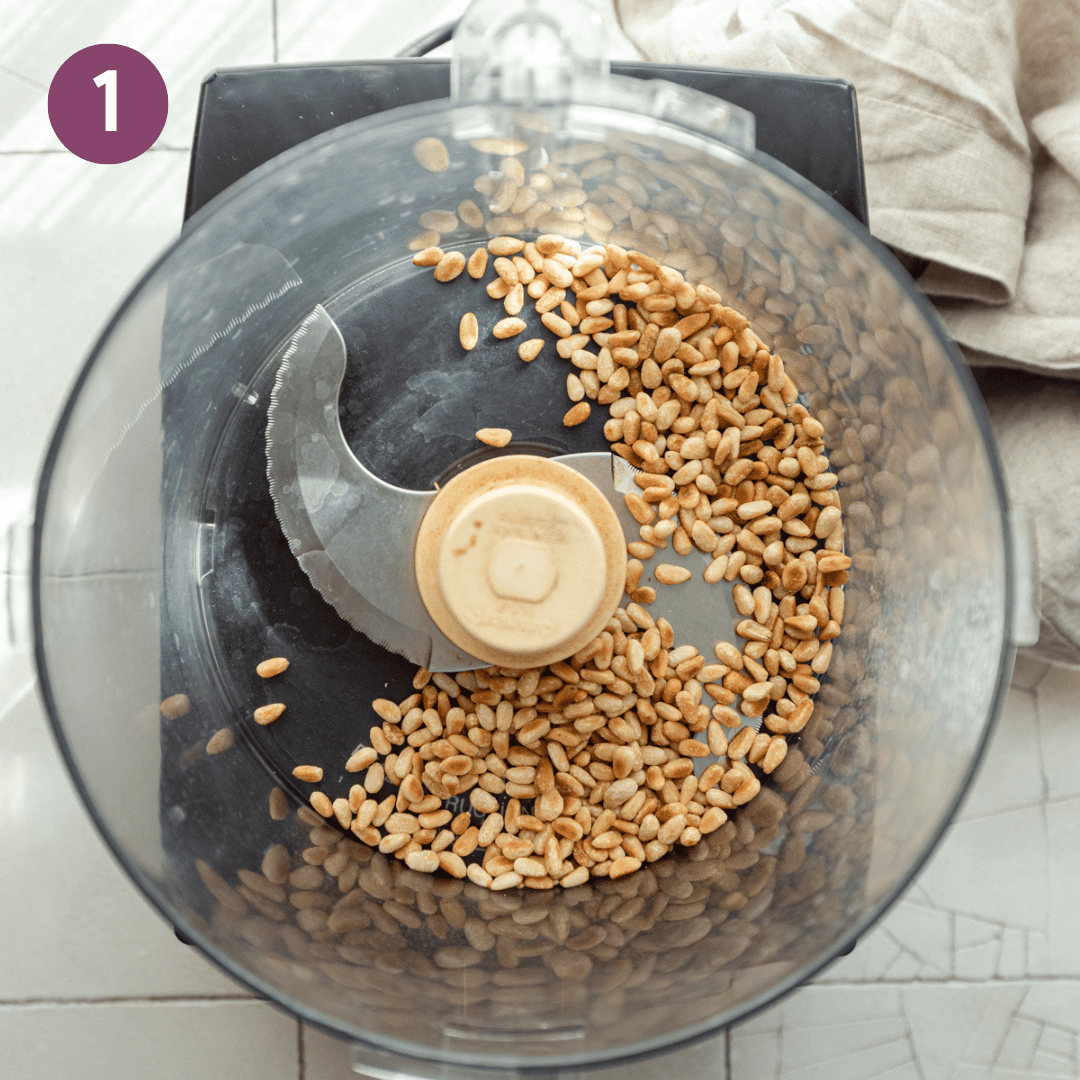
In a food processor, pulse the toasted pine nuts and garlic until they’re finely minced.
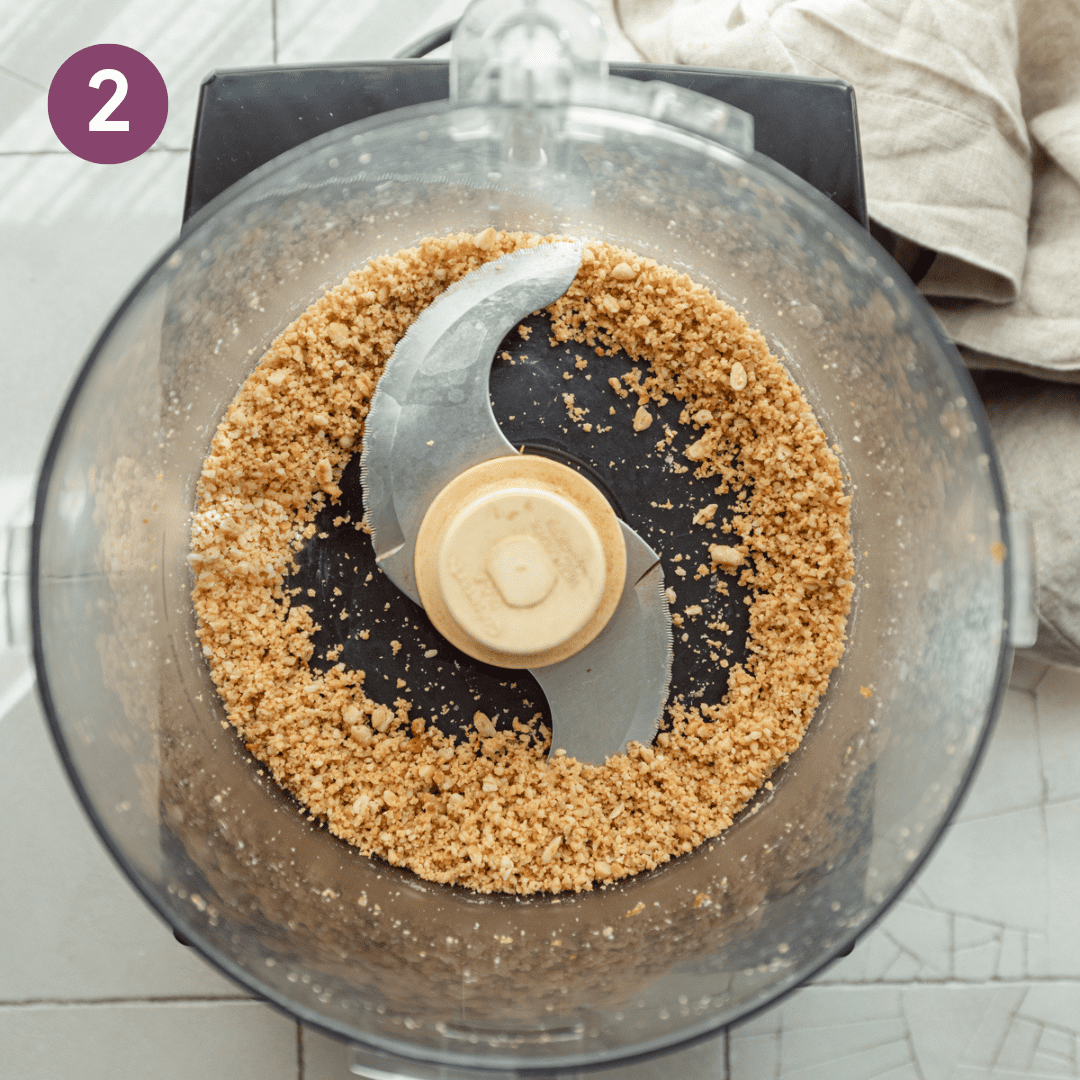
Add the basil, half the lemon zest and lemon juice, salt, black pepper, and nutritional yeast.
Blend until a paste forms, scraping the sides down.
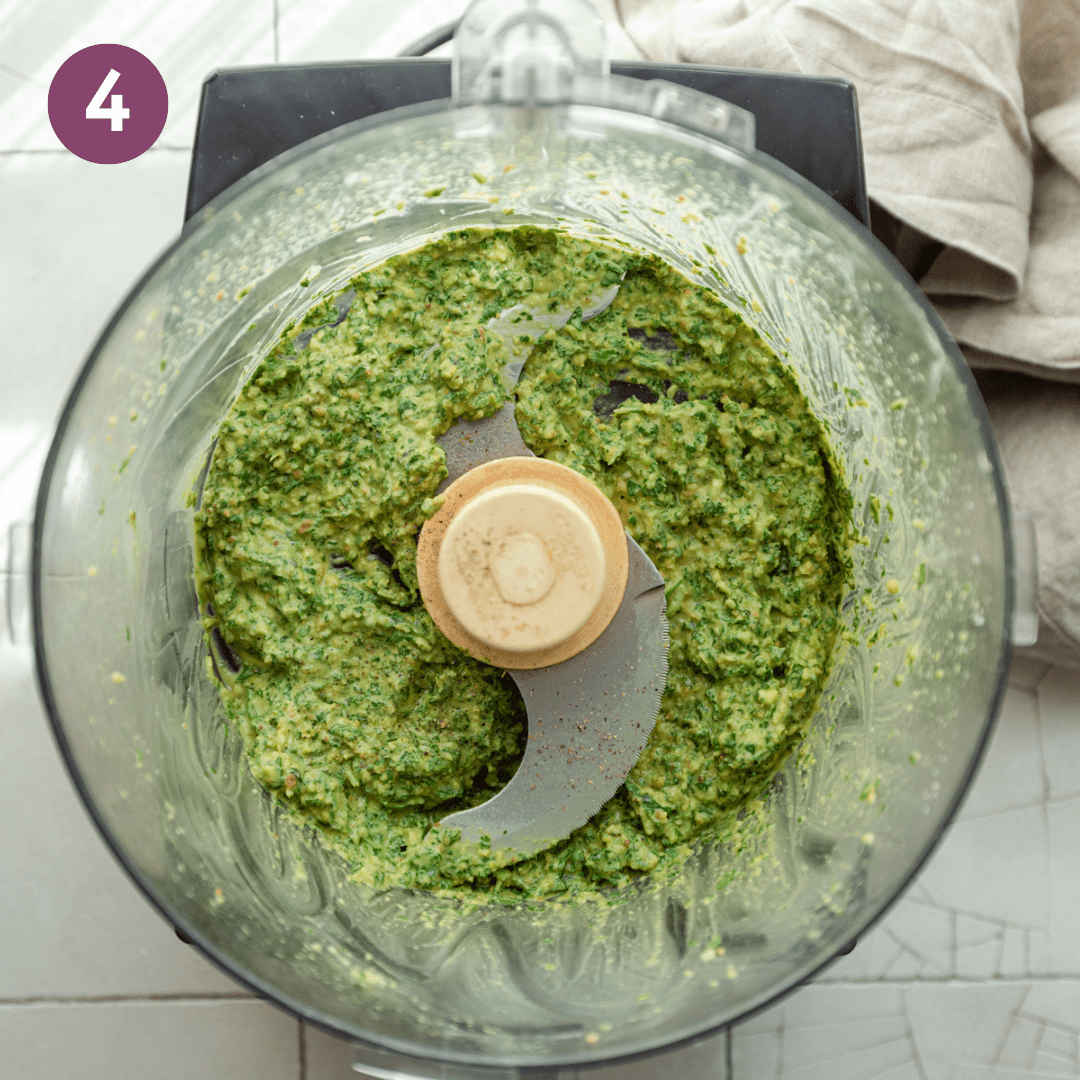
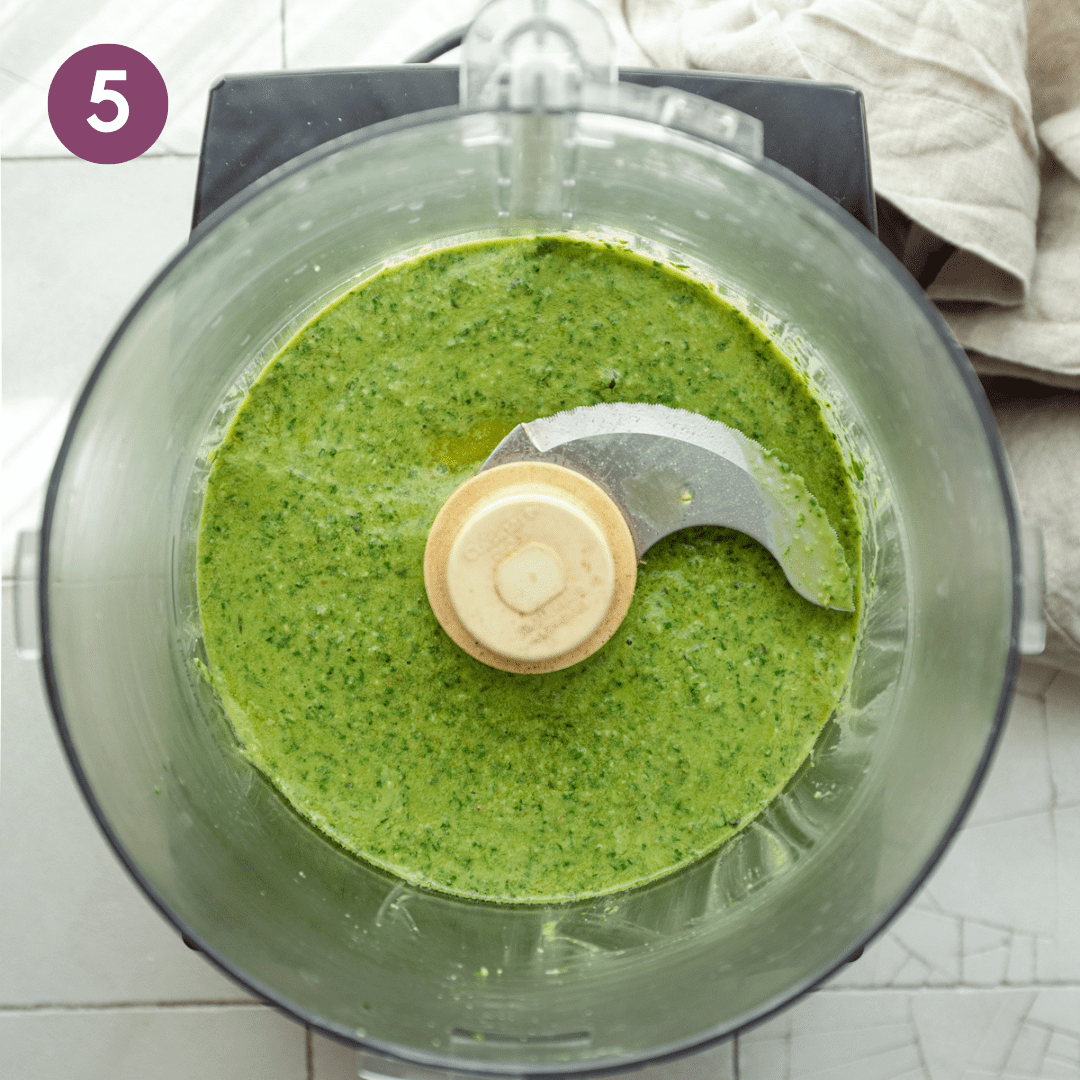
Stream the extra virgin olive oil into the food processor while blending. Scrape down the sides and continue streaming in the oil until smooth and thick.
For ideas on how to use this flavorful sauce, check out the How to use vegan pesto section below. Enjoy!
Tips for making this recipe
Mortar and pestle vs. food processor
While you will get the most authentic pesto consistency by using a mortar and pestle, it makes this recipe less weeknight-friendly—so I almost always rely on a food processor.
When using a food processor, you’ll get a better texture if you (1) pre-chop any tough ingredients (e.g., garlic) and (2) pulse the tougher ingredients first (nuts + garlic) before adding the other ingredients.
Toasting the nuts is essential
In a recipe this simple, every little ingredient and step makes a big difference, and toasting the nuts is one of those steps. The heat releases the nuts’ volatile oils, awakening their otherwise dormant flavors, plus it takes just 5 minutes.
How to Toast Pine Nuts
Stovetop: Heat a dry frying pan over medium heat for a few minutes, then add the pine nuts. Toast for about 4 minutes, until fragrant and golden brown, stirring occasionally, then more frequently as they start to see some color. Transfer to a bowl to stop cooking.
Oven: Preheat to 350°F/175°C. Add pine nuts to a sheet pan in a single layer and toast in the oven for 6 to 8 minutes, stirring once, or until golden brown.

How to keep basil pesto green
When basil is exposed to air, it can oxidize, meaning that your pesto will brown as it sits in the fridge.
Here are two options for slowing down the oxidization and browning process.
Method 1: If you plan to keep the pesto for more than 2 days: blanch the basil leaves in boiling water for 5 to 15 seconds, then immediately transfer them to an ice bath or rinse under cold water to stop cooking.
Benefits: The pesto will stay greener for longer and the sauce will be smoother. Downsides: raw basil has a heavenly aroma which is slightly dulled by the blanching.
Method 2: Use raw basil but after transferring the pesto to a jar, pour a thin layer of olive oil on top of the pesto, then cover and refrigerate. This creates a barrier between the basil and air, slowing down oxidation.
How to use vegan pesto
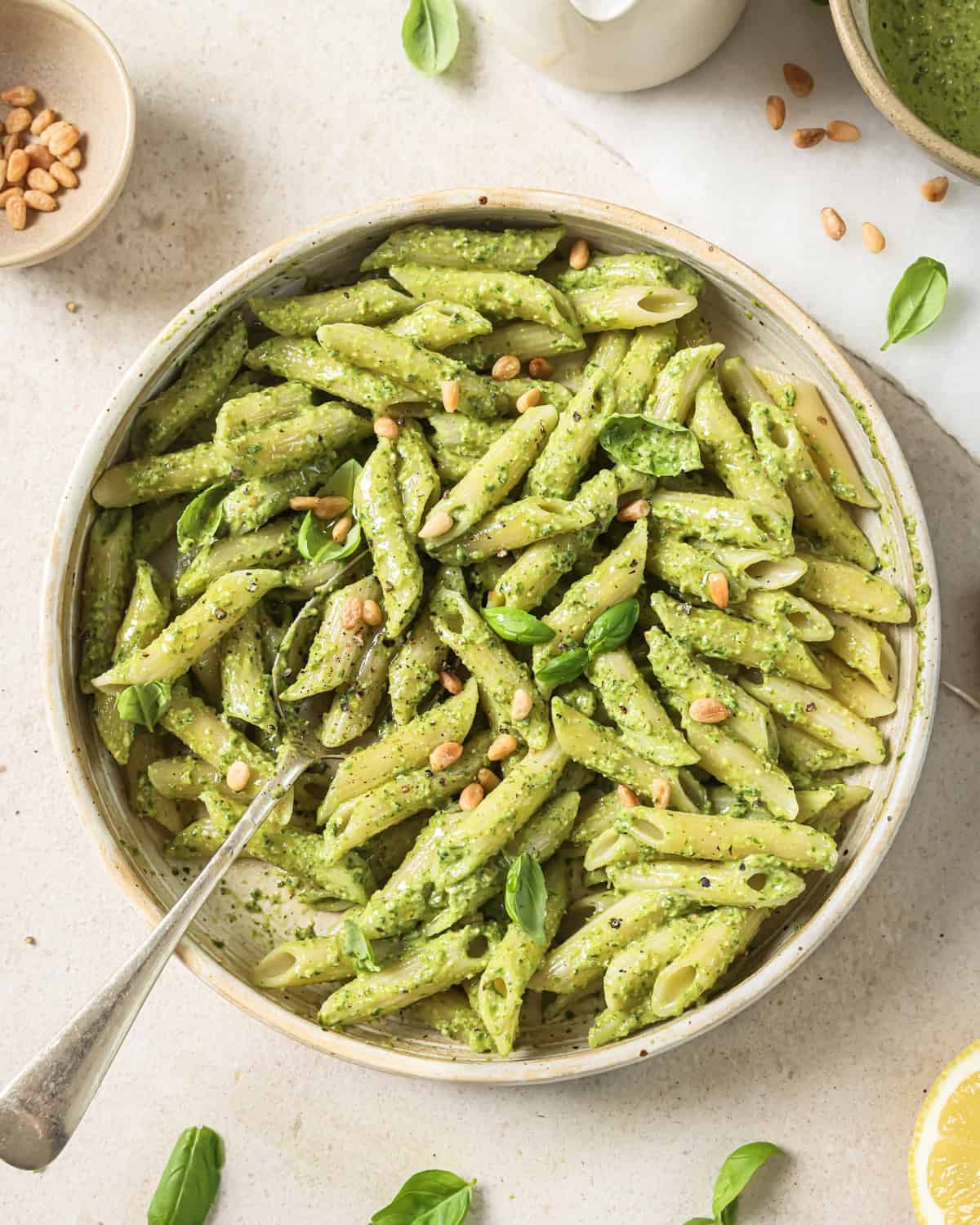
Pesto pasta (…obviously!): Pick a pasta shape with curves and grooves so the pesto can cling to it (e.g., gemelli, cavatappi, fusilli). Also great with pasta salad or even vegetable salads, like carrot ribbons or raw zucchini (a dollop of pesto is divine in this zucchini salad).
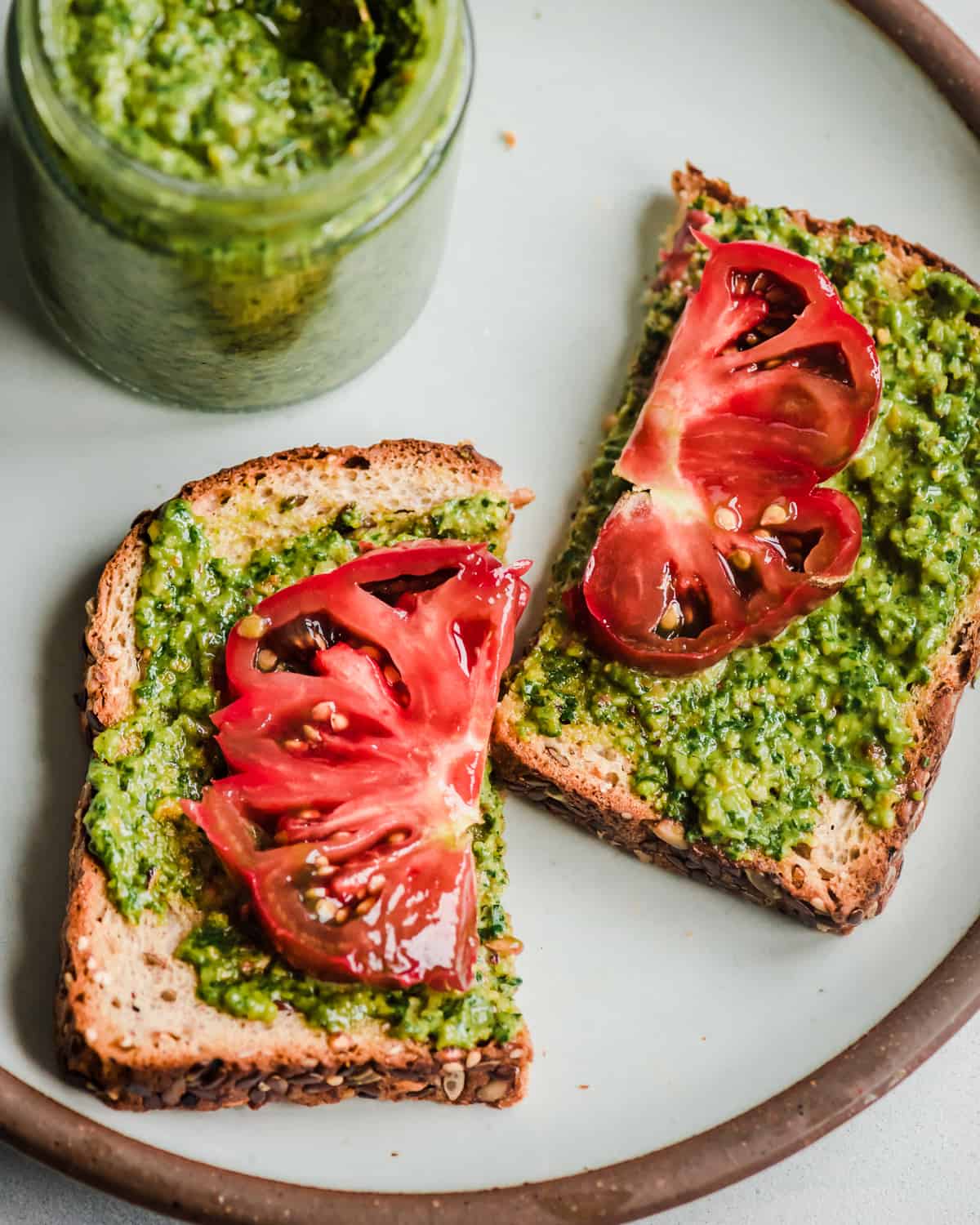
A sandwich/wrap spread: I love topping pesto-slathered bread with heirloom tomatoes, chickpeas smashed with lemon and salt, or pan-fried tofu. Or, mash it up with avocado for an upgraded avocado toast.
As a dip for crudités (or to jazz up other sauces/dips): Great as a dip in its own right, or even better when stirred into creamy dips and sauces like cashew cream and vegan aioli.
Everything sauce: Drizzle this pesto onto virtually any grain bowl, stuffed sweet potatoes, crispy smashed potatoes, or roasted vegetables like cauliflower, broccoli, cabbage, fennel, or eggplant.
Salads and salad dressings: Dollop onto salads like this grilled corn salad, or use it as an alternative to a mayo-based dressing for potato salad. Thin out leftover pesto with lemon juice or a good-quality vinegar for a pesto salad dressing.
Pizza: Use in place of a tomato-based sauce!
Soup: Swirl pesto into soup for an instant flavor upgrade. Replace the gremolata with pesto in my creamy white bean soup, or stir it into my creamy broccoli soup to accent the basil flavors.
Frequently Asked Questions
Herb variations
Try other soft herbs: cilantro, Thai basil, flat-leaf parsley, mint, dill, or tarragon (don’t go overboard on tarragon though—it’s strong). Oftentimes, a mix of two herbs is great. Think mint and cilantro, or flat-leaf parsley and dill.
Use greens in addition to herbs: My nutrient-rich spinach pesto is a fun spin on classic pesto. Or try using half kale (as used in this meal prep video/blog post), arugula, or watercress.
Use root vegetable greens in addition to herbs: When you have in-season carrots, beets, or radishes with good-quality greens, sub half of the basil with the green.
Note: Some herbs or greens can be bitter (e.g., arugula, watercress), spicy (e.g., radish greens) or sweet (e.g., tarragon tastes like anise). I recommend combining smaller amounts of these ingredients with other milder, more neutral herbs or greens like basil, parsley, or spinach for balance.
Nut variations
Try walnuts, pistachios, or cashews. If you’re allergic to nuts, use pepitas or sunflower seeds.
Whichever nut/seed you use, remember to toast them first 🙂
Absolutely. If you’re using high-quality olive oil, toasted pine nuts, and good basil, the nutritional yeast really isn’t necessary.
Depending on the freshness and quality of your basil, classic basil pesto lasts about 5 days. When using other herbs, the pesto typically lasts longer, as basil is more delicate.
Yes! You can store this pesto in the freezer for up to 6 months. The best way to freeze pesto is to pour it into ice cube trays and freeze. Once frozen, transfer the pesto cubes to a ziptop bag or container.
When you’re ready to cook, no need to defrost them. Just add a cube to a hot pan or a hot dish while it’s cooking, and the heat will thaw it pretty quickly.

Introducing
Big Vegan Flavor
Techniques and 150 recipes to master vegan cooking.
Easy Vegan Pesto
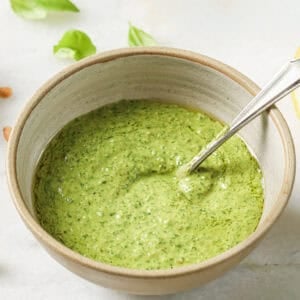
Ingredients
- 3 cups (36g) loosely packed fresh basil leaves
- ⅓ cup (48g) pine nuts (see Note 1)
- 2 garlic cloves, chopped
- 1 medium lemon, zested and then juiced (optional, see Note 2)
- ¼ teaspoon kosher salt, plus more to taste
- Freshly cracked black pepper to taste
- 1 ½ tablespoons (7.5g) nutritional yeast, plus more to taste (optional, see Note 3)
- ⅓ cup (75g) extra virgin olive oil, more as needed (see Note 4)
Instructions
- Toast the pine nuts: Heat a dry skillet over medium. Once hot, add the pine nuts. Stir occasionally, then more frequently once they start to turn color, until golden brown, about 4 minutes. NOTE: If they start to brown unevenly, reduce the heat to medium-low. Remove from the heat and allow to cool a bit.
- Add the toasted pine nuts and garlic to a food processor and pulse repeatedly until you have a fine crumb. Add the basil, half of the lemon zest, 1 ½ tablespoons (22 mL) lemon juice, ¼ teaspoon kosher salt (or ⅛ tsp sea salt), black pepper to taste, and nutritional yeast (if using). NOTE: If you're a pesto purist, you can skip the lemon entirely, or start with just a pinch of the lemon zest and 1 tablespoon lemon juice.
- Blend until a paste forms, scraping down the sides as you go along. Push the paste into the middle of the food processor (makes it easier to blend). With the motor running, stream in the extra virgin olive oil, allowing a sauce to form, then scrape down the sides to incorporate and blend again. Stream in more oil as needed until you have a smooth yet thick texture. NOTE: If you’d like a smoother texture but have reached the right amount of oiliness, add 1 tablespoon of water and blend again (but don't add more than 2 tablespoons water to avoid diluting the flavor).
- Taste for seasonings, adding more salt, lemon zest or juice, garlic, or nutritional yeast as needed. If adding more garlic, mince it or grate it first, then blend it in.
- Store pesto in a glass jar in the fridge for 5 to 6 days. To minimize browning, pour a thin layer of olive oil on top of the pesto before sealing the lid.
Video
Notes
- If you need to substitute pine nuts, my favorites in this recipe are pistachios or walnuts.
- Lemon isn’t traditionally used in classic basil pesto, but I like a little lemon zest and juice here. Feel free to omit or start with just a little bit.
- Add the nutritional yeast for a savory, subtly cheesy flavor.
- Basil pesto is best with a fruity or relatively mild-flavored extra virgin olive oil, not a spicy or peppery variety.
Nutrition
Nutrition information is automatically calculated, so should only be used as an approximation.
 Love this? Leave a rating below!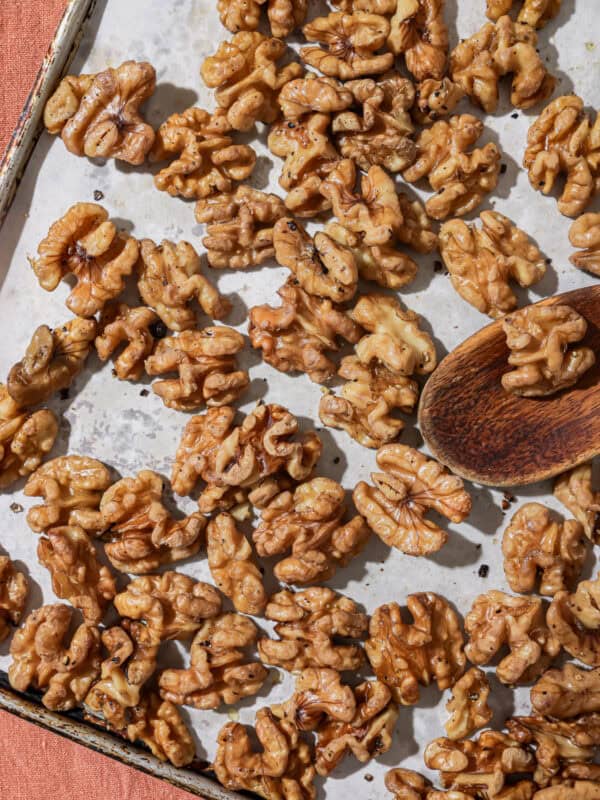








I am mostly on a PB oil-free diet. I use avocado for the fat in pesto. Just made some and it works. I did use a little bit of oil, like a T this time, though it’s not really necessary.
Easy to make (tip: double the recipe to freeze half of it), tasty, and freezes well. Another keeper!
Great tip, Jaclyn! It makes us happy to know you love the recipe.
Nisha. This is the easiest and most available recipe for a quick delicious dinner. Thank you
Thanks for the sweet review, Marcy!
Nisha!!! This pesto is so phenomenal it’s pushed me into a parasocial relationship with you. I knew all your recipes were hits but I have been searching for the perfect pesto for so long and this is it! My taste buds thank you! Incidentally I used cashews and they worked just fine.
Hi EJ, it’s great to hear you finally found your perfect pesto recipe! Thanks for the review, we hope you continue loving the recipes 🙂
Delicious!! Put some on some sourdough with canellini beans-making it again tonight!
That sounds like an awesome meal, Londyn! 🙂 Thanks for sharing!
Absolutely amazing. Can you share the size of your food processor? Since this only makes 1 cup, I think it makes more sense to use a mini processor?
From Nisha: “So happy you love the pesto! I have a 14-cup food processor, though some standard models are a bit smaller than that. You can definitely try this in a mini food processor, but you may need to add the basil in batches and pack everything down (I had to do that when making a similar pesto recipe, but it ended up tasting great).”
Just made this using what I had at home: a mix of basil, spinach and parsley, plus walnuts instead of pine nuts. Absolutely delicious as a salad dressing! Can’t wait to try it on pasta.
Thanks for sharing, Lauren!
This is similar to what Ive done before. But used real cheese. Grateful to find a vegan substitution. But for those allergic to nuts, would white beans work or just eliminate nuts altogether?
Hi Sarah, you can use pepitas or sunflower seeds instead of nuts. Enjoy the pesto!
I held off on making vegan pesto for years because I was just so sure it would be disappointing without Parmesan. This was hands down the best pesto I’ve ever made.
Your review made our day, Lauren! Thank you for taking the time to share your thoughts and for trying out the recipe.
Is the potassium from the basil or one of the other ingredients
Hi Carla, each serving of this pesto only contain about 96mg of potassium, but yes the basil is the primary source.