


Move over, Chana Masala. There’s another Indian bean dish that deserves some spotlight.
Meet Rajma Masala, the lesser-known curry with larger-than-life flavor that’s about to rock your world.
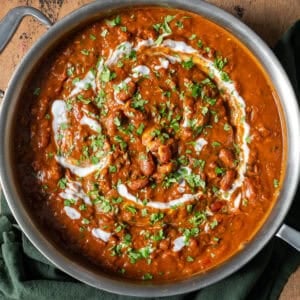
I like to think of it as India’s version of chili; big, bold flavors, layered and simmered so they meld, mingle, and mature into something velvety, rich, and deeply comforting.
Make room in your heart because it’s time to fall in love with this luxurious, restaurant-quality Rajma Masala (that happens to be gluten-free, nut-free, soy-free, and packs in 26 grams of fiber per serving!).
Where’ve you bean all my life? Continue your love affair with Indian bean/legume dishes and try a few more faves from the RPL archives, like my creamy chickpea curry, braised Indian chickpea stew, dal palak (spinach dal), or red lentil curry!
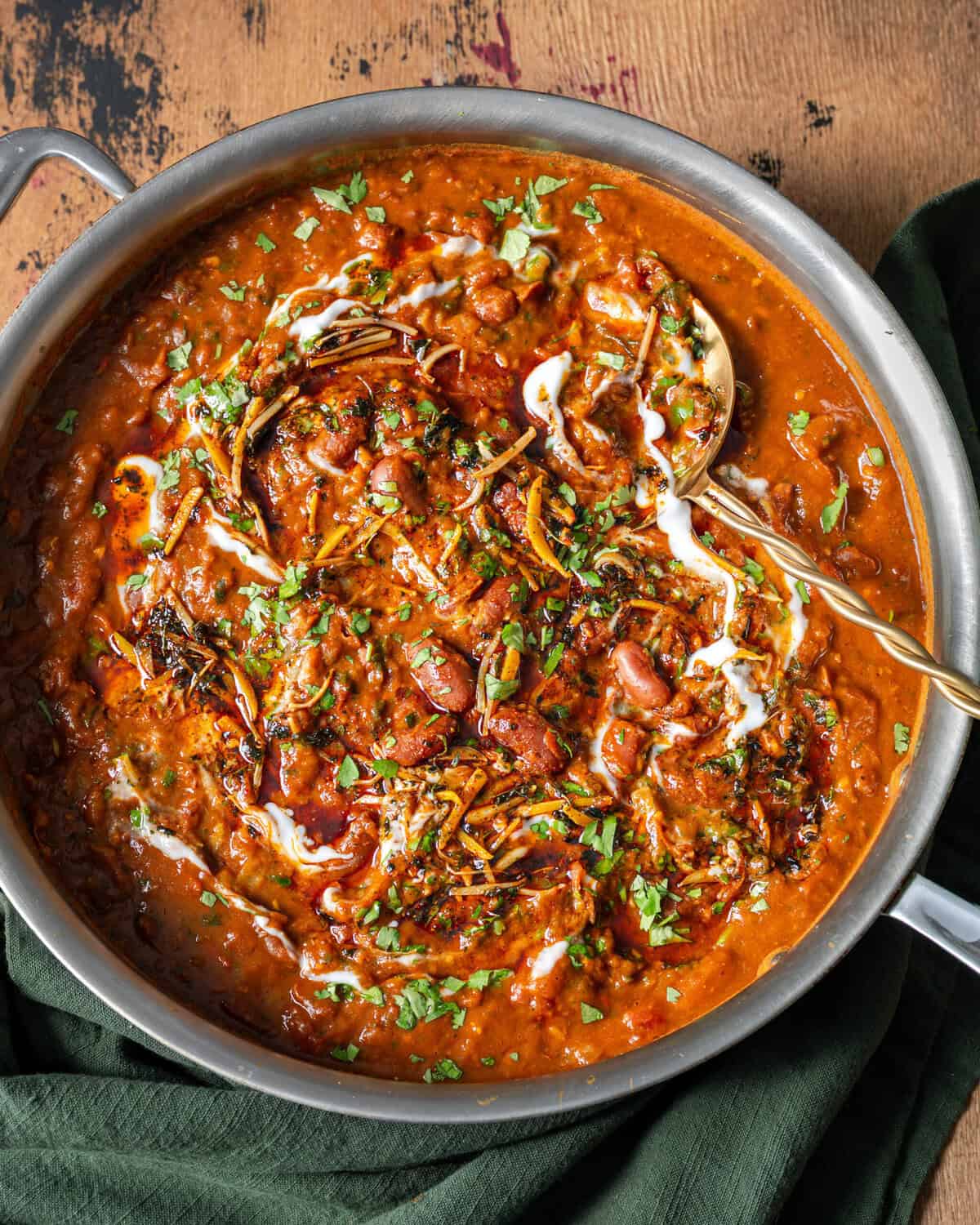
🎥 Watch the video

With over 350K views on Youtube, this rajma recipe is a huge hit with my community. I hope you love it just as much!
Rajma Masala 101
Originating in North India, particularly in the Punjab region, rajma masala is a kidney bean curry (rajma means “kidney beans” in Hindi).
The process of making rajma masala boils down to three steps plus an optional fourth step, each with an associated “key to success” which takes the final dish from “good” to “life-changing.”
1. Cook the kidney beans
Key to success: Cook dried beans from scratch.
Why? The velvety texture of rajma masala is a hallmark of the dish—you simply cannot get it with canned beans. Dried beans release their starches into the liquid as they cook, making the beans creamy and the cooking liquid rich and thick.
2. Make the tomato-onion masala
Keys to success: Dice finely or puree, and take the time to cook both the onion and tomato down.
Why? Finely-diced onions melt into the masala, and browning them adds sweet-savory depth to the masala. Pureeing the tomatoes helps them melt into the masala and cooking them down concentrates their flavor.
3. Combine the beans and the masala
Key to success: Toss the beans in the masala first, then add the cooking liquid.
Why? Adding the beans by themselves allows them to get coated in the flavors of the masala before being doused in liquid. Also, it’s what my mom does for similar dishes, and she is always right.
4. Finish with a tadka (optional)
⭐Key to success: Keep things stirring to prevent burning!
Why? Finishing this dish with a tadka—a tempered spiced oil—takes this dish from really good to really great. Just make sure you stir very frequently so the aromatics and spices don’t burn in the hot oil.
Keep reading for a walkthrough of the steps in detail and my tried-and-true tips for rajma masala magnificence!
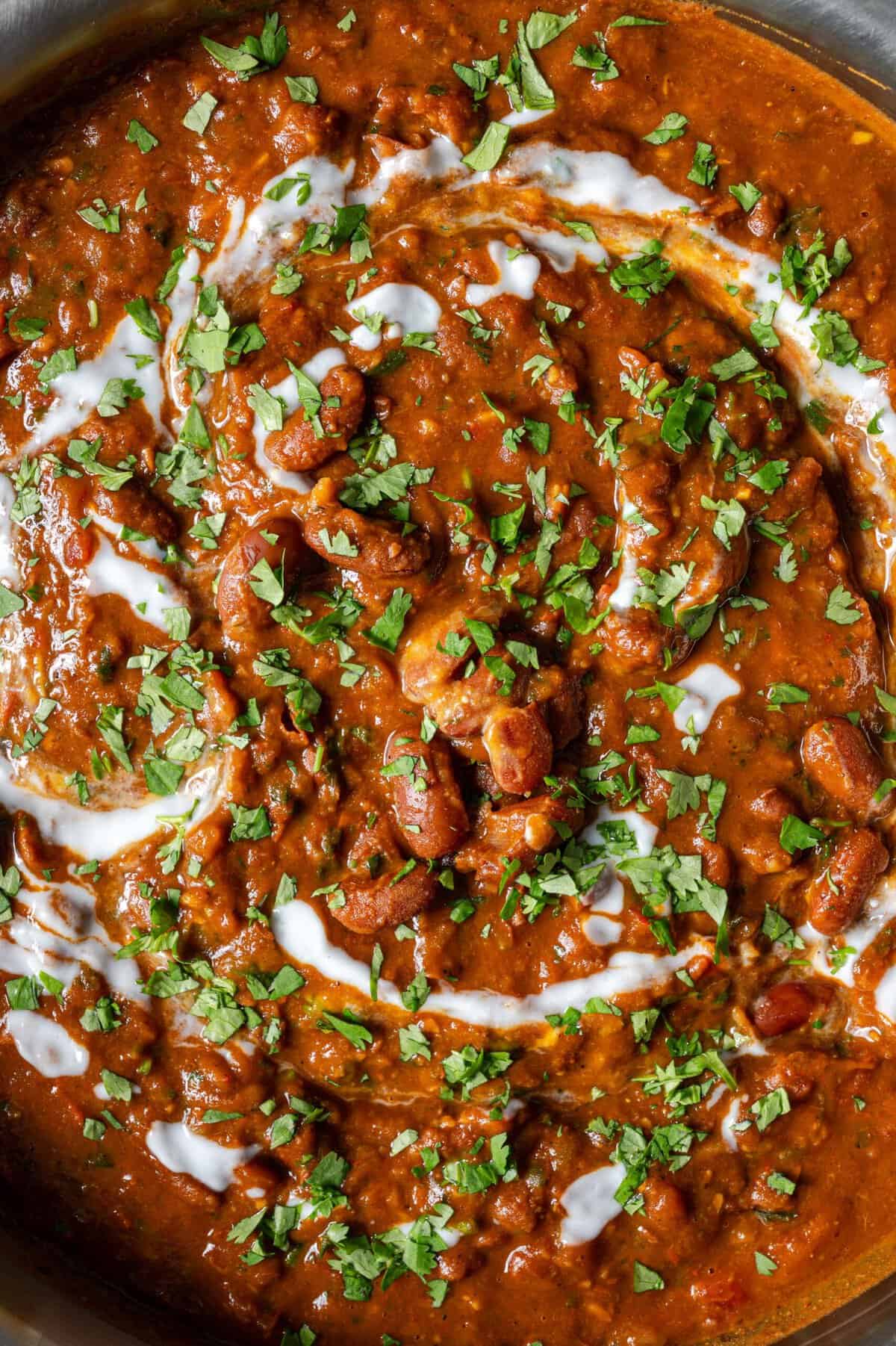
Ingredient notes and substitutes
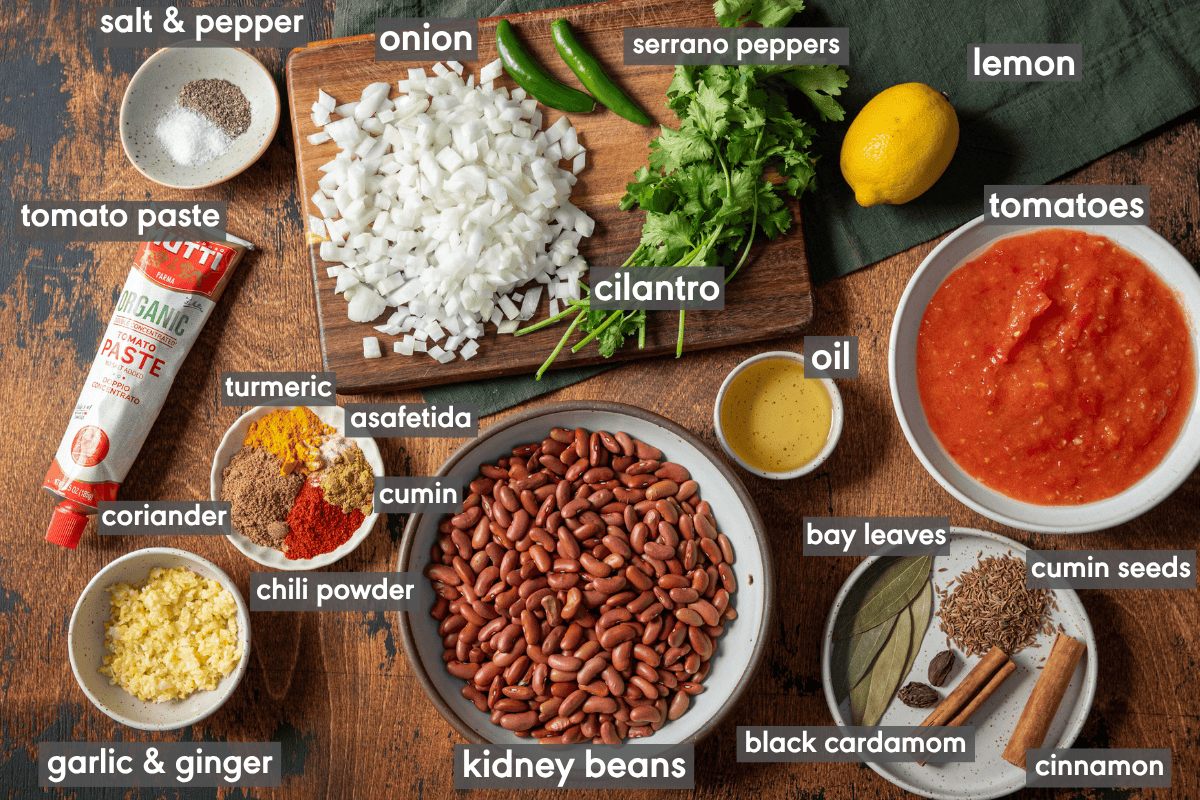
- Dry kidney beans: Canned beans are a great convenient choice for so many recipes—but this is not one of them. The only way to achieve the signature texture and flavor of rajma is to cook dry kidney beans. As they cook, the beans get infused with the flavor of whole spices AND they release their starches into that liquid, making the resulting dish rich and flavorful. Plus, canned beans are too firm, so you’d have to simmer them until really soft anyways.
- The Holy Quaternity of Indian Cooking: If you’ve made my Indian recipes before, you may recognize that this refers to onions, garlic, ginger, and green chilies. They form the base of the masala and add tons of flavor.
- Fresh tomatoes + tomato paste: We utilize both in the masala. The tomato paste adds a base layer of concentrated sweet-savoriness, and the fresh tomatoes get blitzed into a puree to add rajma’s signature tangy flavor.
- Whole spices: The dried beans get cooked with a cinnamon stick and Indian bay leaves (AKA tejpatta), and these same spices are used in the masala—plus cumin seeds and black cardamom pods, if you can find them! Black cardamom is often used in Punjabi-style rajma to add a slight smokiness and unique robustly savory flavor, though it’s optional here. Finally, dried fenugreek leaves (AKA kasuri methi) are used in the tadka, which adds a robustly savory finishing flavor.
- Ground spices: Some staples here: ground coriander, cumin, turmeric, Kashmiri chili powder, and, optionally, a few pinches of asafetida (AKA hing), which contributes an umami onion-garlicky flavor when cooked. And finally the classic finishing spice used in most North Indian gravy-style dishes, garam masala, gets added in the tadka.
Substitutes
You can find all of the spices in this recipe at your local South Asian grocer or online, but here are some substitute options.
- Don’t have Indian bay leaves / tejpatta? Use regular bay leaves.
- Can’t get black cardamom? Omit it (there’s no close substitute).
- Can’t handle spicy food? This recipe is designed to be moderately spicy. If you want zero heat, omit the chile peppers. If you want mild heat, use one pepper.
- Fresh tomatoes not in season? Use canned whole peeled tomatoes and give them the same blitz in the food processor.
- No dried fenugreek leaves? There’s no real sub here, but you can double the amount of garam masala in the tadka.

Step-by-step instructions
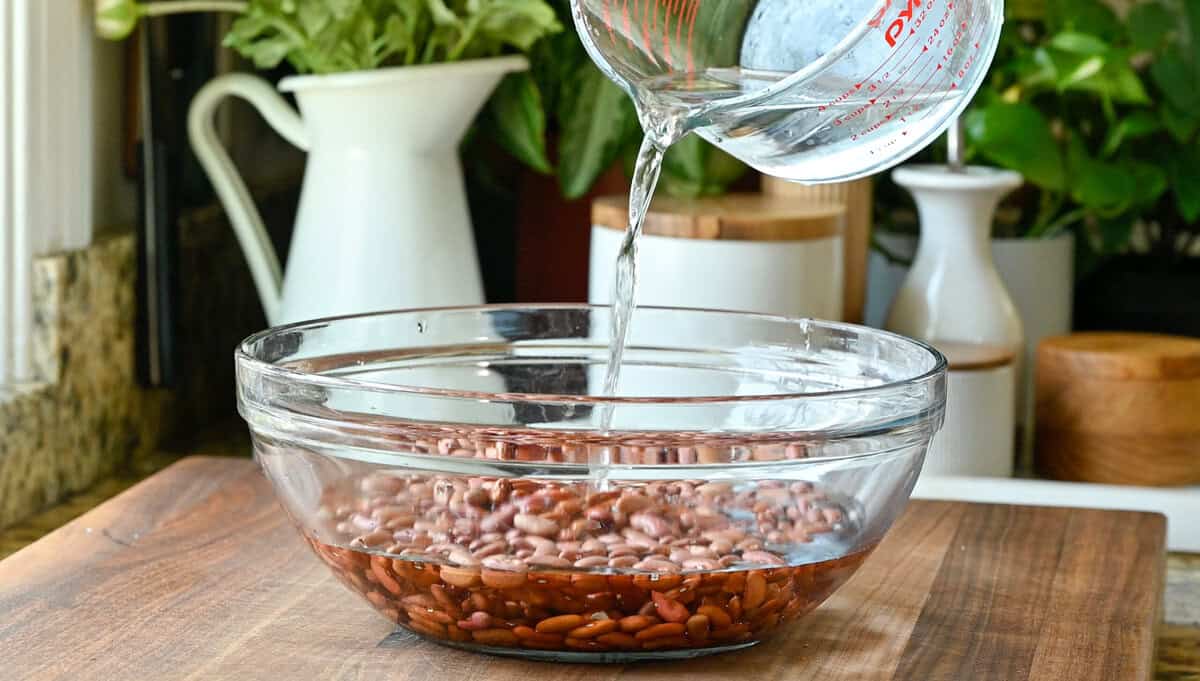
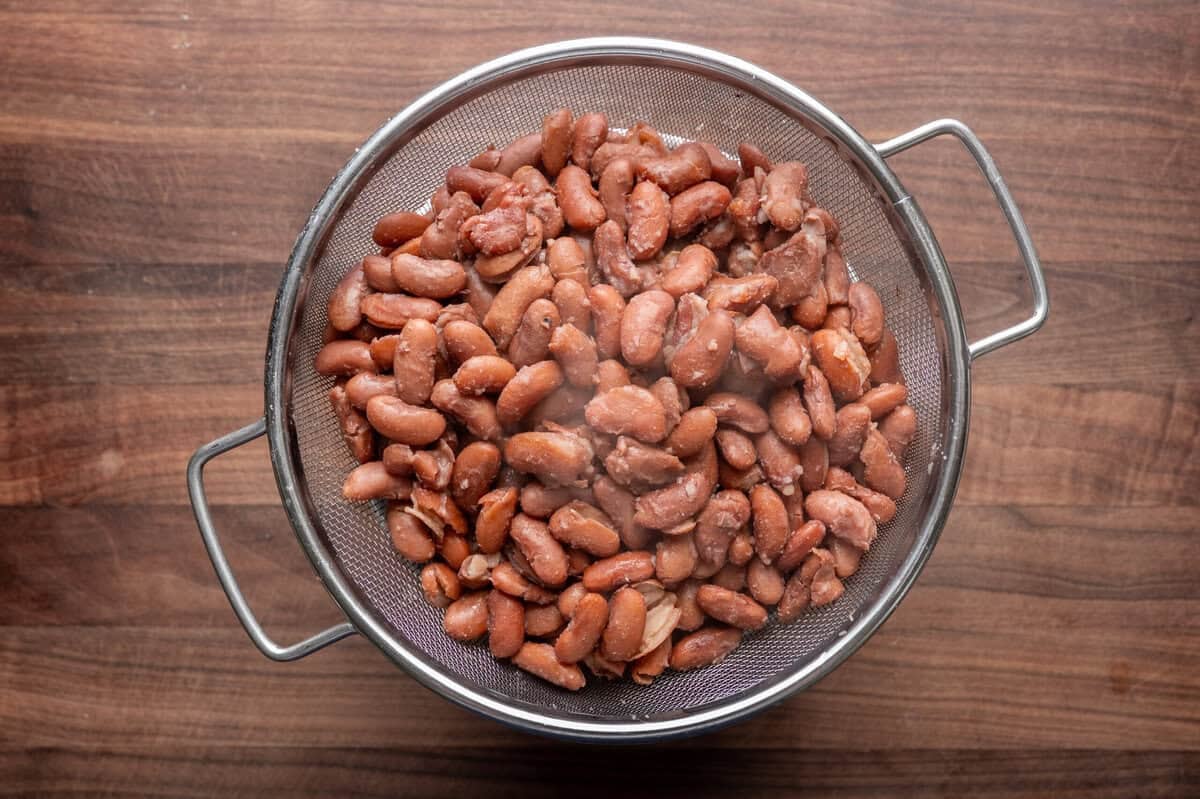
- Soak the beans: Cover with plenty of water and stir in 1 ½ TBSP kosher salt. Soak at room temp for 8 to 12 hours.
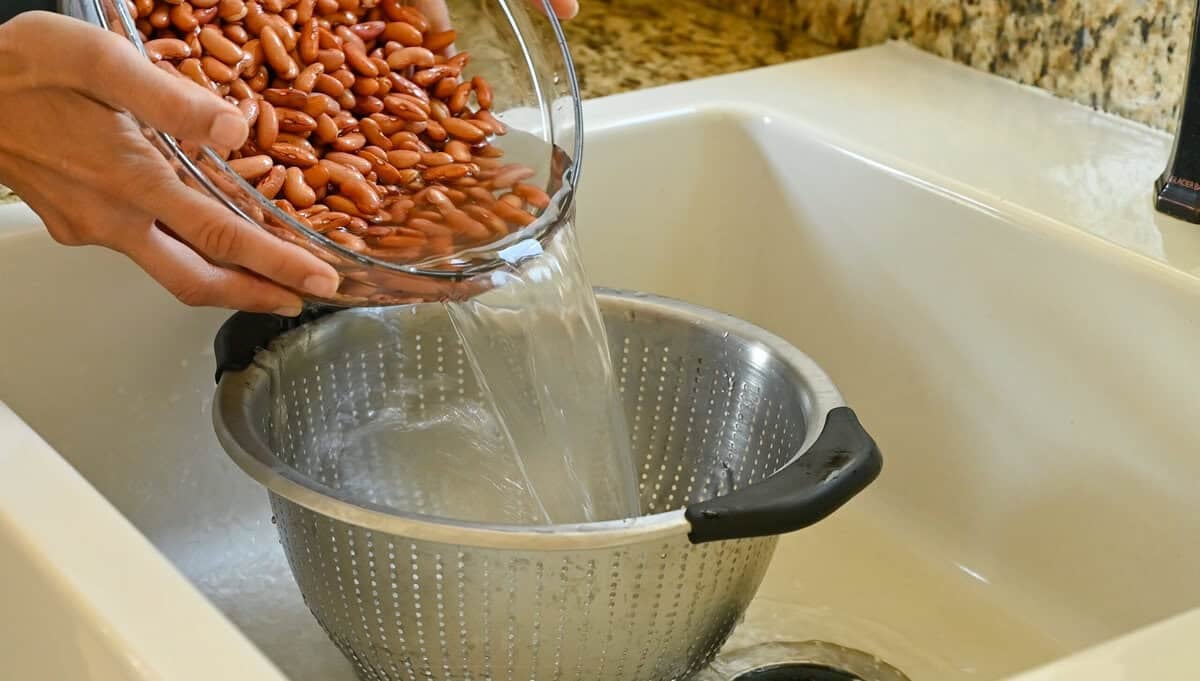
- Drain the soaked beans and rinse well.
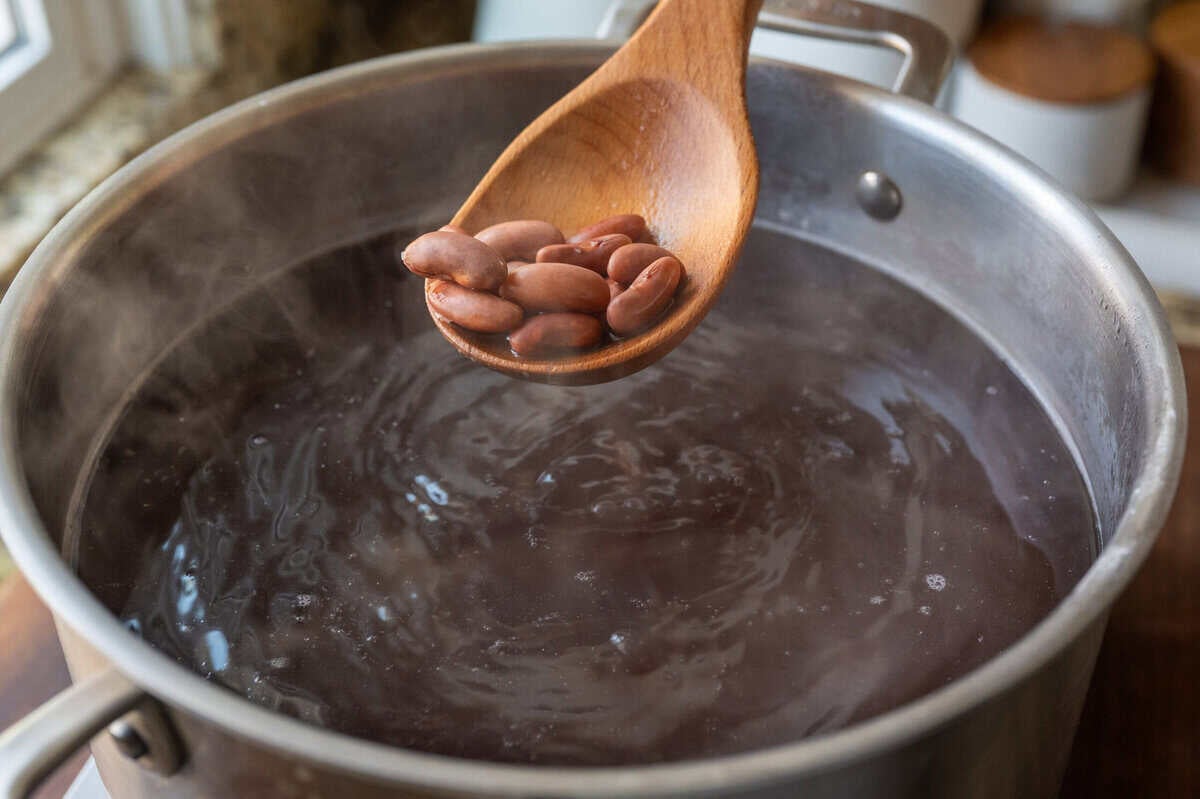
- Cook the beans: Add the beans to a large saucepan with 9 cups (2.1 L) water, baking soda (optional), and oil. Skim off any thick foam as the beans come to a boil. Partially cover and boil for 10 minutes.
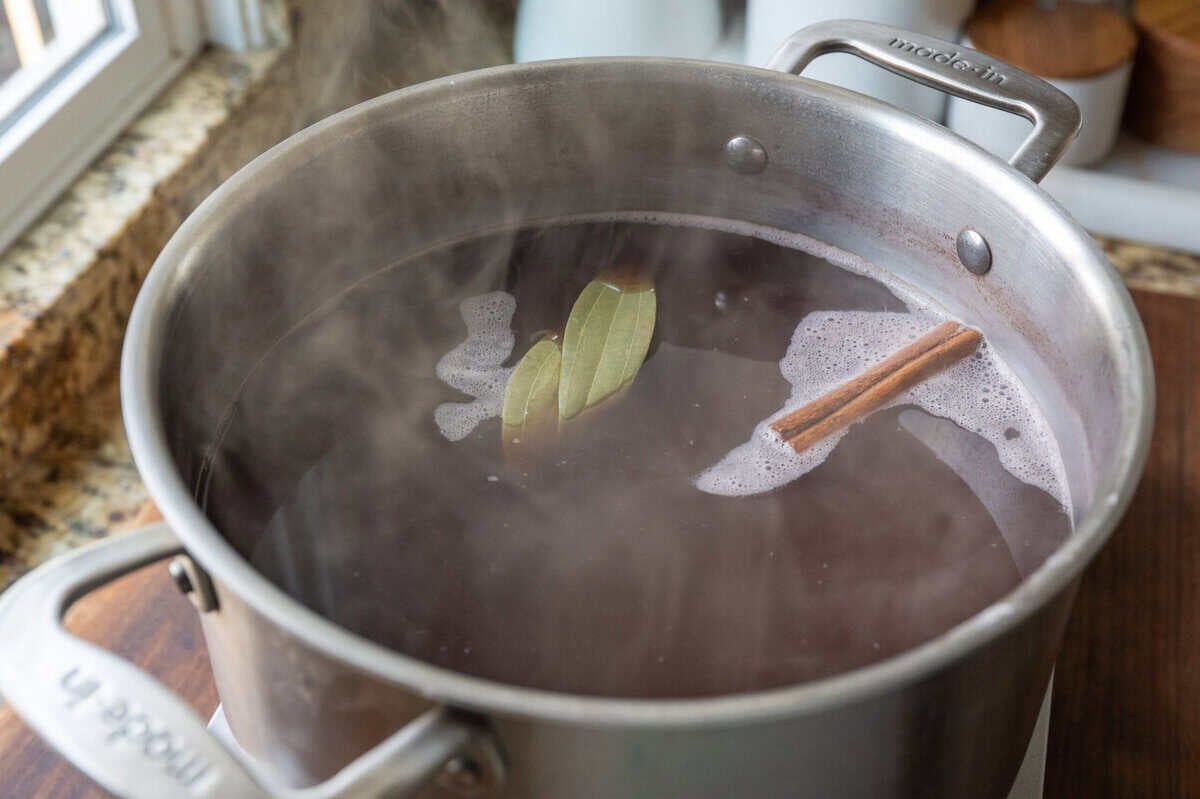
- Reduce the heat and stir in 2 teaspoons kosher salt, the cinnamon stick, and bay leaves.
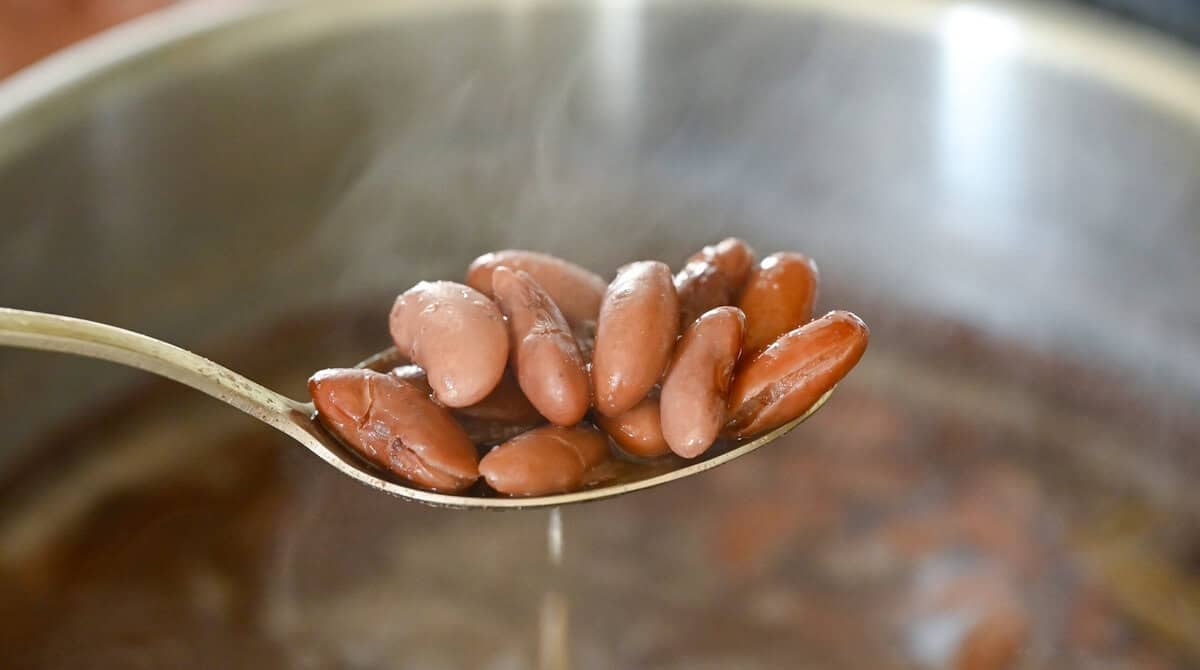
- Cook uncovered at a gentle simmer until the beans are tender and squishable between your fingers, but not mushy.
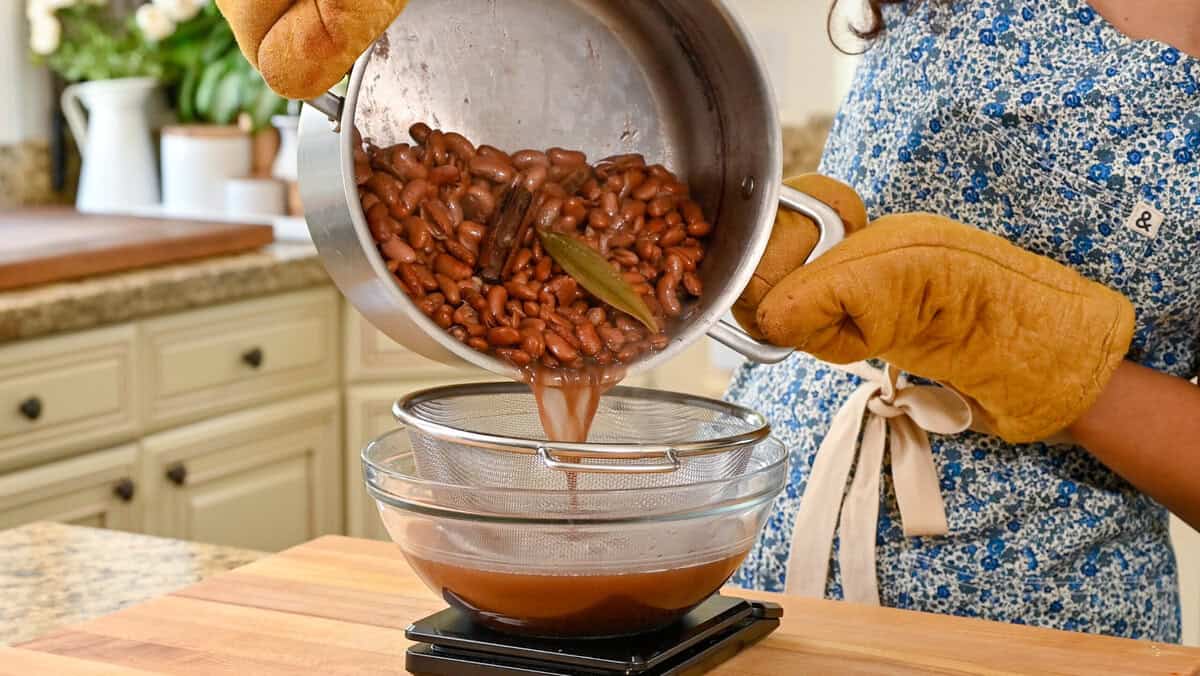
- Strain the beans from the cooking liquid but keep the liquid (discard the spices).
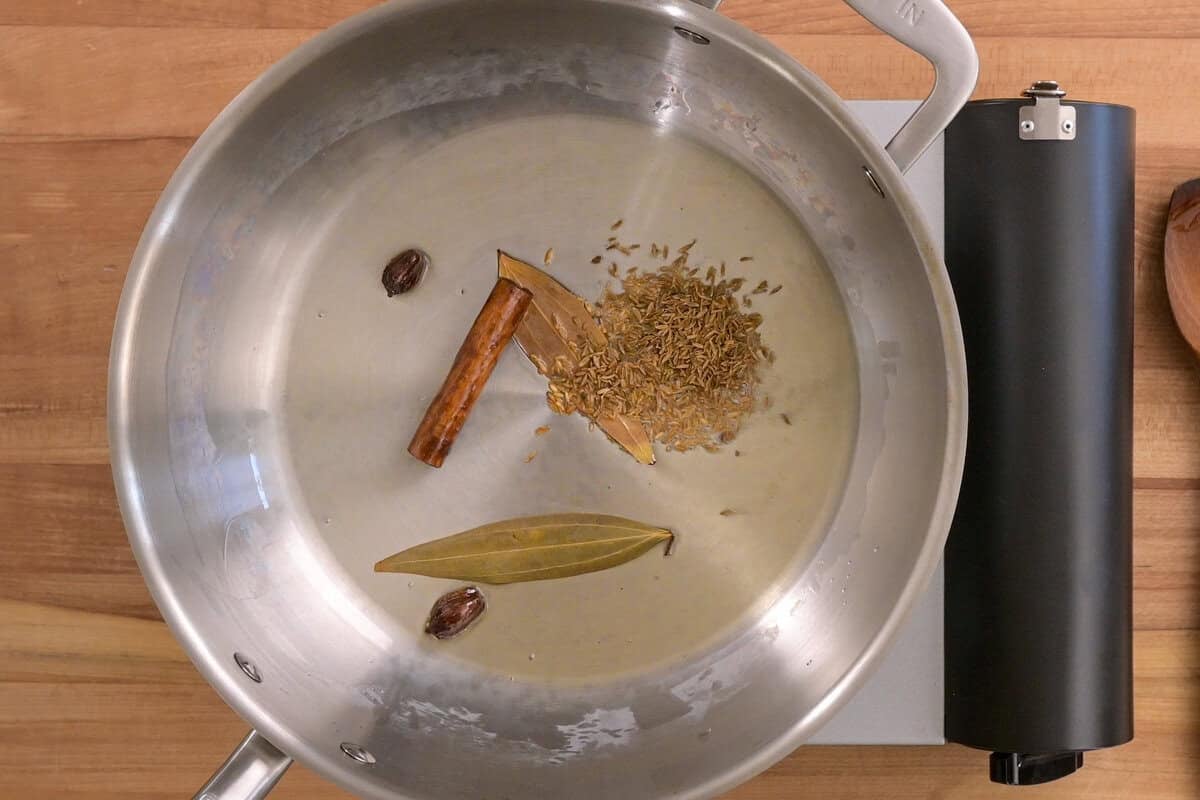
- Make the masala: Heat the oil in a large saute pan over medium, then add the cinnamon stick, bay leaves, and black cardamom (optional). Stir for 30 to 45 seconds, then add the cumin seeds for 10 seconds.
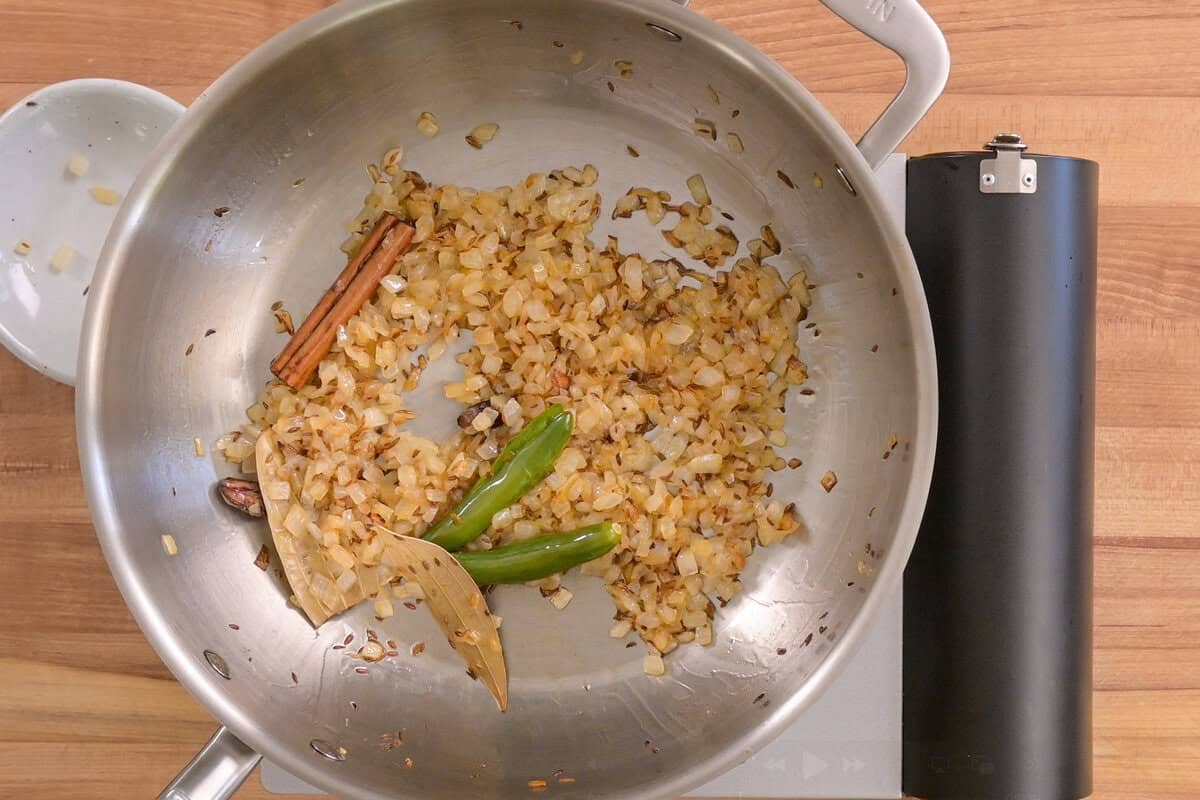
- Add the onion and serrano peppers and stir occasionally until the onions are browned, 12 to 15 minutes.
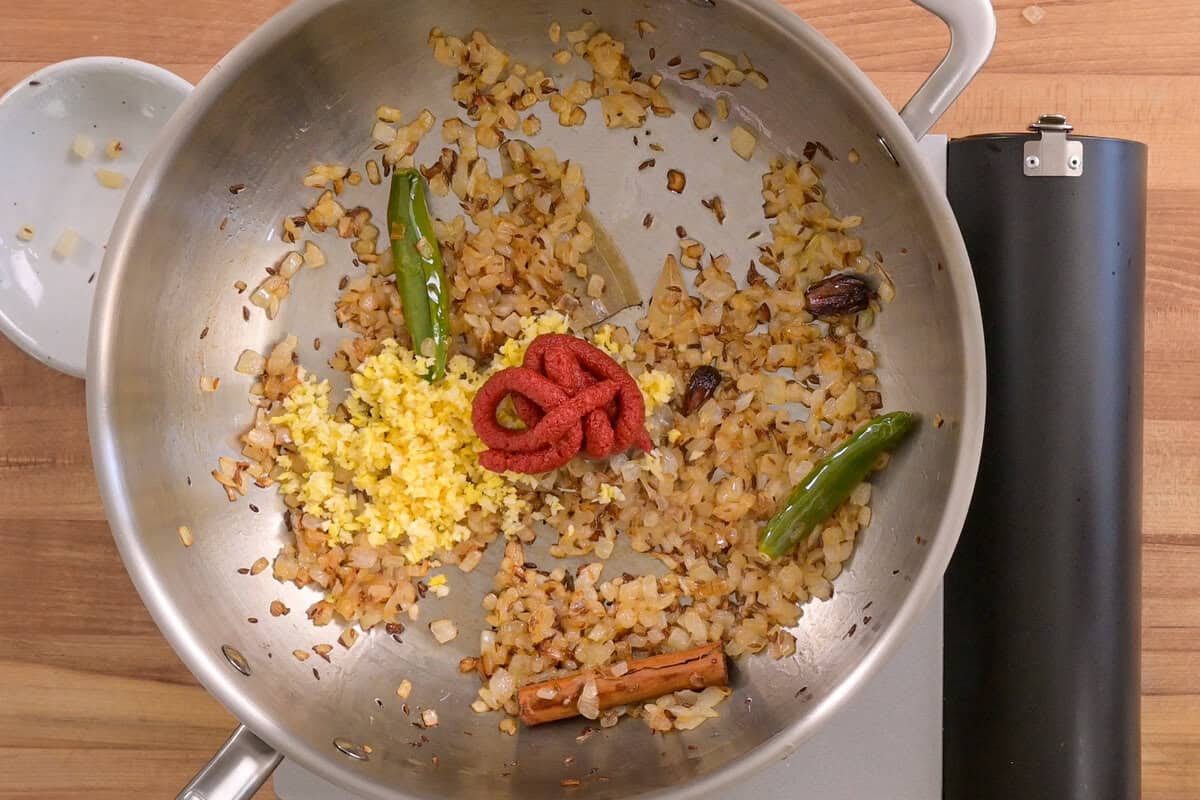
- Add the garlic-ginger paste and tomato paste.
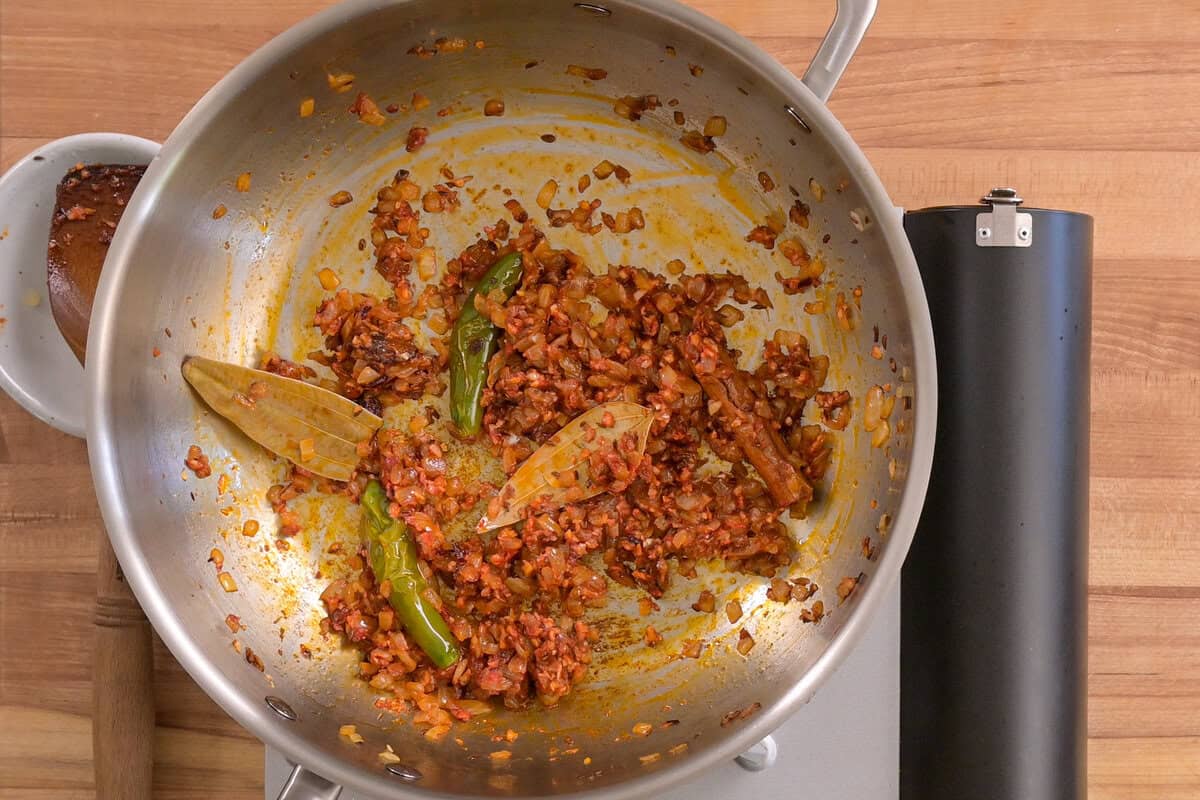
- Stir almost constantly for 90 seconds.
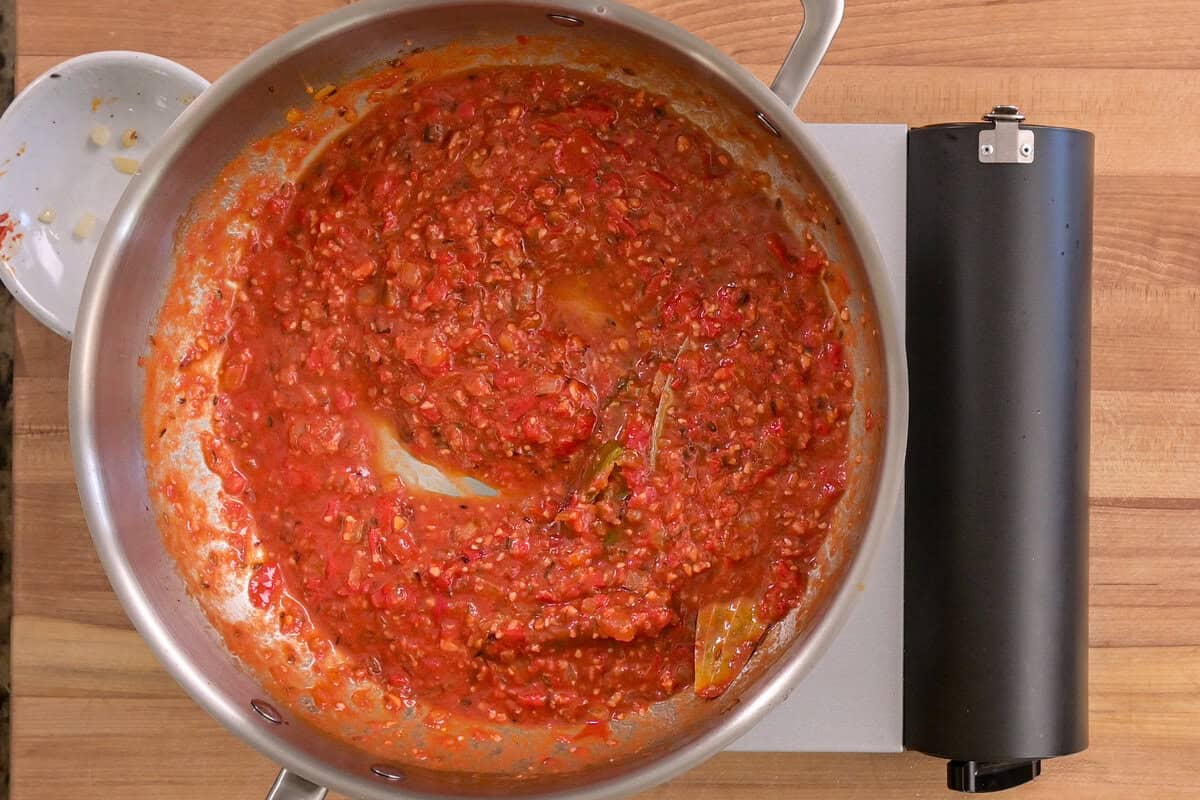
- Add the blended tomato puree, salt, and pepper. Cook for 10 minutes at a rapid simmer, stirring occasionally, until you have a concentrated dark red paste.
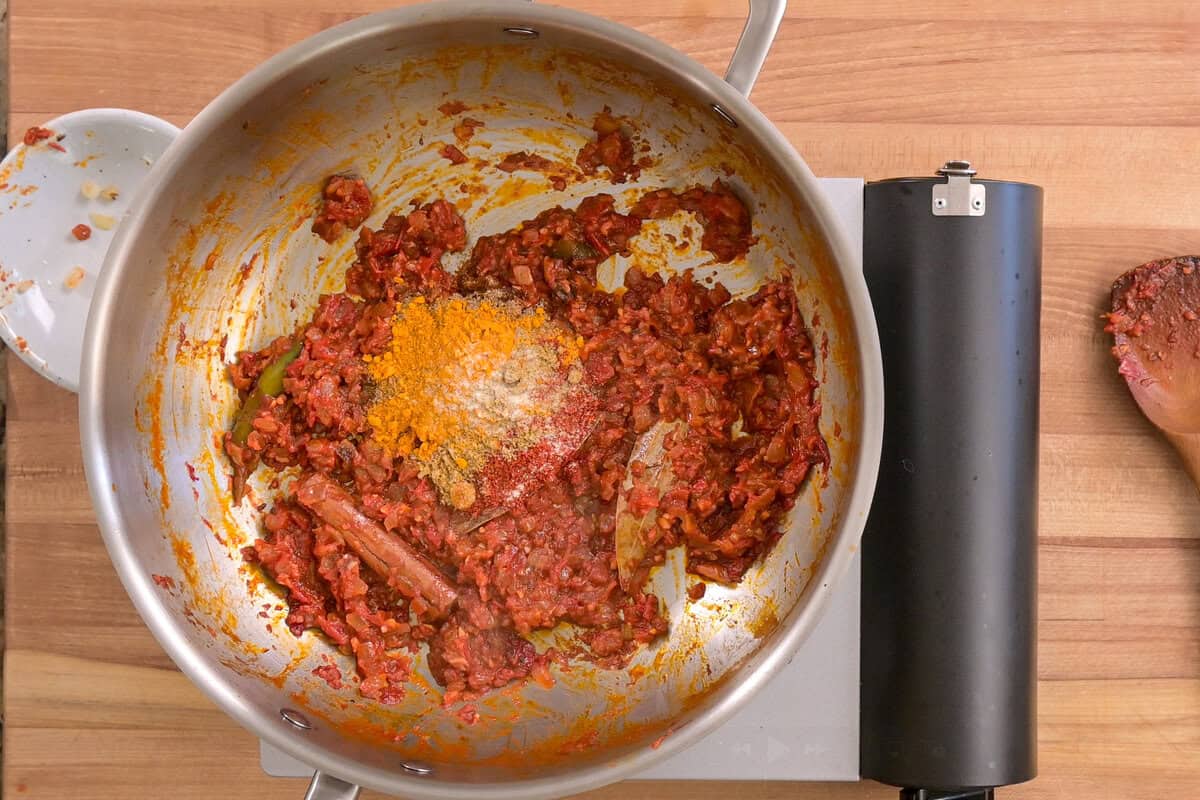
- Add the ground spices—coriander, chili powder, cumin, turmeric, and optional asafetida—plus a big splash of water.
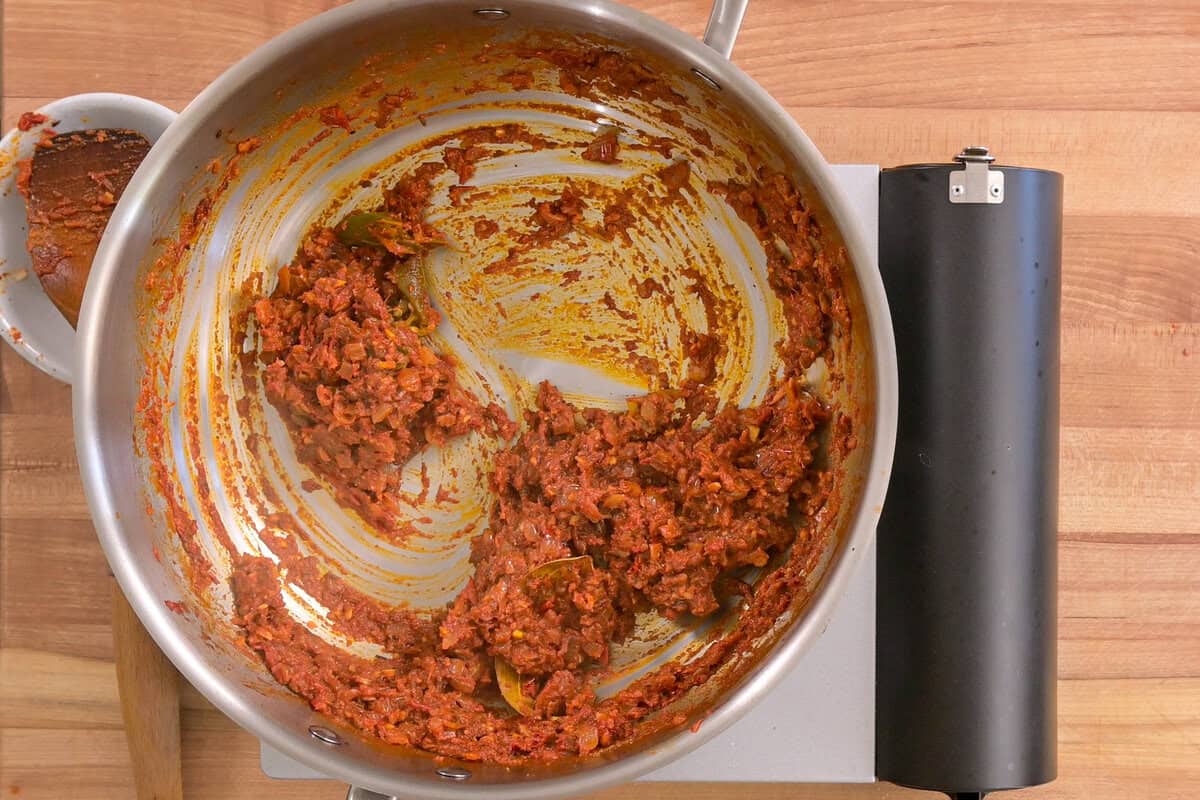
- Stir frequently for 1 minute until thick and combined.
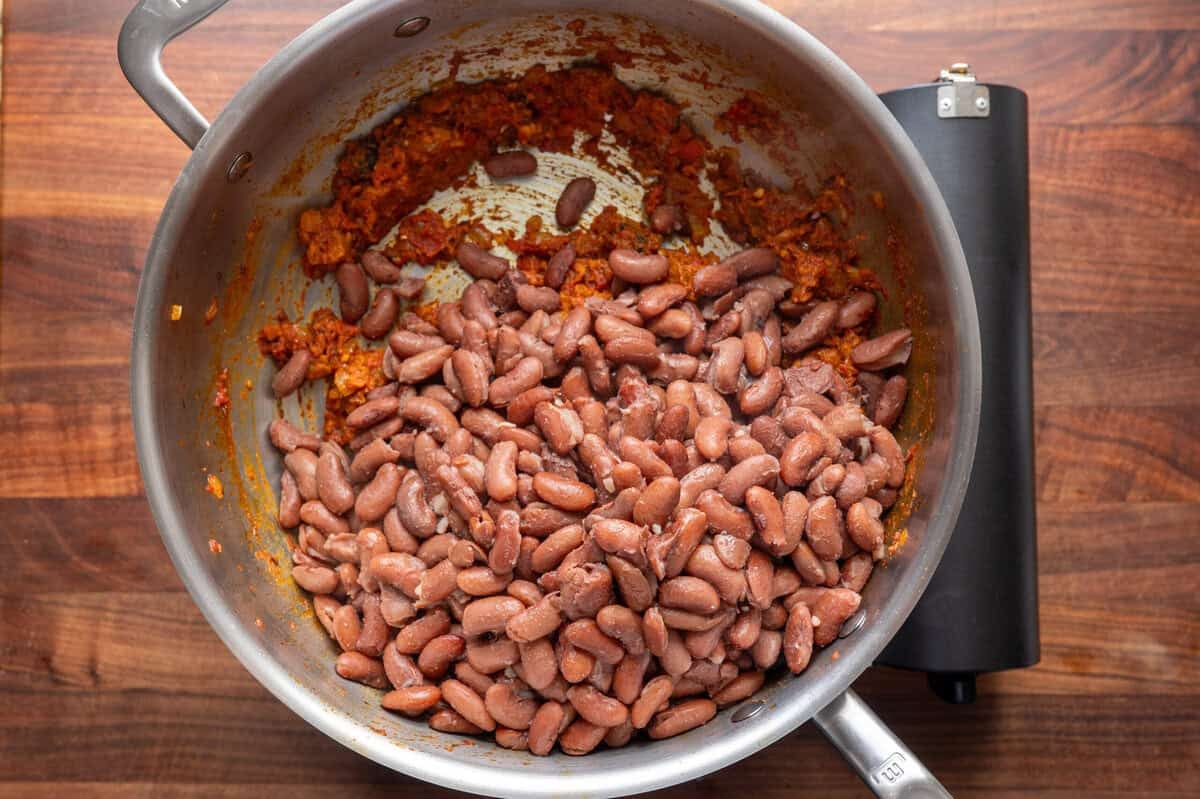
- Combine beans and masala: In the pan used for the beans (or other large, deep saute pan), combine the drained beans and masala. Toss the beans into the masala for 1 minute.
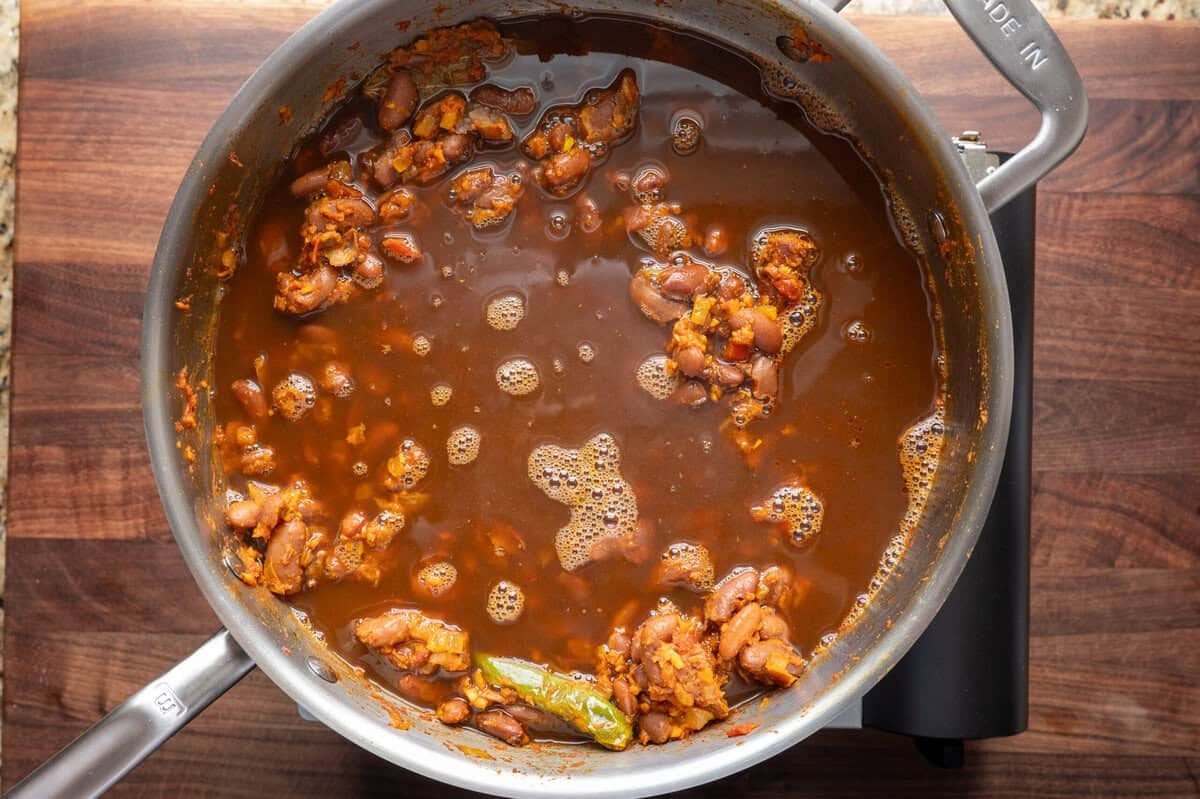
- Add the reserved bean-cooking liquid (4 ½ cups / 1.1L). If you have less than that amount of reserved liquid, top off with water.
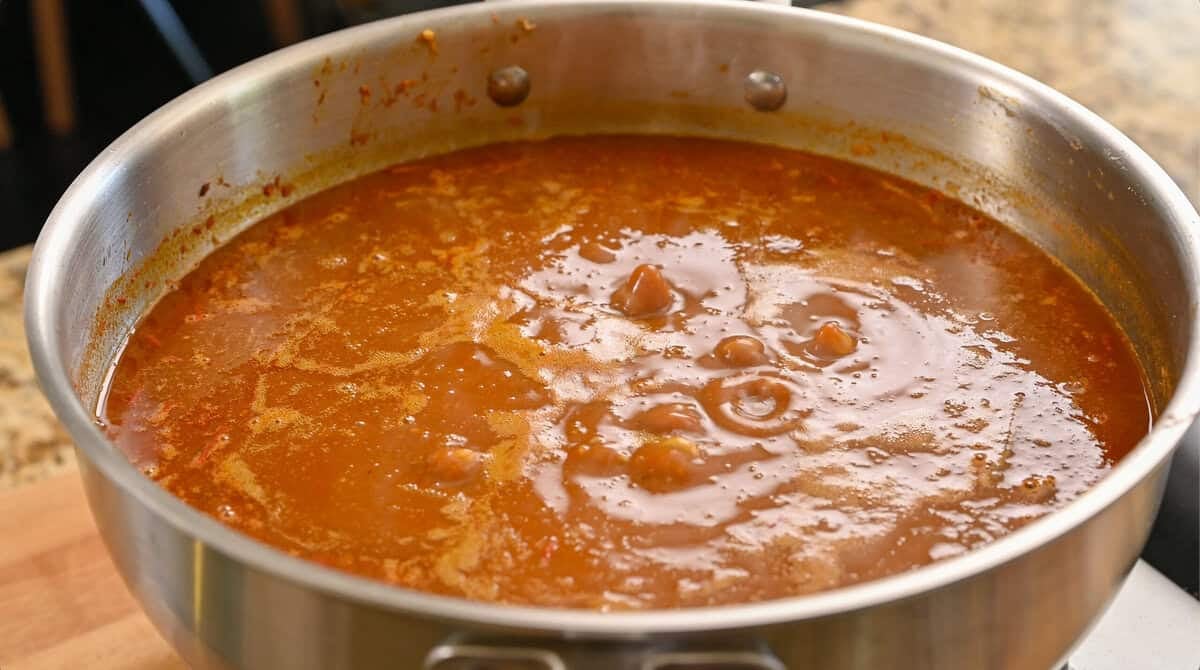
- Bring to a boil, then reduce the heat, and simmer, covered, for 20 minutes, uncovering occasionally to stir.
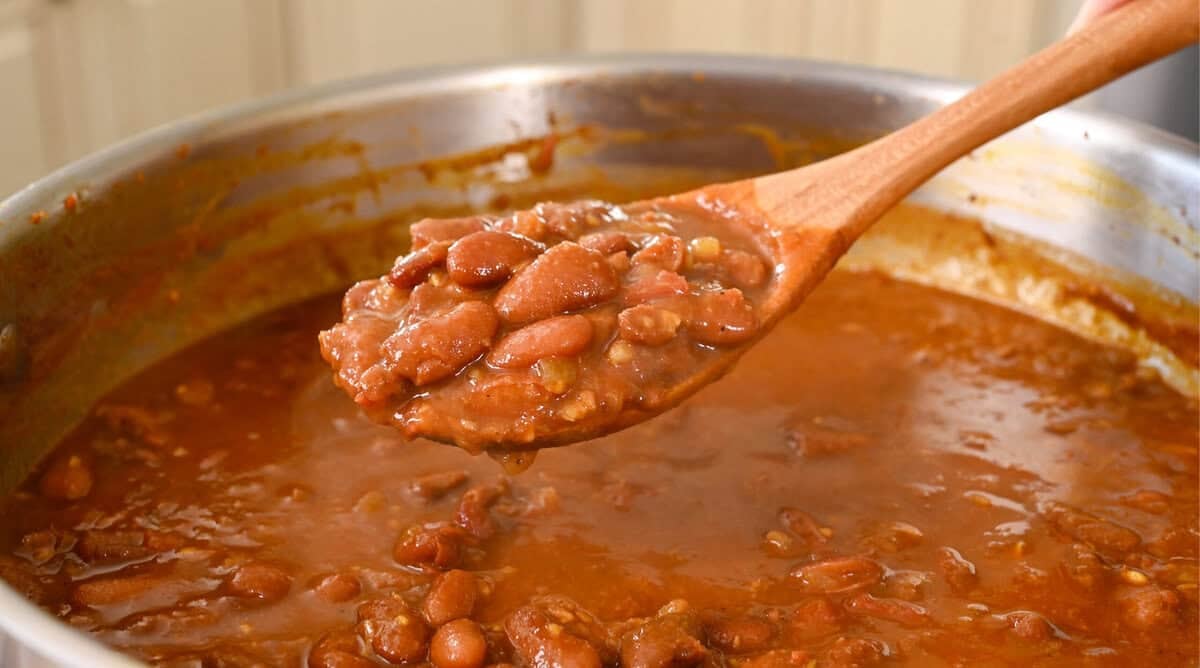
- Uncover and rapidly simmer for 10 final minutes until you have a velvety gravy.
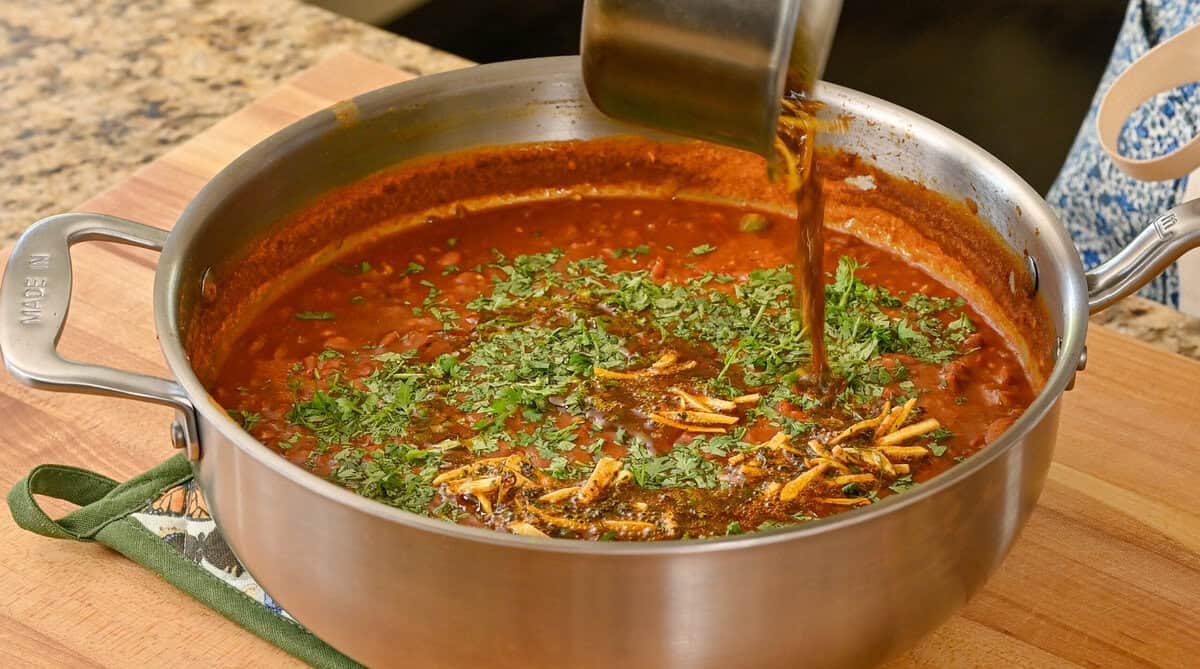
- Remove from the heat and pick out the whole spices and chiles.
Stir in cilantro and lemon juice, and pour the tadka on top just before serving.
Tips for making this recipe
For greatness, don’t skip the tadka
I’ve kept the tadka optional because this dish is still good without it, but it really shines with it, so I’d recommend not skipping it.
In case you’re not familiar, a tadka simply refers to briefly cooking spices and sometimes aromatics in a fat source, then pouring the entire thing—oil and spices—over the final dish. The hot oil releases the fat-soluble oils in the spices AND the oil gets infused with the spices’ flavor, so it’s a win-win, adding tons of dynamic flavor to the finished dish.
5 tips for the perfect beans
- Soak the beans in salty water. Beans are extremely dense and need salt from the get-go. Even a bangin’ masala can’t cure bland beans. Plus, soaking beans in salty water has been shown to make them more tender!
- Add baking soda + oil to the bean-cooking water. Baking soda helps soften the beans faster (by about 20 minutes in my tests) and thickens their texture, making the final texture similar to chili. If you prefer a soupier texture, omit the baking soda. The oil helps minimize the amount of foam the beans release as they come to a boil.
- Boil the beans for 10 full minutes. Raw kidney beans contain a toxin that can give you food poisoning, so boiling them for 10 minutes ensures the toxin is destroyed. I recommend keeping the beans partially covered during the boil so you don’t lose a ton of water to evaporation.
- Top off with water as needed. If not using baking soda, the beans will take longer to cook, and you may need to top off with fresh water to ensure they’re submerged.
- Use texture as your doneness indicator. While I offer estimated times, they will vary based on how long you soaked the beans, whether you used baking soda, the freshness of your beans, etc. The beans are done when you can easily mash one between your fingers but before they become super mushy.
After a 10-hour soak, I’ve found the below:
- With baking soda: 40 – 45 minutes of cook time
- Without baking soda: 70 minutes of cook time
Want to make these beans in your Instant Pot? See the recipe card notes for detailed instructions!
When and how to multitask
There are several opportunities for “multitasking” in this recipe, by which I mean using inactive or mostly inactive cook time to do other prep work.
- While the beans cook… start prepping the masala ingredients! After you’ve boiled the beans for 10 minutes, you’ll add the whole spices and reduce the heat. The beans don’t need babysitting so use this time wisely!
- While the onions brown… prep the garlic, ginger, and tomatoes! The onions need 12 – 15 minutes to brown and need only occasional stirring, so if you feel comfortable, use the time to blitz the garlic and ginger in the food processor and puree the fresh tomatoes.
- While the tomatoes cook… measure the ground spices in a bowl (and do some cleanup!).
- While the rajma simmers… prep the tadka ingredients. Wait to actually cook the tadka (2 to 3 minutes) when the rajma is done so you can pour it on fresh.
Prep ahead, if you want
This dish, like a lot of Indian dishes, is a labor of love, so it’s not something you’d whip up on an average Tuesday night. That said, you can prepare lots of the items in advance to make this process more streamlined.
Cook the beans ahead of time. You can cook the beans and store them separately from the liquid and refrigerate for 2 to 3 days.
Prep the aromatics: If you’re in the habit of doing a little meal prep on the weekend like I am, chop/blend all the aromatics. Store the onions and serrano peppers together in a ziploc bag, then in an airtight container (to prevent onion odor in the fridge). Store the garlic and ginger together and the tomato puree separately for 3 to 4 days.
Frequently Asked Questions
Sure! See the notes at the bottom of the recipe card for detailed instructions.
I highly recommend soaking. In my tests, kidney beans that were unsoaked cooked very unevenly: some were overcooked, while others were still very firm.
This also applies to the Instant Pot—unsoaked kidney beans cooked very unevenly in our tests.
If you don’t have time to do a full soak, try a quick soak. Follow the instructions from the Food Network.
First, omit the baking soda from the beans, as it tends to thicken and soften them into a more chili-like texture.
Two, the recipe calls for adding 4 ½ cups of cooking liquid, so you can start with 5 cups and add more water as needed.
Technically, yes, but you won’t get the same level of flavor development and certainly not texture with canned beans. As dried beans cook, they release this thick starchy liquid, which helps thicken the rajma as it simmers so it turns velvety. Canned beans won’t be able to yield the same results.
Canned beans are also firmer than ideal for this recipe, so you might want to simmer everything longer to soften them.
If you do want to use canned beans, the equivalent would be four 15-ounce/425g cans.
No problem. I use this simply to speed up the prep process, but you can definitely use a knife to finely chop the garlic and ginger and to finely chop the tomatoes.
Since this will take longer, you may need to prep these before cooking the masala instead of multitasking while the onions cook.
Store leftover rajma in a sealed container in the fridge for 5 to 6 days.
This is also a great candidate for freezing, especially because it makes a large quantity, and will stay good for 3 to 6 months—but it is best to not pour any tadka on the portion you plan to freeze. I like to freeze them in my Souper Cubes for easily portioned leftovers that are quick to defrost.
Reheating tip: The rajma thickens a lot as it sits in the fridge (from the bean starch), so you’ll want to loosen it with some water as you heat up leftovers.
This dish is typically served with rice (AKA rajma chawal), but you could also do flatbread (a batch of my homemade vegan naan would be divine but store-bought pita / naan is also great).
I recommend dolloping some plain coconut yogurt on top for a cooling contrast (fave brands: Cocojune, Culina).
If you’re feeling ambitious, you can top it with raita.
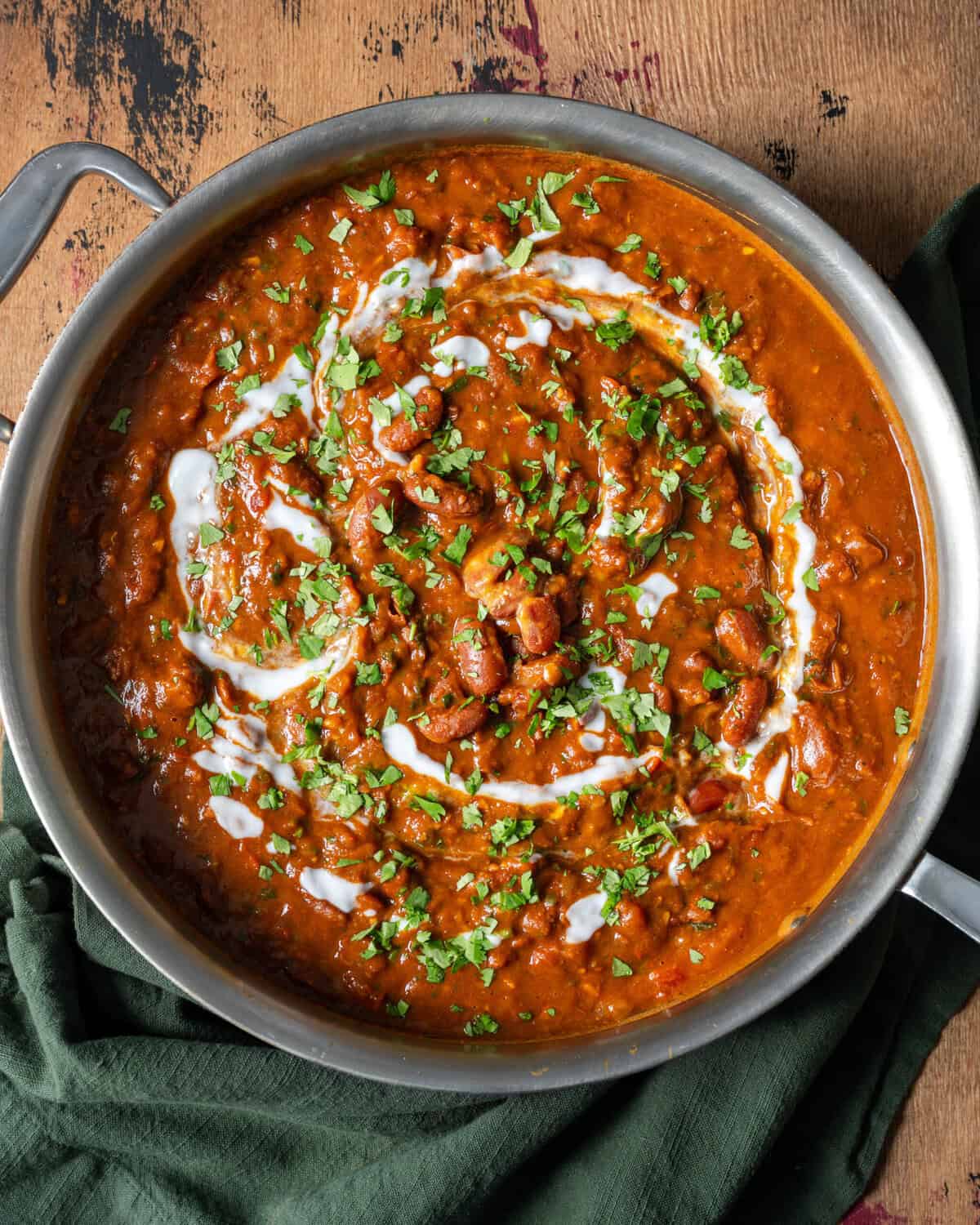
Swooning over this velvety rajma masala? Let me know by leaving a rating and review below! Reading your comments makes my day 🤗

Introducing
Big Vegan Flavor
Techniques and 150 recipes to master vegan cooking.
Rajma Masala (Kidney Bean Curry)
Ingredients
For the Kidney Beans
- 1 lb (450g) dried red kidney beans
- Kosher salt and freshly cracked black pepper (see Note 1)
- ½ tsp baking soda (optional, see Note 2)
- 1 tsp neutral-flavored oil
- 1 (2 to 3”) cinnamon stick
- 2 Indian bay leaves (AKA tejpatta; or regular bay leaves)
For the Masala
- 3 TBSP (42g) neutral-flavored oil
- 1 (2 to 3”) cinnamon stick
- 2 Indian bay leaves (AKA tejpatta; or regular bay leaves)
- 2 black cardamom pods, lightly pressed down on with your finger (optional, see Note 3)
- 2 tsp cumin seeds
- 1 large yellow onion, finely diced (2 cups / 300g diced)
- 1 to 2 serrano peppers, de-stemmed and slit open slightly (2 for spicy; omit for mild heat)
- 6 cloves garlic, peeled
- 1" piece (8g) fresh ginger, peeled
- 14 ounces (400g) ripe tomatoes (see Note 4)
- 2 TBSP (30g) tomato paste
- 1 ½ TBSP (9g) ground coriander
- 2 tsp Kashmiri chili powder (see Note 5)
- 1 tsp ground cumin
- 1 tsp ground turmeric
- A few pinches asafetida (optional, for extra oomph)
Finishing
- 1 cup (16g) fresh cilantro leaves and tender stems, chopped
- A few squeezes of lemon juice
Tadka
- 2 TBSP (28g) neutral-flavored oil (or vegan butter)
- 2 cloves garlic, sliced into thin matchsticks
- 1" piece (8g) fresh ginger, peeled and sliced into very thin matchsticks
- 1 TBSP dried fenugreek leaves, crushed between your fingers (see Note 6)
- 1 tsp garam masala
- ½ tsp Kashmiri chili powder
Instructions
THE NIGHT BEFORE
- Soak the beans: In a large bowl, cover the beans with a few inches of water and stir in 1½ TBSP kosher salt (see Note 1). Soak at room temp for 8–12 hrs.
COOK THE BEANS
- Boil: Drain and rinse the soaked beans. Add them to a large saucepan with 9 cups (2.1 L) water, the baking soda if using, and 1 tsp oil. Bring to a boil, skimming off thick foam. Partially cover and boil for 10 minutes (important to destroy natural toxin in kidney beans).
- Simmer: Reduce to a very gentle simmer (just a few tiny bubbles). Stir in 2 tsp kosher salt, 1 cinnamon stick, and 2 bay leaves. Cook uncovered until beans mash easily between your fingers but aren't mushy. This takes ~ 40-45 minutes with baking soda, or ~70 minutes without. If the water level is low, top it off with fresh water. While the beans simmer: Do all the masala prep in step 5.
- Strain: Set a colander over a large bowl and drain the beans, saving the liquid. Discard the spices. Measure out 4½ cups (1.1 L) liquid—top off with fresh water if short. Return the cooked beans to their large saucepan. Keep the liquid separate.
MAKE THE MASALA
- Prep the masala ingredients (do this while the beans cook): Onion: finely dice Serrano pepper(s): If using, de-stem and slit open slightly. Aromatic paste: In a mini food processor/blender, blend the garlic and ginger into a coarse paste; transfer to a a small bowl and stir in the tomato paste.Fresh tomatoes: Blend until smooth. Keep this fresh tomato purée separate.Ground spices: In a small bowl, combine the ground coriander, chili powder, cumin, turmeric, and asafetida if using.
- Bloom the whole spices: Heat a large sauté pan over medium until hot, then add 3 TBSP oil. Once shimmering, add 1 cinnamon stick, 2 bay leaves, and 2 black cardamoms (if using); stir 30–45 seconds until aromatic. Add 2 tsp cumin seeds and sizzle for 10 seconds.
- Brown the onions. Add onion, serrano(s), and a big pinch of salt. Cook for 12 to 15 minutes until deeply browned, adding a splash of water if they brown unevenly. Add the aromatic base (ginger, garlic, tomato paste) and stir almost constantly for 90 seconds.
- Add the aromatic paste (ginger, garlic, tomato paste). Stir almost constantly for 90 seconds.
- Cook down the tomatoes. Add the fresh tomato purée, deglazing the pan with the liquid. Season with 1 tsp kosher salt and pepper to taste. Rapidly simmer ~10 minutes, stirring occasionally, until you have a concentrated, dark red paste.
- Add the ground spices: Stir in the Ground Spices plus a big splash of water. Stir 1 minute until thick, then remove from heat.
COMBINE BEANS AND MASALA
- Coat the beans. Transfer the masala to the large saucepan with the cooked beans. Toss over medium heat to coat for 1 minute.
- Simmer. Add the reserved 4½ cups (1.1 L) reserved cooking liquid. Bring to a boil, then cover, reduce the heat to low, and simmer for 20 minutes, stirring occasionally.While it simmers, prep the Tadka ingredients. Slice the garlic and ginger into matchsticks. Crush the fenugreek leaves between your fingers and combine with the garam masala and chili powder in a small bowl.
- Thicken. Uncover the pot and simmer rapidly for 10 minutes until thickened and velvety. If you skipped the baking soda, mash ~10% of the beans against the side of the pot to help it thicken.
- Finish. Remove from the heat. Fish out the bay leaves, cinnamon, serrano, and cardamom. Stir in cilantro and a few squeezes of lemon.
TADKA & SERVE
- Make the Tadka: Add 2 TBSP oil or butter to a cold small saucepan, then turn to medium heat. Once shimmering or melted, add the matchstick garlic and ginger; stir 1 to 2 minutes until the ginger frizzles at the edges. Add fenugreek, garam masala, and chili powder; stir for 20 to 30 seconds, then pour over the rajma.Immediately pour the tadka over the rajma.
- Serve: Taste and adjust rajma with salt and lemon. Serve with rice or flatbread, and yogurt if desired. It thickens as it rests, so loosen with water as needed.
Video
Notes
- Salt: Amounts are for Diamond Crystal kosher salt. Use roughly half if using table salt, sea salt, or Morton’s kosher salt.
- Baking soda: Softens the beans faster and thickens the rajma to a stew/chili texture. For a soupier result, skip it but use 10–11 cups (~2.5 L) water to offset the longer cook and extra evaporation.
- Black cardamom: Adds a smoky, savory depth typical of Punjabi rajma, but optional. Lightly crack the pods with your fingers — don’t fully crush or pound the pods, as the aroma can be overpowering.
- Tomatoes: No good fresh ones? Use 14 oz (400g) canned whole peeled tomatoes, crushed or puréed.
- Kashmiri chili powder: A mild Indian red chili powder. Substitute 1½ tsp sweet or hot paprika plus ¼ to ½ tsp cayenne pepper.
- Fenugreek leaves (kasuri methi): Bring a bold, savory note to North Indian dishes. Find them at South Asian grocers or online.
- Instant Pot beans: Cover the beans with a few inches of water and stir in 1½ TBSP kosher salt. Soak 8 hours, then drain and rinse. Add beans, 1 tsp oil, 2 tsp salt, cinnamon, and bay leaves (no baking soda) with 5 cups (1.2 L) water to the Instant Pot. Cook at high pressure for 8 minutes, followed by a natural release for 10 minutes, then manually release remaining steam. Beans should mash easily; if not, pressure cook for a few more min. Strain liquid from beans and keep liquid separate.
Nutrition
Nutrition information is automatically calculated, so should only be used as an approximation.
 Love this? Leave a rating below!









I’m so looking forward to making this. Would pinto beans work? Thank you!
Made this as written. Sheer perfection! All your recipies are sooo outstanding. Your hard work in recipe development shines.
Aw, thank you for such a lovely review, Connie! We really appreciate it 🙂
Made this on Sunday and it is absolutely worth the time it takes. I soaked the beans overnight with a tiny pinch of baking soda and they cooked up creamy without splitting, and this time I did the tadka properly with the black cardamom – it really does change the whole dish. I doubled everything for a family lunch and had to work the spice amounts out as percentages of the bigger pot so the heat stayed balanced, which made me laugh because it is the same maths my son and I do with a grade calculator I use to figure out his overall course grade when we check where his marks are heading before parents’ evening. Froze the leftovers in single portions like Marti mentioned and they reheated beautifully. Thank you for another keeper!
We’re happy to hear the recipe was a hit, Antoinette. Thanks for sharing. 🙂
I’m looking forward to trying this recipe! What brand of dry kidney beans do you use?
Yet another RPL winner! I didn’t prepare the tadka (because I’m freezing individual servings) but it’s delicious as is, even without the black cardamom. I’m looking forward to making it again, next time with the tadka. It’s definitely worth the time it takes to make it.
We’re over the moon to hear you enjoyed the recipe, Marti. Thanks for your kind words!
Seems all your recipes are labor intensive.
Hi Beth, thanks for the feedback. Some of our recipes, like this rajma, are definitely a labor of love as (1) we want to deliver wow worthy results and (2) we also want to be respectful to the traditional ingredients and techniques of making recipes from different cultures).
We do have lots of quicker and easier recipes if you’re interested, such as our 20-Minute Chickpea Tacos, 15-Minute Chili Garlic Noodles, Creamy Pantry Pasta, 20-Minute Broccoli and Za’atar Chickpeas, Chickpea Salad Sandwich, Tuna Salad Sandwich, to name a few.
Our 20 Minute Vegan Meals post has a few more dinners that come together just as fast.
If you’re craving Indian food on a busy night, our Red Lentil Curry is one of the easiest.
wow wow wow, I did not know a bean dish could be so good. I didn’t have black cardamom but I imagine it would be even better with it. Takes some time but so worth it.
Lucia, thank you for your thoughtful review! We’re so happy to hear that you enjoyed the Rajma Masala
This is a wonderful recipe, well worth the time needed to make it. My husband has not stopped praising it and has asked for it on his next birthday (months and months away). Thank you. Nisha!
Made this tonight and it was AMAZING! Perfectly spiced.
I split the prep over two days (making the beans first and then the rest of the dish the next). SO GOOD and I am not (usually) a big fan of kidney beans. Thank you for this delicious recipe!
Your review made our day! Thank you for taking the time to share your thoughts and for trying out the recipe.
Made this tonight and got the desired “you can make this again from my wife”. Will definitely be on our menu. This is such a tasty recipe. Looking forward to having it as leftovers this week.
Thank you for your lovely comment, Jairy! It makes us happy to know that you two enjoyed the recipe.
Now my favorite curry!! So yummy and rich in flavor. Husband loved it. Easy yo make as well. I ran short of one fresh tomato so used fresh and canned. I did throw in a bit of garam masala at the end and it was delicious. Keep the recipes coming!
It made our day to hear it’s your new favorite, Kathy! Thanks for the stellar review!
This is an amazing dish. It’s worth the time and effort. Reheats well, too. My husband and I actually ate the leftovers for brunch. Thank you, again!
Hi Mari, it’s great to hear you had success with the recipe. Thanks for the review!
Hi Nisha, this looks delicious. Before I try this, can the leftovers be frozen? I am single, and this is a large batch.
Hi Lisa, thanks for the kind words!
You can find the answer to your question in the FAQ section, but I will paste it here for your convenience:
“This is also a great candidate for freezing, especially because it makes a large quantity, and will stay good for 3 to 6 months—but it is best to not pour any tadka on the portion you plan to freeze. I like to freeze them in Souper Cubes for easily portioned leftovers that are quick to defrost.
Reheating tip: The rajma thickens a lot as it sits in the fridge (from the bean starch), so you’ll want to loosen it with some water as you heat up leftovers.”
Is there a way to make this with canned kidney beans?
Hi Karen, you can find the answer to your question in the FAQ section, but I’ll paste it here for your convenience: “Technically, yes, but you won’t get the same level of flavor development and certainly not texture with canned beans. As dried beans cook, they release this thick starchy liquid, which helps thicken the rajma as it simmers so it turns velvety. Canned beans won’t be able to yield the same results.
Canned beans are also firmer than ideal for this recipe, so you might want to simmer everything longer to soften them.
If you do want to use canned beans, the equivalent would be four 15-ounce/425g cans.”
This looks delicious, but lots of work and full of ingredients which aren’t easily found. ☹️
Hi Verena, yes, this recipe is definitely a labor of love recipe, but well worth it in our opinion! And if you don’t have a South Asian grocer near you, you can find most of the ingredients online.
If you’re itching to cook some vegan Indian food at home, I recommend starting with our red lentil or chickpea curries. They’re some of the most weeknight-friendly Indian recipes you’ll find!
This recipe is so worth all the effort. All the flavours are well balanced and complement each other, nothing is overpowering. And you were right, the tadka took it from unbelievably tasty to heavenly delicious.
Darina, thank you for your thoughtful review! We’re so happy to hear that you enjoyed the Rajma Masala.
I made mine in an Instant onepot to test ut for camping and it was easy. Being vegan i added some Quorn pieces in with the beans and it was delicious. I didn’t have have the fenugreek to make the last step but served it with rice and everyone loved it. will definitely make this again. thank you Nisha. I have asked my family for your cookbook for my birthday. xx
I made this over the last two days. I used an instant pot to cook the beans and they got pretty mashed up so I didn’t mash enough of the beans in the Dutch oven. It was good but probably needed to be a bit thicker vs the way I made it. I’m tough on five stars, but u think the red lentil curry was five stars and this is a notch below it. There’s also probably a streamlined version that’s way less effort/time and a similar amount of flavor.
Hi Leora, we appreciate the honest feedback. It’s good to hear you enjoyed the recipe overall!
Absolutely delicious and my house smells amazing! I usually have a hard time getting Indian flavors right, but this recipe is great. Good authentic flavor. Thank you!! First Indian cooking success at home. The Tadka really does make it great!
Thanks for your lovely comment, Jenn! We’re glad to be a part of your first Indian cooking success at home! 🙂
I love every recipe I. have made of Nisha’s & am confident this one will also be fantastic. What brand of black cardamom & tejpatta do you recommend?
So kind of you to say, Annmarie! If you’re shopping at your local South Asian market, I would buy whatever they have in stock (or you can ask an employee what they recommend). If you’re buying online, I have good results with the Rani brand.