

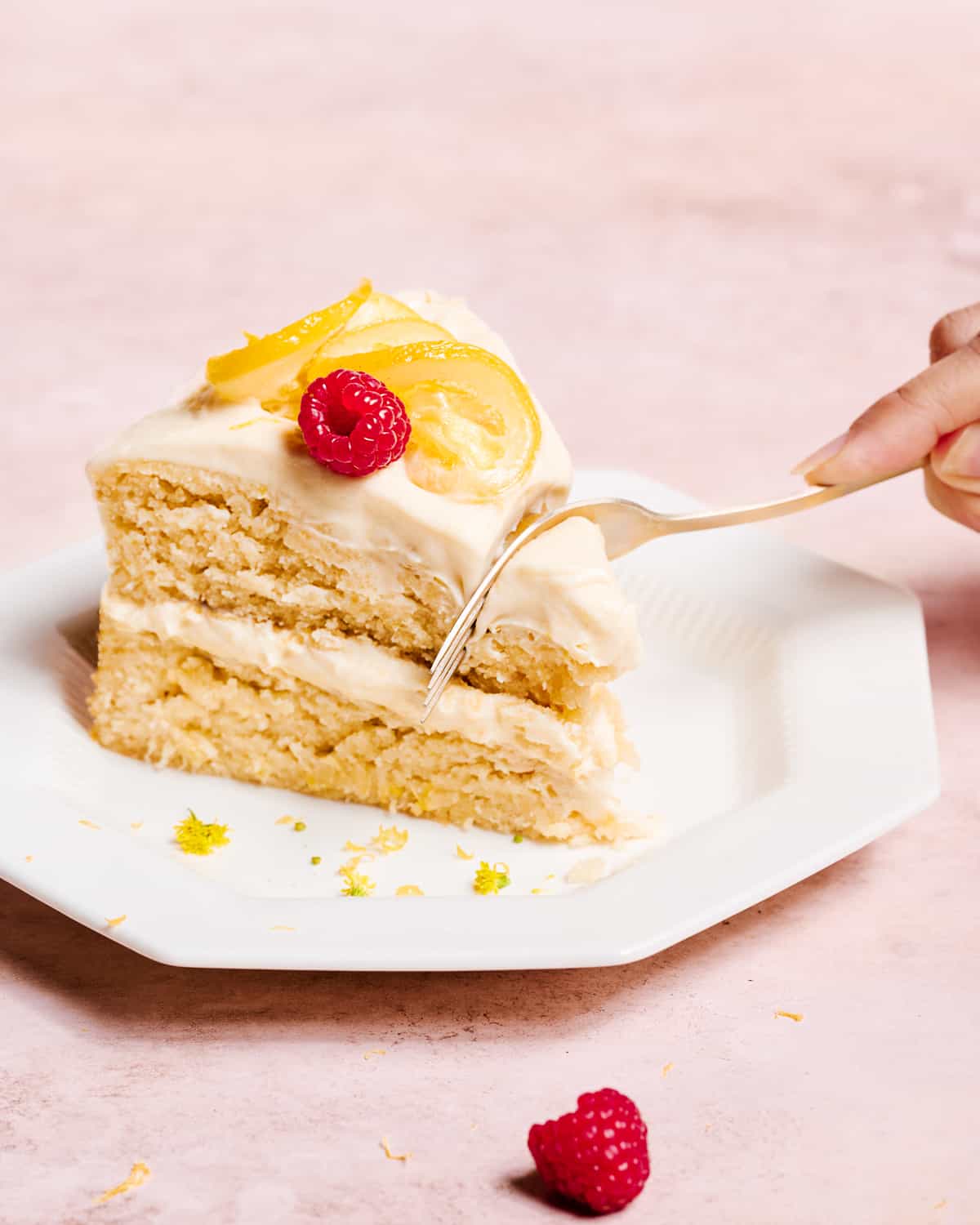
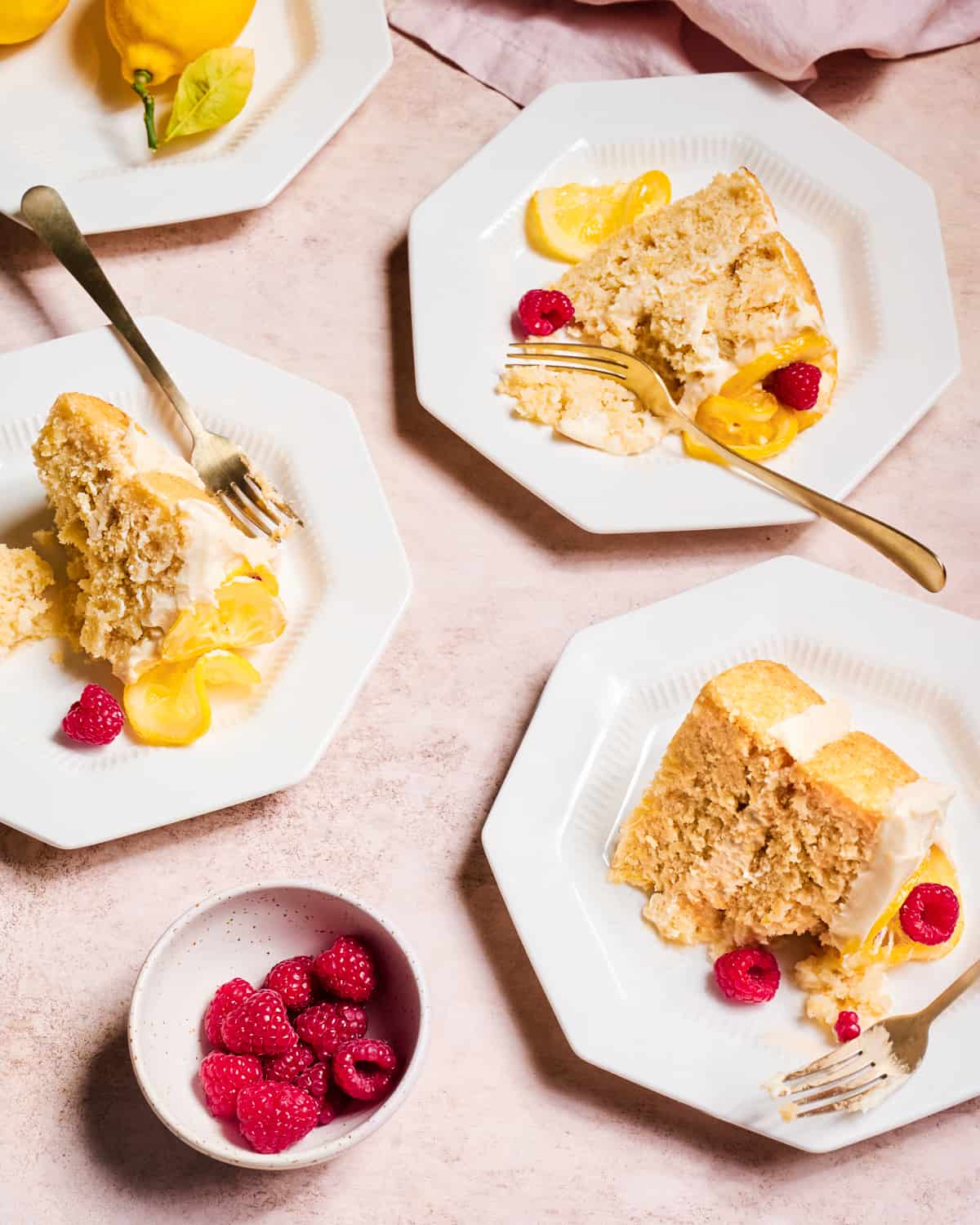
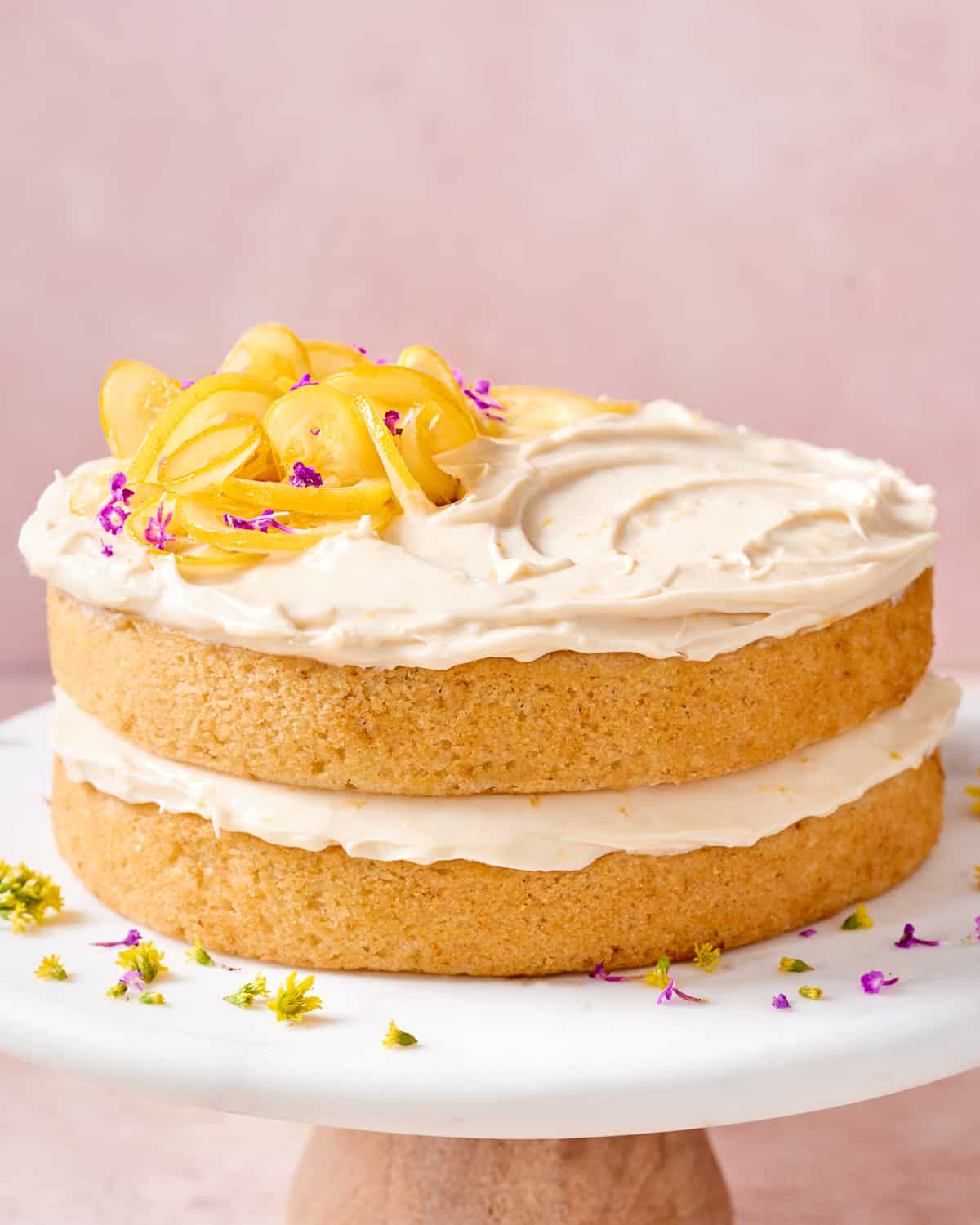
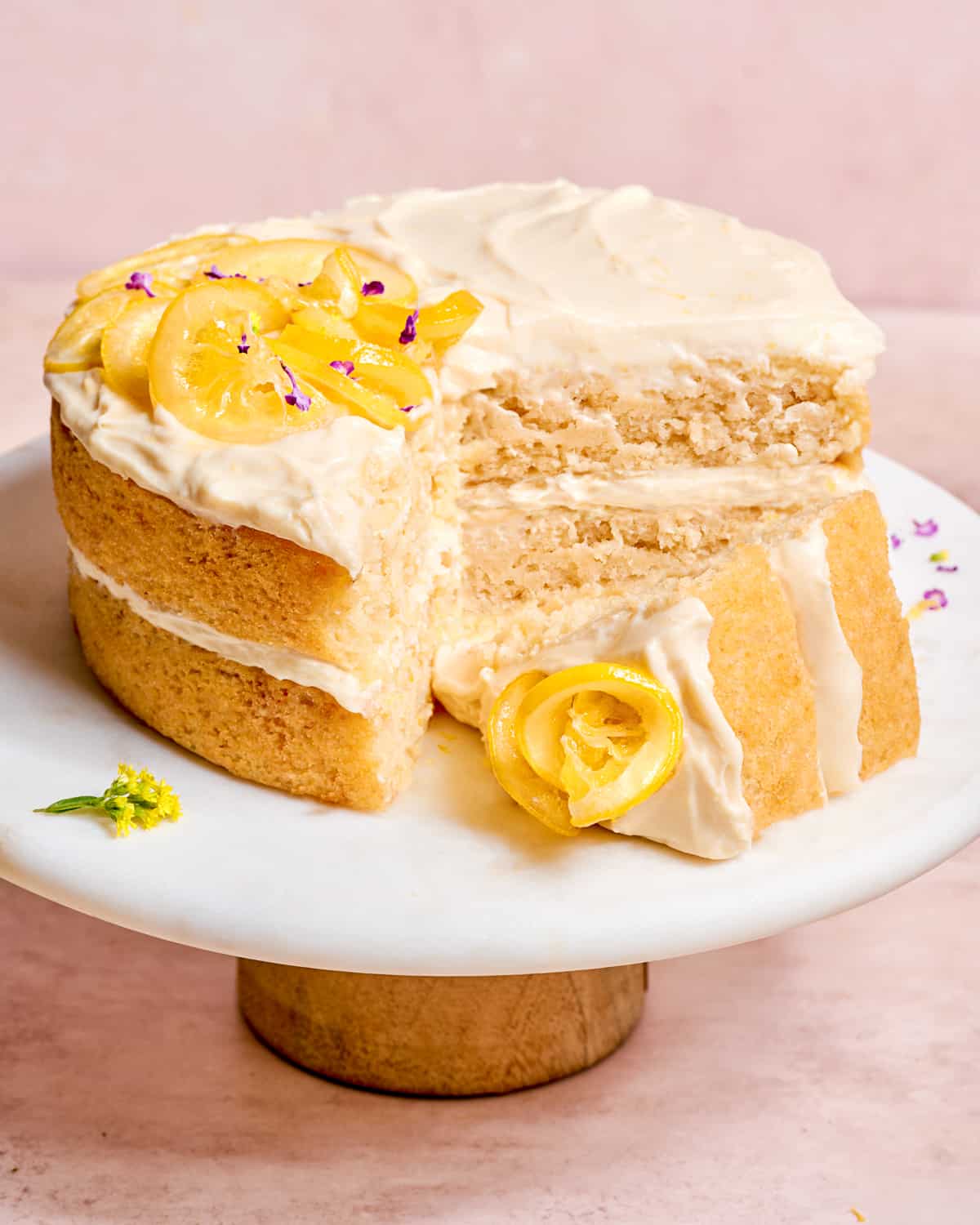
It’s been a while since I’ve been this excited about a dessert, but once you try this phenomenal Vegan Lemon Cake, you’ll get it. It’s got that sweet-yet-tart zing you love in a good lemon dessert and it’s bursting with so much lemony flavor because this cake uses the entire lemon!
A mixture of aquafaba and vegan sour cream lends the most tender, moist crumb and a melt-in-your-mouth texture that is so good you might actually cry. It’s topped with a tart, not-too-sweet lemon cream cheese icing that is outrageously delicious.
It’s possibly the best cake I’ve ever made, and it is THE perfect cake to welcome spring, to celebrate birthdays, Mother’s Day, or anytime you’re in the mood for a special dessert.
Table of Contents:
1. Why this recipe works
2. Ingredients
3. Step-by-step instructions
4. Tips for making this recipe
5. Frequently asked questions
6. Video: How to make this cake
7. Recipe card
Why this recipe works
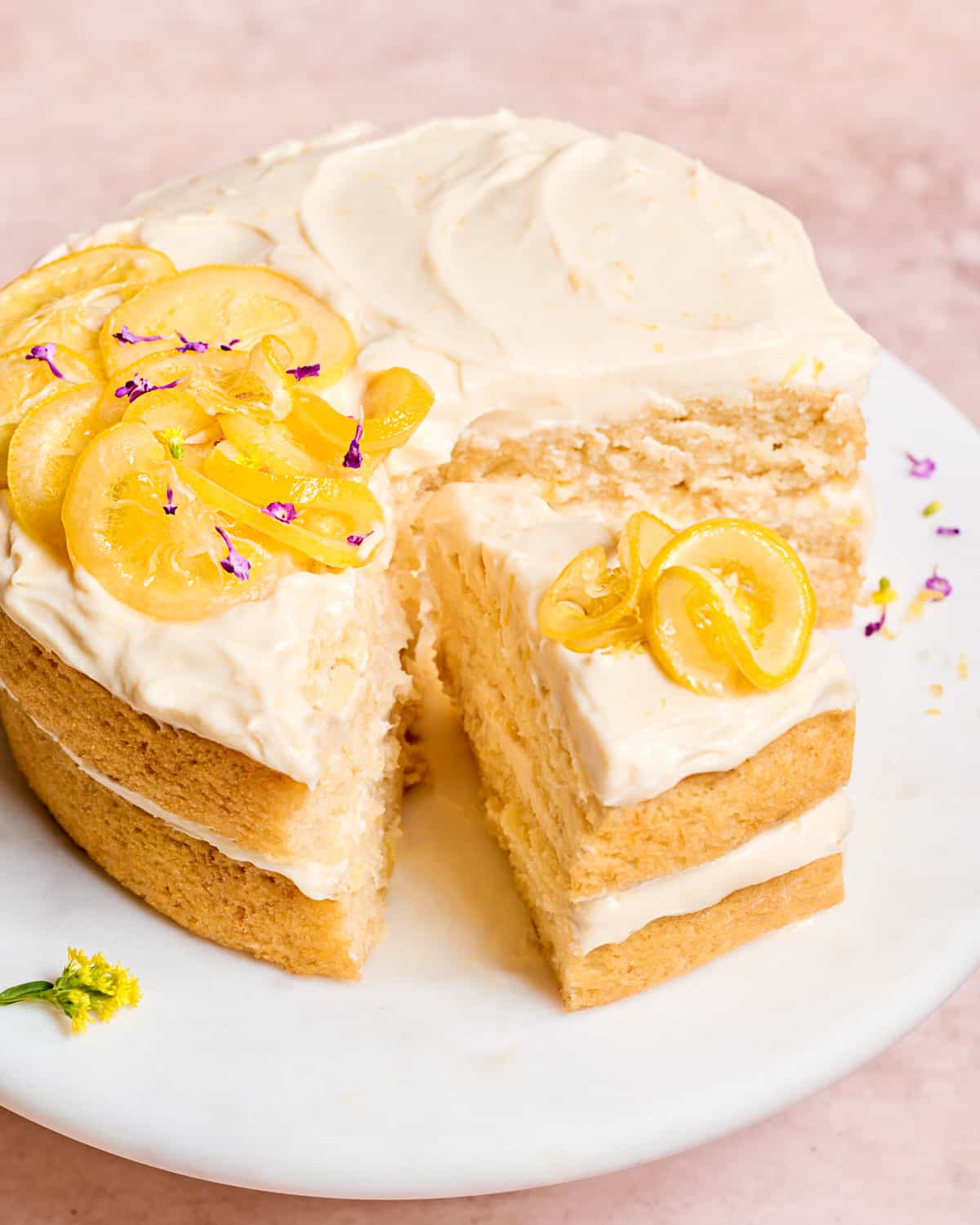
Made for lemon lovers.
The most disappointing thing about many lemon desserts is the mild lemon flavor, and many lemon cakes ditch lemon juice altogether and use lemon extract, but I wanted to bring the zingy flavor of real lemons to the table for this recipe.
The problem is that adding a lot of lemon juice can screw up the texture of cakes, especially vegan cakes. In our first few tests, we added ¾ cup lemon juice. The flavor was amazing, but the texture was gummy and dense.
This is because too much acid interrupts the development of gluten and can cause the cake to rise and then fall. Yet when we used less lemon juice, we could barely taste the lemon flavor.
Solution: Use other parts of the lemon! Lots of lemon zest gets rubbed into the sugar to release its essential oils. Minced pieces of whole lemon and just enough lemon juice are also added for that zippy tartness.
We use everything but the bitter white pith from the lemons. In reducing our food waste, we also cracked the code for the most amazing lemon flavor without compromising on texture.
The frosting brings even more lemon flavor to the mix. It’s tangy from cream cheese, tart and zingy from lemon zest and juice, not too sweet, and wildly good!
Melt-in-your mouth texture
Thanks to lightly whipped aquafaba and vegan sour cream, the cake boasts a light and fluffy texture that literally melts in your mouth. It’s so soft and moist that it makes you close your eyes. Yes, it’s that kind of cake.
Gourmet but approachable.
This cake is easy to make and features basic ingredients like lemons, flour, sugar, and vanilla, but it’s so gourmet your guests will think it came from a fancy bakery. Plus, it freezes fantastically so no leftovers will go to waste!
Ingredient notes
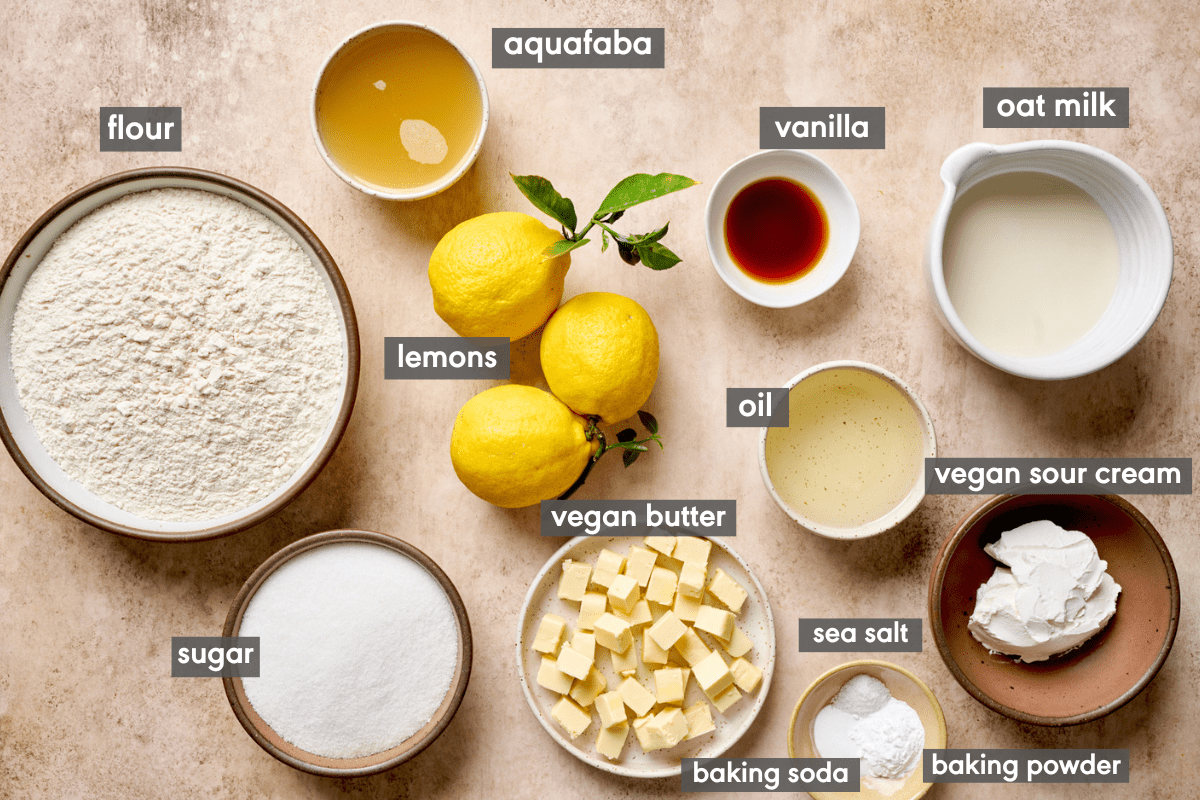
Lemons (the whole thing!)
I always recommend using freshly squeezed lemon juice in cooking and baking because the flavor from the plastic bottles doesn’t compare, but it’s even more crucial when lemon is a key ingredient, as in lemon cake.
Plus, you will need the zest and pieces of peeled lemon from fresh lemons. The zest adds its characteristic zippy floral notes, while the tiny pieces of lemon fruit add little bites of juicy and tart lemon flavor.
Vegan Sour Cream
This is one of the secrets to this vegan lemon cake’s fabulous texture.
We found that replacing ½ cup of plant milk with sour cream did wonders. It added rich flavor and moisture, plus a more tender crumb that practically melts in your mouth.
Tips for buying: We tested this recipe with two brands of vegan sour cream, Tofutti and Kite Hill with excellent results! Based on our experience with other recipes, we think Follow Your Heart sour cream would work great too.
Substitute: We recommend sour cream for the best flavor and texture. If you don’t have access to it, you can probably use a good-quality vegan yogurt. Our favorites are Culina and Cocojune.
Aquafaba
Just the liquid from a can of chickpeas. As you might have learned from my fluffy vegan banana bread and chewy, fudgy brownies, it’s a great egg substitute in baking. Aquafaba is one of the primary methods for getting this vegan lemon cake so tender and light without having to rely on cake flour.
All-purpose flour
Speaking of flour, just everyday all-purpose flour works.
Vegan Butter
Adds that rich buttery flavor and a hint of saltiness to balance the sweetness.
Substitute: If you don’t have access to vegan butter, you can just use more neutral-flavored oil. It won’t have the same flavor but the texture should not change too much.
Oat milk
Our preferred milk for most baked goods. In our experience, its neutral flavor and creamy texture work amazingly well, and the natural sugars in oats help brown baked goods more.
Step-by-step instructions
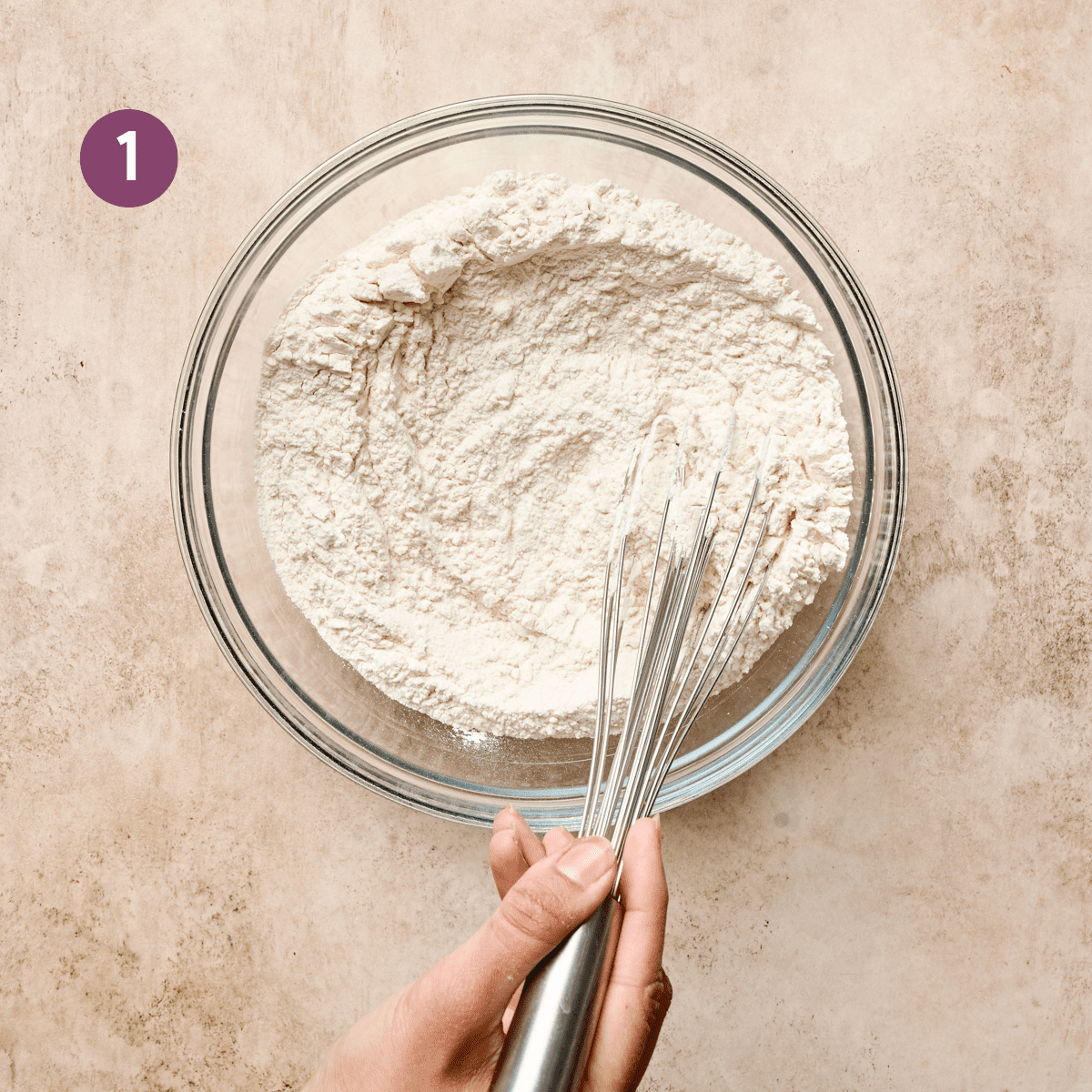
In a medium or large bowl, whisk together the flour, salt, baking powder, and baking soda.
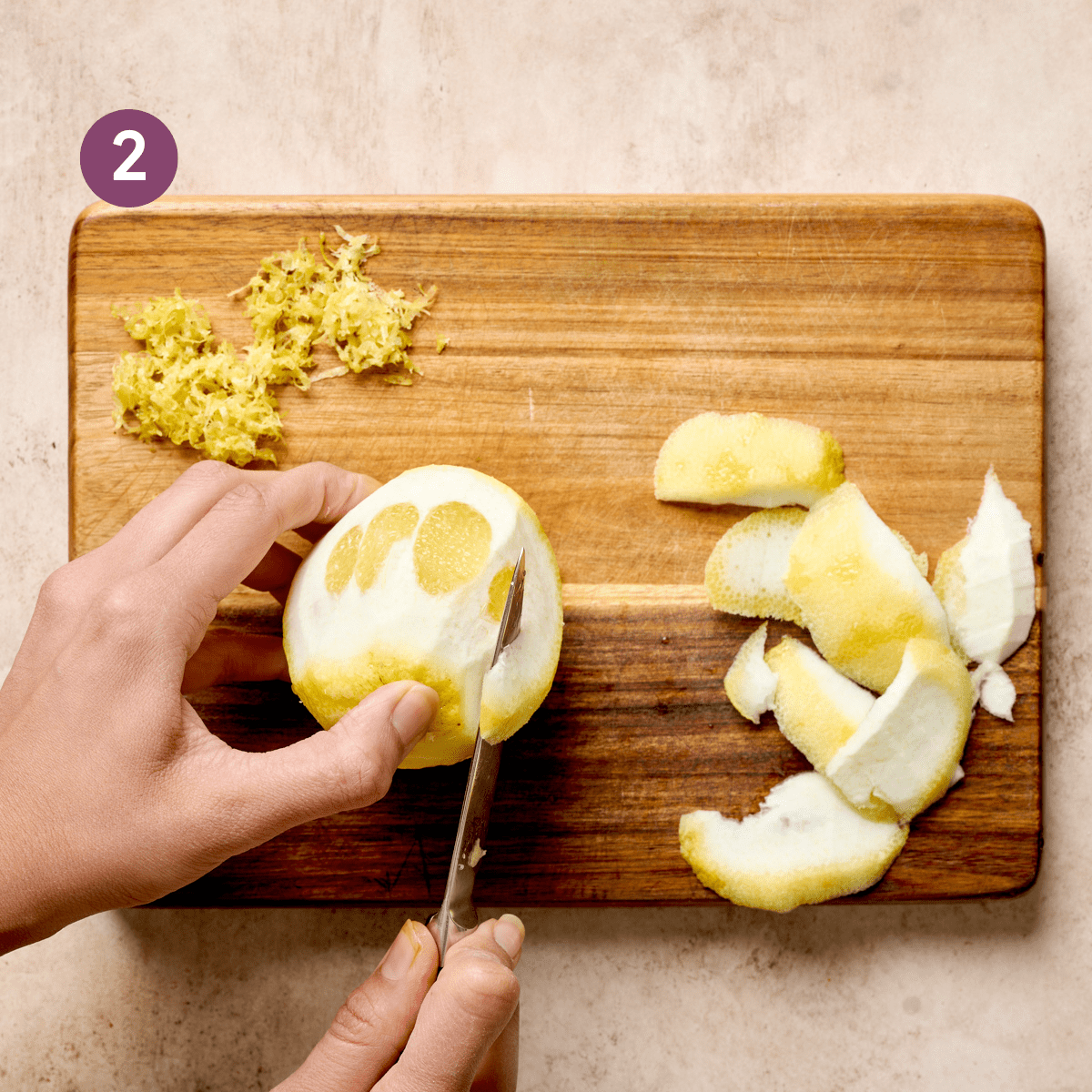
Zest the 3 lemons using a microplane.
Now use a knife to remove the lemon peels and white pith (image 2).
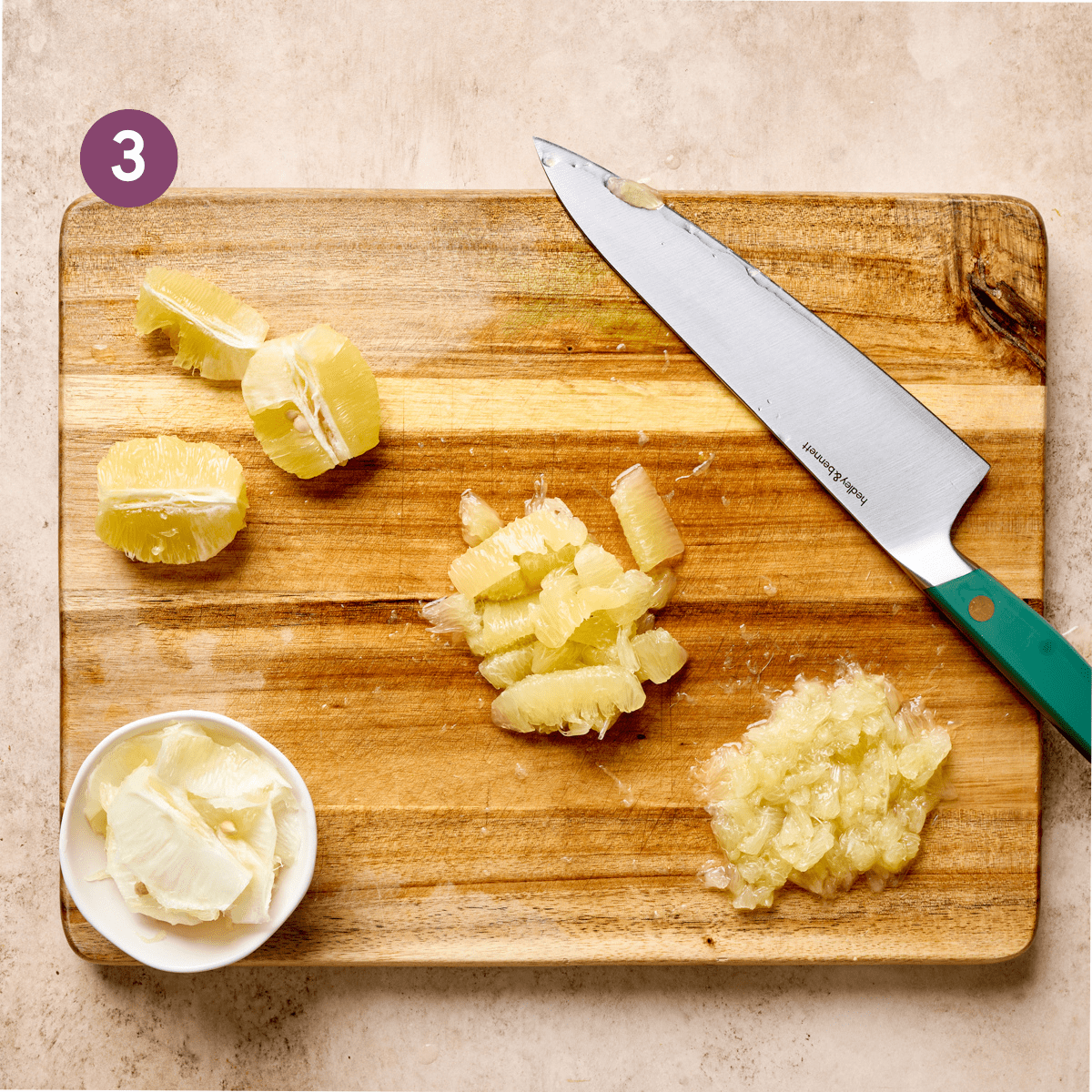
Remove the lemon segments out of the white membranes (see the white bowl in image 3). Mince the lemon pieces (see the bottom right corner of image 3) and pick out the seeds.
Transfer the lemon pieces and accumulated juices to a strainer set over a bowl. Measure out 3 tablespoons lemon juice and keep that with the lemon pieces.
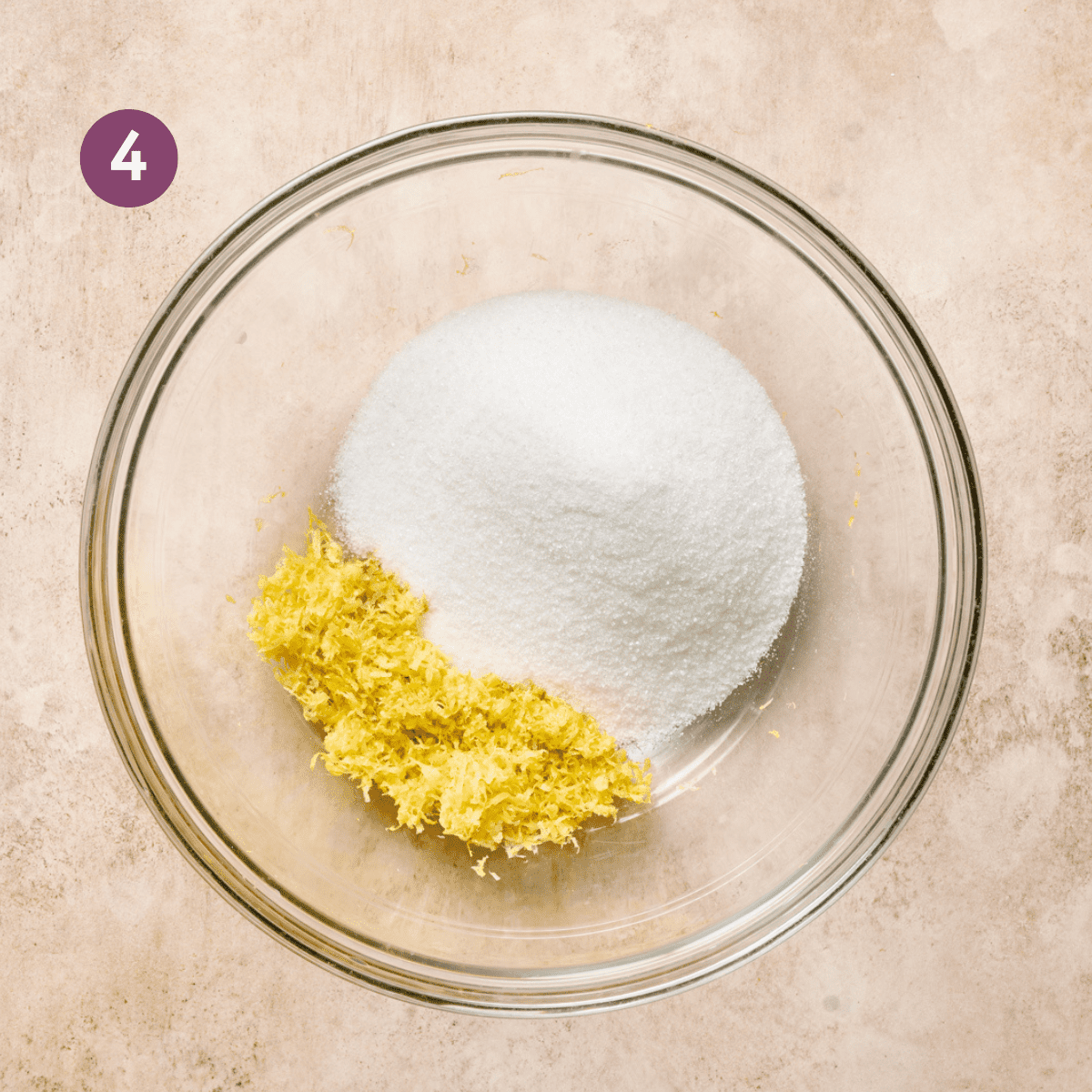
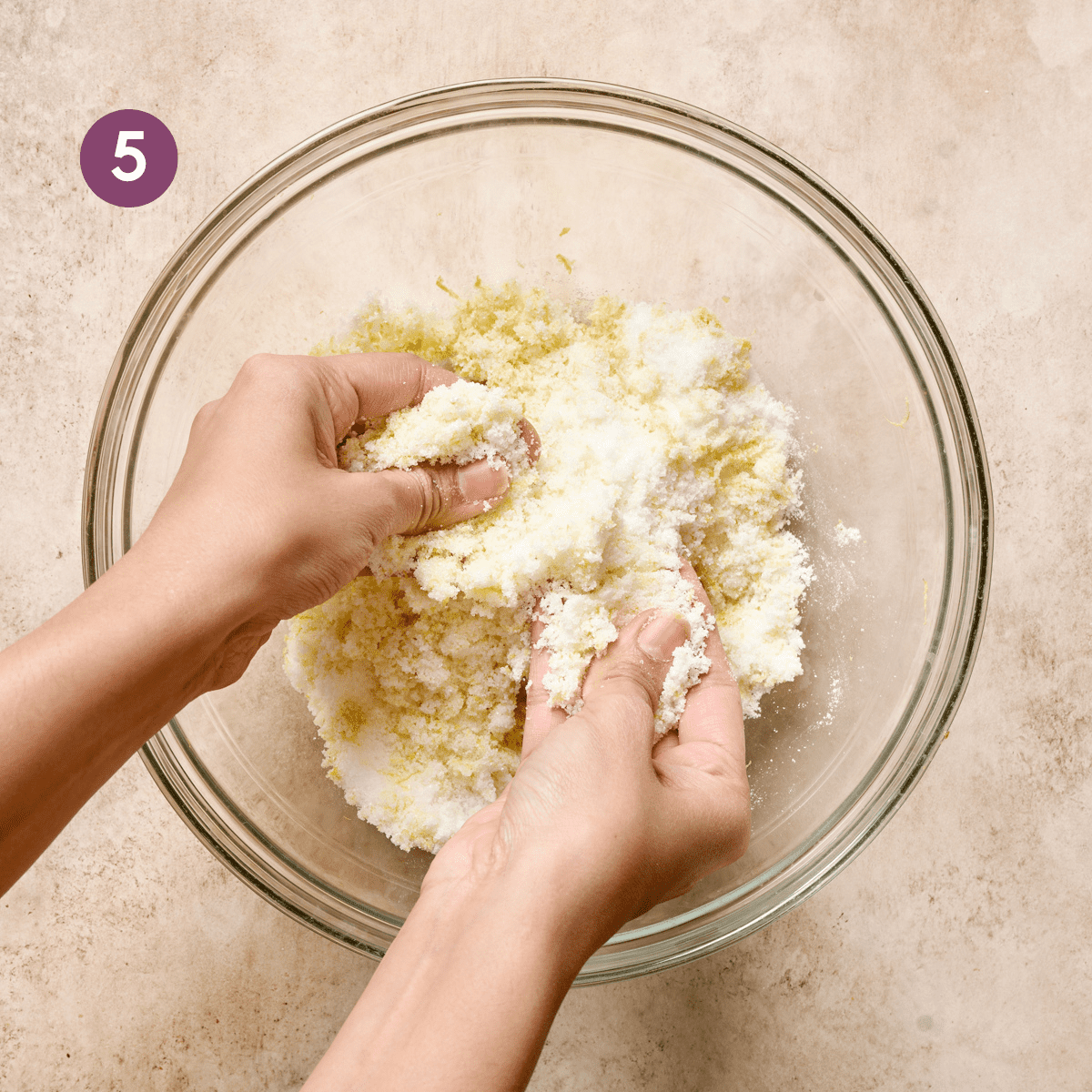
Add the sugar and lemon zest to a large bowl. Use your hands to massage the zest into the sugar until well incorporated and soft. Set aside.
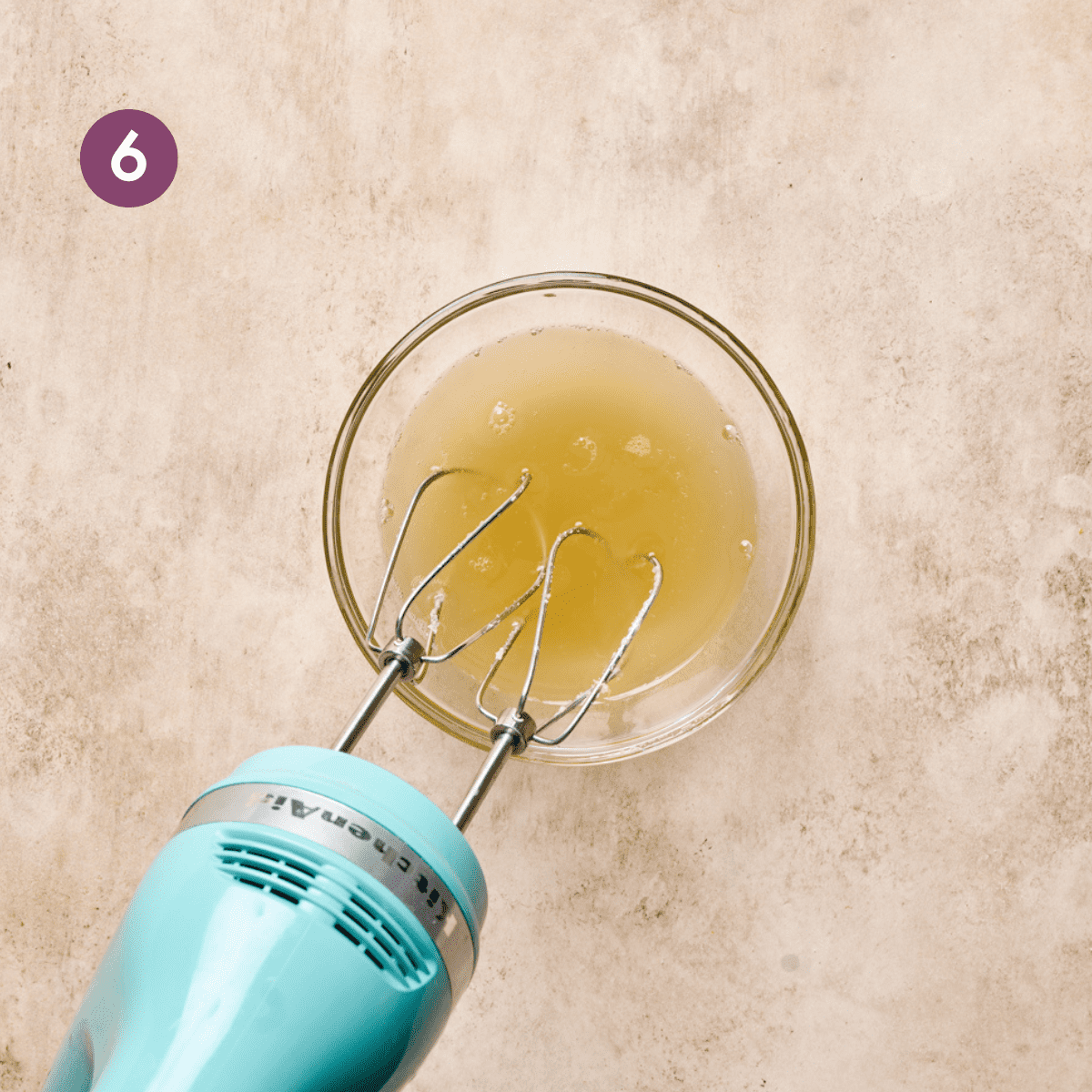
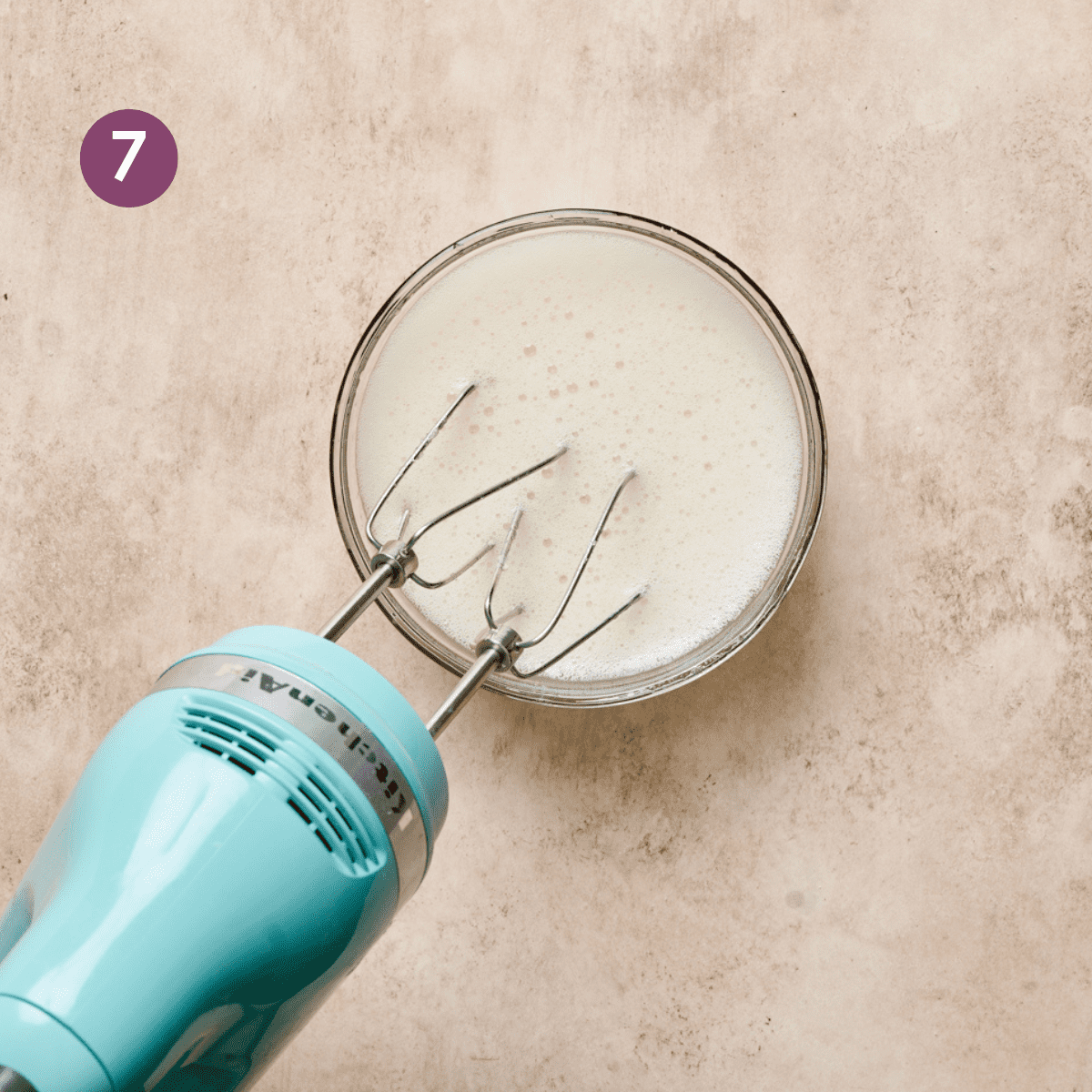
In a small bowl, add the aquafaba. Whip on medium speed until foamy throughout.
Add the softened vegan butter and oil to the lemon zest-sugar bowl. Beat until starting to get fluffy and glossy, about 1 minute.
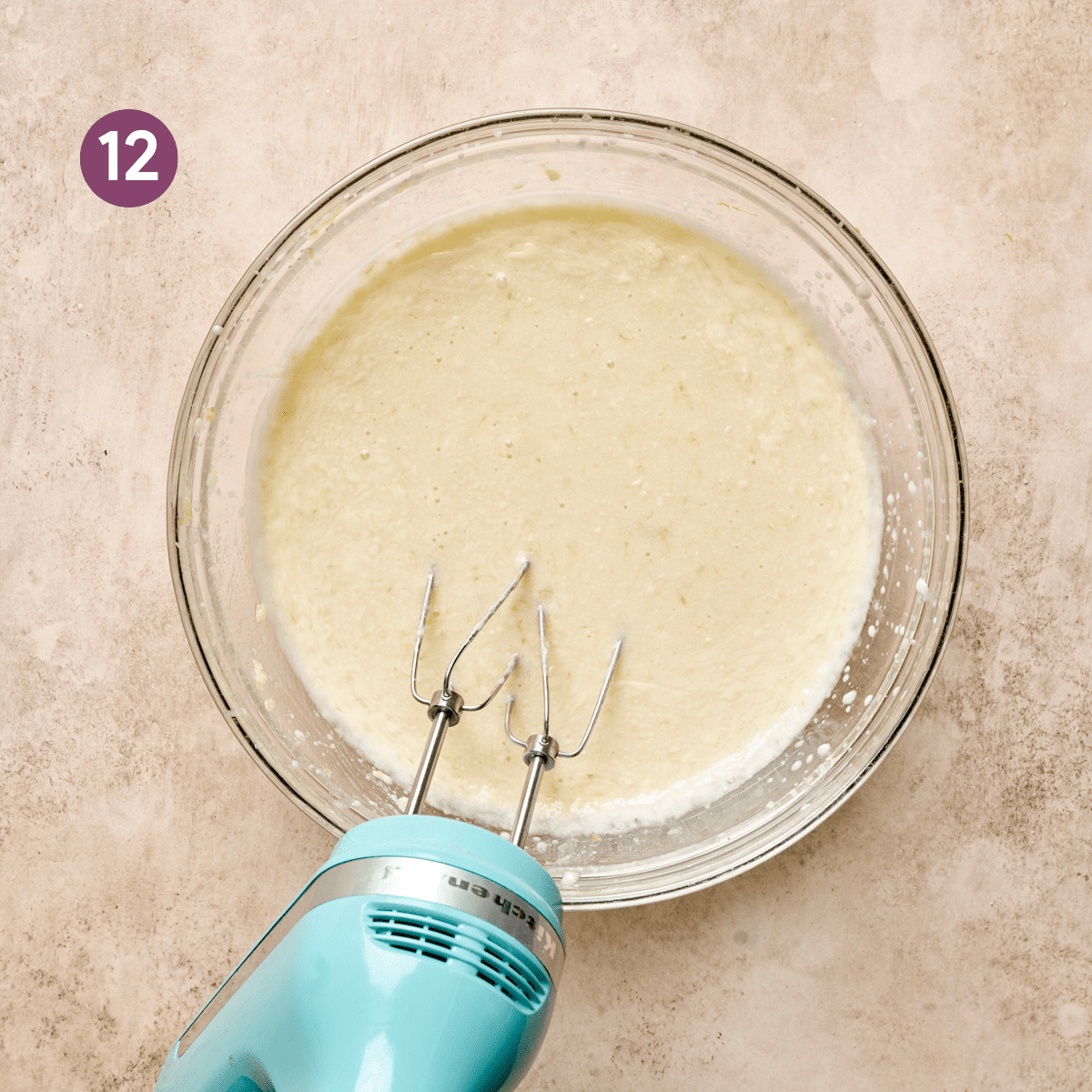
To the butter mixture, add the whipped aquafaba, vegan sour cream, milk, and vanilla. Mix on low until just combined. Finally add the lemon pieces and juice.
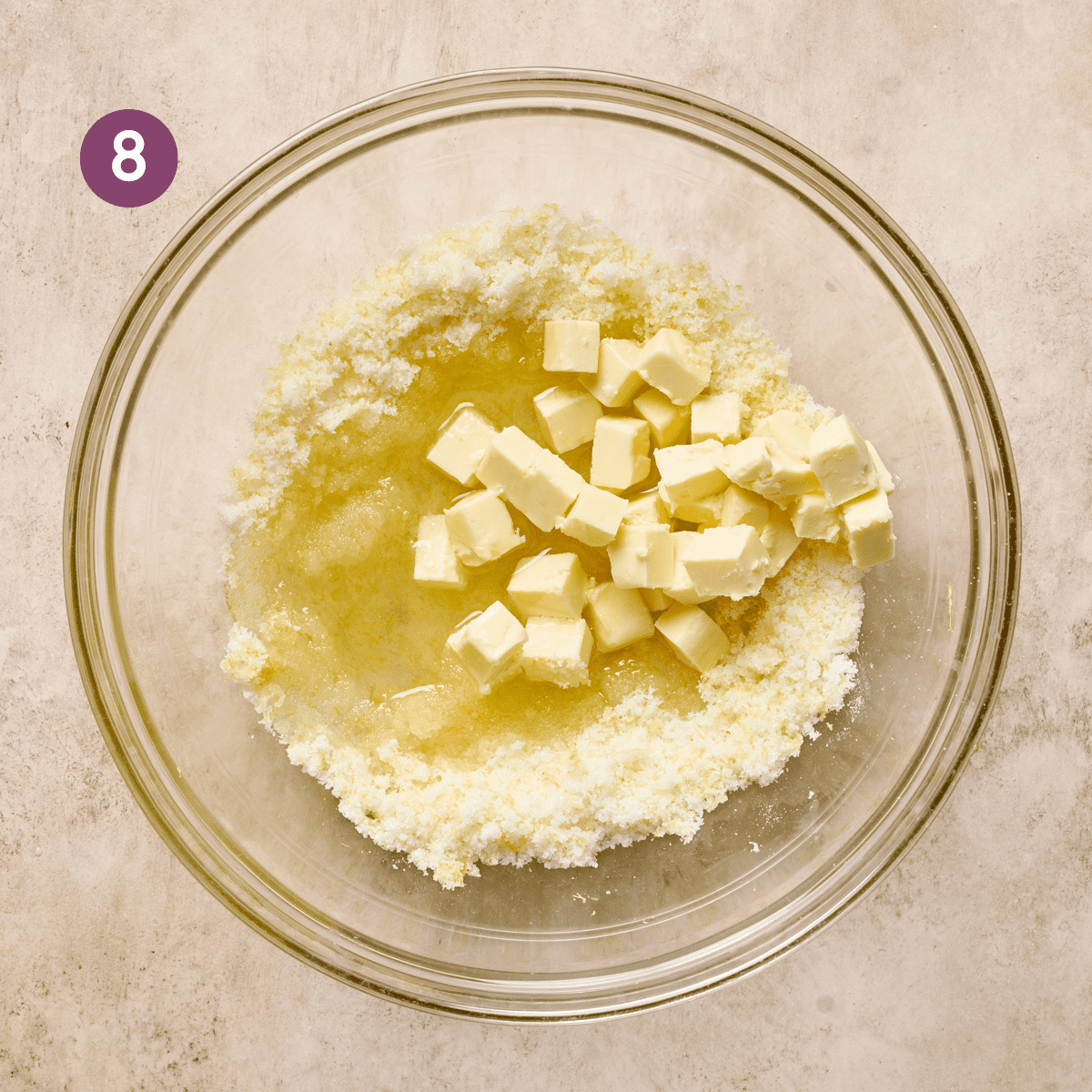
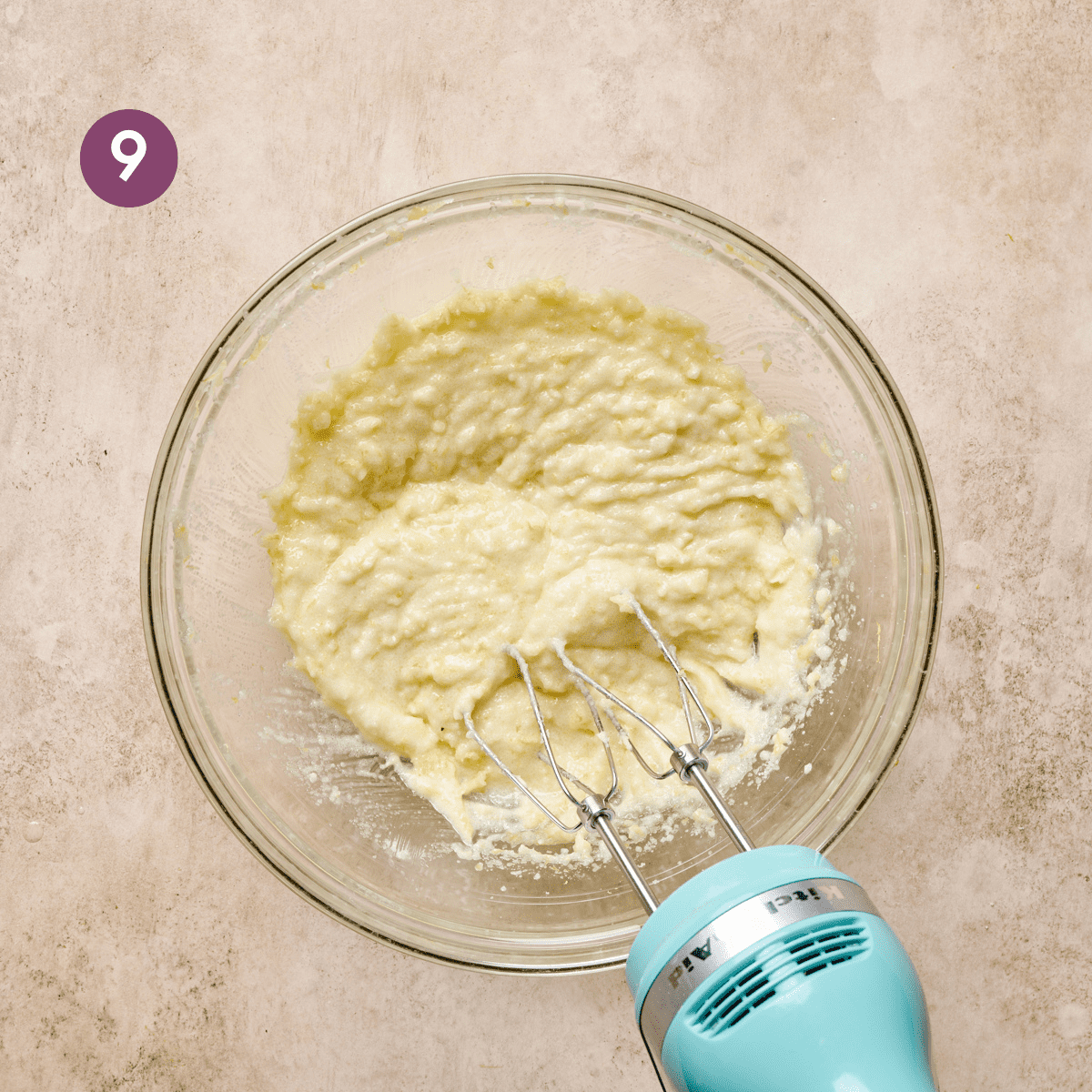
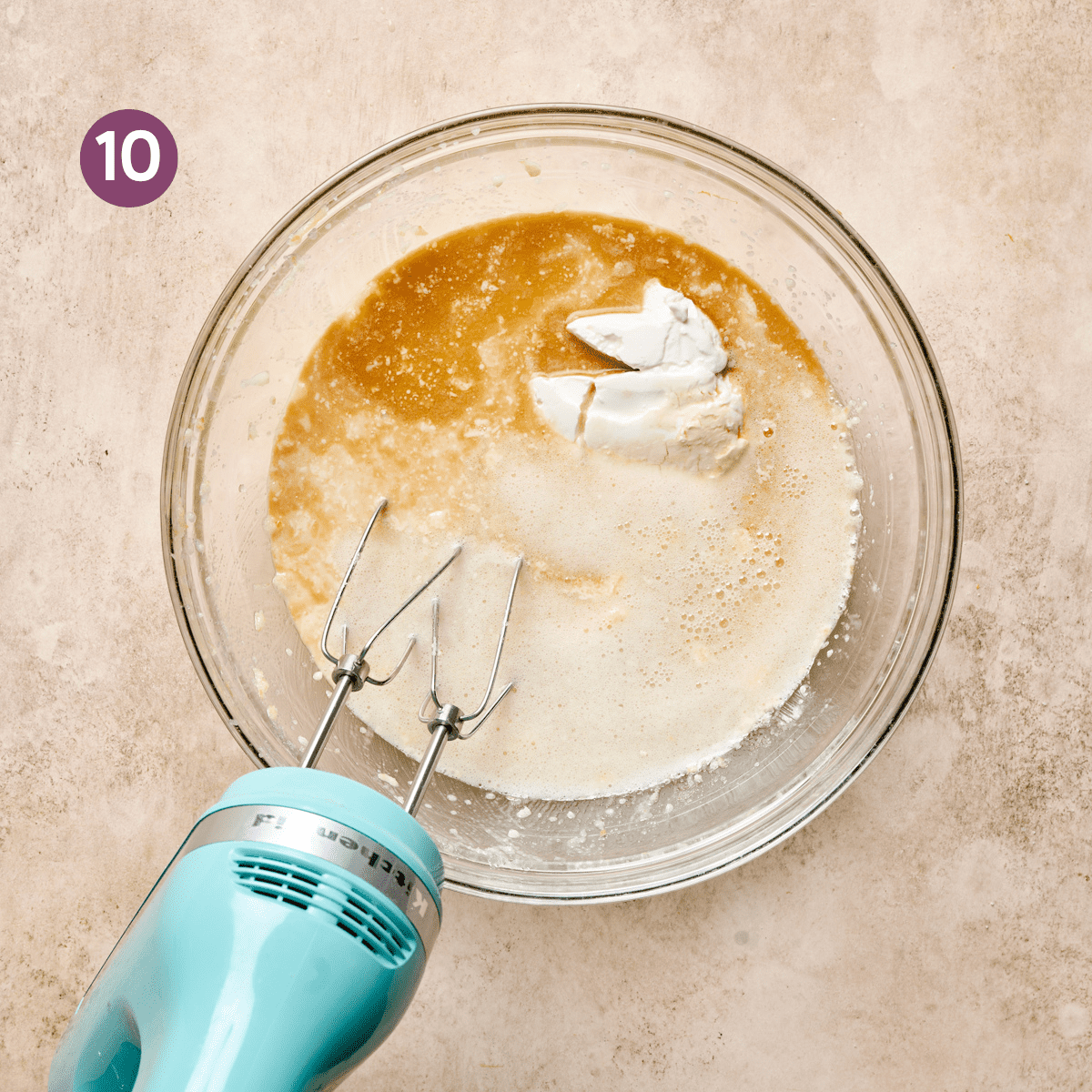
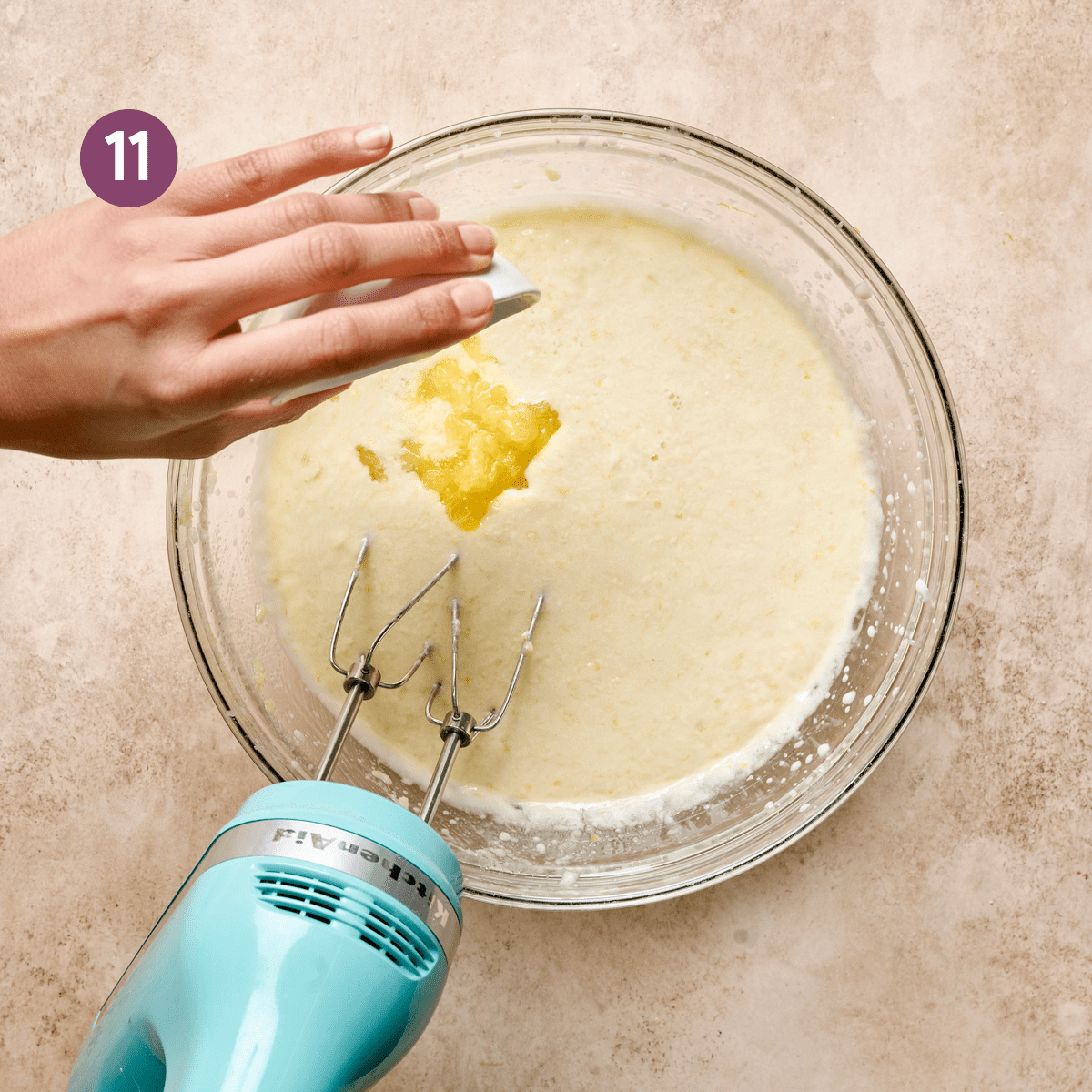
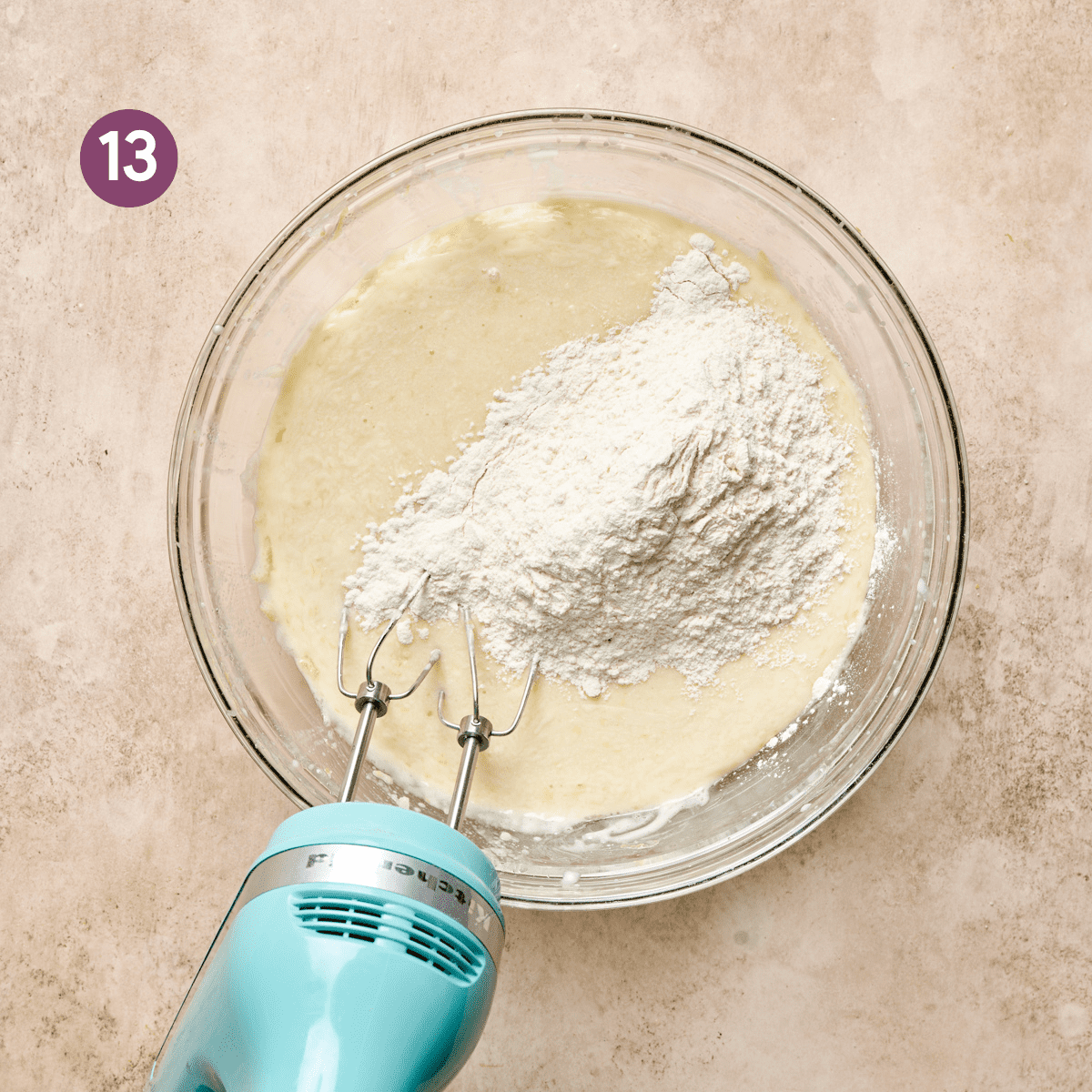
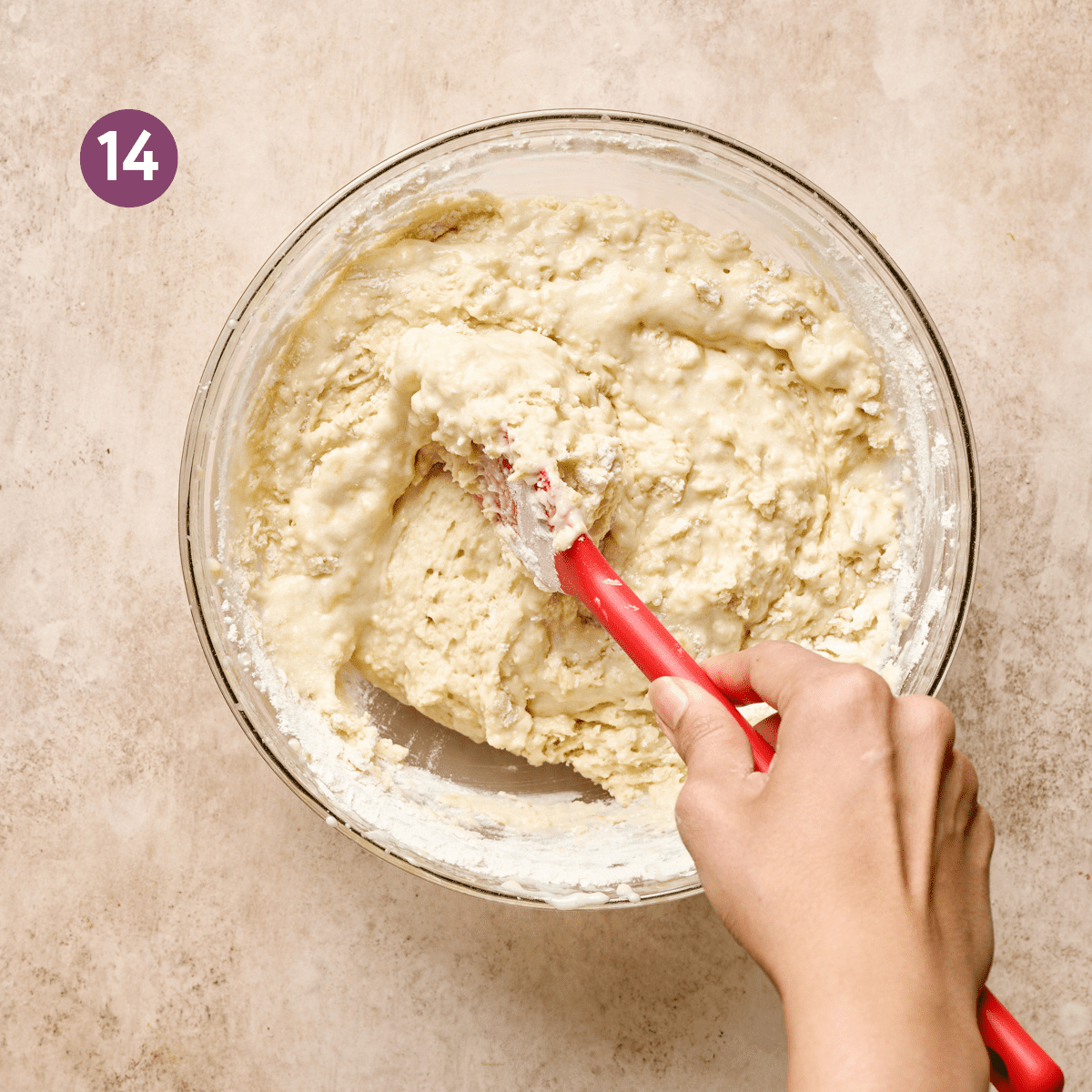
Mix again until the mixture is well blended. Add in half of the dry ingredients. Mix on low until just combined.
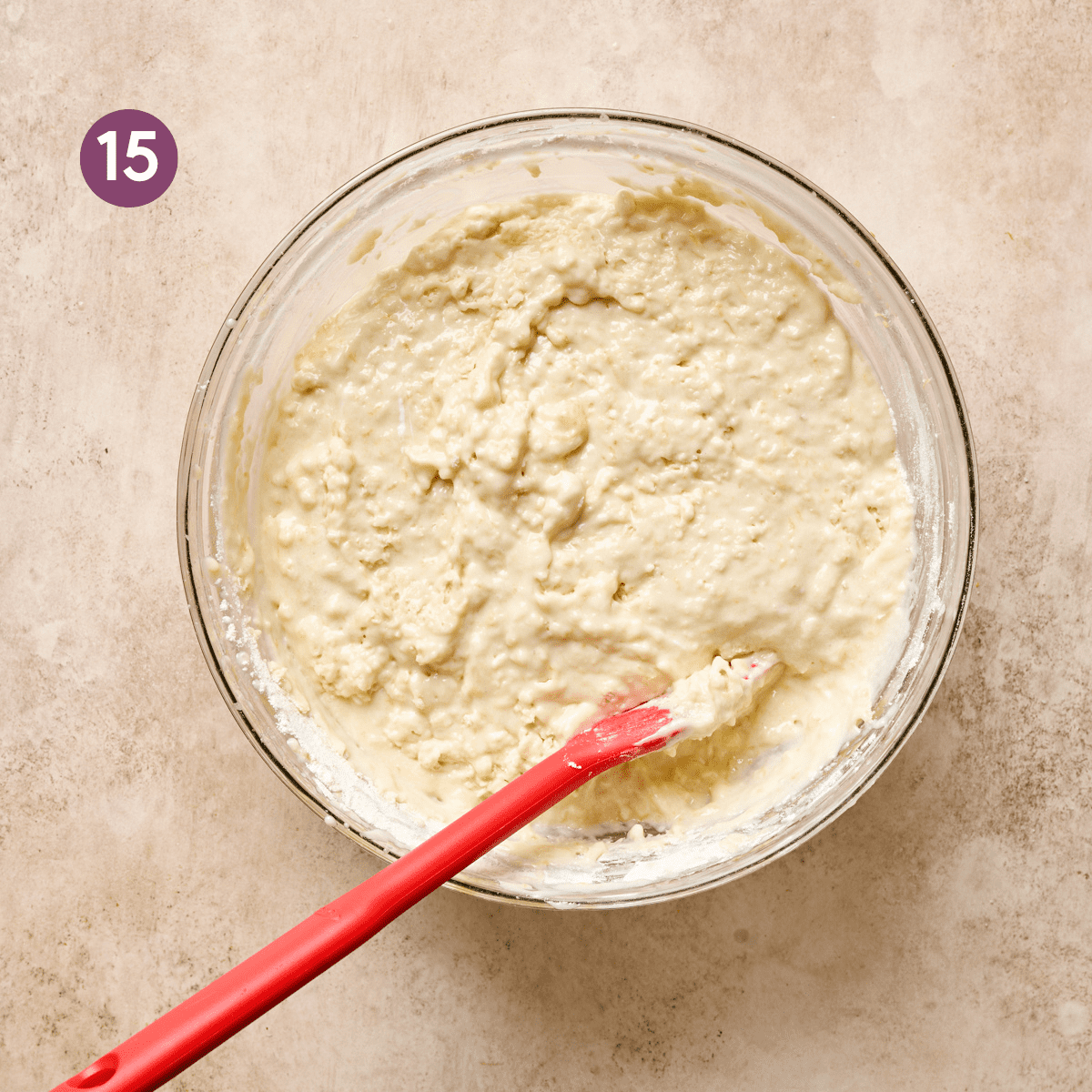
Use a silicone spatula to fold in the rest of the dry ingredients, taking care to not over mix. The batter should be fluffy and thick but airy.
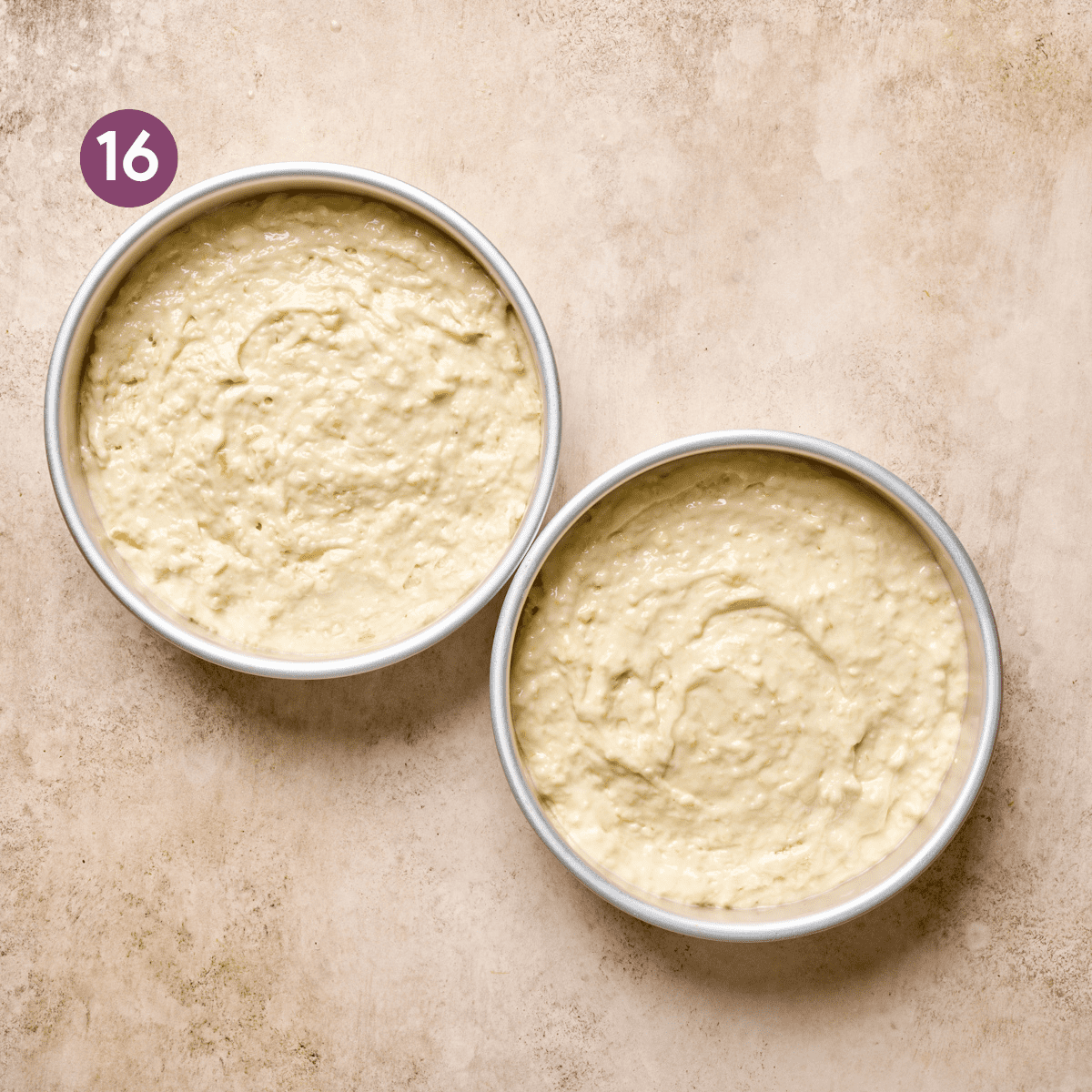
Divide the cake batter between two (8-inch) round cake pans that have been lined and greased.
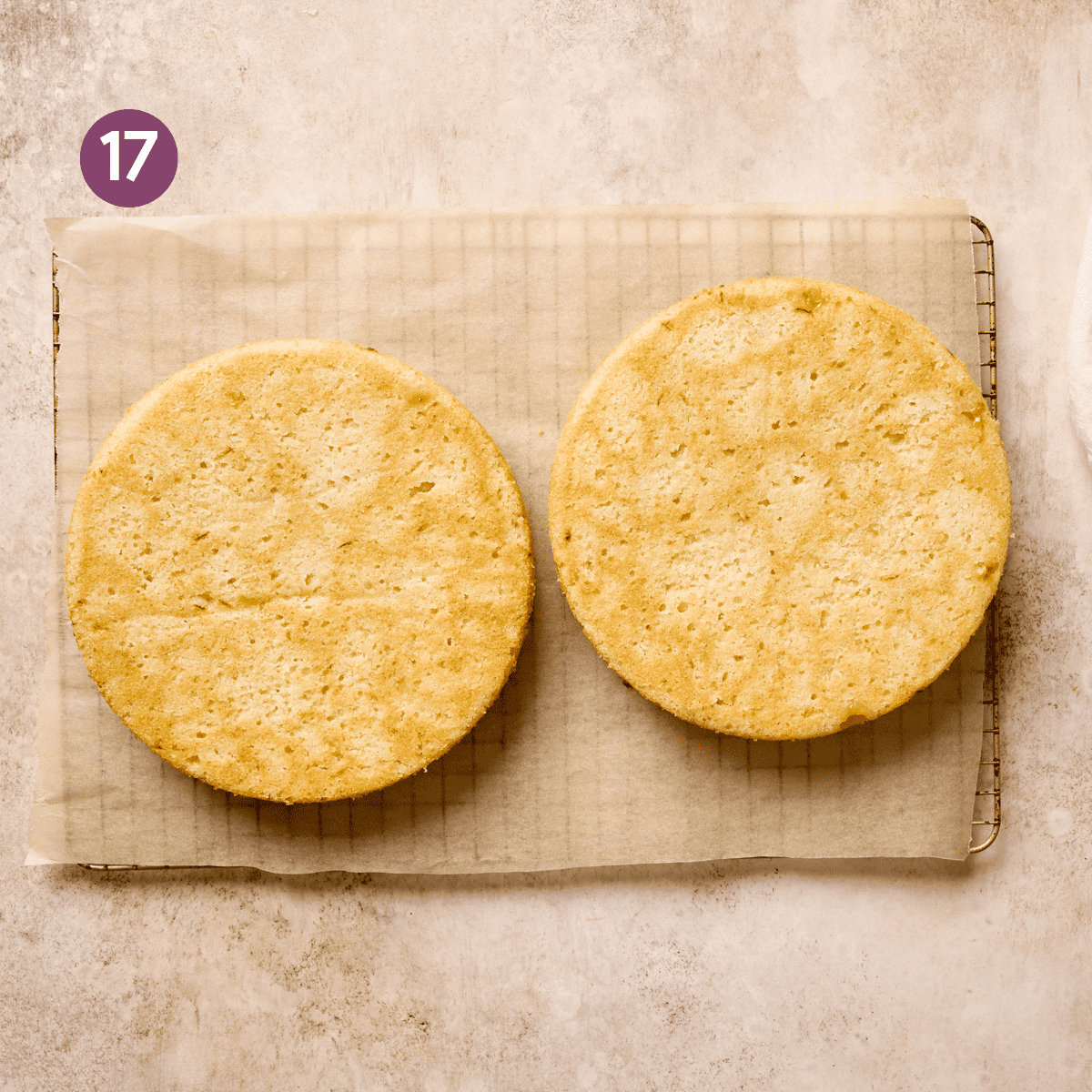
Bake in the oven at 350ºF/175ºC for 30 minutes. Allow cakes to fully cool on a wire rack. Refrigerate to make it easier to frost.
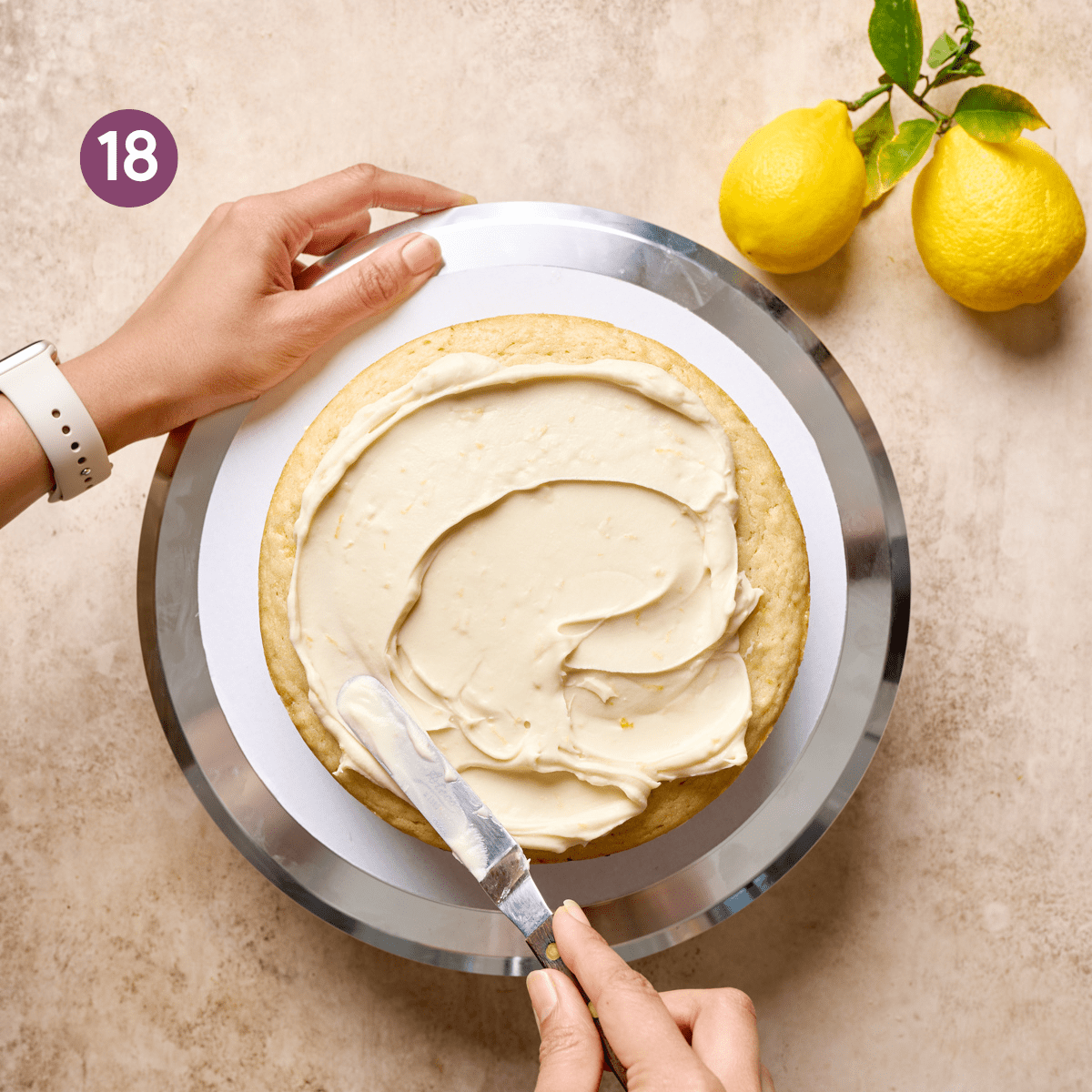
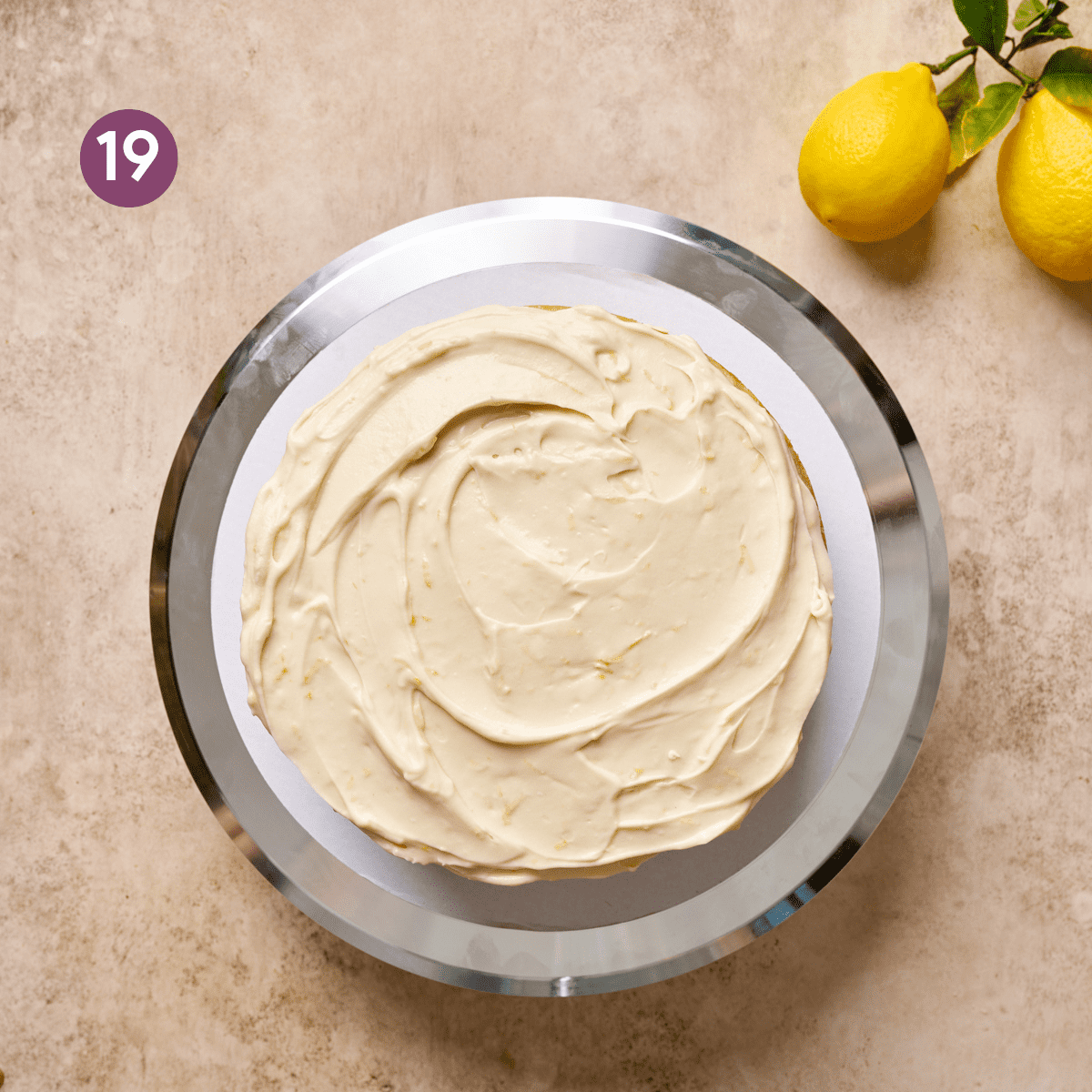
Once fully cooled, frost the cakes with the Lemon Cream Cheese Frosting.
Tips for making this recipe
Measure precisely!
You probably know this by now, but I’m a huge advocate for using a kitchen scale, especially for all baking purposes! It yields the most exact results and makes less of a mess as a bonus!
If you don’t have a scale yet, be sure to use the spoon-and-level method when measuring flour. This prevents over-measuring flour, which can skew the final results in baking.
Spoon your flour from the bag/jar into a measuring cup until full. Do not pack it down as you spoon it in. Then use a butter knife to level it off.
Room temperature ingredients
Allow the milk, sour cream and butter to come to room temperature. When combining these ingredients together, room temp ingredients bond together very easily since they’re warmer, creating an evenly textured batter.
Doing this results in a beautiful fluffy and airy cake. Don’t skip this step or you’ll end up with a lumpy batter that doesn’t bake as nicely.
Prep everything before mixing.
Before combining the dry and wet ingredients, ensure everything else is ready (oven is preheated, cake pans are prepared). This is because the baking soda will start to leaven as soon as it’s mixed with the wet ingredients, so you want to capitalize on this leavening action.
Use a gentle touch when mixing.
First, add the dry ingredients to the wet ingredients in two stages.
During the first mix, the dry ingredients get coated with some fat but not too much liquid, helping to weaken the gluten bonds (which leads to tenderness). During the second mix, the rest of the liquid is added, which helps to produce a light cake with an even rise.
In contrast, if you were to add the dry ingredients all at once, you’d have to mix the batter more vigorously to incorporate. Vigorously beating a cake batter can lead to a dense texture and less fluffiness.
Second, mix until the batter is just combined and then stop! The batter will be thick and fluffy. Don’t try to get it too smooth.
I use an electric mixer which helps me from over-mixing, whereas a whisk requires more effort and is easier to overmix on accident.
For even cakes, use a scale.
If you have a scale, it’s easy to weigh the total amount of batter, then divide it between your two cake pans for the most even baking and presentation.
For the best frosting experience, chill first.
Room temperature cakes are annoyingly difficult to frost, so I recommend chilling the baked cakes and the lemon frosting simultaneously (at least 1 to 2 hours, or longer).
This makes it much easier to ice the cake and prevents your cake from becoming crumbly. It also firms up the cream cheese frosting, allowing an easier spread.
You can also make the frosting a few days ahead of time and store, covered, in the fridge.
Useful tools.
When making a layer cake, a few tools will come in handy (affiliate links).
- Digital scale (for measuring ingredients + dividing cake batter evenly)
- Electric handheld mixer (or stand mixer)
- Two (8-inch / 20 cm) round cake pans
- Parchment paper for lining the cake pans
- Nonstick cooking spray or oil to grease the pans
- Small offset spatula for frosting the cake
- Cake stand, cake turntable, or Lazy Susan (to make it easy to frost the cake)
How to zest, peel, and juice the lemons
Check out step-by-step photos 2 and 3 for a visual reference.
- Zest. Use a microplane to zest the lemons.
- Peel. Now use a knife to remove the peel, including the white pith directly underneath the peel (it’s bitter, we don’t want it!).
- Segments. Peel the lemons with your hands into segments, similar to peeling oranges. Peel away the fibrous white membranes. You should be able to easily pull the lemon flesh out.
- Mince the lemon pieces into very small pieces.
- Strain. Put a strainer over a bowl. Pour the lemon pieces with accumulated juices over the strainer.
- Measure out up to ¼ cup (60mL) lemon juice from the bowl, and save the rest of the juice for another recipe (or lemon water). If any extra lemon juice accumulates from the lemon pieces, discard. You don’t want to add extra lemon juice.
Frequently asked questions
Aquafaba is one of the primary methods for getting this cake so tender and light, so you won’t get the same results using a different egg substitute.
In one of our tests, we tried making the cake without aquafaba and we noticed a change in texture for the worse. It wasn’t inedible or anything, but the aquafaba definitely improves the texture.
We have not been able to test this cake gluten-free yet, so we can’t say what the end results would be.
We have noticed fairly different end results in other baking recipes when we use another type of milk since oats, nuts, soy, etc. are different ingredients with varying fat/protein/sugar contents.
We recommend sticking with oat milk if you can. We typically buy Califia or Oatly but any oat milk should be fine, as long as it’s not a “low-fat” variety. If not, soy milk will probably work fine.
Before serving, remove the cake from the fridge and set at room temp for at least 30 minutes. This allows for the best texture and flavor! Refrigerated cake is good, but room-temperature cake is GREAT.
As for decoration, it’s perfect with just the lemon cream cheese frosting, but some fresh raspberries on top are also lovely. We made candied lemons to make this cake extra pretty, though there’s plenty of lemon flavor in this cake to not need it.
Here’s a guide on how to make candied lemons.
You can store the unfrosted cake in an airtight container or wrapped in plastic on the countertop for 3 to 4 days. Once it’s been frosted, this cake needs to be refrigerated because there’s cream cheese in the icing. The cake should be eaten within 4-5 days.
YES! This makes a generous amount of cake (a two-layer cake), but luckily it freezes pretty perfectly, even when frosted. Individual slices will thaw most quickly and can be thawed on the countertop for 1-2 hours. Larger pieces of cake should be thawed in the fridge.
More Special Occasion Vegan Desserts
Video: How to Make Lemon Cake


Introducing
Big Vegan Flavor
Techniques and 150 recipes to master vegan cooking.
Incredible Vegan Lemon Cake

Equipment
- 2 8-inch (20x20cm) round cake pans
- Digital scale
- Electric handheld mixer (or stand mixer)
Ingredients
- 1 stick (8 tablespoons / 112g) vegan butter, softened at room temperature
- ½ cup (112g) vegan sour cream, at room temperature (see Note 1)
- ¾ cup (180 mL) oat milk, at room temperature
- 3 ½ cups (440g) all-purpose flour, spooned and leveled (or measured with a scale)
- ¾ teaspoon baking soda
- 2 teaspoons baking powder
- ½ teaspoon fine sea salt
- 3 large lemons, zested (3 tablespoons lemon zest)
- 1 ⅓ cups (280g) organic cane sugar
- ½ cup (120 mL) aquafaba (the liquid from a can of chickpeas)
- ½ cup (112g) neutral-flavored oil, such as sunflower oil
- 1 tablespoon pure vanilla extract
- Fresh berries of choice, or candied lemons for decorating (optional)
Vegan Lemon Cream Cheese Frosting
- 1 stick (8 tablespoons / 112g) vegan butter, softened at room temperature
- 8 ounces (227g) vegan cream cheese, softened at room temperature
- 2 1/4 cups (270g) organic powdered sugar, sifted
- 1 teaspoon pure vanilla extract
- 1/8 teaspoon fine sea salt
- 2 tablespoons lemon zest
Instructions
- Take the butter, sour cream, and milk out of the fridge. Slice the butter into small cubes to soften quickly (see Note 2). Measure out the milk and sour cream instead of leaving them in their containers so they come to room temp more quickly.
- Arrange a rack in the middle of your oven and preheat to 350°F/175°C. Make two parchment paper rounds for two 8-inch (20 x 5 cm) round pans. Grease the bottoms of the pan with nonstick spray, then line with the parchment papers. Now spray the parchment paper round and coat the pan’s sides with nonstick spray.
- In a medium bowl, combine the flour, baking soda, baking powder, and salt. Whisk very well to evenly combine the leaveners.
- Over a large bowl, zest the 3 large lemons.
- Now stand the 3 lemons upright on a cutting board. Cut the ends off of the lemons and use a sharp knife to peel away the peel and white pith right underneath, and discard. Use your hands to peel the lemons into segments, like you would oranges. Peel away the fibrous membrane on the outside of each lemon segment. You should now be able to easily pull the lemon flesh out. Mince the lemon into tiny pieces, picking out any seeds.
- Put a strainer or sieve over a small bowl and pour the lemon pieces with accumulated juices over the strainer (do not press the lemons down to release more juice). Measure out about 70g lemon pieces (5 TBSP) and 45 mL (3 TBSP) lemon juice from the bowl. Save leftover juice for a lemon water or spritzer–don't add extra juice to the cake.
- Add the sugar to the lemon zest and rub together with your hands to release the zest’s essential oils. Now add in the softened butter and oil. Beat on low with the mixer, and once the butter is in small pieces, increase to medium . Beat until starting to get fluffy and shiny, about 1 minute total. Rinse and dry the beaters for the next step.
- Shake the can of chickpeas to disperse the starches. Pour ½ cup (120 mL) aquafaba into a small bowl. With an electric mixer (or stand mixer), beat on medium speed until the entire mixture is foamy, including at the bottom of the bowl, 1 to 1 1/2 minutes.
- To the lemon zest-sugar-butter mixture, add the whipped aquafaba, room temp milk and sour cream, and vanilla. Mix on low until just combined, 15 to 20 seconds. Finally, add the lemon pieces (if any juice has accumulated, drain it off) and the 3 tablespoons lemon juice and mix again until well combined.
- Note: before combining the dry and wet ingredients, make sure everything else is ready (oven is preheated, cake pans are prepared). This is because the baking soda will start to leaven as soon as it's mixed with the wet ingredients. Add half of the flour mix into the liquid mix, beating on low until just combined. Add the remaining flour mixture and mix just until you have a mostly smooth batter, then stop. If it gets too tough with a mixer, switch to a silicone spatula. Now use a silicone spatula to fold the bottom and sides of the bowl with the spatula to ensure it’s well combined. If the liquid has settled on the top, fold the batter a couple times to incorporate. The batter should be thick and fluffy but airy.
- Use a digital scale (or measuring cups) to evenly divide the batter between each cake pan (~ 750g / 26 oz per cake pan). Smooth out the surface with the spatula or an offset spatula.
- Bake for 33 to 35 minutes, or until the centers are set and the cakes have puffed up a bit and just started to pull away from the pans. A toothpick inserted in the center should come out clean or with a few moist crumbs but not liquid batter.
- Cool the pans on a wire rack (don't rest on the counter) for 30 minutes. Now add a sheet of parchment paper to the rack. Carefully invert the cakes onto the rack. Cool completely before assembling, ideally in the fridge for a bit to set.
- Make the Lemon Cream Cheese Frosting (or make it 1-3 days ahead of time and refrigerate). Sift the powdered sugar in a fine mesh sieve. Add the softened butter to a medium or large bowl. Using an electric mixer, beat on medium speed until smooth. Add the cream cheese and beat just until well-incorporated. Add half of the sugar and beat on low to combine. Add the remaining sugar and mix again until well-combined and fluffy, scraping down the sides with a spatula. Add the vanilla, salt, and lemon zest, and mix until smooth. If the frosting is a bit loose, refrigerate the frosting before icing the cake.
- Assemble. Place one cake (bottom side facing up) on a cake platter or large plate. Add a generous layer of Lemon Cream Cheese Frosting on top (ideally refrigerated for easier spreading), spreading to the edges using an offset or icing spatula. Top with the second cake (top side facing up). Add another layer of frosting on top and spread out. If you have leftover frosting, you can frost the sides of the cake, using the spatula or bench scraper to smooth it out. If you want less frosting, leave as is. Decorate with berries or candied lemons, if desired.
Video
Notes
- Time doesn’t include cake cooling/chilling time.
- I recommend refrigerating the frosting. It will thicken, making it easier to frost the cake.
Nutrition
Nutrition information is automatically calculated, so should only be used as an approximation.
 Love this? Leave a rating below!
Recipe: Nisha Vora / Rainbow Plant Life | Photography: Megan Morello








This turned out SO well, what an amazing cake! I didn’t have any round cake pans, so I ended up baking this in a 9×13 cake pan at 350 for 40 minutes and it worked out wonderfully 🙂 Thanks Nisha!
Great to hear the recipe was successful even with the changes, Kaz!
Can we make this cake with three small round pans instead of 2? I’ve seen you do other cakes stacked three high and wanted to try it.
Hi Kimberly, three 6″ pans hold slightly less batter than two 8” cake pans, but it should still work pretty well. You’ll possibly have slightly thicker layers.
For the best results, ll recommend weighing the batter so you can divide it evenly across the three pans.
Keep the oven temp at the same: 350°F/175°C as the original recipe, but the baking time may be different — start checking a few minutes earlier, but it might also take a bit more time. Use a toothpick test– if it comes out clean or with a few moist crumbs, the cakes are done.
Delicious, Strong Lemon Flavor!
I’ve made this cake three times and recently at a birthday party: “This is the best cake I’ve ever had!”-(Non-vegan). Removing the lemon flesh gets easier with practice, don’t be intimidated! I’ve made it with plain vegan yogurt however it tastes a little better with vegan sour cream.
Your positive feedback is the best reward for our hard work. Thank you, Joe!
Could I replace the sugar in this recipe with Medjool Dates for e.g.?
Hi Ioana, we would not recommend that. Baking is a science, and sugar and dates act very differently when used in a cake. Sugar adds not just sweetness but also structure and moisture in baking, so replacing the sugar with dates will certainly lead to inferior, possibly underbaked, results. We hope you’re able to try this recipe as written, but if you’re looking for refined sugar free desserts, we’d recommend checking out this page.
Any tips on baking this vegan lemon cake in a microwave convection oven? Do I need to adjust the temperature? There is no heater at the bottom of the microwave convection oven. Also I have a small microwave convection oven, so I need to make it in two batches.
Hope there are some hacks to make the baking succeed!
Hi Lila, thanks for your question! We haven’t tested this cake in a microwave convection oven (and have never owned one), so we have no idea how this might work. You might find these resources helpful as a starting point:
How to Bake a Cake In a Microwave
Microwave Convection Baking Tips
Hopefully those give you some guidance to experiment with!
This cake is sublime! The lemon flavor starts out as a subtle hint when you bite into the cake, and then it explodes to full blown lemony goodness when you get to the frosting. My husband L.O.V.E.D. it! He said it was his best bday cake to date 😉 thank you Nisha!
Hi Audrey, how sweet to hear this was your husband’s birthday cake and you were both big fans of it! Thank you so much for sharing and happy belated to him 🙂
Phenomenal! I made this for my father’s 60th birthday and it was a huge hit. He even proclaimed that it’s his new favorite cake lol! Thank you Nisha for your wonderful vegan recipes, it’s always amazing sharing them with non-vegans and seeing how much they love them. 😉
Hi Sarah, how sweet of you to make this cake for your Dad’s milestone birthday! It’s so wonderful to hear it was such a hit. Thanks for sharing 🙂
Im making this again for saturday bday. Can i make the cake and frosting on wednesday and then frost the cakes sat morning? If so, do I put the cakes in the fridge or cellophane wrap and leave on counter? Thx for your help!
Hi Anna, great to hear this cake is making it to the birthday celebration!
You can store the unfrosted cake in an airtight container or wrapped in plastic on the countertop for 3 to 4 days. Once it’s been frosted, this cake needs to be refrigerated because there’s cream cheese in the icing. The cake should be eaten within 4-5 days.
Enjoy!
I haven’t frosted it yet, but the cake is so lemony good that i had to post my 5 stars! Thanks!!
We are actually not vegan (even if mostly plant based), but since my daughter developed an egg intolerance you became my go to for recipes… this will be her birthday cake, thanks for saving us 😉
Hi Silvia, it’s great to hear you loved this cake! I personally just made it for the first time this past weekend, and wow, was it good!
Once again Nisha’s recipes are stellar.
I, like a few others, had to make cupcakes because I don’t have baking pans of any useful size, but they turned out wonderfully. The delicate texture and the incredible flavor with bursts of lemon were a total success. My sour cream was very salty out of the tub so I didn’t add salt to the frosting and it was perfect. Everyone loved them.
Nisha, congratulations and gratitude for all you’re doing for the vegan community and, of course, for animals. Your creativity, charm, and command bring recipes to life and even though I have a baking phobia, you give me courage to dive in. Your recipes work.
Hi Deborah, thank you so much for the lovely comment! We’re so happy the cake turned out well for you 🙂