


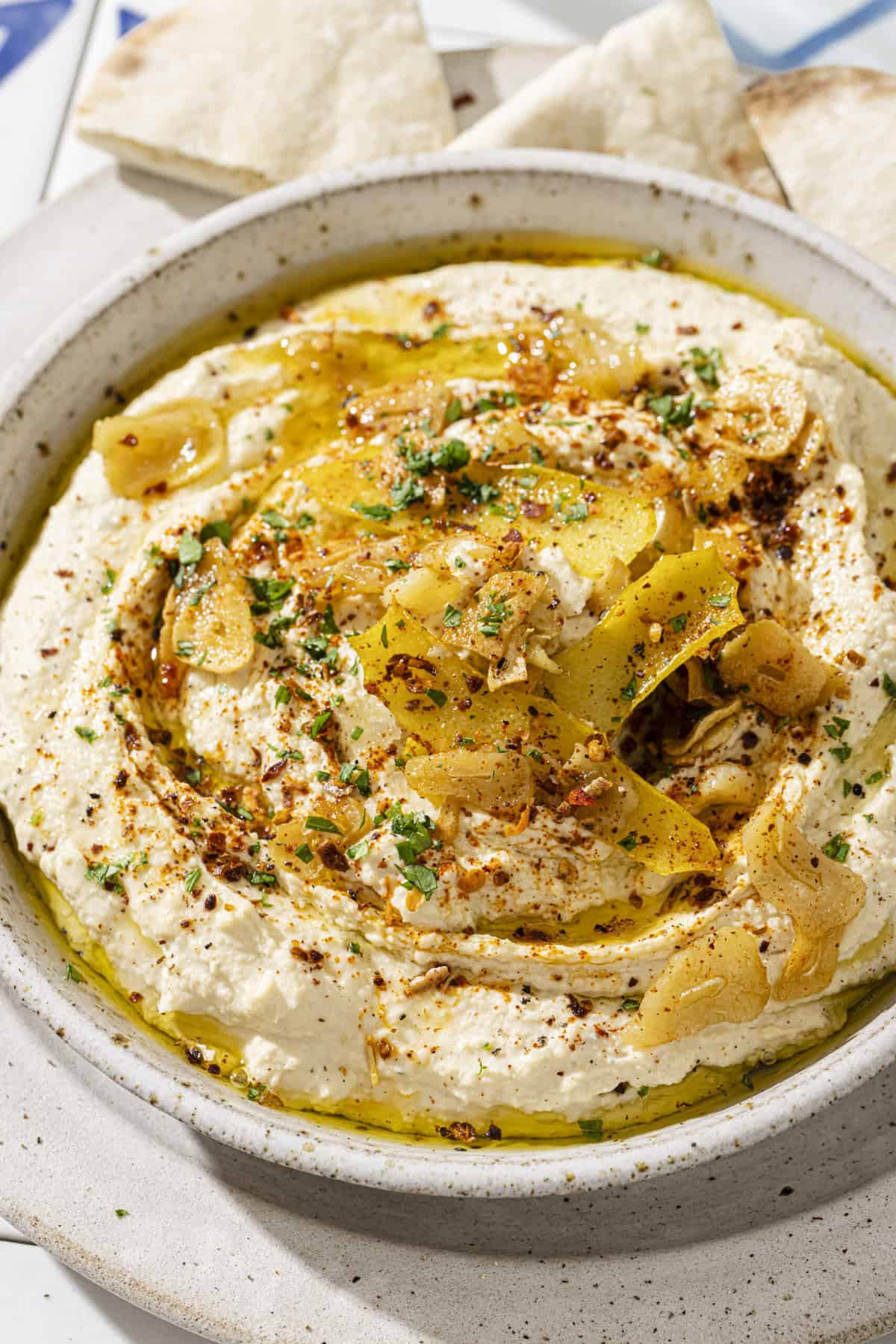
I’ve been making homemade hummus for 10 years, so trust me when I tell you that truly exquisite hummus doesn’t require you to be a world-class chef.
With a handful of quality ingredients and a few choice techniques, anyone can whip up a batch of unparalleled hummus featuring restaurant-quality flavors and a to-die-for texture that puts the grocery store stuff to shame.
In this post:
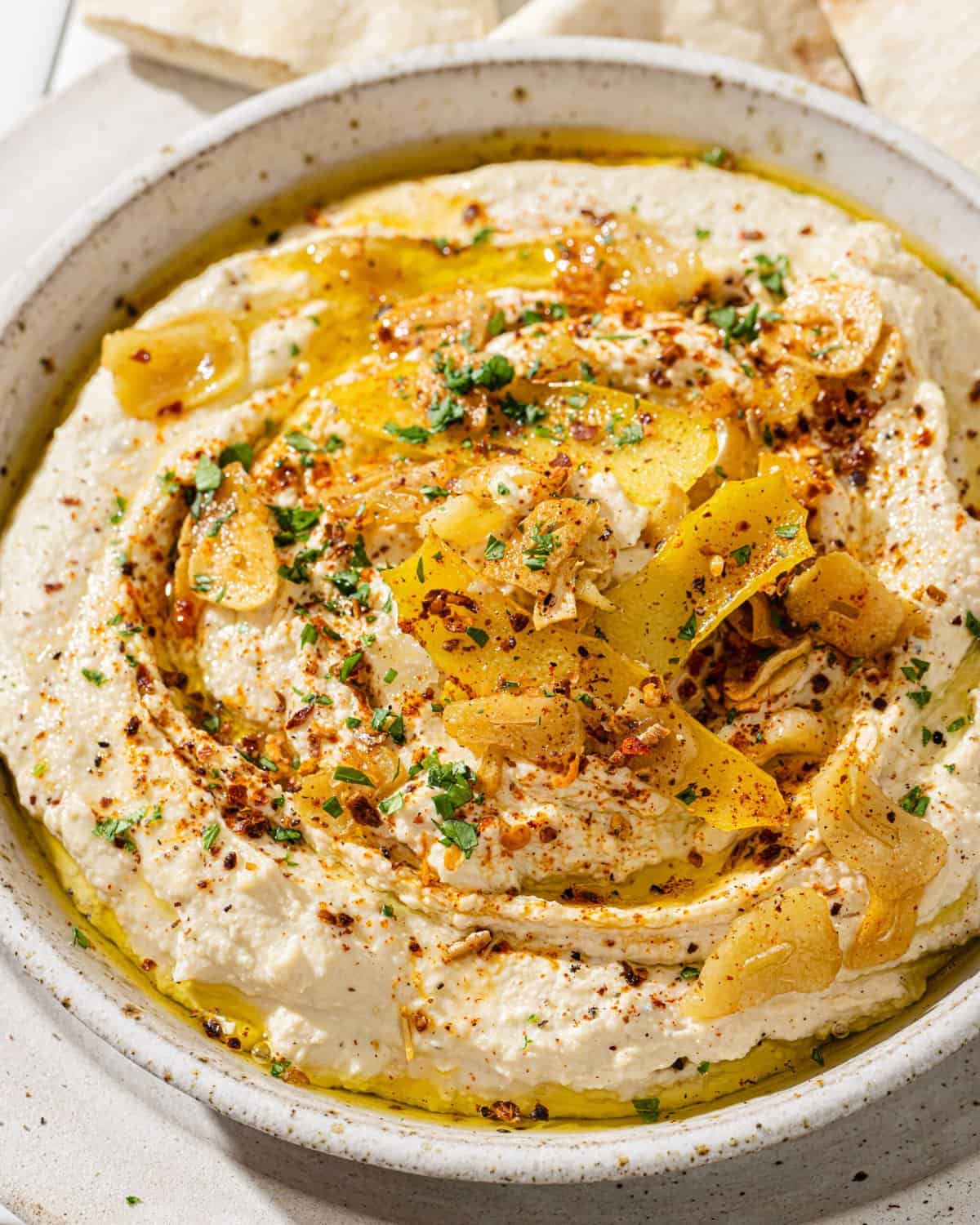
🎥 Video: How to make the best hummus of your life

I hope you’ll love this hummus recipe as much as our community does. The YouTube video for this recipe has over 4.7M views and 118K likes, making it one of the most popular videos on hummus ever 🤯
It’s time to break up with store-bought hummus
My grievances with store-bought hummus fall into two categories: texture (it’s notoriously stiff and gloopy) and flavor (zero rich nuttiness, sometimes not much flavor at all).
Hummus should be creamy and smooth, not gritty. It should be pliable and swoopable, not stiff. It should taste boldly nutty and undeniably rich, not like air. If you ask me, hummus should be nothing short of exquisite.
I respect hummus deeply, which is why I tested so many different variables, including:
- the type of chickpeas used—canned, dried, different brands of each;
- preparation methods—soaking chickpeas vs. not, whether to simmer canned chickpeas, whether to add baking soda to chickpeas while cooking, whether to peel the chickpeas;
- non-chickpea elements (don’t ask how many brands of tahini I tested 😅).
The result? A foolproof method built on simple ingredients, creating a rich, deeply flavorful final product that puts store-bought versions to shame.
PS: The techniques I use in this recipe are largely influenced by three chefs who really know hummus—Reem Kassis, Yotam Ottolenghi, Sami Tamimi—so check out their cookbooks to learn more about hummus!

Ingredient notes
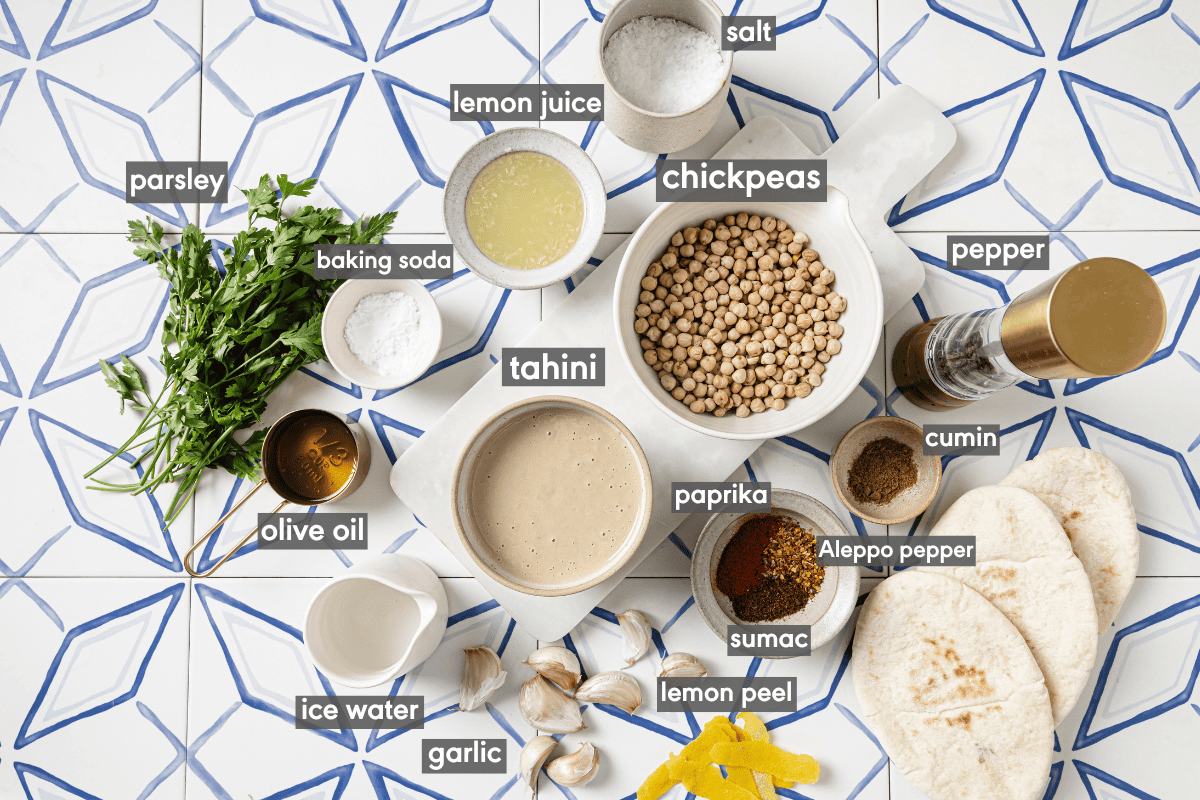
Chickpeas
AKA garbanzo beans. While you may have had sweet potato “hummus” or black bean “hummus,” hummus (or “humus,” “houmous,” “hommus”) is literally the Arabic word for “chickpeas” so we have to use chickpeas!
You can use both canned and dried chickpeas to make hummus…but for the very best hummus, flavor and texture wise, I recommend cooking dried chickpeas.
Canned chickpeas come with a firmer texture, which leaves hummus with a slightly chunky texture.
Don’t have the patience to cook dried chickpeas? You can achieve similar texture results with canned chickpeas if you first simmer the drained chickpeas in a pot of boiling water until very soft. See the FAQ section for more details.
Tahini
Tahini is a smooth and rich paste made with one ingredient: sesame seeds. It’s a primary ingredient in hummus and should never be left out. A good-quality brand of tahini makes a HUGE difference because its flavor is so prominent in every bite.
Tahini Tip
Always use tahini from hulled sesame seeds (unhulled sesame seeds are usually bitter). Check out my suggested tahini brands in the FAQ section below.

Lemon
Freshly squeezed lemon juice brightens up the rich, nutty, and savory flavors. Without it, the hummus would lack its distinctive ‘pop.’ But if you don’t love lemon as much as me, start with less than the recipe calls for.
Garlic
Some people (hi, me!) like their hummus quite garlicky. If you don’t love the sharpness of raw garlic, you can (1) use less garlic (start with 1 clove) or (2) marinate the garlic cloves in the lemon juice for 10 to 15 minutes to cut their raw bite.
Salt
For flavor and to make everything taste like itself!
Substitute: If using sea salt or table salt instead of the kosher salt called for in the recipe, you’ll need to use about half of the amount called for in the recipe, then adjust according to your desired taste.
Ice water
Water brings the hummus together, turning it from stiff to pliable. I learned from chefs Yotam Ottolenghi and Sami Tamimi that ice water, in particular, makes the texture even creamier and gives it an almost fluffy, pillowy, and whipped consistency.
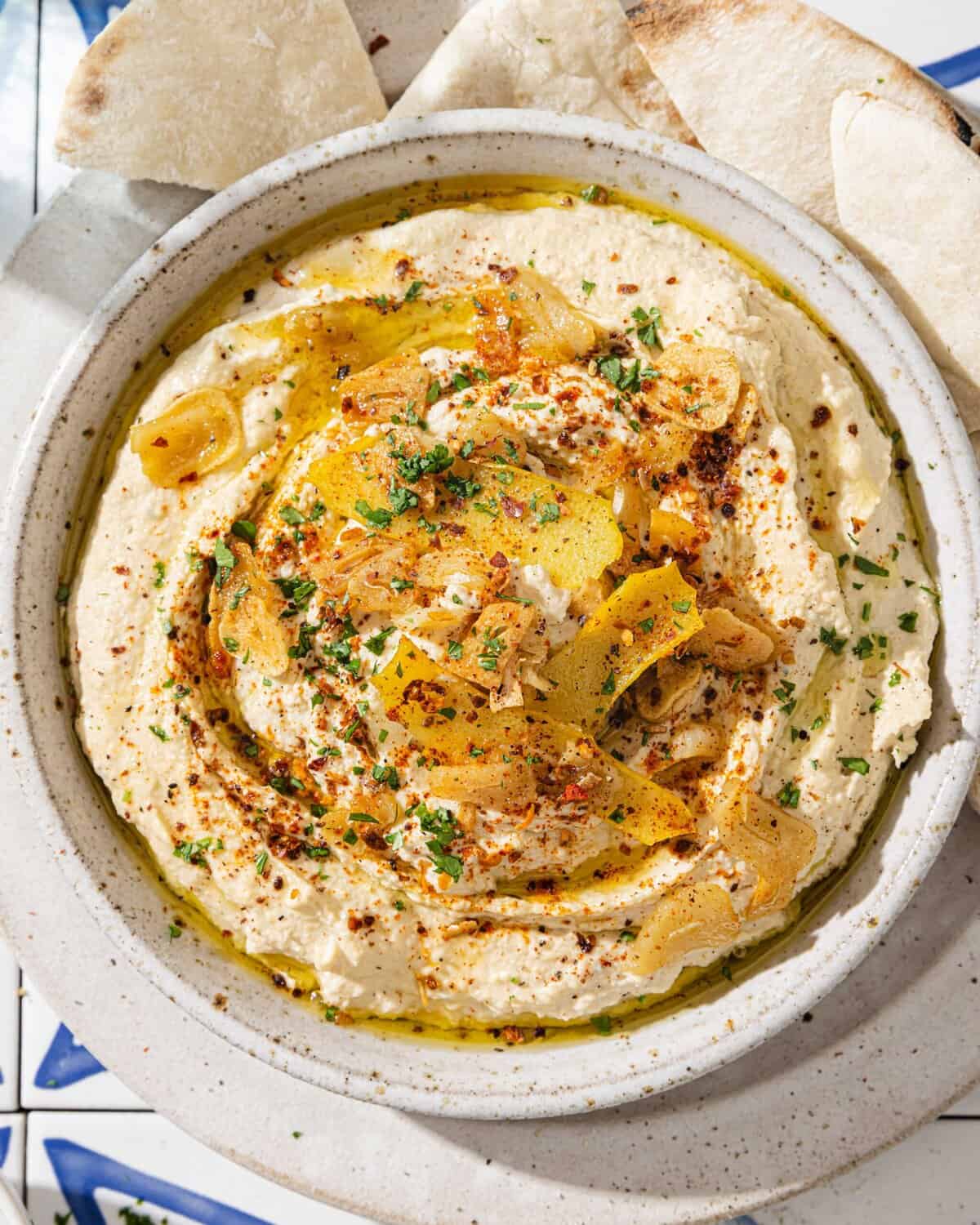
Step-by-step instructions
First, soak and cook the dried chickpeas if you haven’t done so already. Cook until very soft.
If you’re using canned chickpeas, simmer them in a pot of water until very soft.
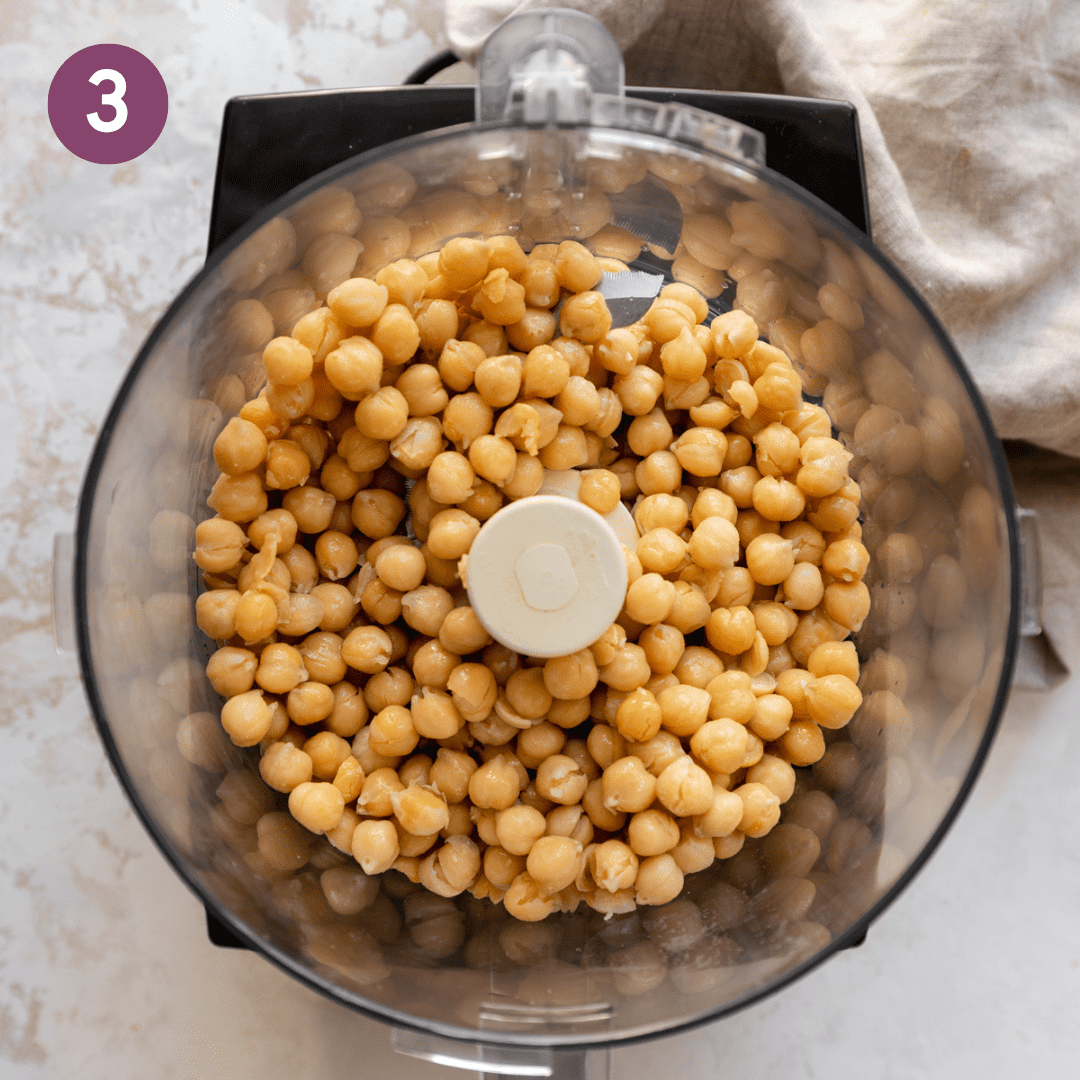
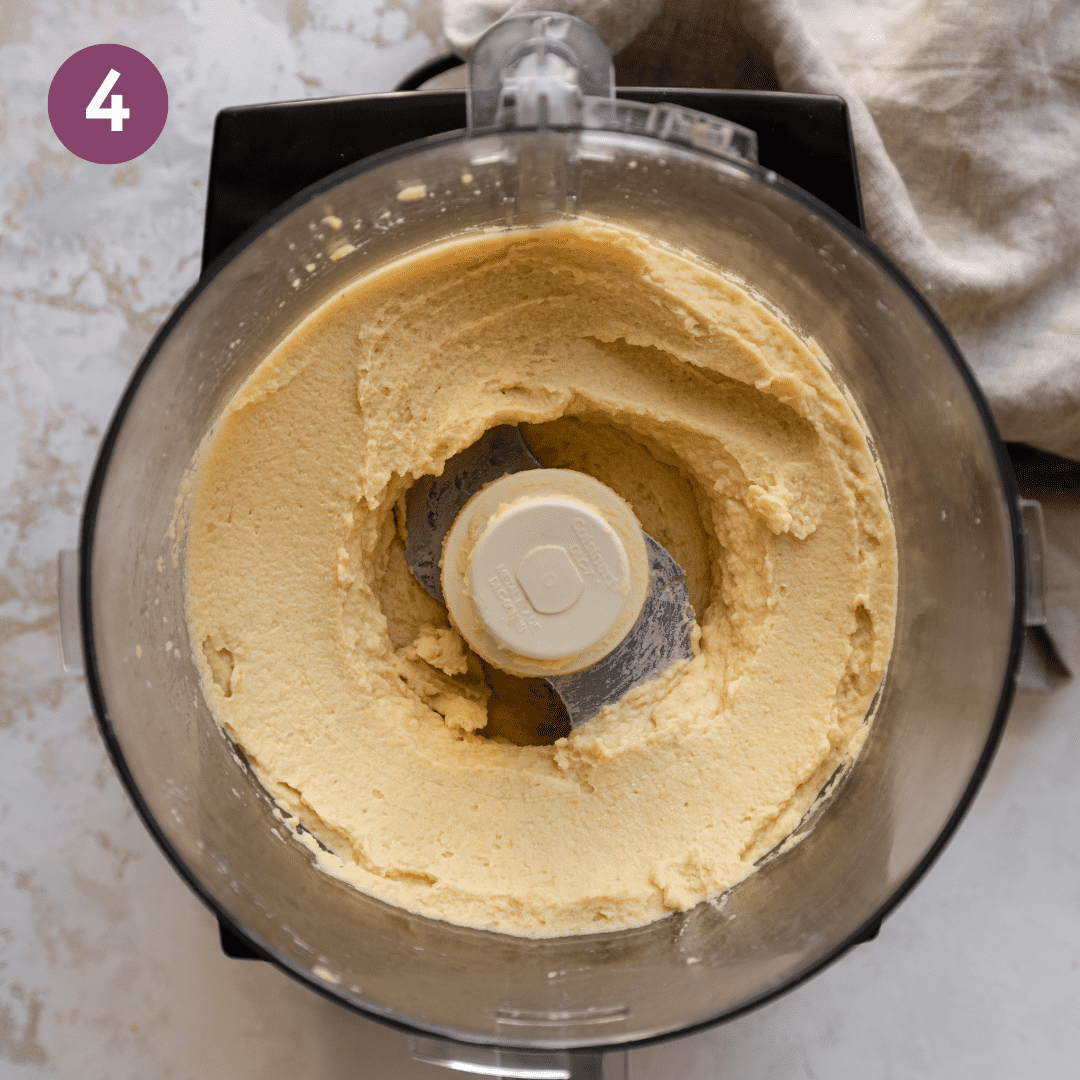
Drain, then transfer the warm chickpeas to a food processor. Blend the chickpeas until you’re left with a thick paste.
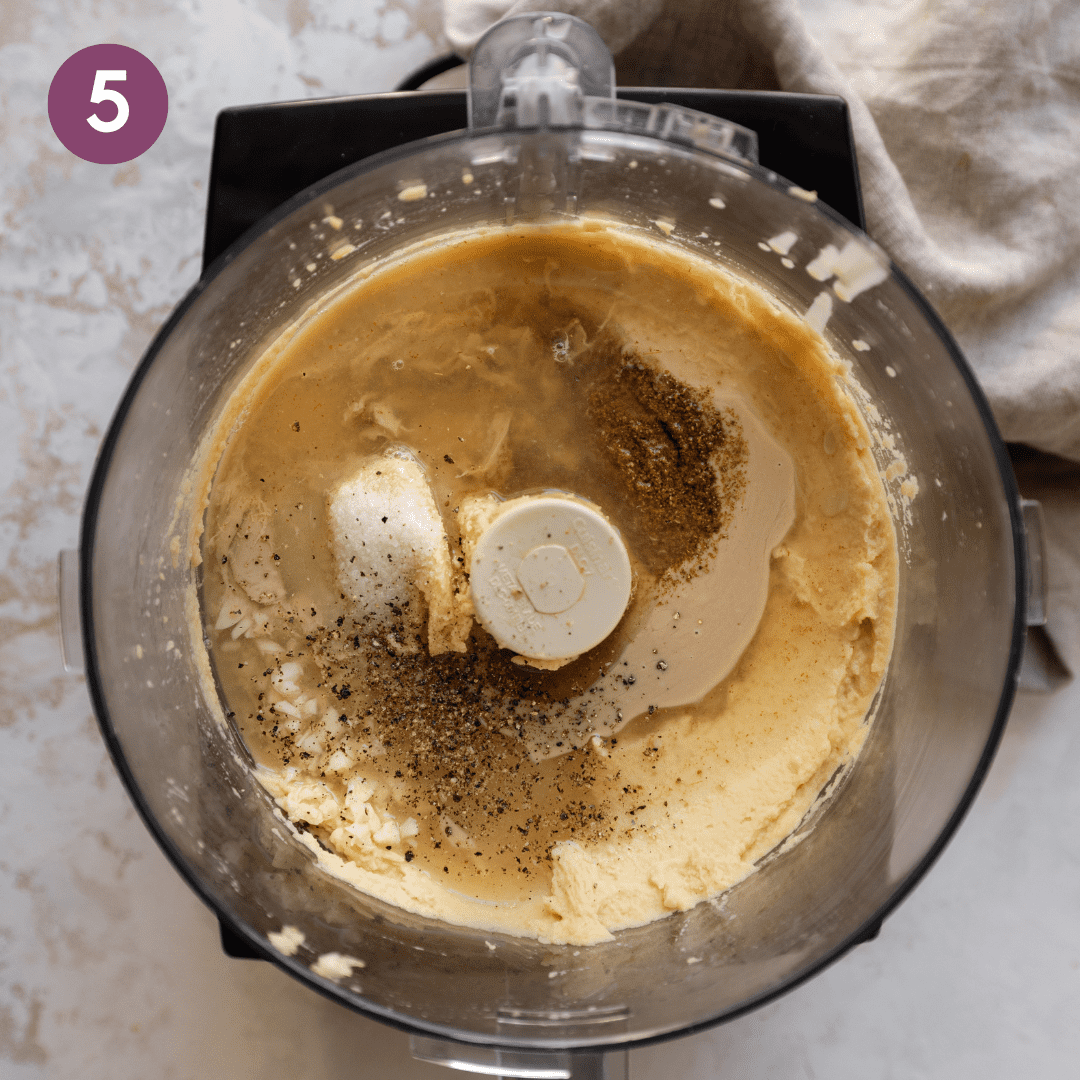
Add the tahini, lemon juice, garlic, cumin, kosher salt, and pepper. Blend again and slowly stream in the ice water as the machine is running.
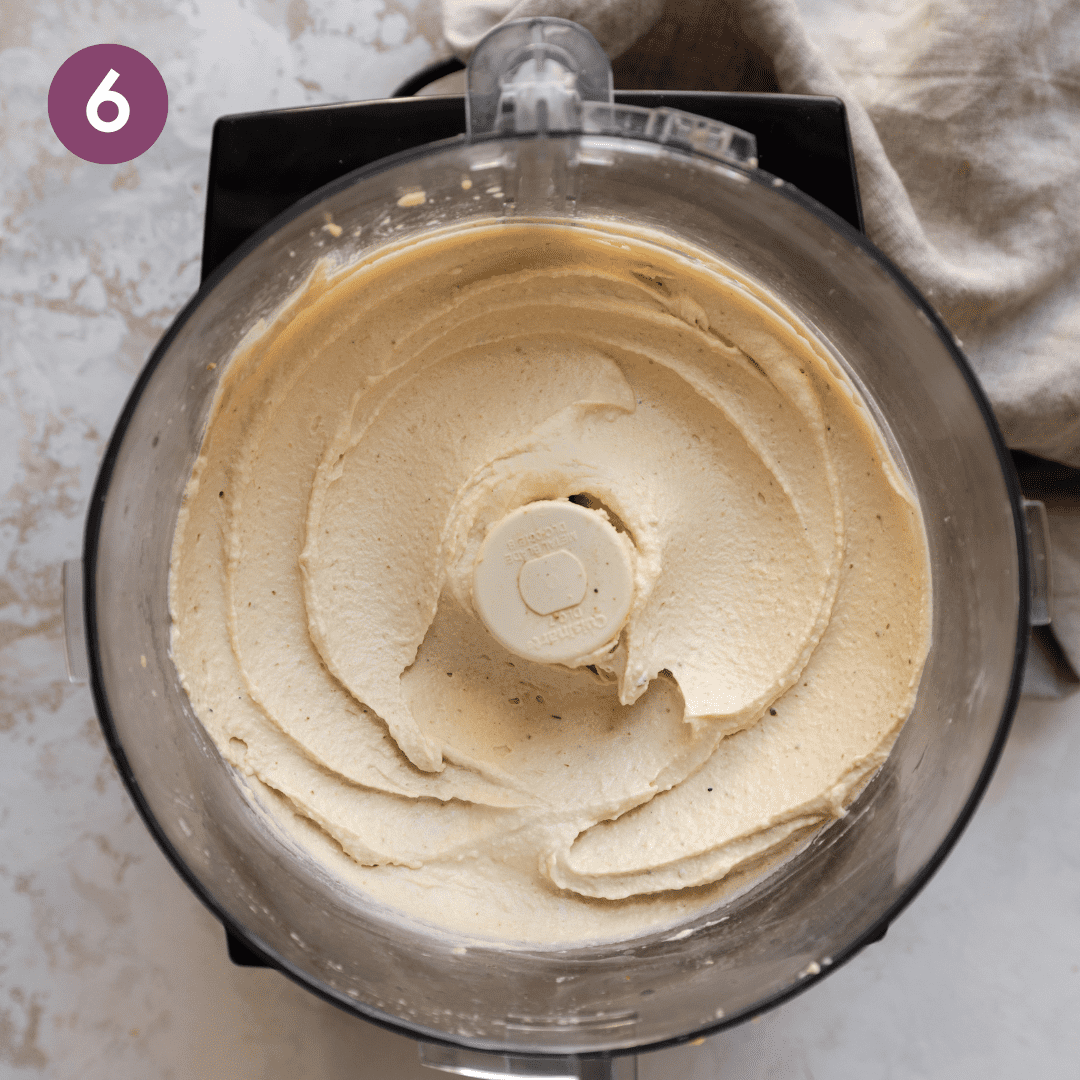
Once it’s smooth and creamy, give the hummus a taste and add more seasonings or lemon juice as needed. Add more ice water for a looser consistency.
Make the lemon-garlic topping before serving the hummus. Heat the olive oil in a skillet over medium heat until warm but not, then add the sliced garlic and cook until golden but not brown. Add the lemon peel and cook for another 30 seconds, stirring occasionally almost constantly.
Transfer the lemon peel and garlic to a plate (reserving the oil) and add a sprinkle of salt on top.
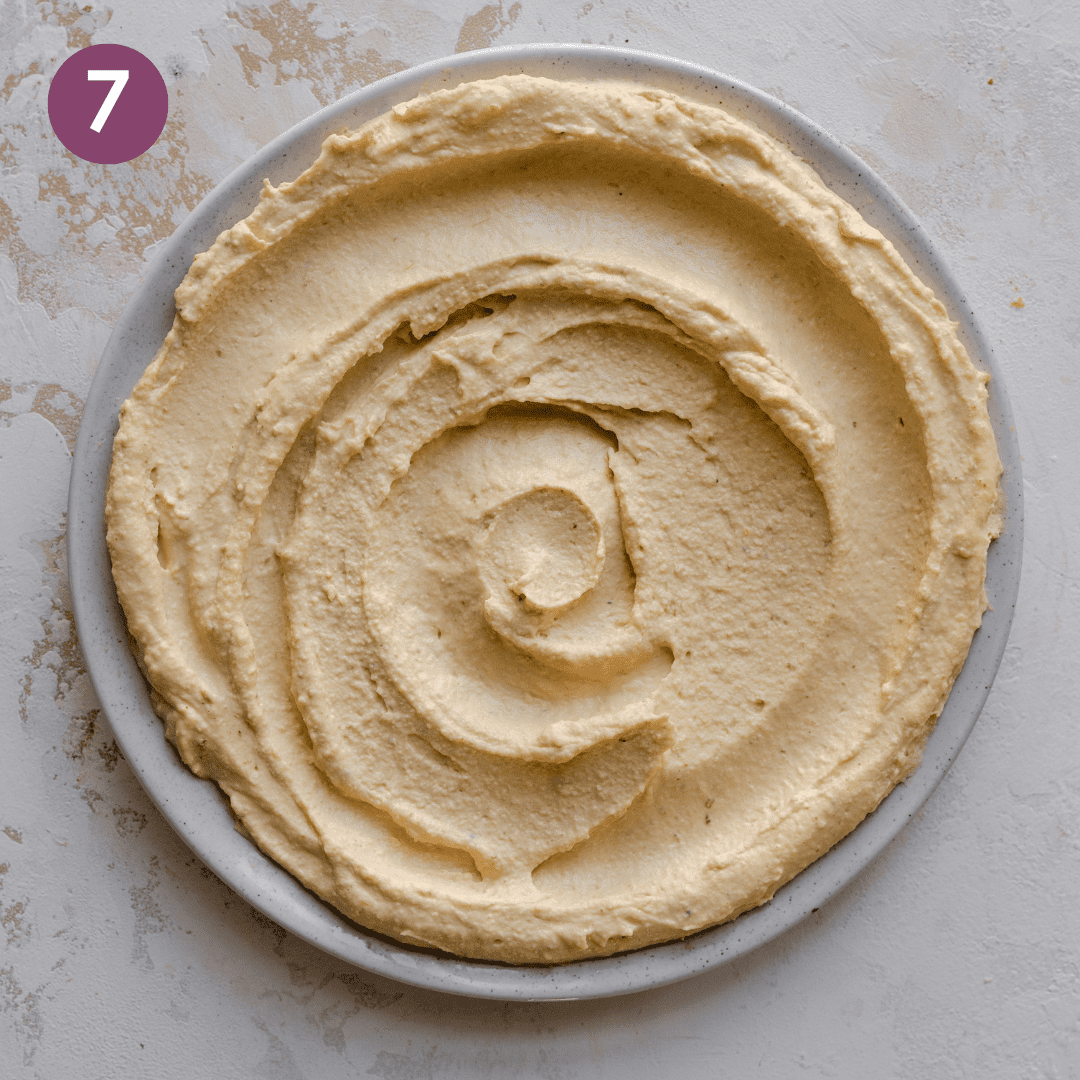
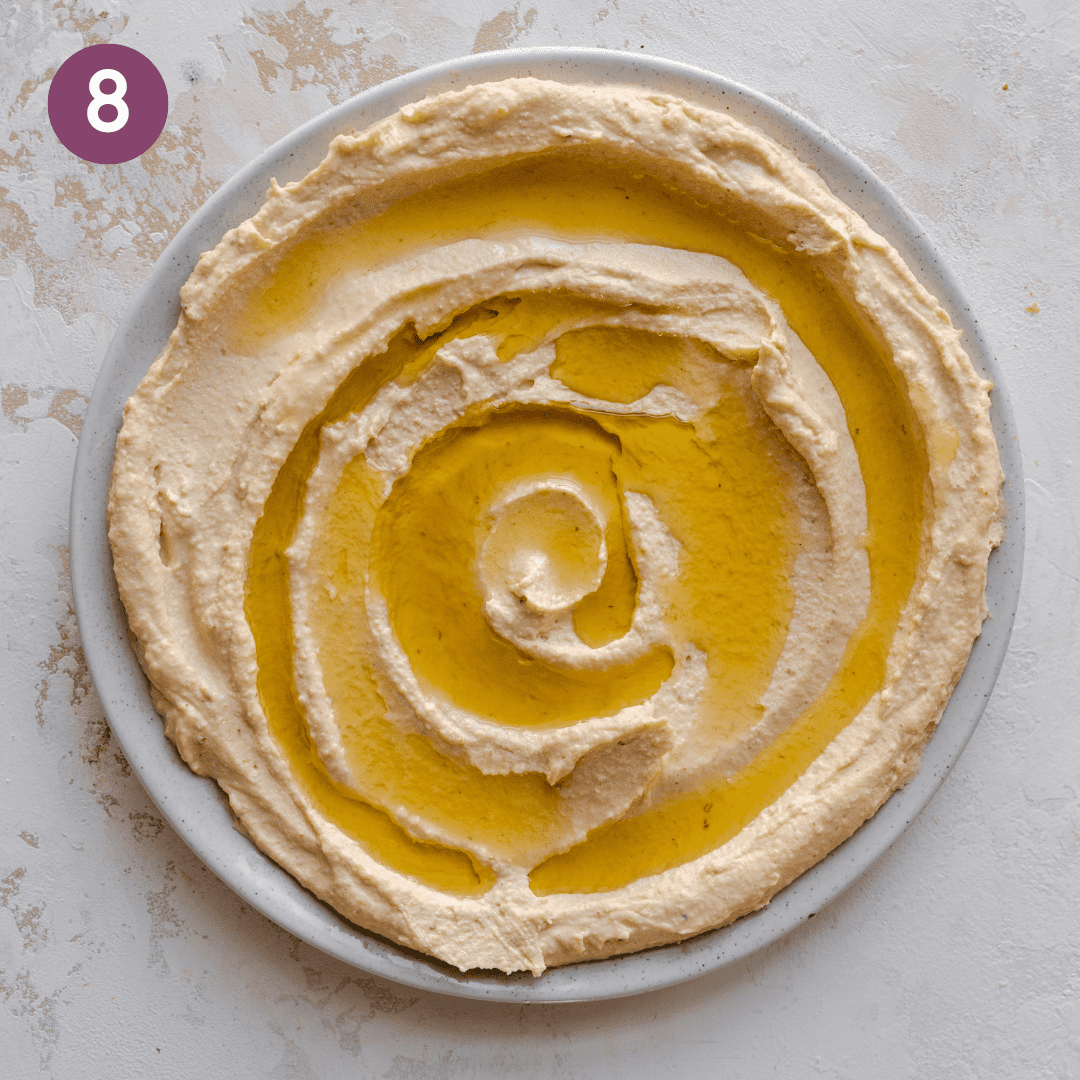
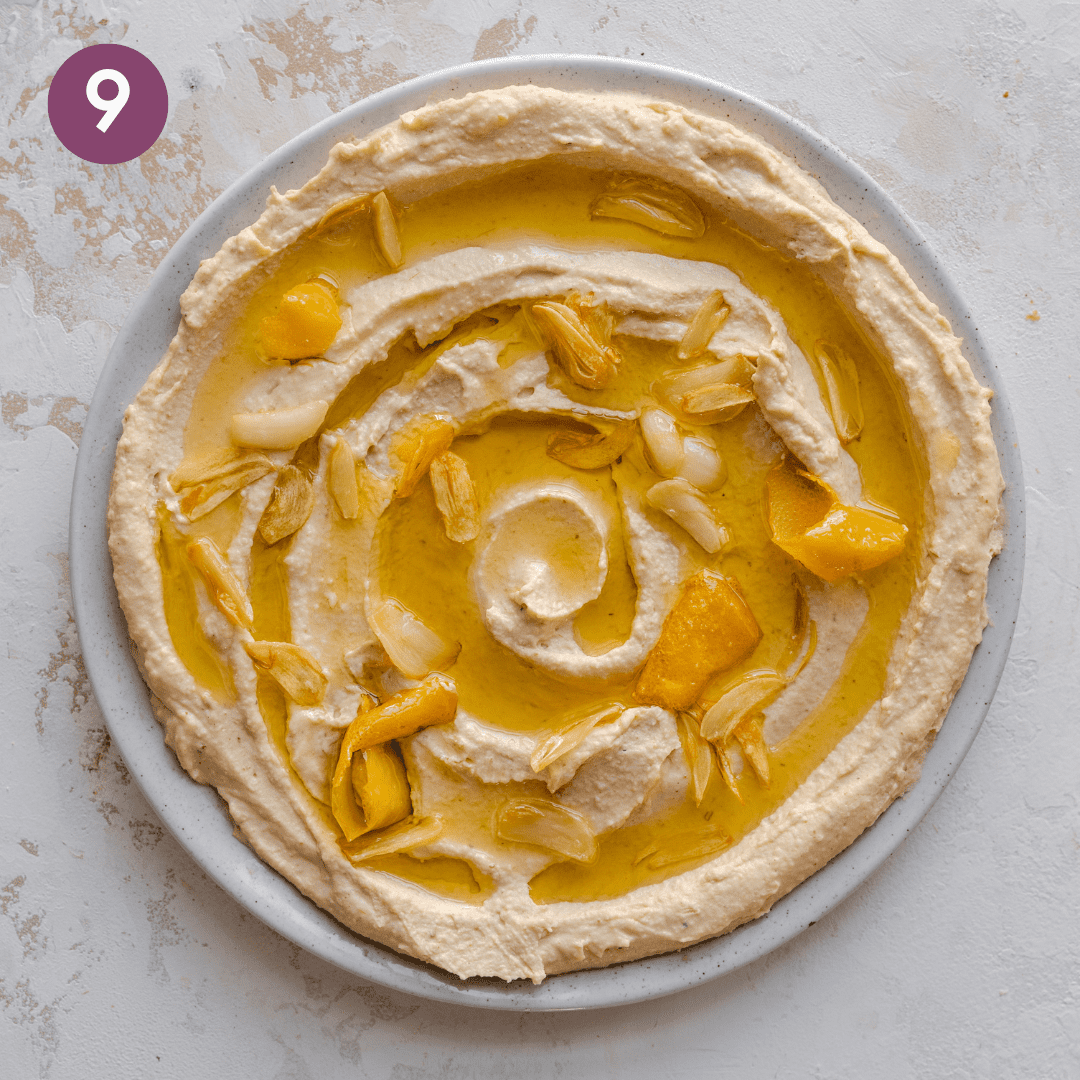
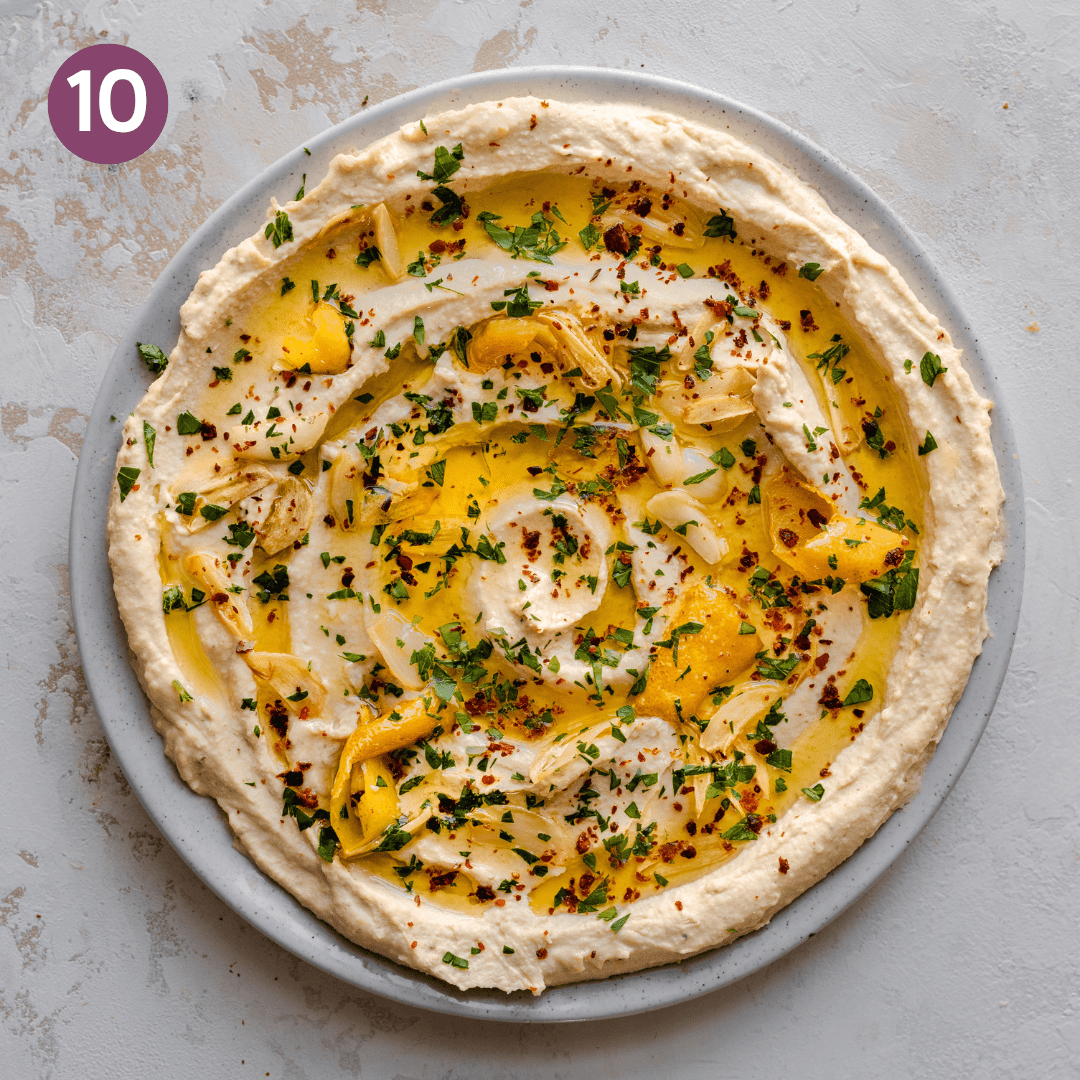
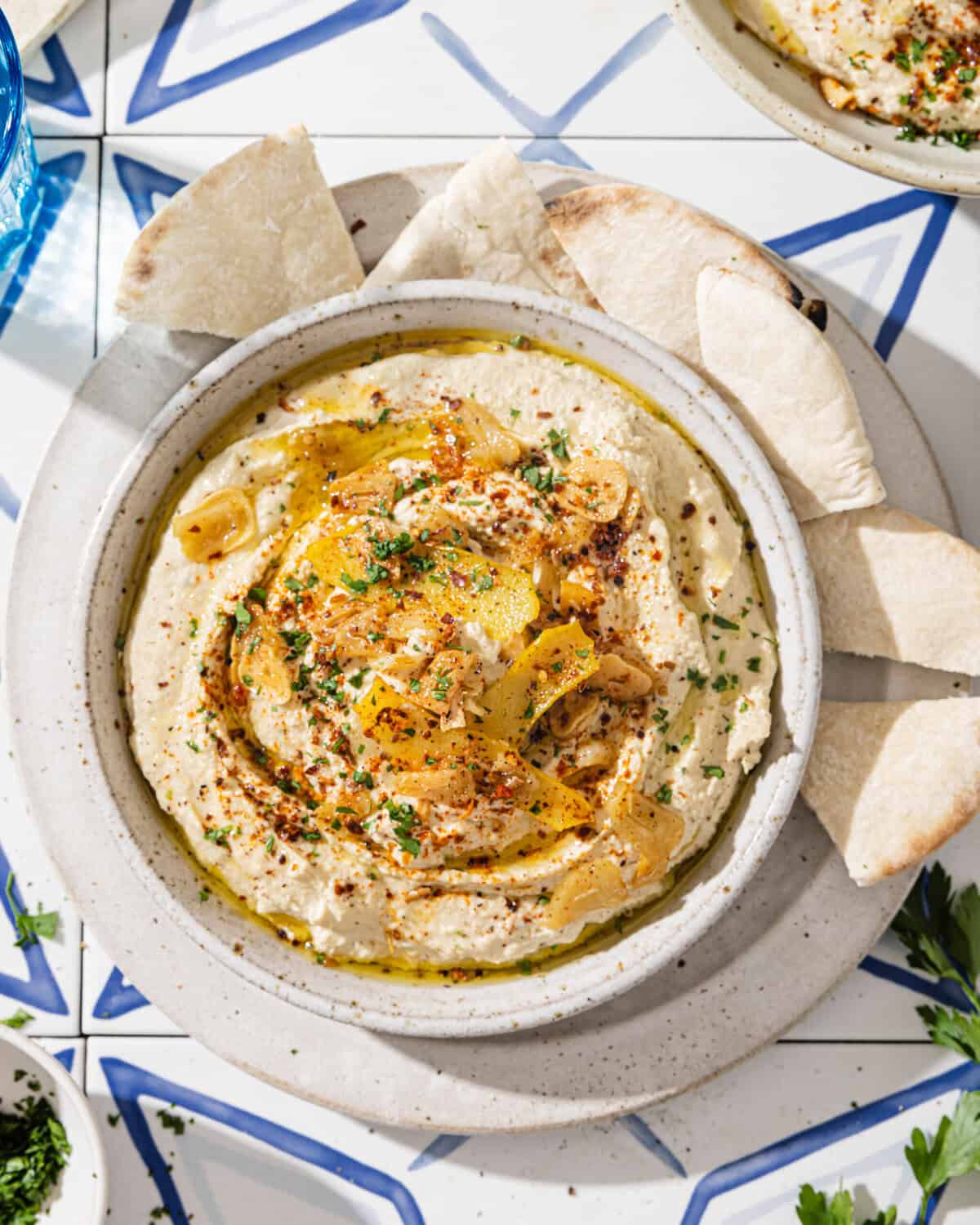
Dress and serve the hummus. Spoon the hummus onto a large serving plate. Use the back of the spoon to make waves or a well in the center. Add the garlic-lemon topping drizzle on the reserved oil, chopped parsley, and paprika or Aleppo pepper. Enjoy!
Tips for making the best hummus
To peel or not to peel?
You will achieve the absolute dreamiest texture if you peel the chickpea skins before blending, but you can still get wonderful results without it.
When you cook the chickpeas with baking soda, it softens them up more, so a lot of chickpea skins actually start to come off naturally. Just discard any loose skins before blending.
If you do want to peel the chickpeas for next-level results, you can speed up the process by laying out the cooked chickpeas on a paper towel; use a second paper towel to rub them vigorously to help loosen the skins.
The chickpeas should be soft
Unlike a salad where you want semi-firm chickpeas, you’re looking for very soft chickpeas that can be easily squashed when pressed with a spoon or pressed between your fingers.
If using canned chickpeas, it’s important to simmer them first so the hummus gets super smooth. Don’t skip this step!
Serve hummus at room temperature (or warm)
In general, you typically can’t taste flavors as deeply in cold food as you can with room temperature or warm food, and hummus is one of the clearest examples of this principle.
Plus, serving hummus warm allows you to experience hummus the way it’s typically served across the Middle East—a luxuriously smooth, warm dip that’s often served with warm pita, or even as the base for vegetables or proteins.
When I make hummus, I blend the chickpeas while still warm, so the freshly made hummus is already warm. However, if you’ve pre-cooked and refrigerated your chickpeas, consider warming the chickpeas up in the microwave first.
For re-warming instructions, check out the FAQ!
Serving suggestions
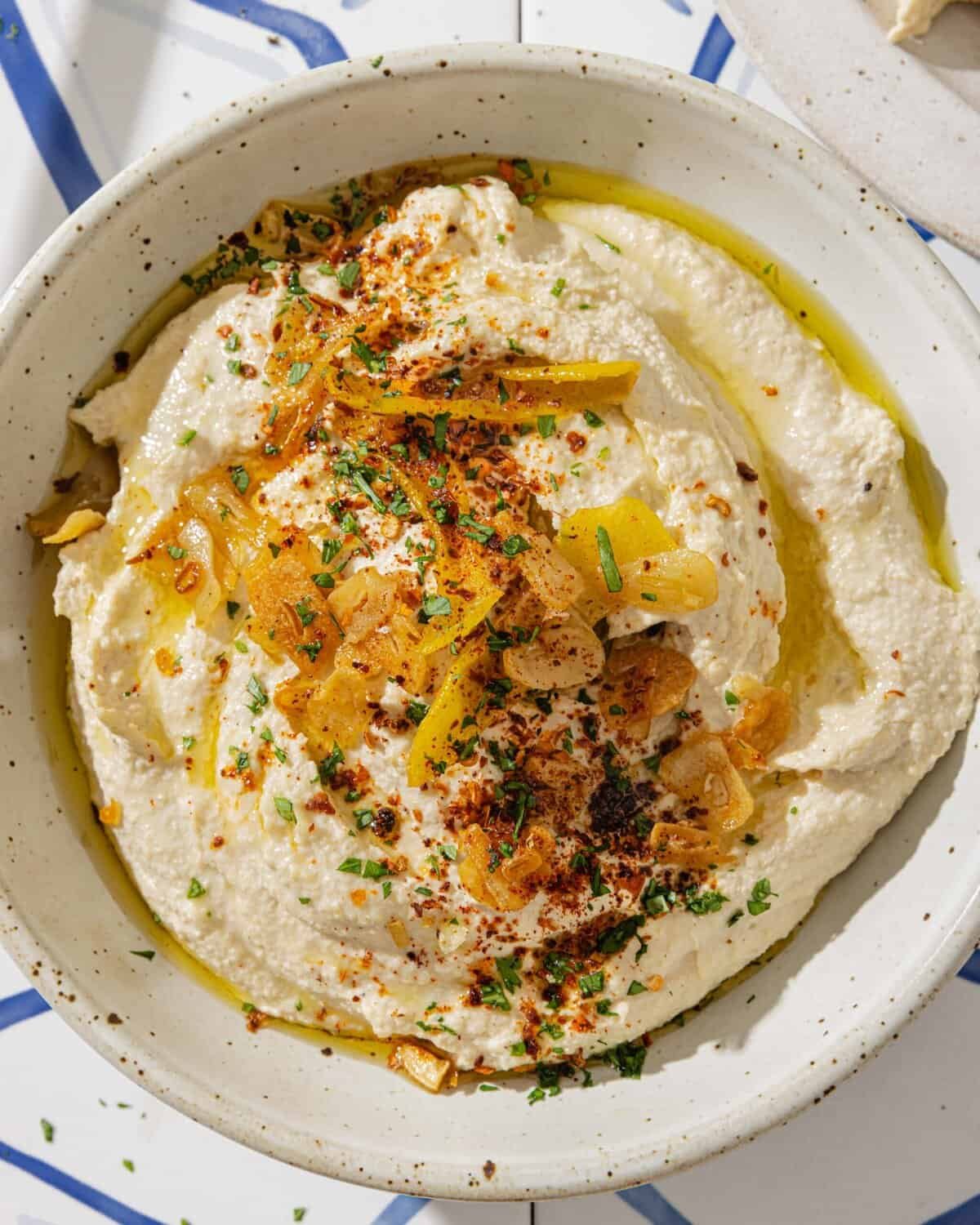
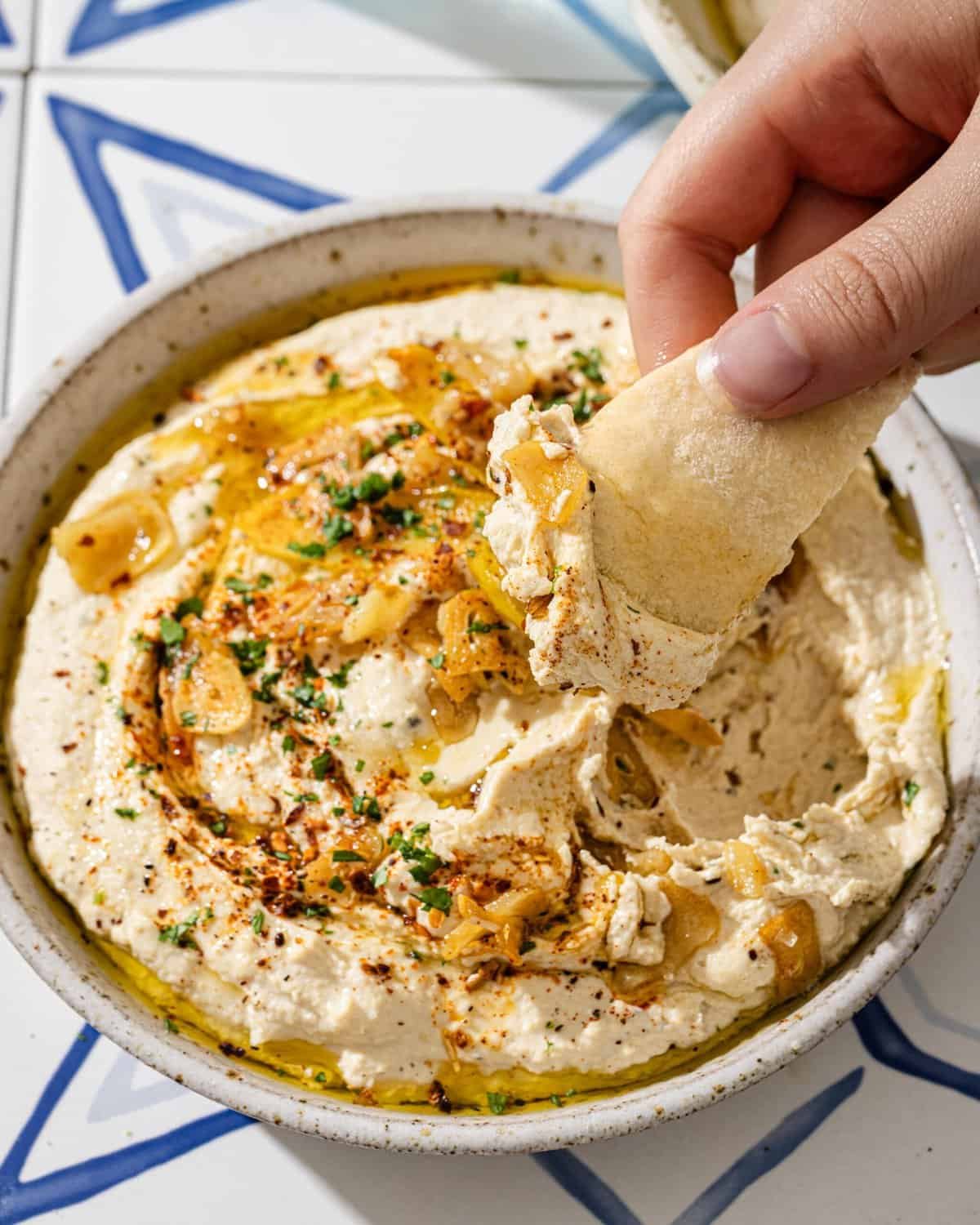
One of the most popular ways to serve hummus in the West is as an appetizer or snack.
- Make it a part of a grazing board, surrounded with pita bread or homemade naan, fresh-cut veggies, crackers, or pita chips for dipping.
In the Middle East, you’ll find hummus included as part of the main or side dishes during breakfast, lunch, and dinner.
- Hummus is great on a mezze platter with falafel, tabbouleh, and tzatziki
- You can use hummus as the base layer on a plate, then top with cooked beans and roasted veggies (similar to my Broccoli and Za’atar Chickpeas with Yogurt Sauce); or enjoy it with your favorite vegan protein, like Grilled Tofu Skewers.
- Try adding a dollop to my Crispy Tofu Shawarma for a next-level meal (recipe for NYT Cooking, gift link!).
Hummus is also great as a sandwich spread or bowl topper.
- Slather it onto a sandwich or in a stuffed pita with crumbled vegan feta, arugula or kale, cucumber, and pickled red onions.
- Hummus is always a fantastic addition to Mediterranean grain bowls and can even be thinned out with water, lemon juice, or vinegar for an easy salad dressing.
How to jazz up your hummus with toppings
This recipe includes a truly divine fried garlic and lemon topping but, because I can’t stop thinking about ways I’d love to serve this hummus, here are a few more topping ideas:
- Drizzle of EVOO and paprika or Aleppo pepper or sumac plus chopped parsley (and maybe toasted pine nuts!
- Best-quality EVOO and za’atar (see my homemade za’atar on p. 179 of Big Vegan Flavor)
- Best-quality EVOO and Dukkah (p. 219 of Big Vegan Flavor)
- Fried capers (p. 167 of Big Vegan Flavor) and parsley with flaky sea salt and lemon zest
- Best-quality EVOO and roasted chickpeas (p. 236 of Big Vegan Flavor) plus Aleppo pepper and smoked paprika
- Best-quality EVOO and minced preserved lemon with parsley/basil and toasted pine nuts
- Salad greens dressed in best-quality EVOO and vinegar
- Crispy spiced garlic (p. 226 of Big Vegan Flavor)
And while I obviously recommend making hummus from scratch—this whole post is about making hummus from scratch—you can use these topping ideas to jazz up store-bought hummus in a pinch.
Flavor variations
While this classic hummus recipe is my all-time favorite, you can blend lots of fun ingredients to make a flavored version.
- Roasted red pepper hummus: smoky and sweet
- Beet hummus: breathtakingly beautiful
- Cilantro-jalapeño: Fold in 1 ½ cups of fresh cilantro and 2 to 4 chopped jalapeño peppers
- Tomato-basil: Fold in an ounce or two of sundried tomatoes and blend; garnish with basil and chopped green olives
- Harissa: Fold in 2 to 4 tablespoons of harissa and blend; top with fresh mint.
Frequently Asked Questions
The results won’t be quite as smooth or as flavorful, but you can definitely make hummus with canned chickpeas.
In this recipe, substitute the dried chickpeas with 2 (15-ounce/425g) drained and rinsed cans.
Chickpeas right out of the can will yield a hummus that’s slightly chunky because canned chickpeas are semi-firm.
To remedy that, simmer the canned chickpeas to soften them! Add them to a saucepan, cover with an inch or two of water, and add ½ teaspoon baking soda. Bring to a boil over high heat, then reduce the heat to maintain a rapid simmer for 20 minutes, or until the chickpeas start falling apart. Continue making the recipe as per the instructions at step 3 (draining the chickpeas and adding them to the food processor.
Always use tahini made from hulled sesame seeds, as tahini made with unhulled sesame seeds tends to be bitter.
My favorite tahini brand is Al Kanater, which is available online.
For a grocery store option, the Whole Foods 365 brand is pretty decent. Al Arz and Soom Foods also make very good tahini.
Yes. A high-powered blender with a baton is best and will make the hummus super smooth. However, it’s pretty important to use a small-capacity blender, as there is very little liquid in the recipe. If you use a 64-ounce container, for instance, you’ll have trouble getting it to blend.
It will stay fresh and creamy for up to 1 week in the fridge (but it’s best within 4 days). You can prevent it from drying out by storing it in an airtight container with a light layer of extra virgin olive oil on top.
Allow it to come to room temperature, or warm it up. Warming it up loosens the texture, making it smoother. Simply add the amount of hummus you’d like to reheat to a saucepan, add a couple teaspoons of water, and stir constantly for a few minutes until warmed through. Or, heat it in the microwave in 10-second increments, stirring after each round.
Yes, you can technically freeze hummus, though you’ll lose some of that irresistible texture. To freeze, transfer the hummus to an airtight container but leave some room at the top to allow for expansion. Thaw it in the fridge the day before consuming.

Introducing
Big Vegan Flavor
Techniques and 150 recipes to master vegan cooking.
The Best Homemade Hummus
Equipment
- Food processor
Ingredients
- 8 ounces (227) dried chickpeas (1 cup + 2 tbsp)(See Note 1)
- 1 teaspoon baking soda, divided
- A generous ¾ cup (~185g) good-quality tahini
- 6 tablespoons freshly squeezed lemon juice, plus more to taste
- 3 cloves garlic, chopped (See Note 2)
- 1 teaspoon ground cumin, plus more to taste
- Diamond Crystal kosher salt (see Note 3)
- Freshly cracked black pepper
- 6 to 10 tablespoons (90 to 150 mL) ice water
Fried Garlic-Lemon Topping (Optional but Recommended)
- ⅓ cup (75g) good-quality extra virgin olive oil
- 5 large cloves garlic, thinly sliced
- 4 to 6 strips of lemon peel, about 2 inches long (don't peel too deeply to avoid the white pith)
- Flaky sea salt or kosher salt
For serving (See Note 4)
- 1 handful of flat-leaf parsley, chopped
- Paprika or Aleppo pepper (or sumac)
- Warm pita or lavash bread for dipping
Instructions
- Soak the chickpeas. Add the chickpeas to a large bowl. Cover with cold water and ½ teaspoon baking soda. Soak for 8 hours or overnight. Drain and rinse.
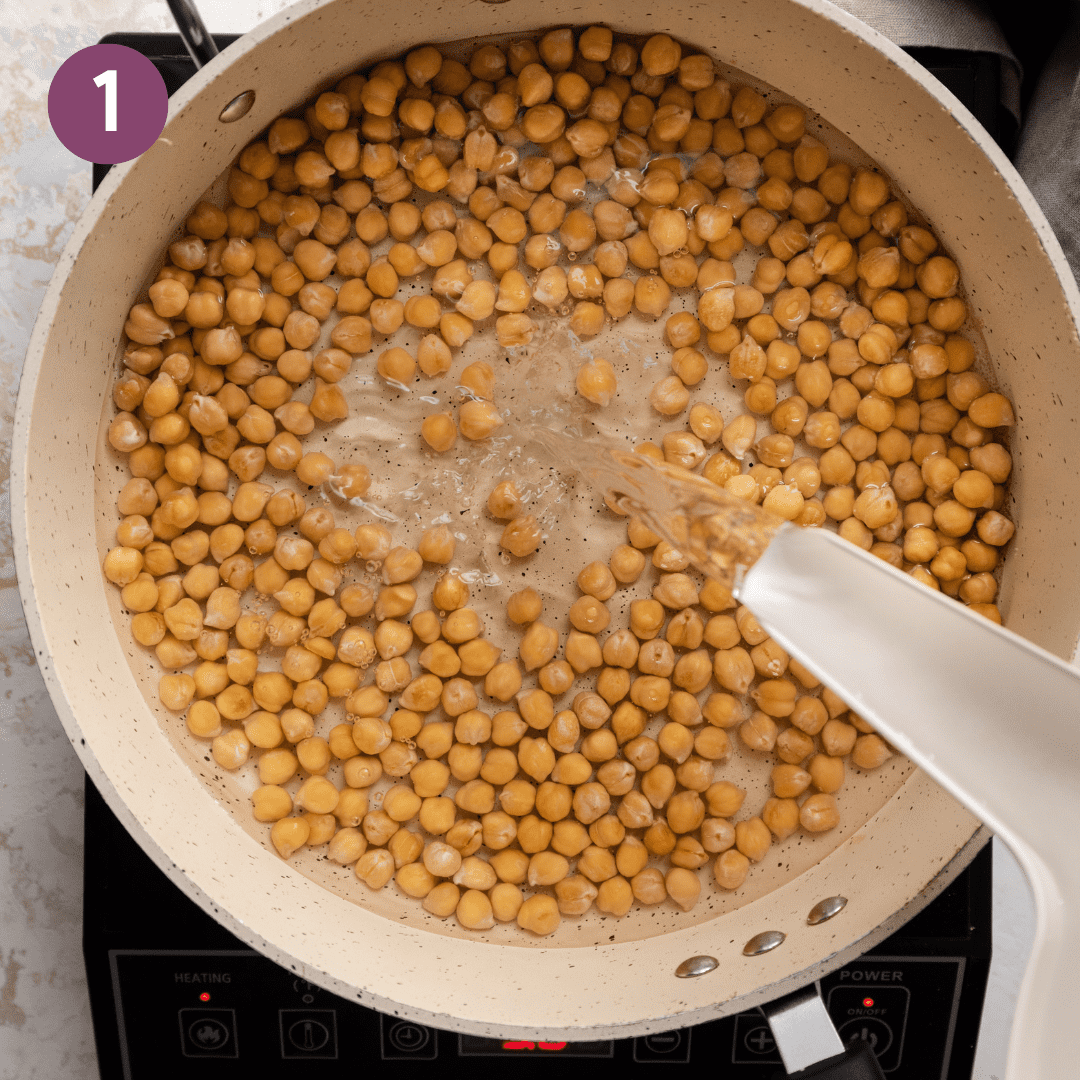
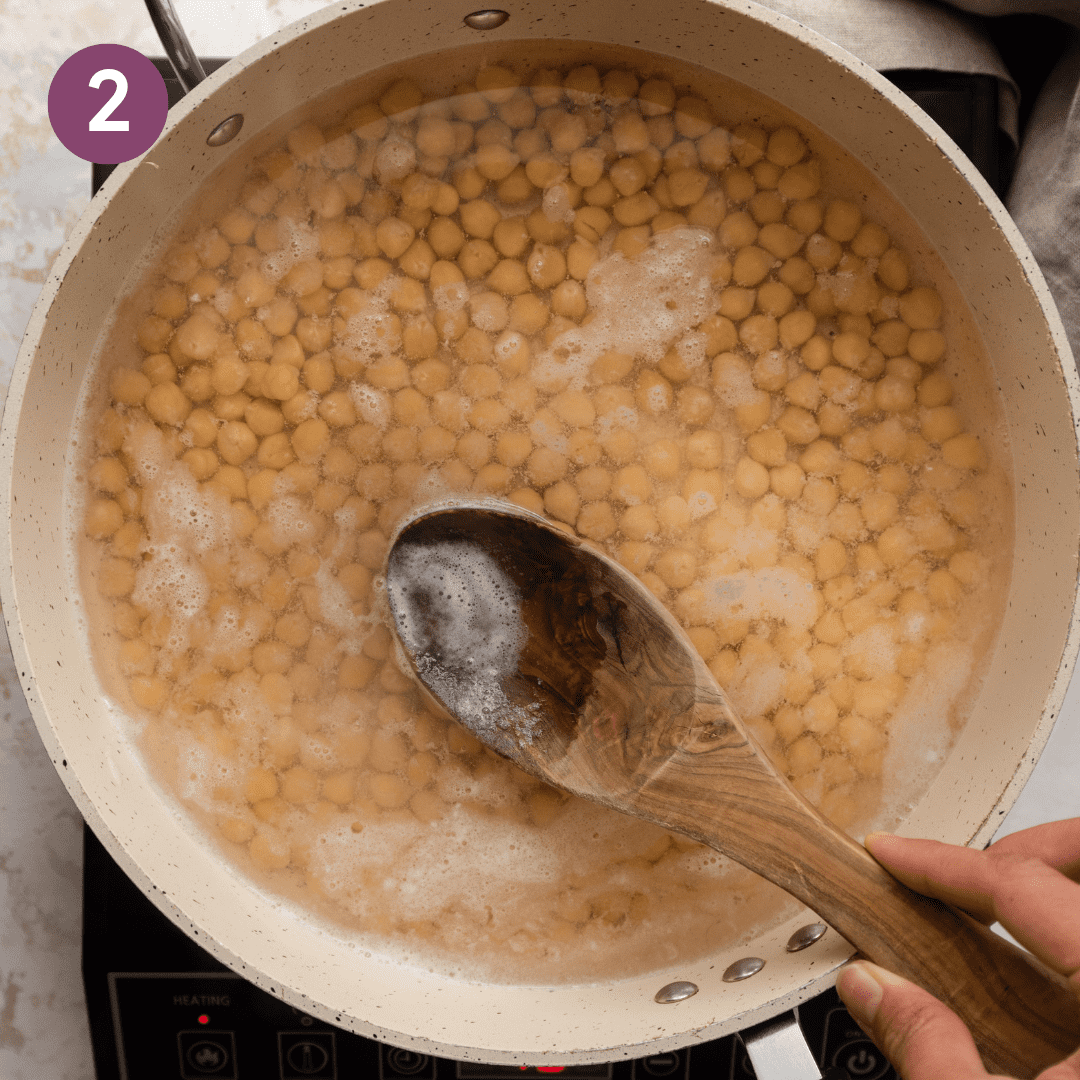
- Cook the chickpeas. Add the drained chickpeas to a medium saucepan with ½ teaspoon baking soda and 6 cups (1.4 L) water. Bring to a boil over medium-high heat. Cover the pot, and reduce the heat as needed to maintain a rapid simmer and cook for 30 minutes.Uncover the pot and add 1 teaspoon of kosher salt. Continue cooking for 10 to 15 minutes, or until the chickpeas are very soft and smush when pressed with a spoon/fork or pressed between your fingers. Drain well.
- Drain the chickpeas, then transfer to a food processor. Blend for 1-2 minutes until you have a smooth puree, scraping down the sides as you go.
- To the food processor, add the tahini, lemon juice, garlic, cumin, 1 heaping teaspoon kosher salt, and black pepper to taste. Blend, and with the motor running, stream in the ice water, 1 tablespoon at a time.After 6 tablespoons of ice water, evaluate the texture. If it’s still stiff or you want it to be looser, stream in more water, and continue blending until smooth and creamy. Once you reach your desired texture, taste for seasonings, adding more salt, garlic, cumin, or lemon juice as needed.
- Make the Fried Lemon-Garlic Topping. Fit a fine-mesh sieve over a bowl. Add the olive oil to a medium frying pan and turn to medium heat. Once the oil is warm (but not too hot), add the thinly sliced garlic and cook, swirling the pan or stirring frequently, for 2 to 2 ½ minutes, until the garlic just turns golden (don't wait until it browns—it will turn bitter).Add the lemon peel strips and cook for another 30 seconds, stirring almost constantly. Remove from the heat and pour the mixture into the strainer, reserving the oil in the bowl.Transfer the garlic and lemon zest to a plate and sprinkle them with a bit of flaky sea salt.
- Transfer the hummus to a shallow bowl or plate with a lip. Use the back of a spoon to make waves or a well in the center. Spoon the reserved oil into the ridges or into the well. Top with the fried garlic and lemon zest mixture. Top with chopped parsley and a few shakes of paprika or Aleppo pepper. Dig in with warm pita!
Video
Notes
- If using canned chickpeas, see the FAQ question titled “Can I use canned chickpeas to make hummus?”
- If you’re not a huge garlic person, start with 1 clove. After blending, taste and add more garlic as desired.
- If using sea salt or table salt (or Morton’s kosher salt), start with half of the amounts listed, then taste the hummus and add more as desired.
- For more topping options, read the “How to jazz up your hummus with toppings” section.
Nutrition
Nutrition information is automatically calculated, so should only be used as an approximation.
 Love this? Leave a rating below!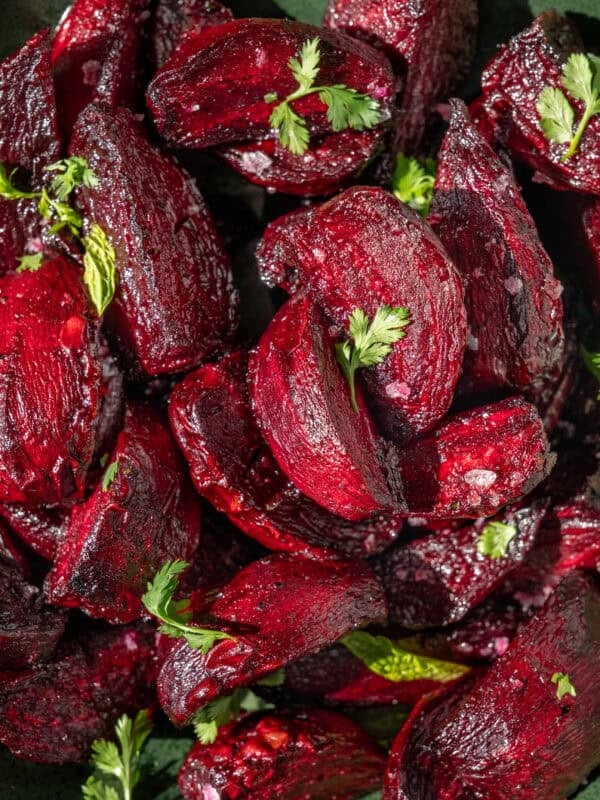








I just made this recipe. I could not find dried chickpeas, but followed the instructions using canned. Used the suggested tahini.
Came out great. Recipe and video make everything easy to follow. Almost a can’t miss to making some of the best hummus ever. Loved the serving suggestions too. Fried garlic slices with lemon and olive oil were very nice additions. Thank you!
Hi GM, we’re thrilled to hear you enjoyed the hummus! Next time, would you mind leaving a rating alongside your review? Star ratings are big help to readers who are thinking of making the recipe. Thanks!
Thank you for the response! I can’t wait! I live in Canada and cant get any of the suggested Tahini but bought two different types of Tahini to try and use the tastiest one!
Good luck and enjoy, Laurel!
Haven’t tried it but it sounds amazing and looking to try it soon. I have a question. Can you make the chickpeas in the instant pot instead of on the stove and get a similar result? How long in the instant pot if possible? If I did this would I put all the baking soda in the instant pot to keep it creamy?
Hi Laurel, we can’t wait for you to try the hummus! Yes, you can definitely make them in the Instant Pot. You’ll want to cook them a little longer than you normally would in order to soften them and, yes, you can add the baking soda to the IP!
I have been wanting to try this recipe of yours for a long time and I have no idea why I waited so long. I made this for Christmas Eve and I’ve already made it again since then. It is hands down the best hummus I have ever had and I’ve decided that every time I am asked to bring something to a party this will be what I bring. Oh, and it is super easy to make which makes it even better!
Wooohoo, Jennifer! Thanks for finally trying the recipe, we’re happy to learn it’s a new favorite!
I made this today and was so surprised by how simple and delicious this was! It made a LOT and I’m curious – how long does it last in the fridge? Can I freeze the extra?
Hi Erika, so great to hear you enjoyed the hummus! I pulled this section from the blog post:
“To prevent hummus from drying out, store leftover hummus with a light layer of extra virgin olive olive oil on top. Store in an airtight container in the fridge for up to a week (but it’s best within 4 days).
To serve leftover hummus, allow it to come to room temperature, or warm it up. I prefer warming it up on the stove, which loosens the texture and makes it smoother. Simply add the amount of hummus you’d like to reheat to a saucepan, add a couple teaspoons of water, and stir constantly for a few minutes until warmed through. You can also heat it in the microwave, in 10-second increments, stirring after each round.
You can also freeze hummus, though you’ll lose some of that irresistible texture. To freeze, transfer hummus to an airtight container but don’t fill it all the way up to allow for expansion. Thaw it in the fridge the day before consuming.”
Enjoy!
Wow. Holy s**t. This is amazing hummus! I can’t believe I made this ❤️ It is so smooth and creamy and the flavors are fantastic! I used canned chickpeas because of time but I cooked them with the baking soda and rinsed them. Very happy 😘
Lovely to hear you’re such a fan of the hummus, Shawn! 🙂
I just made these for the first time and couldn’t wait the 20 minutes for them to cool. They are delicious! Wonderful rise to them and the texture was perfect. Great flavors. I didn’t have brown sugar so used coconut sugar and it was fine. I will definitely be making these again!
Hi Christine, did you mean to comment this on the hummus post? Either way, we’re glad you enjoyed the recipe! 🙂
So I thought this would be nice, but hummus is hummus, right? How wrong was I! This really is the best hummus I have ever tried! I will definitely be keeping a stock of dried chickpeas in to make this again! It’s so creamy and light and once you have cooked the chickpeas, it’s super quick to make – definitely quicker than going to the shop!
Thank you for sharing, Rob! Lovely to hear you enjoyed the hummus. You can even make the hummus in this recipe using canned chickpeas if need be (see part 7 of the blog post)- it’s truly an amazing recipe!
I will never go back to store bought hummus. I made it with canned chickpeas following your directions. Absolutely delicious! Thank you!
We’re thrilled you got the chance to try the recipe, Katy! We feel the same! You’re welcome 🙂
Wow this was delicious!! My husband loved it too! Thank you for the recipe. I will definitely be making this again.
Dina, So glad to hear you two loved this recipe! Thank you for the lovely review!
I have tried so many recipes about homemade hummus but I’ve never been “satisfied” with the taste and returned for shop bought one. I am a huge hummus-holic and love using hummus with bread, veggie, for dressings, dips, with pasta…
But this recipe is absolutely the best hummus I’ve ever tried. Absolutely mouth watering. Thank you so much 😀
So glad you agree this is the best hummus ever Lucy, thanks for trying it!
ABSOLUTELY DELICIOUS!
Thanks for the lovely feedback, Carly!
Most delicious hummus ever! My husband liked this and he doesn’t like hummus!
Amazing, Monica! Thanks for sharing!
I’ll be honest – I was skeptical about making hummus from scratch because it’s a lot of work and cleanup. But woah. This was game changing. Well worth the prep time and cleanup. Flavor and texture are both vastly superior to store bought. Thanks!
Thanks for sharing, Dana!
This recipe is amazingly delicious!! However, I have to avoid lemon juice and any other acidic food. What would be a good replacement for it? Thank you 😊
Hi Gina, we’re so glad you enjoyed this recipe! We haven’t tested replacements for lemon juice in RPL kitchen. If you’d like to experiment at home, I’d suggest trying either your favorite tangy sour cream or tangy Greek yogurt. Start with 1 tablespoon and taste.
Ever since I started making this(about three years ago), I stopped buying store-bought … its so Ewwww
Excellent recipe!
The first time I made it with three cloves of garlic, the garlic flavor was strong, although it faded after a day.
I made it again with one clove of garlic and it turned out great. By the way, both times I made it in a ninja blender.
Hi Inbar,
I’m so glad you enjoyed the hummus recipe, we have it in heavy rotation in our house! Thanks for adding the tip about the ninja blender too, good to know!
This is the best hummus recipe I have ever made. Better than store-bought or even from most restaurants. Thank you so much! This has been a game changer.
A friend was making dinner for a few people and she asked me to bring an appetizer. Everyone loved it and the host said she doesn’t like hummus and never eats it but she loved this one and asked me for the recipe. I couldn’t have gotten a better complement that this. I should have made your naan bread to go with it.
How lovely, Janine! Thanks for sharing 🙂
I made this delicious hummus tonight! So smooth and creamy, especially after using the ice-cold water! Topped it with “Everything but the Bagel” sesame seasoning! Yumm! Thank you, Nisha!!!
Donna, So glad to hear you loved this recipe! You’re welcome! 🙂