

Answering the question, “Where do you get your protein?”, is just part of being vegan. But if you don’t know how to answer the question, then that might be an issue.
Protein is an essential component in every diet because it helps us develop strong bodies and healthy organs. And despite stereotypes to the contrary, eating a plant-based diet doesn’t make it hard to find protein-rich foods. It’s abundant in many whole foods, like vegetables, beans, legumes, nuts, and more!
This thorough guide will help if you’re looking for more ways to add plant-based protein to your diet. In it, you’ll find the best vegan protein sources, as well as the importance of protein and a list of high-protein vegan recipes to try.
In summary, it will help you craft well-balanced, filling, and satisfying vegan meals!
Table of contents:
1. Vegan protein 101
2. The best vegan protein sources
3. High protein plant-based meals
Watch: High-Protein Vegan Meals (that actually taste good)

With over 1 million views and 31K likes on YouTube, these high-protein meals are a huge hit with my audience. I hope you love them too!
Vegan protein 101
Why do we need protein?
Protein is an essential macronutrient that pretty much powers us through our day. It helps us develop healthy muscles, internal organs, brains, skin, blood, etc. In short, protein is part of every healthy diet because it helps you stay energized and full while developing a healthy, well-nourished body.
How much protein do we need?
Humans don’t need as much protein as the current media climate might tell you. In countries where well-balanced foods are abundant and available year-round, it’s easy for most adults to eat the recommended amount. However, this amount will vary depending on your age, sex, weight, activity level, etc.
For instance, a sedentary 50-year old woman who weighs 130 pounds needs less protein than a very active 25-year old woman who weighs 150 pounds.
If you’re regularly strength training, you’ll likely want to consume more protein than the basic recommended amounts, but it’s still easy to do that on a plant-based diet.
Where do vegans get their protein?
It’s simply a misconception that vegans don’t get enough protein. Most adults who live active lifestyles will find all of the plant-based protein they need in simple and budget-friendly foods, like beans, nuts, tofu, whole grains, vegetables, and more (learn more in the listed protein sources below!).
If you’re very active, particularly if you regularly strength train, supplements like vegan protein powder, can come in handy and help you more easily reach your protein goals. Here’s my current go-to brand that has minimal ingredients and great flavor.
The best vegan protein sources
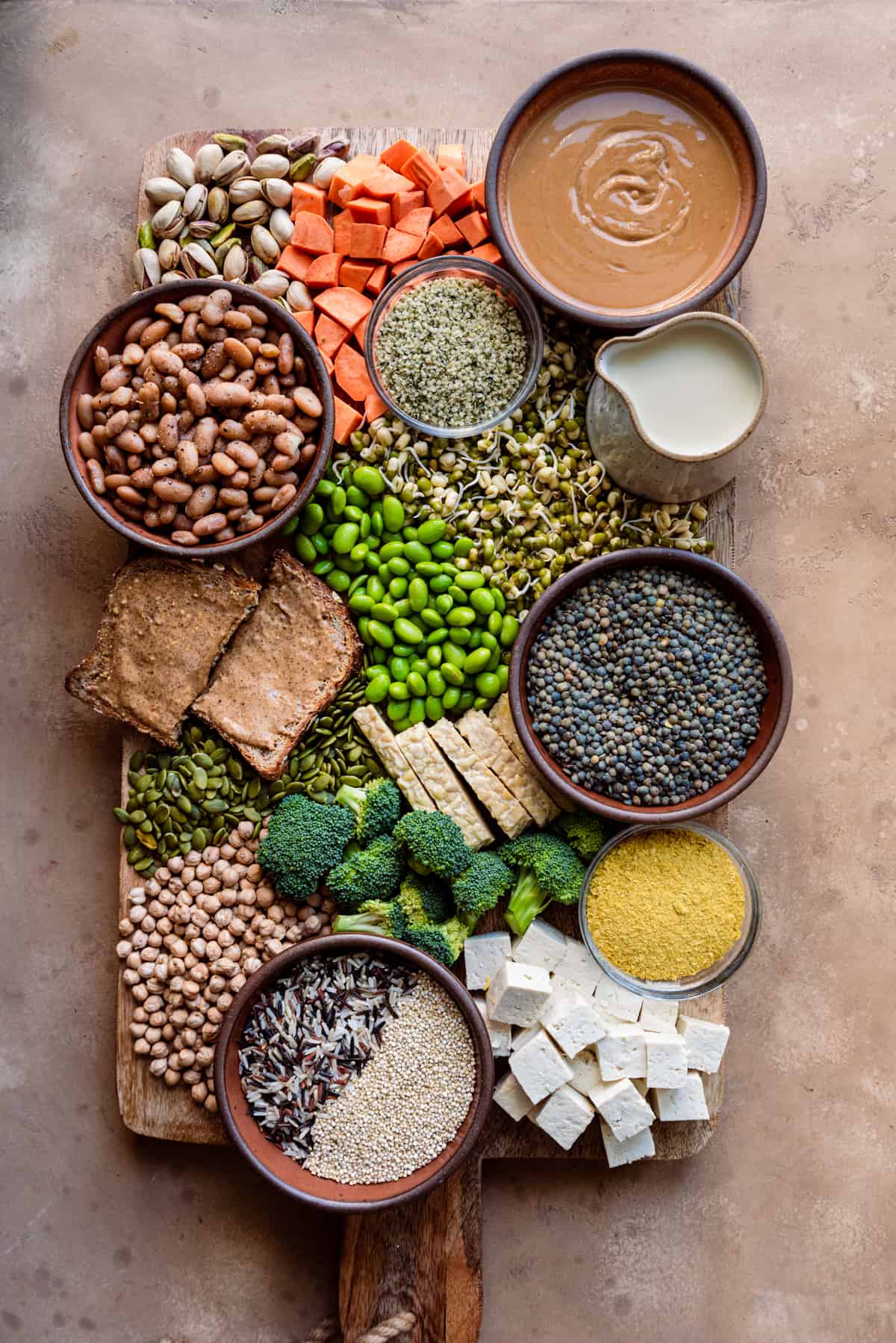
1. Beans and legumes
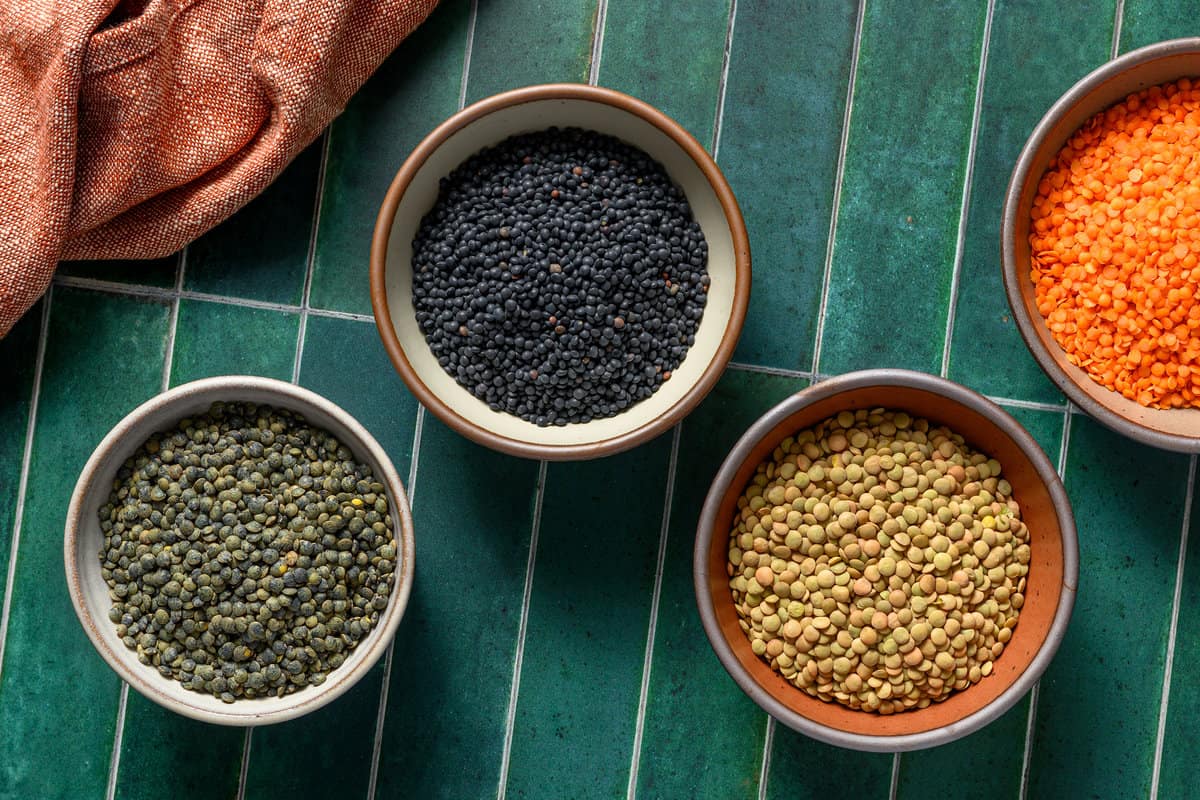
You’ll always find a wide variety of lentils, as well as dried and canned beans and legumes in my pantry because they come with endless uses. They’re one of the best protein-packed ingredients to use in soups and stews, Indian dishes, noodle dishes, healthy snacks, and more.
Lentils
While there are all kinds of beans and legumes to choose from, lentils hold a special place in my heart.
With about 18 grams of protein per 1 cup, they’re the protein-loaded backbone of some of my favorite recipes, like Red Lentil Curry, Lentil Bolognese, Lentil Tacos, Lentil Salad with Fresh Herbs, and Black Beluga Lentil and Mushroom Stew.
Beans
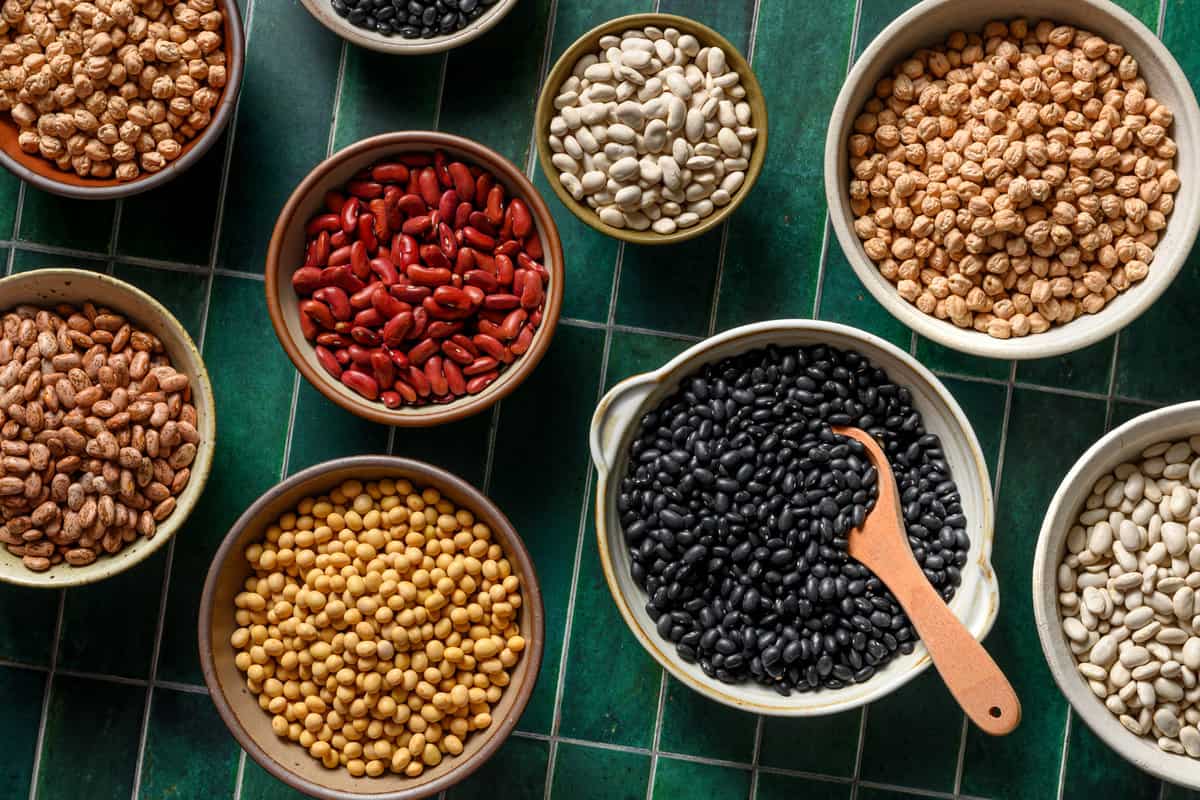
While beans aren’t as protein-dense as lentils, they’re a superfood in their own right and help add more variety to your diet, whether you choose from white beans (e.g., cannellini, navy beans), chickpeas, kidney beans, black beans, pinto beans, or heirloom bean varieties.
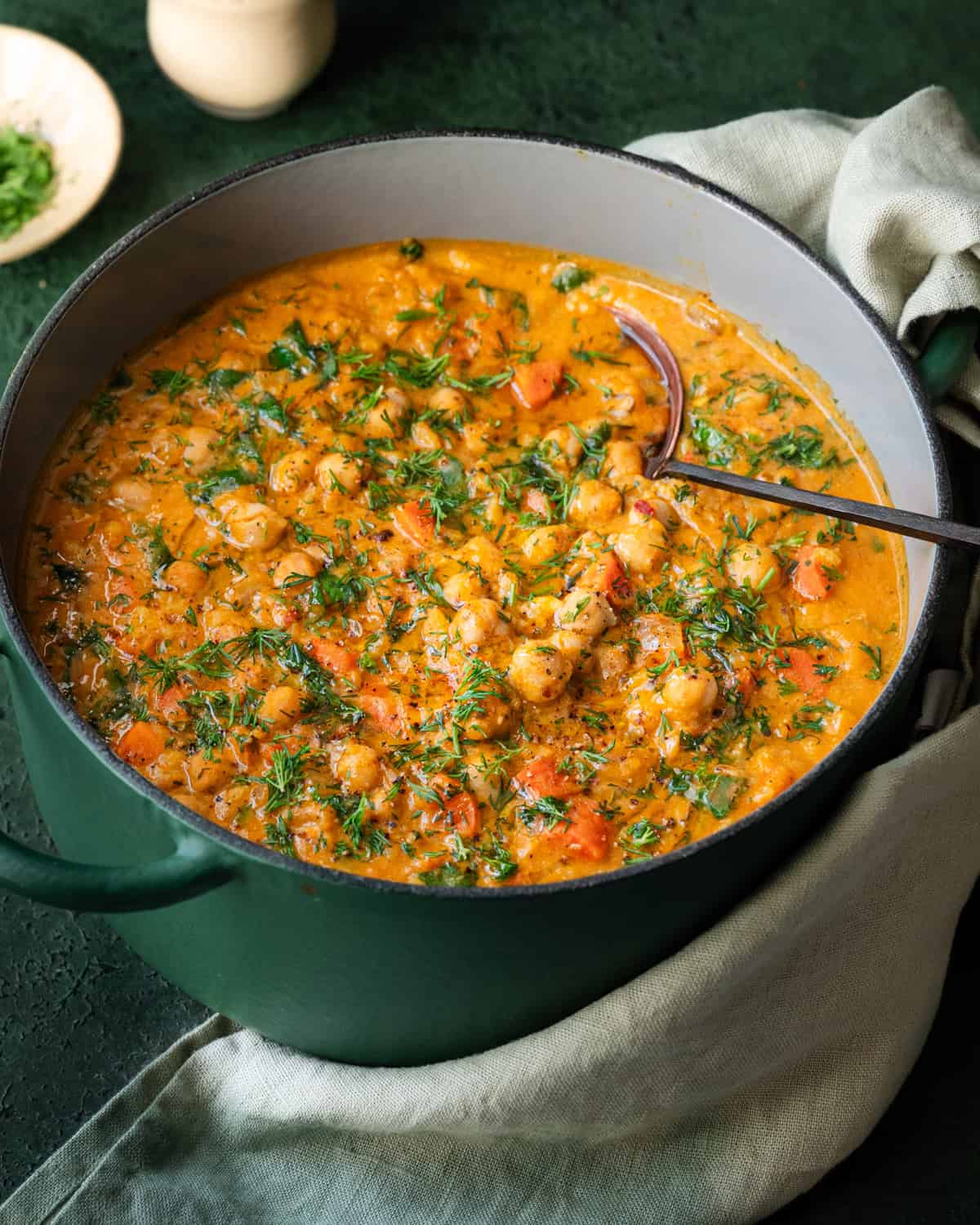
While beans are the perfect addition to soups and stews (you won’t regret making my fan favorite Lemony Chickpea Soup or super savory White Bean Soup), you don’t need to make a full meal to reap the benefits of protein-rich beans.
For instance, you can whip up a big batch of Homemade Hummus or Beet Hummus (made from chickpeas) and have a healthy and filling snack for the whole week. Or turn your beans and lentils crunchy! They make such a satisfying snack topper for salads and bowls.
Try my crispy roasted lentils recipe here. If you have a copy of my cookbook Big Vegan Flavor, do what I do—add the crunchy roasted chickpeas (with flavor variations, page 236) to your weekly meal prep!
2. Nuts and seeds
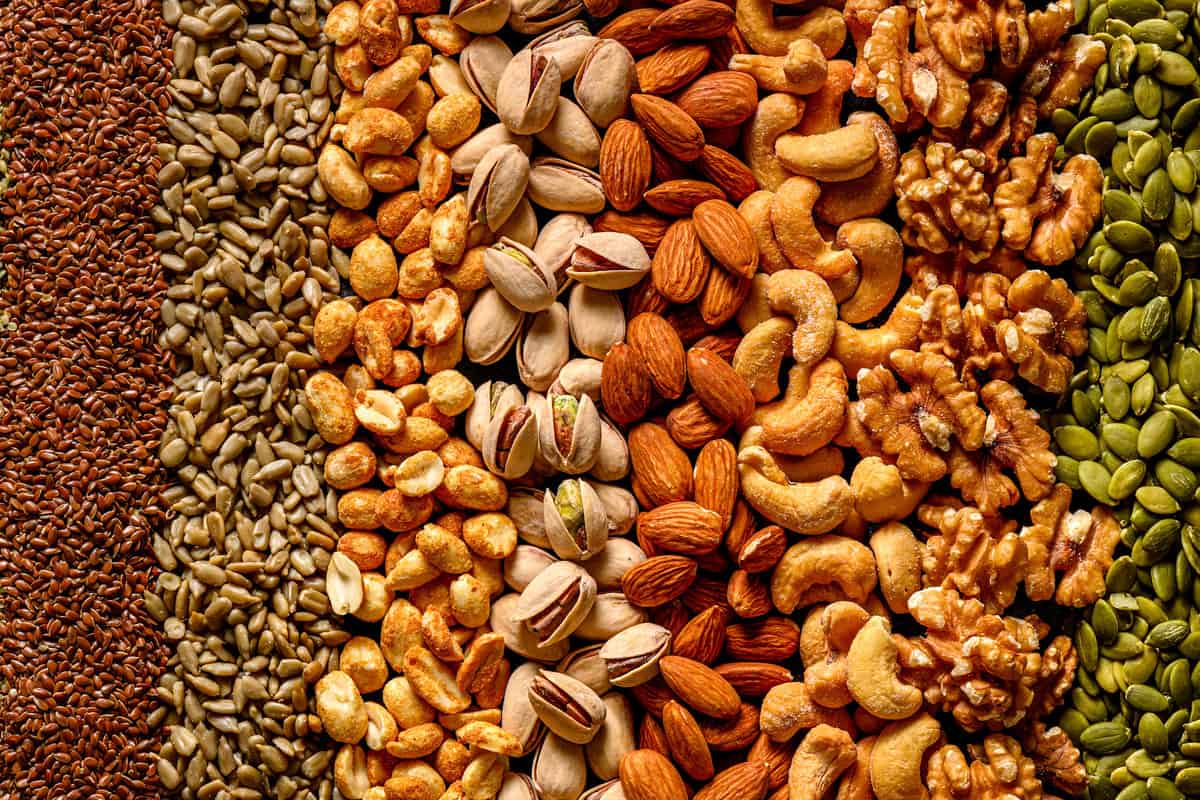
There are almost too many nuts and seeds to choose from but some of the most popular and protein-rich choices are hemp seeds, almonds, pepitas (shelled pumpkin seeds), sunflower seeds, pistachios, peanuts, and cashews.
Nuts and seeds add dynamic textures, flavors, and, of course, protein to all kinds of meals.
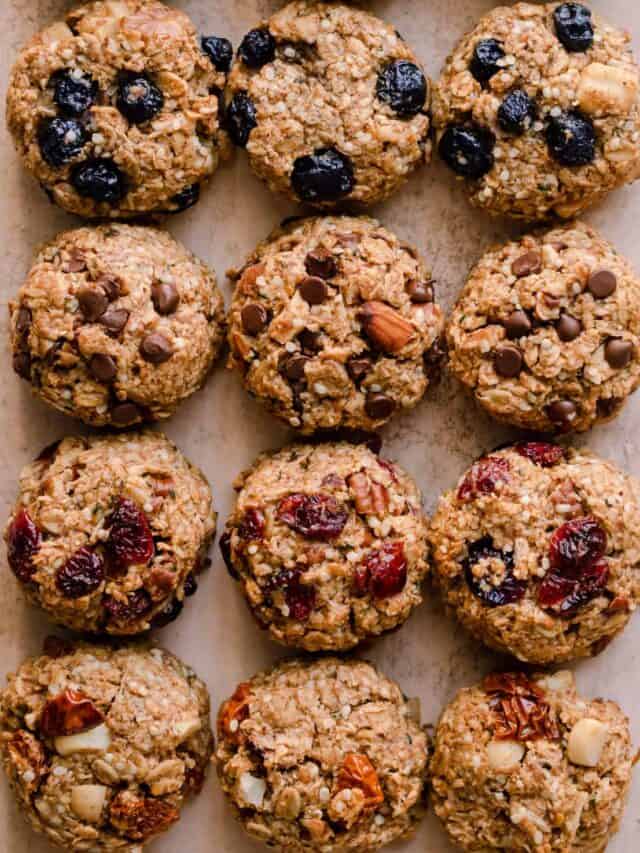
They’re so versatile too! Use them to make homemade nut milk, nut and seed butters, protein-rich sauces like my nut-free Cilantro Crema, Cashew Cream, pesto (whether classic or nontraditional), homemade Cashew Cheese, crunchy toppers for salads, and even Breakfast Cookies!
Tips for increasing protein with nuts and seeds
1) Replace the pine nuts in classic pesto with pepitas for a higher-protein condiment. Just ¼ cup of pepitas contains 9g protein!
2) Sprinkle your salads with hemp seeds (toast them first in a frying pan for more flavor). 3 tablespoons of hemp seeds contain 10 protein.
3) Make that PB&J work for you. Use sprouted whole grain bread (~6g protein per slice) with natural, no-sugar-added peanut butter (8g protein in 2 tbsp). Replace high-sugar jam with raspberries, mashed up with a fork and blended with a bit of chia seed.
3. Tofu and soy products
One of the most popular vegan protein sources is tofu (and don’t forget its soy sister cousins: tempeh, soy milk, edamame, and soy curls!).
Tofu
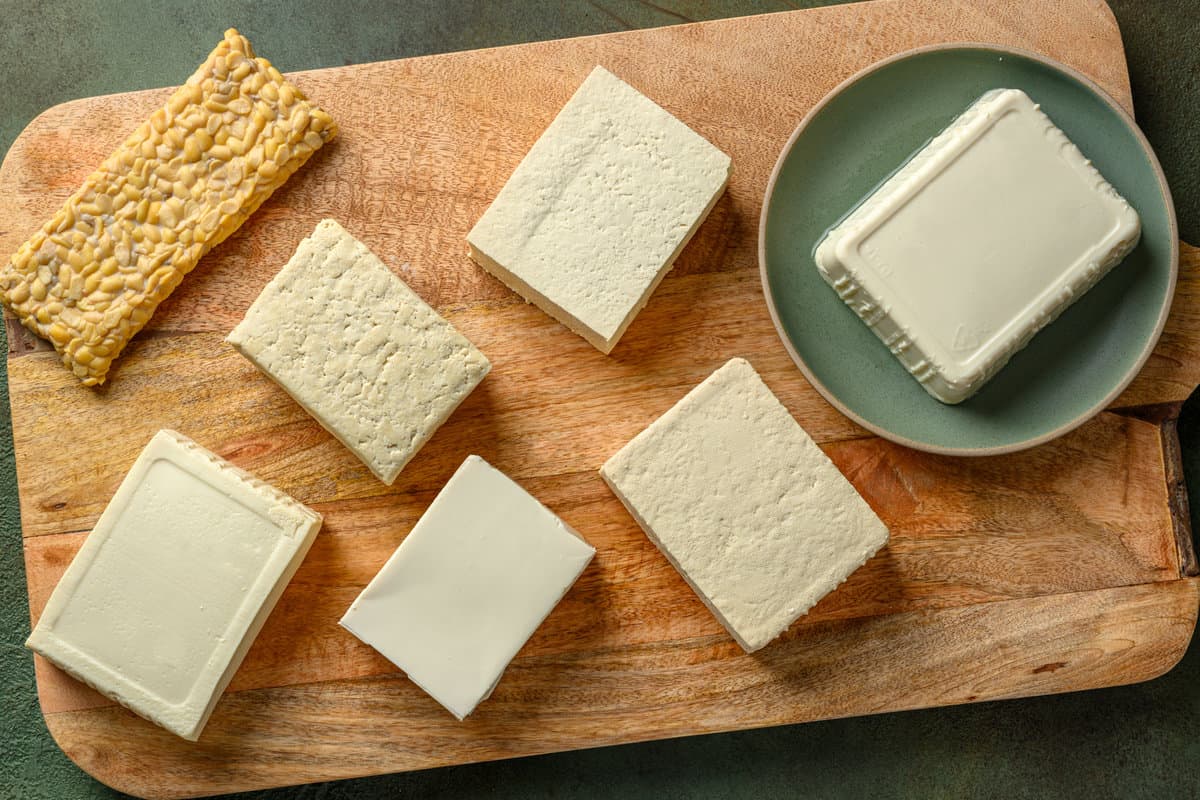
Tofu is made from condensed soy milk formed into a block. It comes in many different varieties and levels of firmness, making it an incredibly versatile ingredient.
Plus, with 8 grams of protein in 3 ounces of extra-firm tofu (and only 70 calories), it’s also a fantastic source of plant-based protein!
Not sure how to make tofu taste good?
It’s surprisingly easy! Start by learning to bake tofu and pan-fry tofu, then how to make the BEST Tofu Scramble and how to marinate tofu.
Once you get comfortable with the basics, move on to more creative tofu recipes, like my Braised Tofu, Tofu Stir Fry, Greek-Style Tofu Feta, or any of these 40 Terrific Tofu Recipes.
Tempeh
Tempeh is similar to tofu, in that it’s made from soy and is very flexible to use in cooking. However, tempeh is fermented, which gives it a meatier and nuttier flavor, as well as gut-healthy bacteria that’s great for our digestive systems. Plus, it’s even higher in protein, with 18 grams of protein in just 3 ounces!
It’s also easy to prepare in a variety of ways. Toss pan-fried tempeh in barbecue sauce for out-of-this-world tempeh sandwiches, or crumble it up for weeknight Tempeh Tacos, or turn it into sweet, smoky, and salty Tempeh Bacon!
Got more questions about tofu or tempeh? I cover everything in my Complete Guide to Cooking Tofu and my Complete Guide to Cooking Tempeh.
Soy Milk
When it comes to soy milk, it’s referred to as “the OG plant milk” for good reason. Boasting up to 9 grams of protein per cup, it’s a great option to use in smoothies and lattes, whether you need a post workout meal or an afternoon pick-me-up.
Try it in my Mocha Latte, swap the oat milk for soy milk in my fan favorite Sweet & Spicy Almond Butter Date Latte, or use it in your morning oatmeal or smoothie.
Pro tip: For a seriously high-protein tofu scramble, replace the oat milk in my fan-favorite tofu scramble with soy milk and the firm tofu with super-firm tofu.
Edamame
And don’t sleep on edamame! These soybeans are a versatile protein-packed ingredient (18 grams protein per 1 cup of shelled edamame!). Plus, it requires little to no preparation, so it’s perfect for quick meals.
I love folding edamame into noodle dishes, like this Rainbow Noodle Salad or these lightning fast Chili Garlic Noodles. I also use it as the base for my high-protein Smashed Edamame Toast (it’s the first recipe card in this post).
Soy Curls
If you’re not familiar with soy curls, they are the genius brainchild by Butler Foods and made from a single ingredient: non-GMO soybeans.
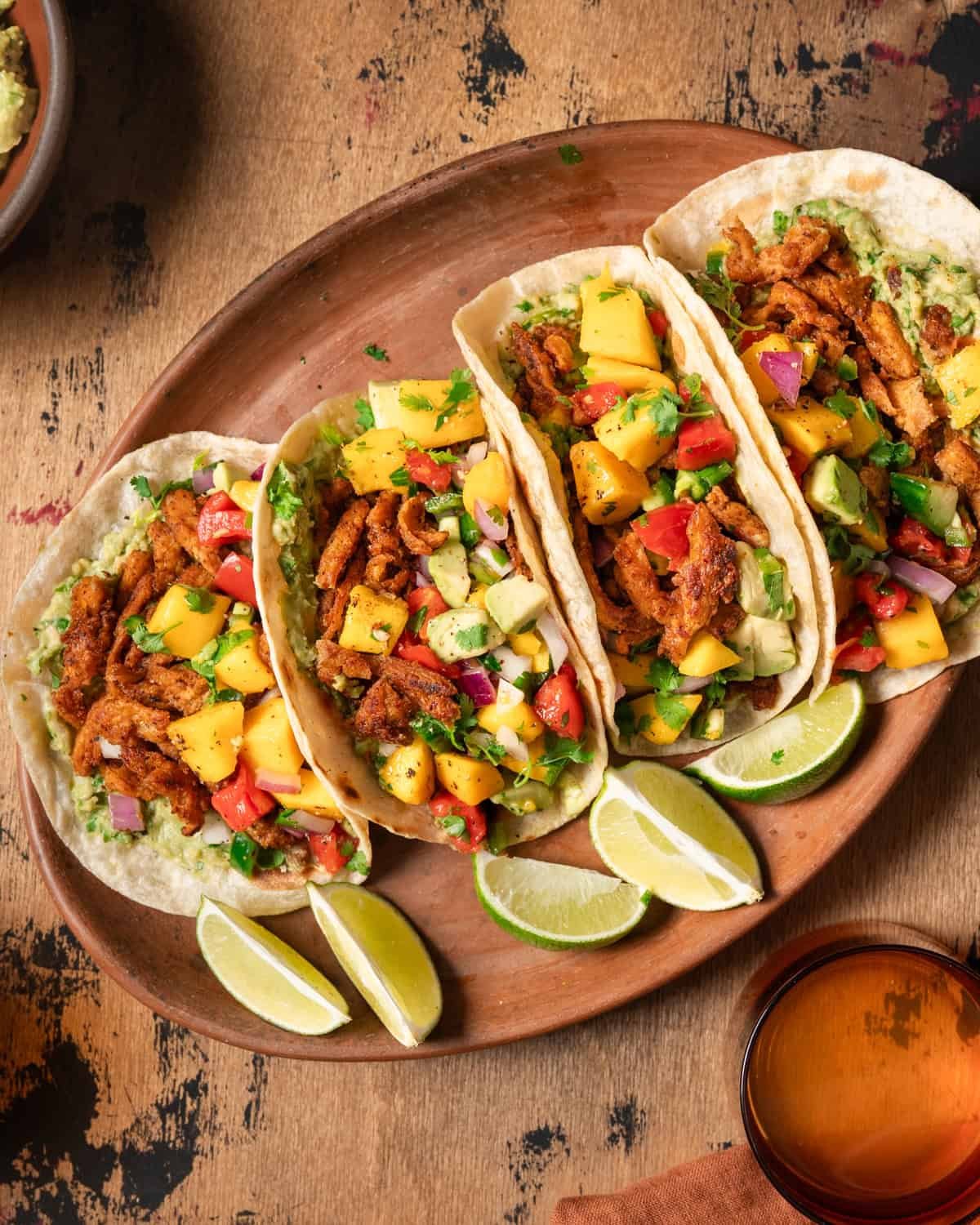
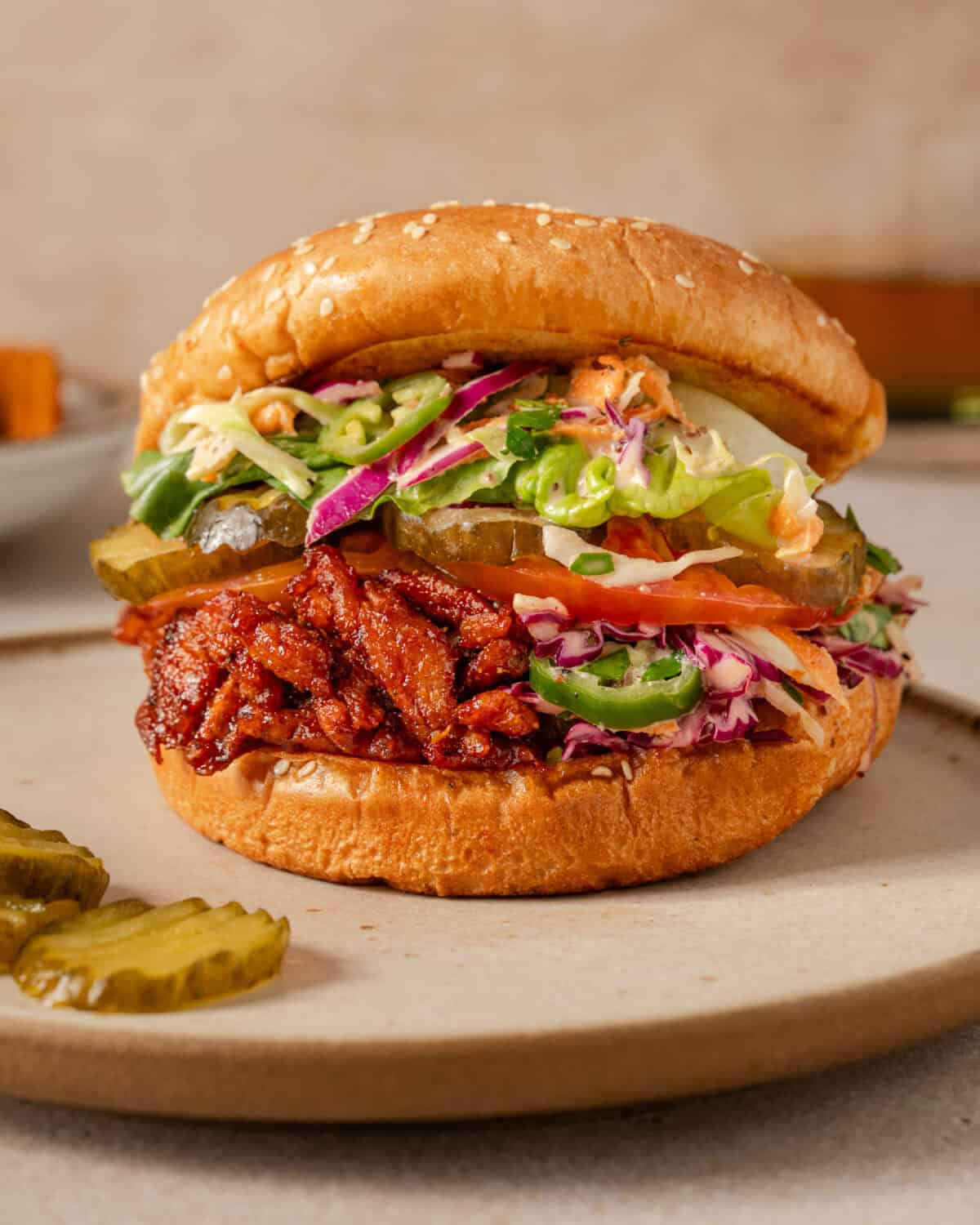
They come dehydrated so they need rehydrating (I like using Better Than Bouillon No Chicken Base to give them a shockingly chicken-like flavor). When you pan fry them, as I do in these Ultimate Vegan Tacos or Vegan BBQ Pulled Pork Sandwich, they get crispy and meaty and SO delicious.
1 serving has about 120 calories and 11g protein.
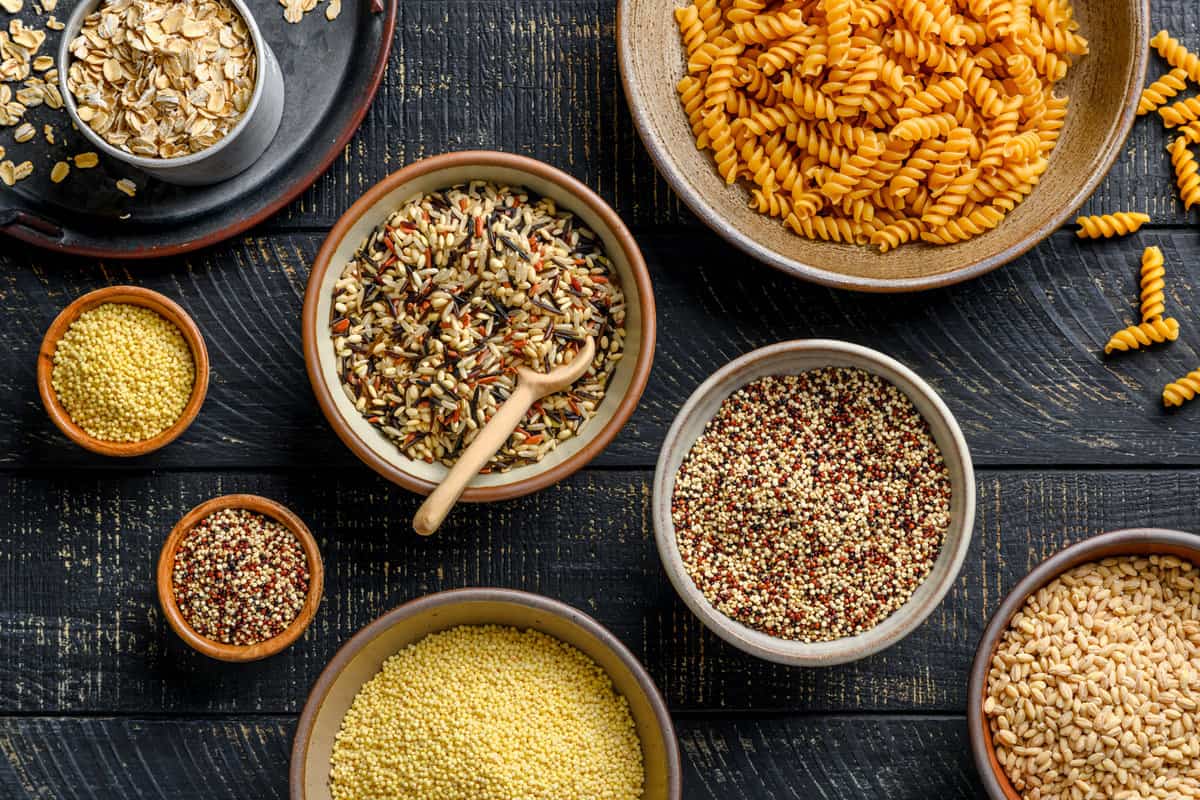
4. Whole grains
Whole grains are often left out of the protein conversation because they’re considered a carb, but by adding 1 cup of cooked quinoa, whole wheat pasta, wild rice, millet, oatmeal to your diet, you can check off 12 to 20% of your daily value for protein.
In addition to protein, whole grains are a fantastic source of fiber, which is severely lacking in the Standard American Diet.
Tips for incorporating whole grains into your diet
1. Add cooked quinoa into your weekly salads or grain bowls, or try this easy-to-customize crispy quinoa salad.
2) Replace your usual sandwich bread with whole wheat seeded sourdough or seeded whole grain breads, like this (6g protein per slice!).
3) Swap standard noodles for higher-protein soba noodles in cold noodle salads.
4) Add oats into chai-spiced cookies or start your morning with a savory oatmeal.
5. Vegetables
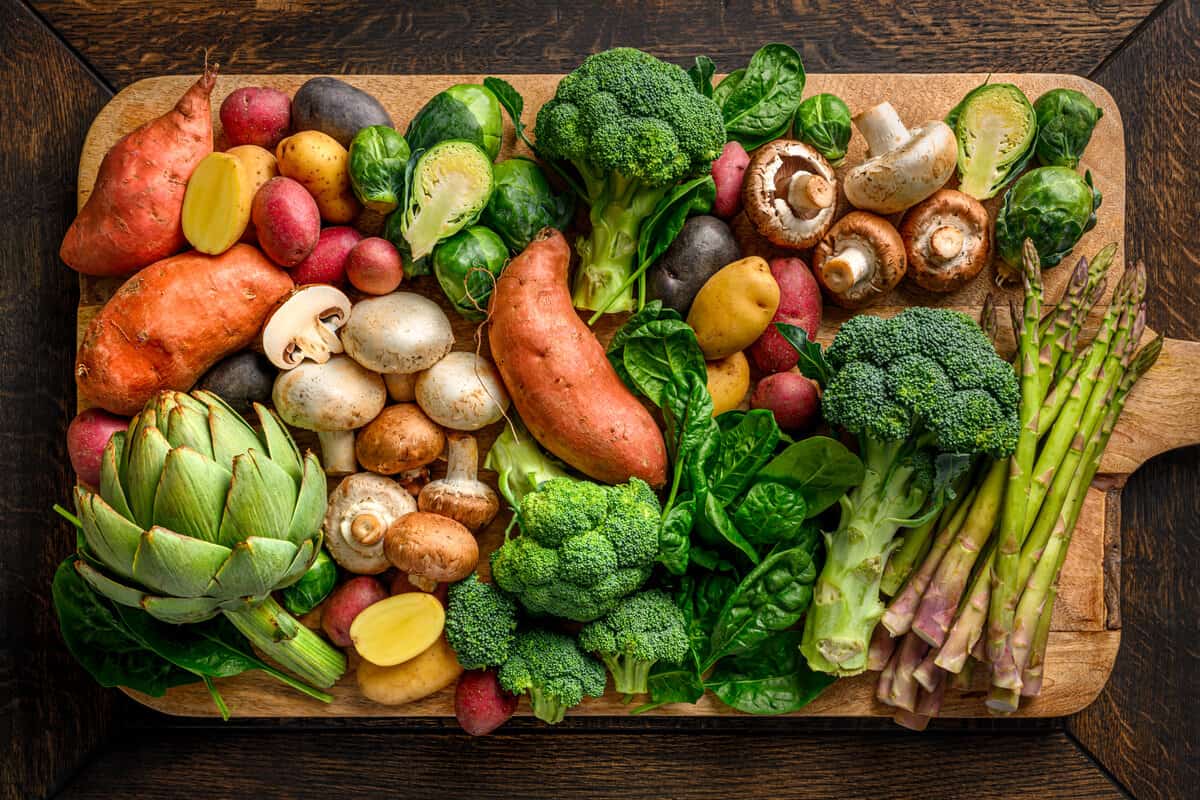
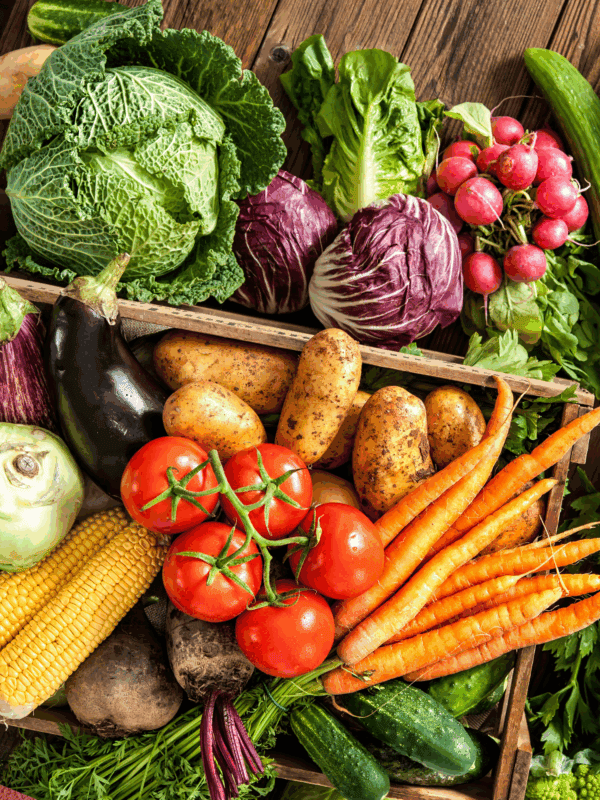
Don’t turn your nose up when considering vegetables as a protein source! They may not have as much protein as beans, tofu, or whole grains, but that doesn’t mean you shouldn’t include them in the majority of your meals.
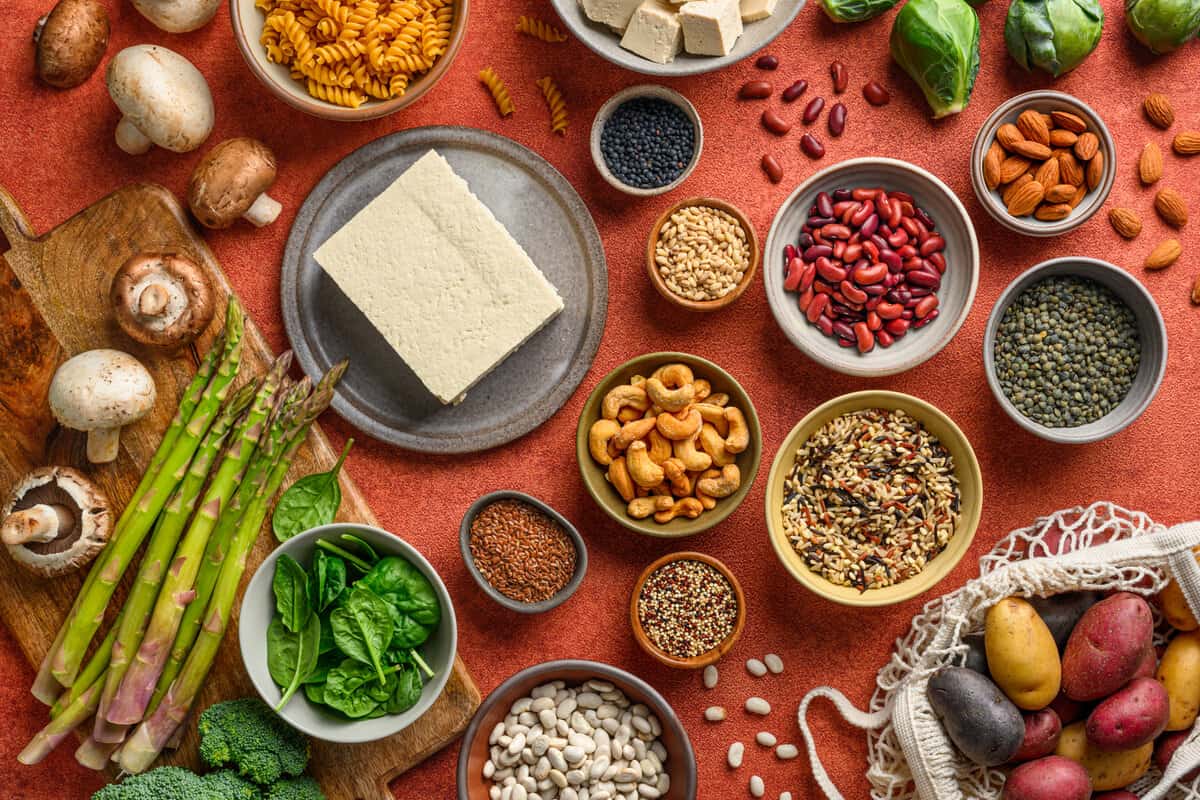
There are plenty of protein-rich veggies to choose from. Some commonly available ones include: spinach, Brussels sprouts, mushrooms, green peas, broccoli, sweet corn, potatoes, and asparagus.
Bonus: these vegetables are budget-friendly and flexible.
Use potatoes to make my Creamy Potato Salad in summer or Miso Butter Mashed Potatoes in winter.
Make mushrooms deliciously crispy in my Creamy Umami Noodle Soup, and broccoli ridiculously creamy in Creamy Vegan Broccoli Soup.
Come spring, pick up some asparagus for my Lemon Asparagus Pasta. And feel good about sneaking in a ton of spinach when you enjoy my Vegan Palak Paneer.
6. Miscellaneous
For all the foods I couldn’t cover in the first five categories 😉
Nutritional yeast
Nutritional yeast, AKA nooch, has a surprising 5 grams of protein in just 2 tablespoons.
It’s a must-have cheesy and umami seasoning that brings big flavor to Tofu Scramble, vegan cheeses like Fermented Cashew Cheese and Vegan Feta, and more.
Vegan protein powders and bars
While I try to get most of my protein from whole food sources, being able to rely on a protein shake after a strength training workout can be invaluable on a busy day. Here’s my current go-to brand that has minimal ingredients and great flavor.
Seitan
Seitan is made from vital wheat gluten and seasonings, is a hearty and filling vegan meat alternative. Vital wheat gluten is the secret behind the popular (and very high-protein) vegan sausage from Field Roast.
Or, if you’re feeling ambitious, you can whip up seitan on your own. I recmmend checking out out Sam Turnbull’s cookbook, Craving Vegan, which has lots of fun recipes for seitan!
Supplemented foods
These days, there are now protein-supplemented foods, like high-protein plant-based yogurt and protein pastas, which make it even easier to reach your protein goals.
High protein plant-based meals
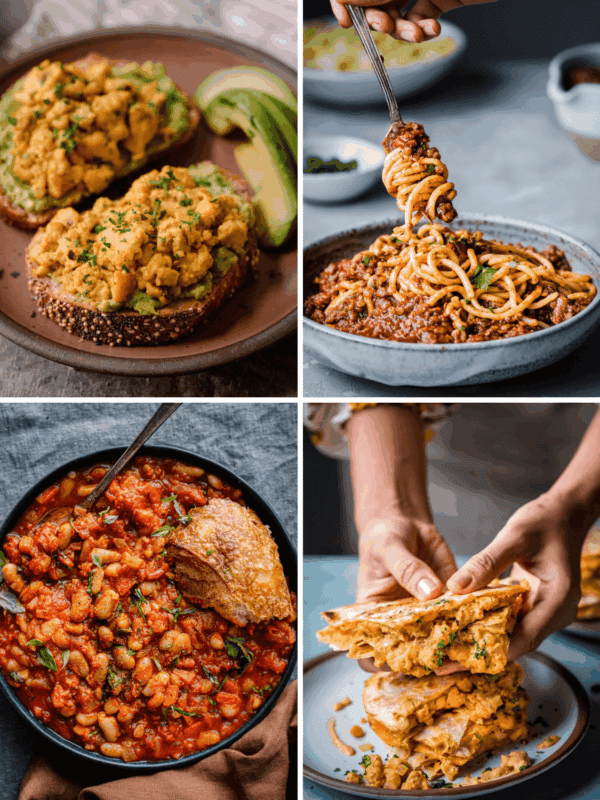
Add more high-protein vegan foods to your diet with any of these protein-rich recipes:
- 20-Minute High-Protein Meals – Choose from three delicious yet easy and quick meals that are loaded with 30g of protein!
- Creamy Vegan Protein Mocha Latte – This warm and comforting drink has 15 grams of protein in each cup!
- Mediterranean Lentil and Grain Bowls – A gourmet, yet easy grain bowl to enjoy for protein-packed lunches and dinner. 25g protein per serve!
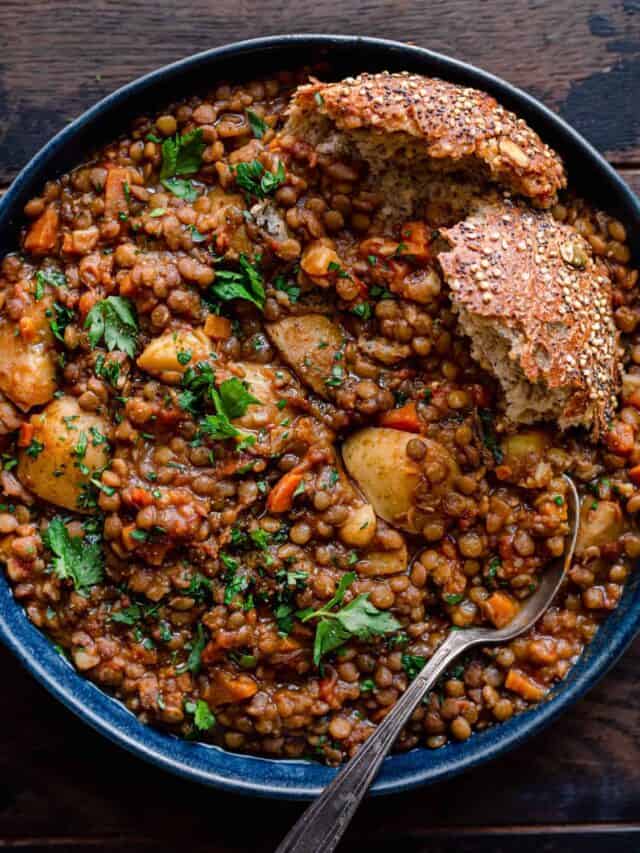
- Instant Pot Lentil Soup – Perhaps the heartiest soup of them all, this recipe is great for meal prep and has protein-rich, fiber-rich, and iron-rich lentils in every bite. 25g protein per serve!
- Breakfast Cookies – eating cookies for breakfast AND getting in a protein fix? YEP! Each cookie has nearly 5g of protein!
- Lemony Chickpea Soup – chickpeas and nutritional yeast team up in this flavor-rich soup and pack in 20g protein per serve.

What are your favorite ways to add plant protein to your meals? Let me know in the comments!










Why do you not list seitan as one of the primary sources? Is it healthy? Can it be consumed by people who are gluten sensitive.
Thx….love your book and congrats NYT contributor!
Hi, Wendy! Thanks for all of your support 🙂
As for your question: seitan is a great plant protein source! We didn’t include it simply because we don’t cook with it often and it’s hard to buy pre-made in grocery stores.
Seitan is a great source of protein, has one of the top protein-to-calorie ratio (beats most animal sources even). It’s basically wheat gluten though, thus isn’t suitable if you can’t tolerate gluten.
Seitan is healthy however it contains vital wheat gluten and is not appropriate for those who have allergies, intolerances or sensitivities to gluten or wheat.
Thank you!!
You’re very welcome, Cara!
Excellent content (as always). Thank you!
We appreciate your lovely review, Elizabeth!
Can you come up with a home-made protein powder vs buying from the store?
I have access to a bulk food place where hemp protein, pea protein powder, rice protein, peanut butter powder, etc are available. Have made a couple different batches but they are not sweet enough so I added 3 dates to the milkshake. Also…because my home-made version is so high in fibre, it can have a constipation effect (wierd I know…fibre is supposed to be good but too much has the opposite effect).
Also…my version is 1/3 the cost of store bought so big savings.
Thank you!
Hi Mike, good suggestion! I’ll pass it along to the team 🙂
ABSOLUTELY THE BEST
Thank You
I can’t wait to get cookin
Glad to hear you found this post useful, Eileen! 🙂
Nisha you forgot SOY CURLS (best is Butler Brand and you can buy bulk from their website) and also homemade Seitan (vs buying brands like “beyond meat” etc. that are all seitan based). Both excellent meat replacements. I’ve been blown away by soy curls in Indian meat curry recipes etc.
This was in the article
1st time! What a beautiful and informative website. Love all the new ideas i got. I’m 70 and can’t wait to try some of your delicious recipes. Again. Thank you!
Hi Lisa, we’re so happy you’ve found value in the site 🙂 We hope you’re able to start trying the recipes ASAP!
What brand of Tofu do you use in this video?
Hi Marzo, which video are you referencing? Nisha uses different brands of tofu depending on which type. You can read more about tofu Nisha uses here!
I thought I knew, but it’s great to have a comprehensive guide for reference. I’m not much of a snacker, so I hope to see more recipes using hemp seeds in savoury dishes.
Hi Kate, it’s great to hear you found value in this blog post! Thanks 🙂
Your Vegan Curry with Tofu is O.M.g. delicious! I have made it several times and it is still one of my very favorite dishes! I would be proud to serve it to guests who are not vegan because it is JUST so good! One of the things I love about this dish, besides the incredible deliciousness, is that it is chock full of veggies so it is literally a complete meal, in terms of vitamins and healthy eating. My favorite pairing is with Naan bread, but I frequently serve rice with it as well. I can never have enough of this amazing curry.
Thank you for the outstanding review on the curry with tofu, Linda! Would you mind leaving a review on that blog post if you haven’t already? We appreciate it!
Excellent article and I have most of the Ingredients. I have the Book from Sam Turnbull as well incl your new book and the Instant Pot one. I do intermittent fasting 20/4 and look for easy Recipe always with a good Amount of protein. I took an Indian Cooking Class locally and also a vegan one. Thanks for all your great Recipes.
We’re so happy you found value in the article, Elke! 🙂
I am grain free so some of these I can’t eat. I enjoy looking and adapting recipes
We hope you found the blog post useful and are here if you have any questions, Barbi!
Your chickpea recipes are changing my life! Yesterday I made your hummous and it really is the best. On the other hand, I was surprised to find that you don’t seem to add seitan to your diet and don’t give a recipe for making it. For a while now I’ve been using some Turnbull’s quick and easy seitan recipe and I just love the stuff! And by the way I’m not vegan.
Hi Gina, we’re delighted you love the chickpea recipes! And as for seitan- we haven’t cooked with it much here on RPL but maybe that will change in the future 🙂
I think you are amazing I watch you most mornings while I excersise. I have your newest cookbook and have been vegan for 15 years and I am 71 and happy and healthy. Smile. Thank you for all you do and teach us ♥️♥️♥️♥️♥️
Hi Nancy, thank you so much for the lovely comment! We’re so grateful to have you here as a loyal RPL reader/viewer 🙂 I will make sure to tell Nisha about your sweet comment!
This is very useful, especially for new vegans. I’m however very surprised seitan gets only a side note mention – when I prepare it it’s about 28g protein /100g. I eat a lot of it and bought it only once (it was disgusting).
Hi Tamara, it’s great to hear you found the blog post valuable. And interesting, we haven’t tried making seitan ourselves!
My doctor believes that peri-and post-menopausal women need more protein than when they were younger to fight muscle mass loss and support a healthy metabolism. Many research studies show between 40 and 60 grams per day. The problem for me is that the calories and fat also consumed to get that amount of protein have led to weight gain in my stomach. I’ve been trying to find a solution – no bread, less oil, etc., but still looking for a balance between flavor, calories and necessary nutrients. Thanks for the information.
We’re happy you found the blog post valuable, Kimberly! If you’re still having trouble with getting the right nutrients in, it might help to speak with a nutritionist. We wish you the best of luck with that!
I eat 110g protein per day at least but low fat (I weigh 140lb and the recommendations are 0.5 to 1g per lb). Making my own seitan has been the best way to get protein without excess fat.
Thank you for that information! I’ll look up how to make it. I actually have never made it and only eat it when my son-in-law is cooking something for us!
Look up Sam Turnbull she has great Recipes on Seitan and how to make it. I follow her on FB.
Wow! Nisha, this is some great information! And timely. My doc was just asking me where I get my protein, if not eating much meat. Going to send her this link. 😊
Hi Kobi, we’re glad you found the blog post useful! 🙂
Nice post. Your pictures of the raw ingredients were beautiful.
Thanks for the kind words, Sue! 🙂
I would love to see all of this info in a table form so that I can print and tape to the inside of my kitchen cupboard. 🙂
Thanks for the feedback, Donna!
I love this guide! It came just in time for me as I am going through perimenopause and need to up my protein to lose some belly weight.
I didn’t see where I could give this a star rating but it I could or would be 5 stars ⭐⭐⭐⭐⭐!
Hi Emily, we are happy this post came just in time for you! 🙂 Thanks for the awesome review!